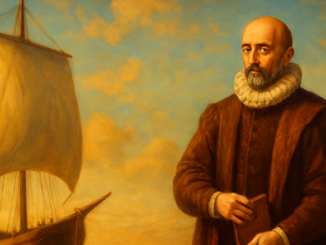
Open book of Montaigne's Essays with classical philosophical texts in background
Michel de Montaigne – Philosophical Background

Montaigne on Moderation: The Philosophical Roots Explored

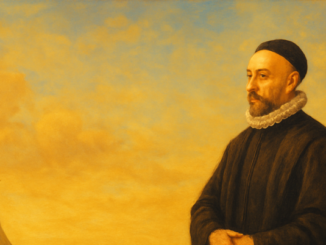
When Michel de Montaigne picked up his pen in the sixteenth century to write about moderation, he drew on a rich tradition of thinkers who came before him. His essay on the subject is no isolated meditation — it is a tapestry woven from Stoic wisdom, Skeptic restraint, and Humanist insight. For anyone searching for balance today, this essay offers not only historical context but also a mirror in which we can recognize our own pursuit of temperance. The Philosopher’s World: Montaigne’s Intellectual Landscape Michel de Montaigne lived in an era of violent religious conflict, political upheaval, and intellectual rebirth. The French Wars of Religion raged across his homeland, while the Renaissance made possible a rediscovery of classical texts. In his tower study, surrounded by the works of Greek and Roman thinkers, Montaigne found the stillness to reflect on life’s fundamental questions. His library contained works by Plutarch, Seneca, Cicero, and the Skeptic philosopher Sextus Empiricus. These thinkers formed the foundation upon which he built his famous Essays. His essay on moderation emerged precisely from this tension between extremes. While Catholics and Huguenots were locked in deadly conflict, Montaigne sought a middle path — not out of cowardice or indecision, […]
Marble bust of Marcus Aurelius with Masonic square and compass symbolism
Marcus Aurelius – Meditations

Marcus Aurelius on Judgment: Philosophical Roots of Masonry

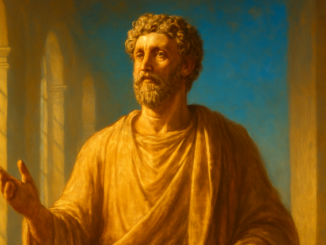
What if our worst enemy doesn’t dwell outside us, but inhabits the silent space between perception and conclusion? Marcus Aurelius — the Roman emperor who philosophized amid war and plague — proposed a radical thesis in the eighth book of his Meditations: it is not events that torment us, but the judgments we pass upon them. This idea, deceptively simple on the surface, carries the weight of centuries of philosophical tradition and casts a surprising light on the ethical quest that Freemasons know well. The Stoic Legacy of Judgment To understand the intellectual world of Marcus Aurelius, we must travel back to the Stoa of Zeno of Citium, the philosophical school that emerged in Athens around 300 BCE. The Stoics developed a psychology of judgment that was revolutionary for their time. They drew a sharp distinction between phantasia — the initial impression that reality makes upon us — and synkatathesis — the assent we choose to give or withhold from that impression. Epictetus, the freed slave whose lectures Marcus Aurelius studied as a young man, refined this doctrine into a practical art of living. His famous distinction between what lies within our power and what does not forms the backbone […]

Ancient Stoic philosophy scroll with Masonic square and compasses symbolism
Lucius Annaeus Seneca – Letters to Lucilius

Seneca’s Letter XLI: The Philosophical Roots of the Divine

What exactly did Lucius Annaeus Seneca mean when he wrote that a god dwells within us? And why does that idea still resonate in the rituals and symbols of Freemasonry? To truly understand Letter XLI, we need to travel back to the philosophical sources from which Seneca drew his inspiration — an intellectual journey that reveals surprising connections between ancient Stoicism and the Craft. Why Did Seneca Speak of an Inner Divinity? This question takes us straight to the heart of Stoic philosophy. Seneca did not write in a vacuum. He stood in a tradition that began with Zeno of Citium, the founder of Stoicism, and was further developed by thinkers like Cleanthes and Chrysippus. For these philosophers, the universe was permeated by an ordering principle — the logos — a divine reason that connected all things. Human beings, they believed, carry a spark of this universal reason within them. Seneca called this the daimon or genius that resides in each of us. This was no abstract idea. The Stoics believed that by cultivating this inner divinity, one could live in harmony with nature. When Seneca writes in Letter XLI that you need not raise your hands toward heaven to […]

Open book of Marcus Aurelius Meditations beside a rough and polished ashlar
Marcus Aurelius – Content & Summary

Marcus Aurelius Book VIII: On Judgment and Prejudice

A stone dropped into water sinks to the bottom. That is its nature. But what is the nature of human judgment? Marcus Aurelius, Roman emperor and Stoic philosopher, devoted a significant portion of his eighth book to this very question. In his private writings — now known to us as the Meditations — he examines how our prejudices and snap judgments can hold us captive. This article explores the heart of Book VIII and reveals why mastering our judgment is the key to genuine freedom. The Central Insight of Book VIII Throughout Book VIII, Marcus Aurelius returns again and again to one fundamental truth: it is not events themselves, but our judgments about those events, that determine our suffering or our peace. He writes to himself as a reminder — a kind of inner compass meant to steer him away from the pitfalls of thoughtless reaction. The emperor understood that even the most powerful man in the world can be enslaved by his own prejudices if he fails to question his first impressions. The central theme is best described as the art of suspension — not the suspension of action, but the suspension of judgment. Marcus Aurelius invites us to […]

Vrijmetselarij - Seneca over reizen als vlucht: filosofische wortels ontdekt
Lucius Annaeus Seneca – Letters to Lucilius

Seneca on Travel as Escape: Philosophical Roots Explored

Why do we sometimes feel compelled to leave, even when we know deep down that no destination will change a thing? Lucius Annaeus Seneca posed this very question nearly two thousand years ago in his twenty-eighth letter to Lucilius. His answer strikes at the heart of Stoic philosophy and echoes a wisdom that also runs through the traditions of Freemasonry: the inward journey is the only journey that truly matters. What Was Seneca Really Saying in Letter XXVIII? In Letter XXVIII, Seneca addresses his friend Lucilius, who has apparently been traveling from place to place in search of peace of mind. Seneca’s message is unequivocal: you carry yourself wherever you go. The problem does not lie in the place where you happen to be — it lies in the restlessness you bring with you. This is no casual observation. It is rooted deeply in the Stoic tradition that Seneca inherited from his predecessors and refined into a living philosophy. The Stoics held that external circumstances are inherently neutral. It is our judgment of situations that produces suffering or joy. When someone travels to escape problems, they merely change the scenery — not the inner drama. Seneca reminds Lucilius that Socrates […]

Vrijmetselarij - Seneca over reizen als vlucht: wat vrijmetselaars kunnen leren
Lucius Annaeus Seneca – Freemasonry & Connection

Seneca on Travel as Escape: Lessons for Freemasons

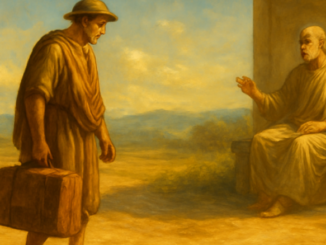
The suitcase stands packed by the door. A Freemason gazes out the window, ready to depart for a distant destination. Perhaps this trip will finally bring the peace he seeks — distance from daily worries, a chance to rediscover himself. But as he reaches for his keys, an ancient voice echoes in his mind: “Why do you think a new place will cure what you carry inside?” It is the voice of Lucius Annaeus Seneca, the Stoic philosopher who understood nearly two thousand years ago that changing your geography rarely solves your inner turmoil. The Illusion of the Distant Horizon In his twenty-eighth letter to his friend Lucilius, Seneca poses a question that still burns today: why do people keep traveling in the hope that a new environment will solve their problems? The first-century philosopher describes how people drift from city to city, from landscape to landscape, endlessly searching for something they cannot find — not because it doesn’t exist, but because they are looking in the wrong place. “You change your sky, not your soul,” he writes with characteristic sharpness. The baggage we most wish to leave behind always travels with us: ourselves. For Freemasons, this observation rings deeply […]

Vrijmetselarij - Marcus Aurelius over de ware aard: filosofische bronnen
Marcus Aurelius – Meditations

Marcus Aurelius on True Nature: Philosophical Sources

A stone is more than mere matter. In the hands of a mason, it becomes a building block, a bearer of structure, a symbol of something greater than itself. Marcus Aurelius viewed the human soul in much the same way — not as an isolated phenomenon, but as part of a cosmic whole. In the eighth book of his Meditations, the Roman emperor examined what a person truly is, beyond the roles and masks of daily existence. To fully grasp his insights, we must understand the philosophical sources from which he drew. The Stoic Tradition as Foundation Marcus Aurelius did not write in a vacuum. He was the last great representative of a philosophical movement that had originated in Athens five centuries earlier. Zeno of Citium, the founder of Stoicism, taught that the cosmos was a living, rational whole. The human soul, he argued, was a spark of that same cosmic reason — the logos. This concept reverberates throughout Book VIII, where Marcus Aurelius repeatedly points to the connection between individual reason and the universal mind. The early Stoics — Cleanthes and Chrysippus — laid the theoretical groundwork. They developed a natural philosophy in which everything that exists forms part […]

Ancient forest symbolizing Seneca's Letter 41 and the divine spark within
Lucius Annaeus Seneca – Content & Summary

Seneca’s Letter 41: The Divine Spark Within Us All

In his forty-first letter to Lucilius, the Roman Stoic philosopher Seneca explores a theme that still resonates nearly two thousand years later: the divine spark that resides within every human being. This letter stands as a cornerstone of Stoic philosophy, and it touches on questions that lie at the very heart of Freemasonry. What makes a person truly great? Where should we look to find the sacred? Seneca’s answer is as simple as it is radical — not in temples or outward rituals, but within the human soul itself. The Central Idea of Letter 41 Seneca opens this letter with a seemingly simple observation. He praises Lucilius for making progress on the path toward wisdom, but quickly reminds him that true greatness does not come from the outside. The central theme of the letter is that within every person dwells a divine spirit — what the Stoics called the animus — a fragment of the universal rational principle they referred to as the Logos. This inner god, Seneca argues, deserves far more attention than any form of outward worship. Importantly, the letter does not reject religion or tradition. Instead, it puts the value of external display into perspective. Seneca describes […]

Tree branches against the sky symbolizing patience and Masonic wisdom
Culture & Media

The Art of Waiting: Masonic Wisdom from a Treetop

Somewhere above the heathlands of the Netherlands, a military parachutist spent over an hour tangled in the branches of a tree. His jump had been calculated; his landing was not. While emergency services gathered below and the minutes crawled by, this soldier did something that has been considered one of the most difficult human skills for centuries: he waited. This seemingly mundane news story touches on a theme deeply rooted in Freemasonry and the arts — the noble art of patience and the surrender to what lies beyond our control. The Historical Roots of Patience as a Craft In the seventeenth century, when the first Grand Lodges were being formed in England and Scotland, patience was not an abstract virtue — it was a practical necessity. The operative masons who built the great cathedrals understood that haste was the enemy of craftsmanship. James Anderson, who compiled the Constitutions of Freemasonry in 1723, repeatedly stressed that true mastery could only be achieved through years of dedication. The Entered Apprentice had to wait before becoming a Fellow Craft; the Fellow Craft had to wait before being raised to Master Mason. This waiting was never a punishment. It was an education. The Renaissance […]

Ancient Roman bust of Marcus Aurelius with Masonic square and compass symbols
Marcus Aurelius – Freemasonry & Connection

Marcus Aurelius Book VII: Fate and Masonic Wisdom

What if everything that happens to us — the good fortune and the misfortune alike — ultimately leads to the same point? In the seventh book of his Meditations, Marcus Aurelius examines the unpredictability of fate with a clear-eyed sobriety that still resonates nearly twenty centuries later. For Freemasons, his philosophy raises a familiar question: how do we relate to the inevitable changes of life, and what does our response reveal about the state of our inner selves? The Paradox of Fate in Marcus Aurelius Marcus Aurelius, the Roman emperor-philosopher who reigned from 161 to 180 AD, wrote his Meditations as private reflections — never intended for publication. In Book VII, he turns his attention to a fundamental paradox: fate appears random, yet the wise person can still adopt a meaningful stance toward it. The unpredictability of life is not an enemy to be conquered, but a teacher that compels self-examination. He writes that the same events which destroy one person make another stronger. It is not the event that determines the outcome, but the way we receive it. This is not passive resignation — it is an active choice for inner sovereignty. The Stoic tradition in which Marcus Aurelius […]

Ancient stone temple interior symbolizing Seneca's philosophy and Masonic inner work
Lucius Annaeus Seneca – Content & Summary

Seneca Letter 28: Why Travel Cannot Cure a Restless Mind

Can we escape our inner turmoil simply by changing our surroundings? In his twenty-eighth letter to Lucilius, the Stoic philosopher Seneca presents a paradox that still challenges us today: whoever travels to flee from themselves inevitably carries along the very thing they are trying to leave behind. This is not an argument against travel — it is a philosophical exploration of where true peace of mind can actually be found. For Freemasons, who regard the inner temple as their most essential workshop, Seneca’s analysis offers a remarkably familiar perspective. The Core Idea: You Cannot Leave Yourself Behind Seneca opens his letter with a blunt observation: Lucilius has been traveling from one place to another, yet his restlessness has not diminished in the slightest. This comes as no surprise to Seneca. He articulates what becomes the central thesis of the entire letter: it is not the location that needs to change, but the mind. Those who are restless on the inside carry that restlessness to every new destination. The journey becomes a flight without a final stop. This insight is not new within the Stoic tradition. Socrates is said to have observed that travel holds little value for those who have […]

Ancient Roman bust of Marcus Aurelius symbolizing Stoic philosophy and fate
Marcus Aurelius – Meditations

Marcus Aurelius Book VII: Philosophical Roots of Fate

When a Roman emperor sat down by candlelight in the second century AD to record his private thoughts, he produced one of the most influential philosophical texts in Western history. Book VII of Marcus Aurelius’ Meditations tackles a theme that touches every human life: the unpredictability of existence. This essay explores the philosophical traditions that nourished these reflections and reveals a striking parallel with how Freemasonry approaches change, impermanence, and the shaping of character. The Stoic Legacy: From Zeno to the Imperial Age Stoicism was born around 300 BC in Athens, where Zeno of Citium taught his students in the Stoa Poikile — the painted colonnade that would give the school its name. The central idea was deceptively simple: while we cannot control external events, we can master our own responses to them. This philosophy was refined by thinkers such as Cleanthes and Chrysippus before reaching its Roman zenith in the works of Seneca, Epictetus, and ultimately Marcus Aurelius himself. In Book VII of the Meditations, we see Marcus Aurelius wrestling with the very questions that preoccupied his predecessors. The fickleness of fortune — what the Greeks called tyche — is not treated as an enemy but as a teacher. […]

Ancient Roman oil lamp illuminating a writing tablet symbolizing reflection
Marcus Aurelius – Content & Summary

Marcus Aurelius Book VII: On the Fickleness of Fortune

Deep in the night, the emperor picks up his writing tablet. Outside, wind howls past the legion tents along the Danube frontier. Inside, by the flickering light of an oil lamp, Marcus Aurelius bends over a question every human being knows: how do you remain steadfast when fortune turns against you? His answers, recorded in Book VII of the Meditations, still speak to anyone searching for inner peace amid uncertainty — and they carry a particular resonance for those who walk the path of self-improvement through Freemasonry. The Core Idea of Book VII The central theme of Book VII revolves around how we deal with change and adversity. Marcus Aurelius argues that external events are, in themselves, neutral. It is our judgment that turns them into disasters or blessings. This foundational Stoic principle receives a deeply personal and practical treatment in this book. The emperor does not write as an abstract philosopher but as a man who contends daily with illness, war, and political intrigue. What sets Book VII apart from the other books of the Meditations is its emphasis on the transience of all things. Marcus Aurelius reminds himself repeatedly that fame is fleeting, that bodies decay, and that […]

Ancient Roman philosopher writing by lamplight, symbolizing Seneca's Letter XXVI
Lucius Annaeus Seneca – Letters to Lucilius

Seneca’s Letter XXVI: Philosophical Roots of Death and Life

An old man sits at his writing desk, the oil lamp casting dancing shadows across rolls of parchment. Outside, evening descends over Rome, but Lucius Annaeus Seneca barely notices. He is writing to his friend Lucilius about something that has occupied his mind for years: the approach of death and the art of truly living. In this twenty-sixth letter, a rich philosophical tapestry unfolds — woven from threads of Stoicism, Epicureanism, and ancient Greek wisdom. What thinkers and traditions shaped Seneca’s reflections on the ultimate transition, and why do they still matter to Freemasons today? The Stoic Foundation: Living in Accordance with Nature Seneca’s thinking about death and life is deeply rooted in Stoic philosophy, a school founded by Zeno of Citium around 300 BCE. The Stoics taught that death is not an evil but a natural part of the cosmic process. Chrysippus, one of the great systematizers of early Stoicism, developed the concept of the logos — the rational order that permeates the universe. For Seneca, this means that death need not be feared, because it is part of the very same logos that makes life possible. In Letter XXVI, Seneca applies this teaching to his own aging. He […]

Ancient philosophical text symbolizing Seneca's reflections on mortality and life
Lucius Annaeus Seneca – Content & Summary

Seneca on Death and Life: Lessons from Letter XXVI

You wake up each morning, start your day, and rarely pause to consider that every day lived is one fewer remaining. Lucius Annaeus Seneca did exactly that. In his twenty-sixth letter to his friend Lucilius, he writes with striking candor about aging, mortality, and the question of how to truly live when the end draws near. Far from being a gloomy meditation, this letter offers a practical guide for anyone who wants to live more consciously. What can we still learn from this wisdom, written nearly two thousand years ago? The Heart of Letter XXVI: Old Age as a Teacher Seneca writes this letter as an elderly man. He describes how his body shows unmistakable signs of decline, how his physical strength is fading — yet how his mind seems to grow clearer with each passing year. The central idea is surprisingly optimistic: old age is not a punishment but a gift. It is the period in which you can finally test whether your philosophical convictions truly hold up under pressure. Seneca compares life to a voyage at sea. As long as you are sailing, you can claim you are unafraid of the storm. But only when the harbor comes […]

Open book with Montaigne essays and philosophical symbols of wisdom and virtue
Michel de Montaigne – Philosophical Background

Montaigne on Virtue Preaching: Philosophical Roots & Context

We have all experienced it: someone delivers a passionate speech about honesty or integrity, and yet something feels off. The words are right, but the speaker fails to convince. Michel de Montaigne wrote about this very phenomenon in the sixteenth century. In his brief but incisive essay on how the preaching of virtue can itself become a vice, he dissected the gap between words and deeds. But where did these insights come from? Which philosophers and intellectual traditions shaped his thinking? This article traces the sources behind this essay and shows how their wisdom remains strikingly practical today. The Stoic Legacy: Seneca as Teacher Montaigne read the Roman philosopher Seneca with extraordinary care. In Seneca’s letters to Lucilius, he found a recurring theme: the dangers of hollow rhetoric. Seneca warned that philosophers who speak beautiful words without living by them ultimately discredit philosophy itself. For Seneca, philosophy was never an academic exercise — it was a daily practice of self-improvement. This Stoic emphasis on congruence — between inner conviction and outward action, between belief and behaviour — resonated deeply with Montaigne. In his own era, he observed how preachers and moralists lost themselves in theatrical performances about virtue while their […]

Statue of Marcus Aurelius representing Stoic philosophy and justice
Marcus Aurelius – Meditations

Marcus Aurelius on Evil and Justice: Philosophical Roots

You’re facing a difficult decision. Someone has wronged you, and the urge to strike back burns hot. It’s precisely in moments like these that Book VII of Marcus Aurelius’ Meditations offers concrete guidance. But where did these insights originate? Which philosophical traditions shaped the thinking of this Roman emperor? And more importantly — how can you put this ancient wisdom to work in your life today? The Stoic Foundation: Mastering Your Reactions Marcus Aurelius wrote from within a tradition that began three centuries before his time. Around 300 BCE, Zeno of Citium founded the Stoic school in Athens. Its core principle was simple yet powerful: you have no control over what happens to you, but you have full control over how you respond. In Book VII, Marcus Aurelius applies this directly to questions of evil and justice. When someone insults or harms you, the event itself is neutral. It’s your judgment about it that turns it into something painful. This is not passivity. It’s an active choice to direct your energy toward what you can actually influence. Try it yourself: the next time someone’s behavior irritates you, ask yourself, “Can I change this?” If yes, take action. If not, accept […]

Ancient Stoic column and Masonic square and compasses symbolizing inner wisdom
Lucius Annaeus Seneca – Freemasonry & Connection

Seneca on True Joy: Wisdom That Freemasons Recognize

When the Roman philosopher Lucius Annaeus Seneca wrote his twenty-third letter to Lucilius on the subject of true joy, he touched on something universal. His words, nearly two thousand years old, still resonate with anyone searching for meaning beyond the superficial. For Freemasons, this letter strikes a particularly familiar chord — the conviction that genuine fulfillment does not come from the outside, but must be built from within. Let us explore how Seneca’s insights and the Masonic tradition converge in their shared pursuit of inner light. The Stoic and His Student: A Conversation About Happiness Seneca wrote his famous letters to a younger friend, Lucilius, as a form of philosophical correspondence. In Letter XXIII, he poses a fundamental question: what makes a person truly happy? He warns Lucilius against the mistake so many of us make — seeking joy in possessions, status, or fleeting pleasures. These forms of happiness, Seneca argues, are fragile and entirely dependent on circumstances beyond our control. True joy, by contrast, springs from a clear conscience and a virtuous character. The Stoic philosopher uses the image of a spring that wells up from within, as opposed to water piped in from elsewhere. External happiness is like […]

Ancient scroll symbolizing Seneca's Letter XXIII on true joy and inner peace
Lucius Annaeus Seneca – Content & Summary

Seneca’s Letter XXIII: On True Joy and Inner Tranquility

What is the difference between superficial happiness and deep, unshakable joy? In his twenty-third letter to his friend Lucilius, the Roman philosopher Lucius Annaeus Seneca confronts this fundamental question head-on. He examines why most people spend their entire lives chasing fleeting pleasures, while the only source of genuine fulfillment lies within themselves. Nearly two thousand years later, this letter still holds up a timeless mirror for anyone wondering where lasting happiness truly comes from. The Heart of Letter XXIII Seneca opens this letter with a deceptively simple question: are you truly happy, or are you merely playing the part of someone who is? He urges Lucilius to look honestly into the mirror. Roman society of Seneca’s day — much like our own — offered endless distractions and superficial pleasures: banquets, fame, possessions. But Seneca warns that this kind of joy is as fleeting as morning mist. The moment circumstances change, happiness evaporates along with them. The philosopher draws a sharp distinction between laetitia — exuberant cheerfulness — and gaudium — deep, inner joy. The former depends on external factors and shifts with fortune. The latter springs from the soul itself and cannot be taken away by circumstance. This distinction forms […]

Ancient Stoic philosophical texts symbolizing Masonic brotherhood and wisdom
Marcus Aurelius – Meditations

Marcus Aurelius Book VI: Philosophical Roots of Brotherhood

What drives a Roman emperor to write about the interconnectedness of all people while camped in a war zone? And why do those thoughts still resonate nineteen centuries later in the rituals of Masonic lodges around the world? The answers lie buried deep in the philosophical traditions that shaped Marcus Aurelius — traditions that continue to provide the foundations for fraternal bonds to this day. Where Did Marcus Aurelius Draw His Ideas From? This is perhaps the first question that arises when reading Book VI of the Meditations. Marcus Aurelius did not write in a vacuum. He stood on the shoulders of giants — generations of Stoic thinkers who had laid the groundwork before him. The Stoa, founded by Zeno of Citium around 300 BC, taught that all human beings are part of one cosmic community. This concept, the cosmopolis, forms the backbone of everything Marcus wrote about our obligations to one another. But the emperor did not limit himself to a single source. He drank from multiple philosophical rivers: the practical ethics of Epictetus, the letters of Seneca, and the moral biographies of Plutarch. Each of these thinkers contributed a unique stone to the edifice of his thought on […]