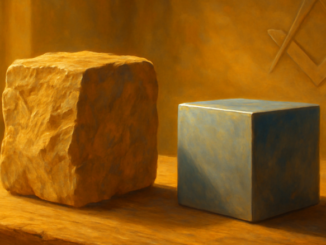
Masonic rough ashlar symbolizing talent, responsibility, and ethical duty
Philosophy & Ethics

What Being the Favorite Teaches Us About Ethics in Masonry

When someone is labeled the favorite, something curious happens: the expectation of victory transforms winning from a possibility into an obligation. Professional cyclist Lorena Wiebes, who recently claimed another dominant stage victory at the Tour, carries that burden with apparent ease. But what does it truly mean to be required to perform simply because others expect it of you? And doesn’t this touch on a deeper ethical question that lies at the very heart of Freemasonry — the relationship between talent, responsibility, and moral duty? The Paradox of Merit and Expectation There is a philosophical tension here that seems harmless on the surface but raises fundamental questions upon closer examination. A cyclist who has become the best through years of dedication and innate talent is criticized when she doesn’t win. The logic seems perverse: precisely because she excels, what was once remarkable becomes obligatory. Aristotle might have spoken here about the relationship between aretè — the virtue of excellence — and the social context in which that virtue acquires meaning. Freemasonry knows a remarkably similar dynamic. Once a man is initiated as a Brother, he accepts an invisible but very real contract — not just with his lodge, but with […]

A rough ashlar stone illuminated by a single spark of light in a Masonic lodge
Philosophy & Ethics

The Question as Starting Point: What If Everything Began Today?

Imagine the world was created today. Imagine that all our memories, our history books, our fossil records and ancient manuscripts are nothing more than illusions — conjured into existence in this single moment of creation. It’s a thought that pulls the ground from beneath your feet, a question that destabilizes everything you think you know. And yet, this very disruptive question is one of the most powerful tools available to a thinking person. The Question Mark as a Tool In everyday life, we use question marks casually. We ask for directions, the time, the weather forecast. But there is another kind of question — one that doesn’t seek information but transformation. The philosopher René Descartes once subjected everything he believed to systematic doubt, until he arrived at his famous conclusion: “I think, therefore I am.” He wondered whether an evil demon might be deceiving him entirely about the nature of reality. It is no coincidence that precisely these kinds of radical questions laid the foundations of modern philosophy. In Freemasonry, the question plays a distinctive and central role. The seeker who knocks at the door of the lodge arrives not with answers but with a question in the heart. The […]

A compass resting on rough stone symbolizing ethical leadership in Freemasonry
Philosophy & Ethics

World Cup Shares Controversy: What Ethics Demands of Leaders

You may have caught the headlines: the FIFA president defending the sale of World Cup shares to investors, insisting there was ‘no obligation’ to disclose or refrain. On the surface, it sounds like a reasonable legal defense. But something about it doesn’t sit right. When someone in a position of immense power says something ‘wasn’t required,’ an immediate question arises — but was it the right thing to do? That tension between what is permitted and what is proper touches something fundamental, something Freemasons have been reflecting on for centuries. The Difference Between What You May Do and What You Should Do Every day, we navigate the gap between what is legally allowed and what is genuinely good. You can ignore a colleague who needs help. You can stay silent when injustice unfolds before your eyes. No one will take you to court for it. But deep down, you know there is a different standard — one that isn’t written in any law book but ought to be engraved in your character. The recent controversy surrounding the sale of shares in the FIFA World Cup perfectly illustrates this tension. When a leader hides behind the phrase ‘no obligation,’ it sounds […]

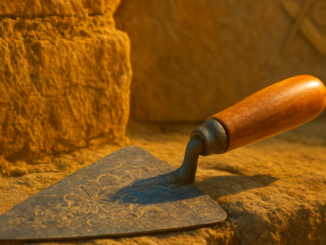
Masonic trowel resting on rough stone symbolizing the art of joining
Philosophy & Ethics

Lodge De Troffel: The Philosophy of Joining and Binding

A trowel rests on the work table. It is a simple tool, designed to spread mortar between stones, to fill gaps, to bind loose elements into a unified whole. Yet the lodge that bears this name — Lodge De Troffel — carries a philosophical mission that reaches far beyond the stonemason’s craft. Where other lodges choose names that evoke light, wisdom, or cosmic order, this brotherhood takes its identity from an instrument concerned with what lies between the stones. And it is precisely there, in the joints, in the spaces between, that the essence of human coexistence may well reside. The Tool That Builds Nothing but Binds Everything Pick up a trowel and you notice something remarkable. Unlike the gavel that strikes, the chisel that cuts, or the square that measures, the trowel is a tool without aggression. Its motion is smoothing, reconciling, complementary. It adds where something is missing. Strictly speaking, the trowel builds nothing — it only makes it possible for what has been built to remain standing. In Freemasonry, this instrument represents the art of connection. When a lodge takes the name De Troffel — The Trowel — it makes a deliberate philosophical choice. It places neither […]

A symbolic path leading back to familiar ground representing Masonic loyalty
Philosophy & Ethics

Return and Loyalty: What a Football Transfer Teaches About Ethics

A seasoned 37-year-old footballer returns to the country where his career began. Some call it sentiment; others see a calculated move. But behind every homecoming lies a deeper question: what does it mean to return to your origins? And what does that choice reveal about someone’s character? When Dutch club NEC announced the return of a Serbian midfielder to Nijmegen, it offered a surprising mirror for an age-old ethical question — one that stands at the very heart of Freemasonry. The Outside View: Romance or Calculation? For the average football fan, a transfer like this stirs mixed feelings. Is this a veteran looking to perform one last trick on familiar turf? Or a seasoned professional eager to prove his worth in a league he knows inside out? The cynic sees a marriage of convenience: the club gains name recognition; the player gets game time. The romantic sees a man returning to his roots — to the place where it all started. These two readings coexist without either being entirely right or wrong. The outside world tends to judge quickly. We search for motives, hidden agendas, the self-interest lurking behind every decision. That impulse is profoundly human, but it often says […]

Ancient philosophical symbols and Masonic tools representing the ethical foundation
Philosophy & Ethics

Freemasonry and Philosophy: The Ethical Foundation

Freemasonry and philosophy are inseparable. To truly understand the Craft, one must explore the philosophical roots that sustain it — because, at its core, the lodge is a space where people gather to reflect on the great questions of human existence. What does it mean to act rightly? How do we live in harmony with others? What does it take to become a truly good person? The philosophy of Freemasonry is not some abstract academic construct. It is a living, shared pursuit of ethical and moral development. In this article, we explore the historical background of this deep connection, the key concepts that underpin Masonic ethics, and the ways in which these ideas continue to resonate in the modern world. Historical Background: Philosophy as the Foundation of the Lodge Modern Freemasonry as we know it emerged in the early eighteenth century, most notably with the founding of the Grand Lodge of London in 1717. But the intellectual soil from which it grew had been cultivated for centuries. The late seventeenth and early eighteenth centuries were steeped in the ideals of the Enlightenment — a philosophical movement that placed reason, individual liberty, and universal brotherhood at the center of human progress. […]

No Picture
Philosophy & Ethics

Freemasonry and Philosophy: The Ethical Foundation

Freemasonry is far more than a fraternal organization with elaborate rituals and symbolic regalia. At its heart, it is a philosophical and ethical system — a structured approach to self-improvement, moral reasoning, and the pursuit of truth. The intersection of freemasonry philosophy ethics has shaped some of the most thoughtful minds in Western history, offering its members a framework through which to examine their place in the world, their duties to their fellow human beings, and the nature of virtue itself. This pillar page explores the deep philosophical roots of Freemasonry, its core ethical principles, the thinkers and traditions that have influenced it, and why its moral teachings remain profoundly relevant in the modern world. Historical Background: Philosophy and the Origins of Freemasonry To understand the ethical foundations of Freemasonry, one must first appreciate the historical context in which the fraternity emerged and evolved. Although the precise origins of Freemasonry are debated by historians, the formation of the first Grand Lodge in London in 1717 marks the beginning of what is known as “speculative” Freemasonry — a practice that drew on the symbolic tools and language of medieval stonemasons to construct a philosophical and moral edifice rather than a physical […]

Masonic symbols of compasses and square representing interpretation and meaning
Philosophy & Ethics

The Art of Interpretation: Finding Meaning in Life and Lodge

In 1784, Immanuel Kant penned his famous essay on the meaning of Enlightenment. His answer was simple yet profound: it is the capacity to think for oneself, to refuse to accept the world at face value and instead seek to understand it actively. What Kant described touches on something essential — the art of interpretation, or the process of giving meaning to what we experience and observe. Both in our everyday lives and within the walls of a Masonic lodge, this act of interpretation plays a central role, though it takes on distinctly different forms in each setting. What Interpretation Really Means Interpretation is the process through which we transform raw experiences, facts, and observations into something comprehensible and meaningful. It goes far beyond mere explanation. When we interpret, we connect what we perceive with our own values, our life history, and our worldview. The Greek philosopher Aristotle spoke about the necessity of knowing not only what something is, but also why it matters. Interpretation, then, is an active endeavor — it demands reflection and a willingness to pause at what often seems self-evident. In daily life, we interpret constantly, often without realizing it. A glance from a colleague, an […]

Rough ashlar and perfect cube symbolizing Masonic moral transformation
Philosophy & Ethics

Responsibility and Punishment: Ancient Lessons on Human Failing

In July 2026, news broke of a tragic traffic accident in Suriname in which five people lost their lives at the hands of a driver who had no license. The court sentenced him to prison. But behind the headlines lies a deeper story — one about human responsibility, guilt, and the possibility of moral reconstruction. These are questions that have occupied humanity for centuries, and they hold a central place in the teachings of Freemasonry. The Roman Foundation of Personal Accountability In ancient Rome, legal scholars developed a concept that continues to shape our justice systems to this day: culpa — guilt through negligence. Roman jurists distinguished between different degrees of fault. A person who knowingly took a risk beyond their control bore a heavier responsibility than someone who caused harm by pure accident. A driver who knows he is not authorized to operate a vehicle, yet gets behind the wheel anyway, falls squarely into the first category. The Lex Aquilia, dating from 286 BC, established that anyone who causes damage to another through their own actions must compensate for that damage. But the Romans also understood that money alone cannot suffice when human lives are lost. That is why […]

Masonic lodge in solemn remembrance during a ceremony honoring a departed Brother
Philosophy & Ethics

Grieving a Colleague: What Loss Teaches Us About Ethics

The phone goes silent after the message. A referee stares at an empty field where yesterday a familiar face still stood. The news of a valued colleague’s sudden death hits like a hammer blow. In that moment of loss, a question emerges that reaches far beyond personal grief: what does our mourning reveal about who we truly are — and how we treat one another? The Silence After Loss When a colleague dies unexpectedly, a hole opens up in the world. Not just in the workplace, but in the fabric of everyday connections. The world of refereeing, like any tight-knit community, knows this feeling of collective grief. These are moments when achievements and results suddenly seem meaningless. What remains is the memory of a person — shared experiences, the way someone carried themselves through life. In Freemasonry, we know these moments of stillness as well. When a Brother enters the Eternal East, as passing is described in Masonic terms, the lodge gathers in reflection. Not to judge what someone accomplished, but to remember who someone was. This tradition reminds us that ethics is not only about action — it is also about remembrance and honor. Ethics in the Face of […]

Masonic lodge interior with symbolic tools representing allusive speech
Philosophy & Ethics

Allusive Speech: The Hidden Art of Meaning in the Lodge

When the first speculative lodges opened their doors in the eighteenth century, the brethren developed a remarkable way of communicating. They did not speak directly about the things that moved them most deeply. Instead, they chose allusive language — a style in which meaning lies hidden behind images, references, and symbols. The allusive meaning of their words opened doors that direct speech would have left firmly shut. This article explores how this subtle art of allusion still forms the backbone of philosophical transmission within Freemasonry. What Is Allusive Language? To speak allusively means to hint, to reference without making something fully explicit. The word comes from the Latin alludere, meaning “to play upon” or “to touch lightly.” When someone speaks allusively, they approach a subject without spelling it out entirely. The listener must make the connection, fill in the missing piece, and complete the meaning. This is not a sign of vagueness — it is an act of trust in the intelligence and sensitivity of the person listening. In the philosophical tradition, this kind of indirect speech has deep roots. Socrates asked questions rather than providing answers. The mystical poets of the Middle Ages wrapped their insights in allegory. Zen […]

A contemplative man standing at a crossroads symbolizing agnostic doubt and growth
Philosophy & Ethics

Agnosticism in Practice: How Doubt Can Enrich Your Life

You’re standing at a crossroads and you simply don’t know. Maybe it’s a major life question, maybe something small. That uncertainty feels uncomfortable — as though you’re falling short somehow. But what if that very uncertainty is actually a strength? Agnosticism, the honest acknowledgment that some things remain unknowable, is often mistaken for indecisiveness. Yet this philosophical stance offers surprisingly practical tools for anyone who wants to live more consciously. In this article, you’ll discover how to put doubt to work — not as a weakness, but as an instrument for personal growth. What Agnosticism Really Means for Everyday Life Agnosticism derives from the Greek word meaning “not knowing.” It isn’t a rejection of faith or science — it’s the honest recognition that certain questions have no definitive answer. You encounter this more often than you might realize. What’s the right career move? How do you know for certain that you’re on the right path? An agnostic attitude means accepting this uncertainty without being paralyzed by it. This is precisely where philosophy and Freemasonry intersect. Within Freemasonry, no definitive truth is imposed. There is no catechism to recite, no creed to sign. Instead, you’re invited to seek, to question, and […]

Starry night sky with an artificial light source symbolizing ethical boundaries
Philosophy & Ethics

Artificial Nightlight from Space: An Ethical Exploration

Imagine stepping outside on a clear evening and looking up. The stars shine as they have for millions of years. But somewhere among those pinpricks of light, there now floats an artificial sun — crafted by human hands, designed to banish the night. Does that sound like progress, or like hubris? This week, a controversial project aimed at doing exactly that received final approval. It raises a question older than any technology: just because we can do something, does that mean we should? The Promise of Permanent Daylight The concept behind the new satellite is as simple as it is radical: a reflective surface in orbit that bounces sunlight back to specific regions of the Earth — even when those regions should be cloaked in darkness. Proponents point to the practical benefits: savings on street lighting, safer cities, and assistance during nighttime rescue operations. The technology exists, the funding is secured, and now the final approval has been granted. But it is precisely in this moment of triumph that a deeper question emerges. What does it truly mean to abolish the night? What about ecosystems that depend on darkness? Migratory birds that navigate by the stars? People who need the […]

Masonic rough ashlar and tools symbolizing self-knowledge and ethical choice
Philosophy & Ethics

When Saying No Is Right: The Masonic Ethics of Refusal

There is a curious paradox woven into the fabric of modern life: we celebrate those who say yes to challenges, yet we rarely acknowledge the courage it takes to say no. When a prominent football manager recently declined to take charge of a national team — a role most would consider a tremendous honor — it raised a question that reaches far beyond the back pages. What does it truly mean to turn down something the world expects you to accept? And what can Freemasonry teach us about the ethics of refusal? Refusal as an Act of Integrity Here is a thought worth sitting with: sometimes, declining an offer is ethically purer than accepting it. We live in a culture that glorifies ambition and distrusts modesty. Anyone who turns down a prestigious position is quickly suspected of harboring hidden motives or lacking drive. But what if the opposite is true? What if refusing a role that doesn’t fit you reveals deeper self-knowledge than eagerly seizing it ever could? In Freemasonry, we work with the metaphor of the rough ashlar — the unfinished stone that must be shaped into a perfect cube. This image does not suggest we should become everything […]

A level and whistle symbolizing impartiality in Freemasonry and refereeing
Philosophy & Ethics

Impartiality Under Pressure: The Referee and the Freemason

When the head of refereeing for an international football federation declares that even the most powerful figures have no influence over his decisions, it touches on a universal theme: the question of impartiality. How do you preserve your integrity when external pressure mounts? This challenge plays out not only on the football pitch but also in the quiet of the Masonic lodge, where brethren practice the art of judgment without prejudice. The World of the Referee In international football, the referee stands as a central symbol of fairness. Every decision is analyzed, criticized, and sometimes regarded with suspicion. When a top official must publicly declare that there has been no outside influence — not even from the highest authority — it reveals something about the world he operates in. It is a world of constant scrutiny, where every whistle can be interpreted as evidence of bias. The referee moves through an arena where millions of eyes are watching. His neutrality is not merely expected — it is demanded. And yet, he is human, carrying his own experiences, preferences, and blind spots. The art lies not in denying this humanity but in acknowledging it and rising above it. The referee must […]

A camouflaged tree snail blending into wet bark in a tropical rainforest
Philosophy & Ethics

Invisible Tree Snails and Ethics: When Hiding Is Wisdom

Imagine walking through a tropical rainforest as the first drops of rain begin to fall. Everything around you shifts and transforms. And there, on a tree trunk barely an arm’s length away, a snail disappears right before your eyes — not by crawling away, but by changing color until it blends perfectly into the wet bark. Biologists recently announced the discovery of a new species of tree snail with exactly this ability. It sounds like magic, but it’s evolution. And it raises a question that sits at the very heart of Freemasonry: when is it ethically right to make yourself invisible? The Art of Disappearing The newly discovered species, found in the rainforests of Southeast Asia, possesses a remarkable adaptive ability. The moment raindrops touch its skin, specialized pigment cells activate, rendering the snail nearly invisible against the backdrop of wet bark. This isn’t a conscious decision on the snail’s part — it’s a finely tuned survival mechanism that has evolved over millions of years. Predators searching for an easy meal simply look right through it. What makes this discovery truly fascinating isn’t just its biological complexity. It’s the deeper question it raises about visibility and vulnerability. When do you […]

Masonic trowel symbolizing connection and the philosophy of building
Philosophy & Ethics

The Trowel: Masonic Philosophy of Building Yourself

You may have come across the name “Lodge The Trowel” — one of the well-known Masonic lodges in the Netherlands. But what does that name actually mean? And more importantly, what can you learn from the philosophy behind this symbol, whether you’re a Freemason or not? The trowel is far more than a builder’s tool. It’s an invitation to work daily on connection — with yourself, with others, and with the world around you. Why Name a Lodge After the Trowel? The name of a Masonic lodge is never chosen at random. Every lodge carries a name that points to an ideal, a symbol, or an aspiration. A lodge named after the trowel refers to the tool that masons use to spread mortar between stones. Without the trowel, a wall is nothing more than a loose pile of bricks. With the trowel, those individual pieces become a unified structure — one that endures. In Freemasonry, the trowel symbolizes the act of binding people together. Where the hammer and chisel shape and refine individual stones, the trowel is what creates cohesion. It is the tool of community, of brotherhood, of smoothing out the rough edges between people. A lodge that bears […]

Warm summer night cityscape symbolizing Masonic trial by fire and character
Philosophy & Ethics

The Tropical Night as Ethical Mirror: When Heat Tests Character

Last night, temperatures in parts of the country refused to drop below comfortable levels — what meteorologists call a tropical night. While many tossed and turned in sweat-soaked sheets, searching desperately for relief, a hidden question lay buried in the oppressive stillness. Not a question about the weather, but about ourselves. How do we behave when things become uncomfortable? As it turns out, the heat of a summer night can be an unexpected teacher in the art of ethical living. The Boiling Point of Character A thermometer measures temperature, but what measures our inner compass when the heat rises? In Freemasonry, we speak of working the rough ashlar into a perfect cube. This is not a one-time act but a lifelong process — one that becomes most visible in moments of discomfort. The tropical night serves as a kind of crucible in which our everyday patience, kindness, and self-control are put to the test. When the night brings no relief, small irritations bubble to the surface. The neighbor who opens his window and plays music. The child who cannot sleep. The partner who claims the only fan. In these seemingly trivial moments, something ancient reveals itself — what the Greeks […]

Masonic gavel resting on a rough ashlar stone symbolizing justice and growth
Philosophy & Ethics

The Judge’s Gavel: Justice as an Inner Building Stone

A courtroom delivers its verdict. Twenty years in prison for an act of irreversible violence. The gavel strikes wood, and in that single blow, something resonates far beyond legal statutes and procedural formality. What does justice truly mean when we look beyond the courtroom walls? In Freemasonry, the gavel is one of the most powerful working tools — not wielded to condemn, but to shape. A recent high-profile sentencing invites us to reflect on the deeper layers of guilt, restoration, and the moral responsibility every human being carries within. The Gavel: An Instrument of Judgment and Formation In the courtroom, the judge wields a gavel to affirm a ruling. It marks a moment of finality — a decisive conclusion. But look a little longer at this gesture, and you’ll discover that the same instrument carries an entirely different meaning in other contexts. The stonemason uses his mallet to work rough stone, slowly and deliberately shaping something that is not yet finished. In the Masonic tradition, this gavel symbolizes the willpower with which we shape ourselves, chipping away at the imperfections of our character — not through force, but through patience and self-awareness. A twenty-year prison sentence for a violent crime […]

Symbolic representation of the 33rd degree in Scottish Rite Freemasonry
Philosophy & Ethics

The 33rd Degree: Wisdom or Mystery?

Few numbers capture the imagination of those curious about Freemasonry quite like the number 33. It surfaces in conversations about the Craft, often shrouded in speculation and fascination. But what truly lies behind this thirty-third step on the ladder of Masonic knowledge? Let’s explore the philosophy behind the degrees, their meaning, and the deeper question of whether wisdom can ever be contained in a number. What Is the 33rd Degree, Really? Let’s start with the basics. Within the Scottish Rite — one of several appendant bodies in Freemasonry — there are thirty-three degrees. The first three are the so-called Blue Lodge degrees: Entered Apprentice, Fellow Craft, and Master Mason. Beyond these lie thirty additional degrees, with the thirty-third serving as the capstone. But does holding this degree automatically mean someone is wiser or more knowledgeable? The answer is more nuanced than you might expect. The 33rd degree is not an academic credential, nor is it proof of superiority. It is, above all, a recognition of years of dedication to the principles of brotherhood, self-improvement, and service to the community. The number itself carries symbolic weight, but the true value lies in the journey that leads to it. Why Thirty-Three? This […]