Ancient temple symbolizing the Masonic quest for inner wisdom and gratitude
Islam

Surah Saba and the Masonic Quest for Inner Wisdom

What happens to a civilization that has everything but forgets to be grateful for it? The Quran tells the story of the Kingdom of Sheba in Surah Saba — a land of abundance that collapsed under the weight of spiritual blindness. This story, over a thousand years old, raises questions that remain strikingly relevant today, and that resonate deeply with the spiritual journey undertaken by Freemasons. What Does Surah Saba Actually Tell Us? Surah Saba, the 34th chapter of the Quran, takes its name from the ancient Kingdom of Sheba, located in present-day Yemen. The Queen of Sheba, a figure known from both the Bible and the Quran, once visited King Solomon, drawn by his legendary wisdom. But the surah itself extends far beyond that historical encounter. It paints a picture of a people blessed with fertile gardens, an ingenious irrigation system, and material prosperity — yet who ultimately came to take all of these blessings for granted. The central message is as simple as it is profound: gratitude and awareness are the keys to a meaningful life. When the people of Saba lost this inner orientation, their civilization fell apart. The gardens withered, the community fractured. It is a […]
Symbolic trench and light representing covenant and trial in Freemasonry
Islam

The Allies: Covenant and Trial in the Quran and Freemasonry

A covenant is more than an agreement. It is an invisible thread that binds people together precisely when circumstances threaten to tear them apart. In the thirty-third surah of the Quran, titled Al-Ahzab — The Allies — this theme unfolds against the backdrop of a historic siege. But beneath the narrative of armies and defense lies a deeper layer: the question of what truly holds us together when everything begins to shake. For those familiar with Freemasonry, the resonance is unmistakable — themes of brotherhood, trial, and the inner construction of character echo throughout. The Trench as a Symbol of Protection The central image in this surah is a defensive trench, dug around the city of Medina as an overwhelming coalition of adversaries drew near. On the surface, this is a matter of military strategy. But look deeper, and the trench becomes a universal symbol: a deliberate boundary between what we hold dear and the forces that threaten it. In Freemasonry, we find similar symbolism in the temple itself — a sheltered space where the profane does not enter, and where inner work can unfold in stillness. The trench demands collective effort. No one digs it alone. This communal labor […]

Empty chairs arranged in a circle symbolizing Quaker and Masonic inner reflection
Quakers

Quakers and Freemasons: Silence as a Shared Path

An empty chair in a circle. No minister, no liturgy, no prescribed words. Just people sitting together, waiting for whatever may arise from within. This image of a Quaker meeting evokes something that Freemasons instinctively recognize: the conviction that truth does not come from outside, but must be discovered in the depths of one’s own being. Today we explore the roots of the Religious Society of Friends and examine the threads that connect this movement to Freemasonry — as well as the places where their paths clearly diverge. A Spark in Seventeenth-Century England The Religious Society of Friends emerged in the 1640s, in the midst of an England torn apart by religious and political upheaval. George Fox, a restless young man from Leicestershire, found no answers in the churches of his day. In 1647, he experienced what he described as an inner revelation: there is no need for an outward priest or church building, because every human being carries an inner light directly connected to the divine. This was a revolutionary insight. Fox traveled across the country, gathering like-minded seekers around him. They called themselves “Friends of the Truth.” The nickname “Quakers” came from their opponents, who described how these […]

Vrijmetselarij - The Spider in the Quran: A Masonic Reflection on Inner Trials
Islam

The Spider in the Quran: A Masonic Reflection on Inner Trials

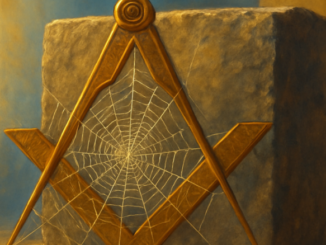
Why would a sacred book name an entire chapter after a spider? It seems like a strange choice — until you realize that this small creature carries a powerful lesson about the fragility of our inner constructions. In this twenty-ninth installment of our series exploring the Quran through a Masonic lens, we turn to Surah Al-Ankabut — The Spider — and pose the questions every seeker of truth should be willing to ask. What Does This Surah Actually Tell Us? Surah Al-Ankabut, the twenty-ninth chapter of the Quran, opens with a direct challenge. It confronts the idea that it is enough to simply declare, “I believe,” without that belief ever being tested. True spiritual growth, this text teaches, only emerges when we pass through fire. The trials of life are not punishments — they are tests that reveal what truly lives in our hearts. The central image of the spider appears later in the surah, when it speaks of those who seek protectors apart from ultimate truth. Their construction is compared to the web of a spider: the frailest of all houses. A web that a single sweep of the hand can destroy. This is not a condemnation of the […]

Vrijmetselarij - De Romeinen in de Koran: lessen over vergankelijkheid en hoop
Islam

The Romans in the Quran: Lessons on Impermanence and Hope

Imagine living in the seventh century and hearing that the mighty Byzantine Empire has suffered a crushing defeat at the hands of the Persians. The world as you knew it seems to teeter on the edge. Then a text appears — one that not only offers consolation but makes a remarkable prediction: within a few years, the tide will turn. This is the essence of Surah Ar-Rum, the thirtieth chapter of the Quran, which deals with the Romans. Today, we explore this text through two lenses: that of the faithful Muslim and that of the seeking Freemason. What can both perspectives teach us about impermanence, resilience, and spiritual growth? The Historical Context of Surah Ar-Rum Surah Ar-Rum opens with a reference to a concrete historical event: the defeat of the Byzantines — referred to in the Islamic tradition as “the Romans” — by the Persian Empire around 614 CE. The verses speak of a victory that will follow within “a few years.” Historically, this prediction proved accurate when Emperor Heraclius turned the tide and defeated the Persians in 627 CE. For believers, this is a sign of divine knowledge; for historians, it is a fascinating example of prophetic literature intersecting […]

Vrijmetselarij - De Verhalen: Mozes' reis als spiegel voor spirituele groei
Islam

The Stories: Moses’ Journey as a Mirror for Spiritual Growth

In the year 622 CE, a small group of believers fled the city of Mecca to build a new life in Medina. This hijra — or emigration — not only marked the beginning of the Islamic calendar but also echoed a far more ancient narrative: the flight of Moses from Egypt. The twenty-eighth chapter of the Quran, known as Al-Qasas or “The Stories,” retells this primordial account and, in doing so, reveals timeless lessons about exile, inner transformation, and the return to light. For Freemasons, who are themselves well acquainted with symbolic journeys and moral development, this text offers striking and illuminating parallels. The Historical Context of The Stories The Stories was revealed in Mecca during a period when the early Muslim community faced persecution and oppression. The Prophet Muhammad and his followers found themselves in circumstances remarkably similar to those of Moses and the Israelites under Pharaoh’s rule. This parallel was no coincidence. The chapter opens with the letters Ta Sin Mim — mysterious letter combinations whose meaning remains a subject of contemplation to this day. The text then describes how Moses grew up in the court of his oppressor, how he fled to Midian, and how he ultimately […]

Vrijmetselarij - Luqman uit de Koran: wijze lessen voor het dagelijks leven
Islam

Luqman from the Quran: Wise Lessons for Everyday Living

Picture a father taking his son on a walk, sharing life’s most important lessons step by step. No abstract philosophy — just concrete, practical guidance for living a virtuous life. This is precisely what we find in the thirty-first chapter of the Quran, Surah Luqman. For Freemasons, who place personal growth and moral development at the heart of their work, this ancient text contains remarkably familiar insights that remain directly applicable to daily life. Who Was Luqman and Why Does His Wisdom Matter? In Islamic tradition, Luqman is regarded as a wise man — possibly an Ethiopian healer or judge — who lived around the time of King David. Unlike the prophets, he received no divine revelation. Instead, he was endowed with practical wisdom. This makes his position uniquely compelling: he stands closer to the ordinary person who arrives at insight through reflection and lived experience. For the Freemason, this is a familiar idea. Lodge work is not about receiving absolute truths handed down from above. It is about independently seeking light and developing understanding one step at a time. Luqman embodies this journey of self-directed learning, making him a figure that resonates deeply across traditions. The surah contains thirty-nine […]

Symbolic representation of prostration connecting Islamic prayer and Masonic reflection
Islam

The Prostration: Islamic Surrender and Masonic Inwardness

When a Muslim bows in prayer, the forehead touches the ground in an act of complete surrender. When a Freemason enters the lodge, the outside world falls away and an inner journey begins. At first glance, these two acts seem to have little in common. But look deeper, and a shared essence emerges: the willingness to diminish one’s own ego in service of something greater. In this article, we explore Surah 32 of the Quran — titled The Prostration — and place its message alongside the spiritual practice of Freemasonry. The Heart of Surah 32: The Prostration Surah 32 is one of the Meccan revelations and consists of thirty verses. Its title refers to verse 15, which describes how believers prostrate themselves in worship when they recognize the signs of their Creator. The surah opens with an affirmation that the Quran is, without doubt, from the Lord of all worlds, and it calls the reader to reflect on the creation of the heavens and the earth, on time, and on the human soul. At its center lies the theme of recognition. The person who perceives divine signs does not bow out of compulsion but out of inner conviction. It is […]

An ant colony symbolizing wisdom and brotherhood in Freemasonry
Islam

Surah The Ants: Wisdom in the Small for Freemasons

What if the greatest wisdom is not found in the stars or in the writings of kings, but in the organized activity of an anthill? It is a thought that feels both strange and familiar to anyone engaged in the inner search for light. Surah An-Naml — The Ants — the twenty-seventh chapter of the Quran, invites us into a paradox: that true greatness resides in the small, and that profound insight sometimes whispers from the most inconspicuous of places. For Freemasons, who are accustomed to reading the world as a book full of hidden meanings, this surah opens a window onto a spirituality that resonates deeply with their own quest. The Paradox of the Insignificant Surah The Ants takes its name from a seemingly incidental detail: a passage in which the Prophet Suleiman — the biblical Solomon — passes by an ant colony. One ant warns her fellow ants to take shelter, lest they be crushed beneath Solomon’s advancing army. Solomon, who according to tradition understood the language of animals, smiles and thanks God for this gift. Here the reader encounters something remarkable. Why would an entire chapter be named after this tiny creature? Why not after Solomon himself, […]

Open Quran with Masonic square and compasses symbolizing poetry and truth
Islam

The Poets in the Quran: Poetry as a Mirror of the Soul

What is a word truly worth? And when does poetry transcend mere sound and rhythm to touch something deeper within us? These are questions that have occupied poets and seekers of truth for centuries. In the twenty-sixth surah of the Quran, known as The Poets, this very tension is explored with striking clarity. The text invites reflection on the responsibility we carry when we speak, write, or create. For Freemasons — who place the spoken word and inner growth at the heart of their practice — this surah opens a remarkable window onto spirituality. What Does This Surah Actually Tell Us? Surah 26, Ash-Shu’ara (The Poets), is one of the longer chapters in the Quran. It recounts the stories of prophets who were tasked with delivering their message to unwilling peoples. Moses, Abraham, Noah, and other figures each appear in turn. The pattern is always the same: a messenger speaks truth, only to be rejected by people clinging to their old ways and inherited patterns. It is only at the very end of the surah that the text turns its attention specifically to the poets themselves — and this is where a fascinating tension arises. The Quran warns against poets […]

Candle illuminating an open book in a Masonic lodge symbolizing discernment
Islam

The Criterion: Surah Al-Furqan and Masonic Discernment

A candle flickers in the silence of the lodge. A Freemason opens an ancient book and reads words about light separating darkness, about truth distinguishing itself from illusion. For a brief moment, everything falls into place: this power of discernment — this ability to see clearly — is precisely what he seeks within these walls. In the twenty-fifth Surah of the Quran, known as Al-Furqan or The Criterion, we encounter a theme that runs through all spiritual traditions and resonates deeply with the inner journey of the Freemason. The Heart of The Criterion Surah Al-Furqan takes its name from the Arabic word that denotes the ability to separate truth from falsehood, good from evil, light from darkness. The Surah opens with praise for the Creator who bestowed this power of discernment upon humanity as a gift. This is no trivial matter: the capacity to truly distinguish what is true and good forms the foundation of every spiritual quest. In the Islamic tradition, this criterion refers to divine revelation itself — the standards by which a person can determine the course of their life. But its meaning reaches far beyond any single religious context. At its core lies a universal human […]

A quiet Quaker meeting house interior symbolizing silence and spiritual reflection
Quakers

The Quakers: Origins and Spiritual Roots for Freemasons

Imagine sitting in a bare room with no priest, no liturgy, no outward display of any kind. You wait in silence until someone is moved to speak — or no one speaks at all, and the silence itself becomes the message. This experience, which has transformed millions of lives across the centuries, began in seventeenth-century England with a shoemaker’s apprentice who refused to remove his hat for any earthly authority. The Society of Friends, known internationally as the Quakers, offers a surprisingly practical approach to spirituality that resonates deeply with Freemasons. A Revolutionary Beginning in Turbulent Times George Fox, born in 1624 in Leicestershire, grew up in an England torn apart by religious disputes and civil war. As a young man, he wandered for years in search of spiritual answers, but no preacher or theologian could satisfy his deepest questions. In 1647, he experienced what he would later describe as a moment of revelation: there existed an inner light in every human being that granted direct access to divine truth — without the mediation of priests or sacraments. This insight was explosive in an era when religious authority was literally a matter of life and death. Fox began to preach […]

Symbolic lamp in a niche representing the Light Verse and Masonic illumination
Islam

Light in the Quran: Surah An-Nur and Freemasonry

Have you ever stood before a candle in a darkened room and wondered what light truly means — beyond the mere physical phenomenon? Across spiritual traditions, light serves as a powerful symbol of truth, knowledge, and divine presence. The twenty-fourth chapter of the Quran bears the name An-Nur, meaning The Light, and contains one of the most poetic and mystical passages in Islamic scripture. For Freemasons, who ritually journey from darkness into light, this surah offers a surprising sense of recognition and rich material for reflection. The Heart of Surah An-Nur Surah An-Nur is the twenty-fourth chapter of the Quran and consists of sixty-four verses. While its content ranges from social legislation to spiritual elevation, the surah owes its name to the celebrated Light Verse — a passage that has inspired mystics, philosophers, and artists for centuries: “God is the light of the heavens and the earth. His light is as a niche in which there is a lamp; the lamp is in a glass; the glass is like a radiant star, kindled from a blessed olive tree.” This imagery invites deep contemplation on the nature of divine presence and human consciousness. The surah was revealed in Medina during a […]

Open Quran beside Masonic square and compasses symbolizing shared spiritual wisdom
Islam

Surah Al-Mu’minun: Lessons for Freemasons’ Spiritual Growth

Standing before the mirror each morning, you might ask yourself: am I truly living according to my own values? It is a question people have posed for centuries, regardless of background or tradition. The twenty-third surah of the Quran, known as Al-Mu’minun — The Believers — opens with a remarkable description of what sincere spirituality looks like in practice. This text from the Islamic tradition offers surprisingly concrete guidance that resonates with Freemasonry’s enduring quest for moral refinement and inner growth. The Heart of Surah Al-Mu’minun Surah Al-Mu’minun was revealed in Mecca and consists of 118 verses. It opens directly with the qualities of believers who will succeed in life. What stands out is how tangible these qualities are. The surah names specific actions: humility in prayer, avoiding idle talk, keeping promises, and safeguarding one’s integrity. These are not lofty ideals that feel out of reach — they are daily choices available to every human being. The surah continues with stories of prophets who called their communities to reflection. Names such as Noah and Moses appear alongside references to creation itself as a sign of a greater whole. A central theme keeps returning: true spirituality reveals itself not in words […]

Pilgrims in white garments symbolizing the inner journey of Freemasonry
Islam

Pilgrimage as Inner Journey: Lessons from Surah Al-Hajj

Imagine standing at the threshold of a journey that will transform your entire being. You leave behind status, comfort, and familiar habits. You join thousands of others pursuing the same goal, dressed in simple white garments that erase all outward distinctions. This is the essence of pilgrimage as described in Surah Al-Hajj, the twenty-second chapter of the Quran. And remarkably, this description resonates with something every Freemason recognizes: the conscious decision to embark on an inner journey that changes you forever. What Surah Al-Hajj Teaches Us About Transformation Surah Al-Hajj, named after the great pilgrimage to Mecca, reaches far beyond a physical journey. The text describes how pilgrims shed their ego, surrender to something greater than themselves, and return as changed individuals. The surah opens with a powerful reminder of the transience of earthly existence and calls for humility. This is not abstract theology — it is a concrete call to action. The pilgrimage requires you to literally leave your daily identity behind. No expensive clothing, no status symbols, no distinction between rich and poor. Everyone wears the same simple white garments. This equality is not a symbolic gesture but a profound practice that forces you to see yourself without […]

Ancient prophets symbolizing the spiritual chain in Surah 21 and Freemasonry
Islam

The Prophets in the Quran: Surah 21 and Freemasonry

What do Abraham, Moses, David, and Solomon have in common? According to Surah 21 of the Quran — titled The Prophets — they all share the same spiritual core: a devotion to truth, justice, and reverence for the divine. For a Freemason, this connecting thread raises fascinating questions. How do the ancient prophetic traditions relate to the pursuit of light and inner growth that lies at the heart of the lodge? What Does Surah 21 Actually Tell Us? Surah 21, consisting of 112 verses, presents a remarkable panorama of prophetic figures. From Noah’s deliverance from the flood to Solomon’s wisdom, from Job’s patience to Jonah’s liberation from the darkness of the whale — the scope is vast. But what makes this chapter truly distinctive is that the Quran does not present these figures as isolated stories. They form a chain, an unbroken line of individuals who all carried the same message: live righteously, seek the truth, and recognize that something greater exists beyond the individual self. This idea of continuity is crucial. The prophets do not stand in opposition to one another — they stand side by side. They are like building blocks of the same spiritual edifice. Abraham is […]

Stadium crowd with fireworks illustrating collective behavior and responsibility
Spiritual Traditions

Fireworks in Stadiums: Lessons on Collective Behavior

Starting this season, professional football matches in the Netherlands will be permanently abandoned whenever supporters throw fireworks onto the pitch. This drastic measure marks a turning point in how society deals with collective behavior in public spaces. But behind the headlines lies a far deeper question — one that philosophers and spiritual thinkers have grappled with for centuries: how do individual impulses relate to the greater whole, and what does it truly mean to be part of a community? The Stadium as a Mirror of Society Even in Roman times, the stadium served as a reflection of broader society. Seneca, the Stoic philosopher of the first century AD, wrote extensively about how crowds in amphitheaters took on a character entirely separate from the individuals who composed them. He warned that people in large groups tend to abandon reason and allow themselves to be swept up by collective emotion. This observation remains strikingly relevant today. When tens of thousands of supporters gather, an energy emerges that can be both uplifting and destructive. The throwing of fireworks is one expression of this energy — one that has now escalated to the point where football authorities felt compelled to take drastic action. The […]

Burning bush in the desert symbolizing spiritual illumination and Masonic light
Islam

Surah Ta-Ha: The Inner Journey of Moses and the Seeker

There are moments when life takes an unexpected turn — an encounter, an insight, an experience you never planned for, yet one that changes everything. Surah Ta-Ha, the twentieth chapter of the Quran, tells the story of just such a turning point in the life of the prophet Moses. And remarkably, this ancient narrative touches on the very themes that Freemasons have contemplated for centuries: the calling that finds you when you are not looking for it, the fire that illuminates without consuming, and the courage to embark on a journey whose destination remains unknown. The Mysterious Opening Letters Ta-Ha. Two Arabic letters that give the surah its name, yet whose meaning no one knows with certainty. Some scholars interpret them as a form of address, others as a reference to hidden wisdom. It is precisely this mystery that makes the opening so powerful. From the very first syllables, you are invited to look beyond the surface, to search for meaning that is not immediately visible. For Freemasons, this is a familiar principle. In the lodge, we work with symbols that carry no single fixed meaning — symbols that, through their very ambiguity, invite reflection. Just as the rough ashlar […]

Ancient temple entrance facing east symbolizing spiritual light and purity
Islam

Maryam in the Quran: Spiritual Purity and Inner Light

What can a Freemason learn from a woman who received a divine message in complete surrender? Surah Maryam, the nineteenth chapter of the Quran, tells the story of Mary in a way that resonates deeply with universal spiritual themes. This is a story that invites contemplation far beyond the boundaries of Islamic tradition — and one that speaks directly to the heart of the Masonic journey. Why Does an Entire Chapter Bear Her Name? In the Quran, Maryam is the only woman who has an entire chapter named after her. This is no coincidence. The Islamic tradition regards her as the ultimate embodiment of purity, devotion, and trust in the unseen. Remarkably, her story does not begin with her at all, but with the prophet Zechariah, who prays for a successor. This immediately establishes a theme that runs throughout the entire surah: the longing for continuity, for passing the light on to the next generation. For Freemasons, this strikes a familiar chord. The idea that knowledge and wisdom are transmitted from generation to generation lies at the very core of the fraternal ideal. Zechariah does not pray for wealth or power — he prays for someone who can continue his […]

Ancient cave entrance bathed in light symbolizing spiritual transformation
Islam

The Cave as Spiritual Refuge: Surah Al-Kahf and Freemasonry

In the year 250 AD, according to an ancient tradition, seven young men fled the Roman city of Ephesus and sought refuge in a mountain cave. They were escaping religious persecution, but what they found there would transcend the centuries — a story of faith, steadfastness, and divine protection that continues to inspire millions to this day. This story lies at the heart of Surah Al-Kahf, the eighteenth chapter of the Quran, known in English simply as The Cave. For Freemasons, who have long been drawn to the spiritual traditions of humanity, this surah offers surprisingly rich connections. The Historical Roots of the Cave Story The legend of the sleepers in the cave, known in Arabic as Ashab al-Kahf, has deep roots in the late ancient world. The story had already been circulating in Christian sources since the fifth century and was committed to writing by the Syriac bishop Jacob of Serugh around 500 AD. The young men — later venerated by Christians as the Seven Sleepers of Ephesus — are said to have slept for more than three hundred years in their cave, protected by the hand of God, only to awaken in a world that had finally embraced […]