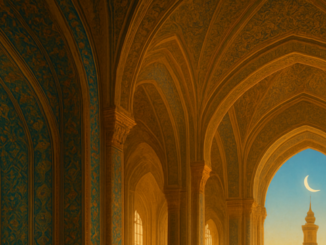
Ancient rock-carved dwellings symbolizing spiritual lessons in Freemasonry
Islam

The Rock Formation: Spiritual Lessons from the Quran’s 15th Surah

Rock. A word that evokes steadfastness, protection, something that endures the test of time. In the fifteenth surah of the Quran, known as Al-Hijr or The Rock Formation, we encounter the story of a people who carved their homes directly into stone. What does this image mean for the devout Muslim? And what can the Freemason — accustomed to building symbolically — recognize in this ancient tale of stone and spirituality? A Warning Carved in Stone: The Believer’s Perspective For the Muslim, Surah Al-Hijr is a text of layered meaning. The name refers to a historical site in the northwest of present-day Saudi Arabia, where the people of Thamud once lived. This civilization had been gifted with the ability to carve magnificent dwellings out of solid rock. Their technical mastery was legendary. And yet they perished — not from a lack of skill, but from spiritual blindness. The surah tells how the prophet Salih warned his people, but they refused to listen. They placed their trust in material achievements, in the seeming indestructibility of their rock-hewn homes. The message is clear: no human construction, however impressive, offers true protection when the inner foundation is missing. The believer reads here a […]

Thunder and lightning over a Masonic temple symbolizing spiritual awakening
Islam

Thunder in the Quran: Spiritual Echoes for Freemasons

What if thunder is not merely a meteorological event, but a voice speaking to those willing to listen? The thirteenth chapter of the Quran, known as Ar-Ra’d — The Thunder — presents us with a paradox that strikes at the heart of every spiritual quest: how can something that instills fear simultaneously be a sign of grace? This question resonates deeply within Masonic philosophy, where confronting our deepest uncertainties is often the very first step toward genuine insight. A Paradox as a Point of Departure The Thunder opens with a powerful assertion: the cosmic phenomena surrounding us are not random occurrences, but signs for those who reflect. The thunder rolling across the sky, the lightning illuminating the night, the rain awakening barren earth — according to this Quranic chapter, all of these are invitations to contemplation. But here the paradox emerges: the same thunder that commands awe also inspires fear. The same force that destroys also brings life. This ambiguity is not a contradiction to be resolved, but a wisdom to be embraced. The Freemason recognizes this pattern immediately. In the lodge, the candidate is confronted with darkness before light is bestowed. The rough stone must be shaped with tools […]

Ancient desert battlefield symbolizing the inner struggle in Freemasonry
Islam

The Spoils of War: From Badr to the Inner Struggle

In the year 624 CE, a decisive battle took place in the desert near Badr. A small band of followers of the Prophet Muhammad faced a far superior force from Mecca. The unexpected victory that followed — and especially the division of the spoils — gave rise to fundamental questions about possession, community, and surrender. The eighth chapter of the Quran, known as Al-Anfal or The Spoils of War, addresses this event. But beneath the historical narrative lies a deeper layer: a spiritual teaching about releasing the ego and placing trust in a higher order. For Freemasons, who likewise pursue moral growth and fraternal unity, this ancient text offers remarkably familiar ground. The Historical Context of Badr The Battle of Badr was far more than a military confrontation. It was a turning point in early Islamic history — a moment when a persecuted community stood its ground against its oppressors for the first time. The young Muslim community in Medina numbered only around three hundred men, while the Meccan army fielded nearly a thousand soldiers. The victory was experienced by the faithful as divine assistance, as proof that devotion to a higher ideal is stronger than numerical superiority. After the […]

Freemason lodge interior symbolizing spiritual homecoming and commitment
Spiritual Traditions

Coming Home as a Spiritual Choice: Lessons from Racing

In a world that glorifies mobility — where success is measured by the next step, the bigger opportunity, or the better offer — the declaration “this is my home” sounds almost rebellious. When a world champion in motorsport chooses to stay where he was shaped, it touches something far deeper than sporting sentiment. It touches an ancient spiritual principle that Freemasons have understood for centuries: the power of conscious commitment. The Historical Roots of Loyalty to a Community The history of Western spirituality is filled with examples of individuals who deliberately chose commitment over unlimited freedom. In the medieval building lodges — the direct predecessors of modern Freemasonry — loyalty to one’s workshop was not a limitation but a prerequisite for growth. A journeyman who drifted from lodge to lodge without ever settling lacked the depth that only sustained commitment can provide. The great cathedrals of Europe were not built by roaming adventurers but by generations of craftsmen who dedicated their entire lives to a single structure. Johann Wolfgang von Goethe, himself a Freemason and author of the celebrated novel about Wilhelm Meister’s formative years, described this principle with eloquence. For Goethe, true freedom was not the ability to go […]

Mountain ridge symbolizing liminal space between light and shadow in Freemasonry
Islam

The Heights: Liminal Space as a Spiritual Lesson

Imagine standing on a mountain ridge. On one side, a vast open valley stretches before you; on the other, a deep abyss drops away into shadow. You find yourself precisely on the boundary — not here, not there, but somewhere in between. That feeling of in-betweenness, of occupying a space where you haven’t yet arrived but can no longer turn back, is exactly what the seventh surah of the Quran speaks about. And it is an image that carries deep resonance within the traditions of Freemasonry. What Does This Surah Tell Us? The seventh surah of the Quran, known in Arabic as one of the longer chapters, bears a name that refers to elevated places or heights — Al-A’raf. Its central image is a liminal zone: a place where souls reside who do not immediately belong among the blessed, yet are not counted among those who have gone astray. These people on the heights can see both sides. They observe, they wait, and they hope. The surah also recounts the stories of prophets who called their communities toward righteousness. You read about Adam, Noah, and Moses — about the eternal struggle between truth and self-deception. But what makes this text […]

Open Quran showing Al-Fatiha with Masonic square and compass symbol
Islam

The Opening of the Quran: Spiritual Lessons for Freemasons

In the seventh century, somewhere on the rocky plains of the Arabian Peninsula, a prayer was composed that has since been spoken billions of times each day. Al-Fatiha — The Opening — is the first chapter of the Quran. It consists of only seven verses, yet it forms the beating heart of Islamic worship. This brief text carries a universal spiritual message that reaches far beyond the boundaries of any single religion. For Freemasons, who study sacred texts from all traditions in their pursuit of light and moral growth, this opening chapter offers striking parallels with their own journey. A Historic Breakthrough in Spiritual Language When the Prophet Muhammad received his first revelations in the seventh century, the Arabian world was in the grip of a spiritual struggle. Tribal gods competed for attention while monotheistic influences from Christianity and Judaism slowly seeped into the region. The Opening emerged in this context as a radically simple prayer: no complex rituals, no priestly intermediaries — just a direct invocation of the One. The prayer begins with the words “In the name of God, the Most Gracious, the Most Merciful” and closes with a supplication for guidance upon the straight path. This structure […]

Open Torah scroll with Masonic symbols representing creation and light
Judaism

Genesis Through Jewish Eyes: Creation as a Practical Life Lesson

Imagine waking up every morning with the freedom to begin again. Imagine that your past does not define who you are today — that you carry within you the power to recreate yourself. This is precisely what the first book of the Torah, Bereshit, teaches us. The Hebrew word means literally ‘in the beginning,’ and it opens a narrative that is not merely about the creation of the world, but about your own capacity for renewal. In this first article of our series on sacred texts through a Masonic lens, we explore how this ancient Jewish wisdom translates into the practical art of living. The Power of the First Word In Jewish tradition, Bereshit is far more than a historical account. The medieval commentator Rashi noted that the Torah does not open with laws or commandments, but with a creation story — and this is no accident. It tells us that before we can act, we must first understand where we come from and what our place is within the greater whole. Creation unfolds not randomly but with order, intention, and the deliberate separation of light from darkness. For Freemasons, this resonates deeply. Every lodge meeting begins with the lighting […]

Dramatic sky with lightning and sunlight symbolizing Masonic inner balance
Spiritual Traditions

Heat and Storms: What Weather Extremes Teach About Balance

Scorching daytime heat, violent thunderstorms, and nights that finally bring relief — it’s a weather pattern most of us simply endure. We crank up the air conditioning, flee from the first rumble of thunder, and breathe a sigh of relief when the cool air arrives. But what if we looked at this cycle not merely as a meteorological event, but as a mirror for our inner lives? In Freemasonry, nature has served as a teacher for centuries, and extreme weather offers a perfect opportunity to put that ancient wisdom into practice. Heat as a Test of Patience We all know the feeling: once temperatures climb past ninety degrees, we become irritable, our patience thins, and minor annoyances suddenly feel monumental. Extreme heat has a way of testing character like few other things can. In Freemasonry, we speak of working the rough ashlar — the slow, deliberate process of smoothing away our sharp edges. Intense heat acts as a kind of trial by fire, exposing exactly those unfinished corners we’d rather not see. Next time the temperature soars, pay conscious attention to how you respond. Do you snap at your partner? Lose your composure in the checkout line? These moments aren’t […]

Masonic temple symbolism representing unity and the building of community
Christianity

Ephesians and Freemasonry: Building Unity in Practice

You’ve been there before: sitting in a meeting, a team, or a community where everyone has the best of intentions, yet genuine connection never materializes. Everyone talks, but nobody builds. The Epistle to the Ephesians, written in the first century, speaks directly to this challenge. And remarkably, this ancient text resonates deeply with what Freemasons have been striving to do for centuries — building a community that goes far beyond words alone. The Heart of the Epistle to the Ephesians The Epistle to the Ephesians, traditionally attributed to the Apostle Paul, was addressed to the faith community in Ephesus, a thriving port city in what is now modern-day Turkey. Unlike some other letters in the New Testament, this epistle doesn’t revolve around specific conflicts or misconduct. Its central theme is the unity of all believers, regardless of background. The author employs a powerful metaphor that any Freemason will immediately recognize: the community as a building, a temple under construction, with Christ as the cornerstone. What makes this letter truly remarkable is its emphasis on the concrete and practical. Rather than offering abstract theological musings, it provides actionable guidance for daily life. How do you handle anger? How do you speak […]

Broken chains and Masonic symbols representing spiritual freedom and growth
Christianity

Galatians and Freedom: When Chains Symbolically Fall

You may know the feeling: you follow every rule, meet every expectation, and yet something inside you feels imprisoned. As though you’re doing exactly what you’re supposed to, but somewhere along the way you’ve stopped hearing your own voice. The Letter to the Galatians, written by the Apostle Paul around the year 50 CE, speaks directly to that tension. It is a text about freedom — not the freedom to do whatever you please, but the freedom to become who you truly are. A Letter Against Regression The Galatians were communities in Asia Minor that Paul had previously visited. After his departure, other teachers arrived insisting that, in addition to their new convictions, followers must also observe the old Mosaic laws in order to be truly redeemed. Paul responds with fire. For him, this is no theological footnote — it is a fundamental issue. If you have found freedom, why would you voluntarily return to a system of obligations that never transformed your inner self? This tension between outward form and inward transformation is something every sincere seeker recognizes. You can follow every ritual, recite every word, know every symbol, and still remain hollow inside. The question Paul puts to […]

Cyclist making a split-second decision symbolizing inner knowing and Freemasonry
Spiritual Traditions

The Wrong Bet: What Cycling Teaches Us About Inner Knowing

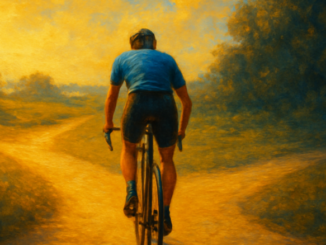
In a fraction of a second, a cyclist makes a decision. He follows his rival, convinced that rider is about to win. But reality unfolds differently. The gamble turns out to be wrong. This moment of human fallibility at the highest level of sport raises a deeper question: how do our snap judgments relate to genuine inner knowing? And what can two very different perspectives on intuition and spirituality teach us about the difference? The Outsider’s Perspective: Intuition as Tactics For most spectators watching a cycling sprint, the final dash to the finish line is a matter of raw physical power and clever tactics. The rider sitting in second position reads his opponents’ movements — shoulder shifts, breathing patterns, the subtle redistribution of weight. From this vantage point, intuition is nothing more than lightning-fast pattern recognition, honed by years of experience and training. When a rider later admits he thought someone else was going to win and made his move accordingly, we interpret it as a miscalculation. A tactical error in a high-speed chess game. The outside world judges: he should have paid closer attention, picked up on different signals. The conversation revolves around technique — what went wrong in […]

Symbolic representation of the 33rd degree in Scottish Rite Freemasonry
Spiritual Traditions

The 33rd Degree: Spiritual Growth in Everyday Practice

Few things in Freemasonry spark as much curiosity as the 33rd degree. Some see it as the ultimate secret, others as a mystical status reserved for a chosen few. But what if this highest step of the Scottish Rite is not merely a ceremonial pinnacle — but an invitation to make spiritual growth tangible in your everyday life? In this article, we explore how the principles behind this degree can help you become a better version of yourself, starting today. Why the 33rd Degree Captures the Imagination The 33rd degree is the highest degree within the Scottish Rite, one of the most prominent branches of Freemasonry. The number thirty-three carries a special resonance — it evokes ideas of life stages, symbolic completion, and timeless wisdom. Yet contrary to what movies and conspiracy theories might suggest, this degree has nothing to do with secret power or hidden knowledge. It is about service, wisdom, and a willingness to help others grow. In practice, the 33rd degree is conferred upon Freemasons who have dedicated years of effort to their brethren and their community. It is not a reward earned through examinations or tests. It is recognition of a way of life. And that […]

Symbolic representation of agnosticism and Freemasonry paths converging
Freemasonry & Society

Agnosticism and Freemasonry: Two Paths Toward the Unknowable

Agnosticism is often understood as a position of not-knowing — a philosophical stance that acknowledges certain questions about existence may be unanswerable. Freemasonry, on the other hand, is sometimes perceived as a fraternity defined by its rituals and symbols. But what happens when we place these two worlds side by side? Both share a fundamental recognition: that the human mind cannot fathom everything, and that within that very recognition lies a particular kind of wisdom. In this article, we explore how the agnostic outlook and Masonic philosophy mirror and enrich each other. The Agnostic Perspective: Living With Uncertainty The agnostic does not claim to know whether a higher power exists. This is not a weakness or a lack of conviction — it is a deliberate intellectual position. The term was coined in the nineteenth century by the British biologist Thomas Henry Huxley, who wanted to express that certain metaphysical questions lie beyond the reach of human knowledge. The agnostic stance demands humility: the ability to say “I don’t know” without abandoning the search for meaning. In modern society, agnosticism is frequently confused with indifference or atheism. Nothing could be further from the truth. Where the atheist asserts that no god […]

Masonic gavel on a workbench symbolizing the cycle of growth and renewal
Christianity

Judges and the Cycle of Falling and Rising: Symbols of Growth

A hammer rests on the workbench. It is motionless, yet it carries within it the potential for both creation and destruction. In much the same way, the Book of Judges lies before us — a collection of stories about leaders who rise and vanish, about a people who fail and recover, fail and recover again. What does this ancient text tell us about the human soul? And how does the symbolism of this seventh book of the Old Testament mirror the path that every Freemason walks? The Cycle as an Archetypal Pattern The Book of Judges does not describe a linear history — it traces a spiral. The people turn away from their path, fall into oppression, cry out for help, and a leader emerges to deliver them. After a period of peace, the cycle begins anew. This pattern repeats itself twelve times, like a mantra carved into the very fabric of the text. For the Freemason, this cycle is deeply familiar. The rough ashlar is not shaped into a perfect cube in a single stroke. It is a process of failure and correction, of straying and returning to center. The cycle in Judges is not a sign of weakness […]

Symbolic river crossing representing Masonic thresholds and spiritual growth
Christianity

The Book of Joshua: Crossing Thresholds as a Symbol of Growth

There are moments in life when you stand before a boundary you have never crossed. It might be a river, a doorway, or simply a decision that will change everything. The Book of Joshua in the Old Testament describes exactly such a moment: the people of Israel stand on the banks of the Jordan, ready to enter the Promised Land. But beneath this narrative of conquest and settlement lies a deeper layer of symbolism that still resonates more than three thousand years later. For Freemasons, this sixth book of the Hebrew Bible contains strikingly familiar themes about thresholds, courage, and the ongoing journey toward inner growth. The River as a Symbol of Transition The Jordan is no ordinary river in the story of Joshua. It serves as the dividing line between wilderness and fertile land, between wandering and arrival. Crossing it marks an irreversible change — there is no going back. The image of a river as a threshold appears across countless spiritual traditions. Water represents purification, but also the unknown — something fluid that has not yet taken solid form. In Freemasonry, the threshold plays an equally significant role. Entering the lodge is not merely stepping through a doorway. […]

Symbolic light illuminating Masonic and Gnostic spiritual traditions
Spiritual Traditions

What Connects Freemasonry and Gnosis? Exploring Inner Knowledge

When we explore the connection between Freemasonry and Gnostic traditions, we step into territory where ancient questions come alive once more. What does it truly mean to know? And how does knowing differ from believing? These are questions that searching minds have been asking since the early centuries of the Common Era — and they still echo through the lodges of today. The relationship between these two traditions runs deeper than most people realize, and it has something genuinely valuable to offer us in the present moment. Why Do People Compare Freemasonry with Gnostic Thought? It’s a fair question to start with, and the comparison doesn’t arise by accident. Both traditions emphasize that outward forms are merely carriers of deeper meaning. A Gnostic from antiquity would say that the material world is a veil behind which a higher reality is hidden. A Freemason speaks of symbols that only reveal their secrets when the gaze turns inward. In both cases, the personal inner journey stands at the center — not the blind acceptance of dogma. Yet the resemblance is subtler than it first appears. Gnosis, the Greek word for “knowledge,” refers to a direct, experiential form of knowing. It isn’t about […]

Vrijmetselarij - Freemasonry and Religion – A Bridge, Not a Wall
Spiritual Traditions

Freemasonry and Religion – A Bridge, Not a Wall

In a world where religion often draws dividing lines, Freemasonry offers something rare: a space where differences are not obstacles but invitations to dialogue. Freemasonry is not a religion. Nor is it a counter-movement. It is a centuries-old brotherhood where people — believers and non-believers alike — come together to work on themselves, their values, and their contribution to the world. This naturally raises questions. If Freemasonry isn’t a religion, why does spiritual symbolism play such a central role? And how can a community that prescribes no particular belief still be so profoundly meaningful and morally grounded? Let’s take a closer look at the unique relationship between Freemasonry and religion — and what it means for your personal development and ethical growth. No Dogma, But Genuine Depth Freemasonry makes no demands on your faith. Whether you are Christian, Muslim, Jewish, Hindu, humanist, or agnostic — as long as you believe in something greater than yourself, you are welcome. That “higher power” doesn’t need a name. What matters is that you recognize that humanity is not the center of everything, but part of a larger whole. There is no theological debate, no creed to recite, no prescribed path. Instead, Freemasonry offers […]

Buddhist meditation and Masonic symbols representing spiritual harmony
Religion

Buddhism and Freemasonry: A Shared Path to Inner Peace

Buddhism, with its emphasis on meditation and enlightenment, has steadily grown in popularity across the Western world. At the same time, Freemasonry continues to offer a unique framework for spiritual growth and self-discovery. While these two traditions differ significantly in origin, they share a remarkable devotion to introspection, ethical living, and personal development. For those drawn to both paths, the intersections between Buddhism and Freemasonry reveal a rich landscape of shared wisdom. Buddhism: The Way of Meditation and Wisdom Buddhism is more than a religion — it is a philosophy and way of life that encourages individuals to understand and transcend suffering. At its core lie foundational teachings such as the Eightfold Path, the Four Noble Truths, and the disciplined practice of meditation. These principles guide practitioners toward clarity, compassion, and ultimately, enlightenment. Buddhist temples and meditation centers around the world serve as sanctuaries for reflection and spiritual growth. The serene images of the Buddha, the fragrance of incense, and the resonant tones of singing bowls create environments that foster harmony and inner balance. For many seekers, Buddhism offers a practical, experience-based approach to understanding the mind and finding peace. Freemasonry: A Universal Spiritual Journey Freemasonry offers a symbolic path […]

Islamic geometric patterns alongside Masonic symbols representing shared spirituality
Religion

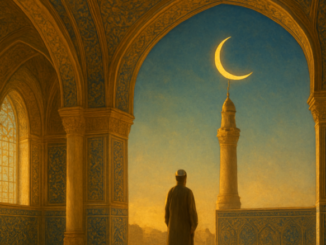
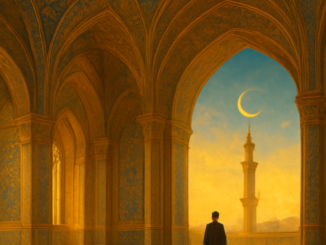
Islam and Freemasonry in the Netherlands: Ritual & Spirit

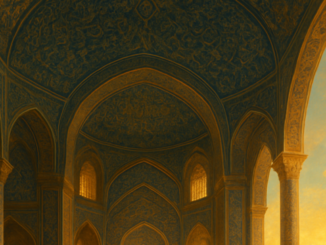
The Netherlands is a mosaic of cultures and religions, and Islam plays a prominent role in this diverse landscape. With over one million Muslims, the faith is deeply woven into Dutch society. At the same time, Freemasonry offers a non-dogmatic space for spiritual growth and moral reflection. How do these two traditions complement each other, and what can they learn from one another? Islam: A Way of Life Rich in Ritual Islam is far more than a religion — it is a complete way of life. Built on the Five Pillars — the declaration of faith, prayer, charity, fasting, and pilgrimage — Islam provides its followers with structure, purpose, and direction. The daily prayers (salat) and the annual observance of Ramadan instill discipline and deep devotion to God. Mosques serve as centers of both community and worship, spaces where spirituality and human connection come together. They are often adorned with intricate geometric patterns and calligraphy that are not merely beautiful but carry profound symbolic meaning — pointing toward the infinite nature of the divine. Freemasonry: A Space for Universal Truths While Freemasonry is not a religion, it shares notable parallels with spiritual traditions like Islam. Freemasons use rituals and symbolism […]