An hourglass sits on the table. The sand flows, undisturbed, from one globe to the other. At first glance, it shows us something obvious: the passing of time. But look longer, and you see more. The sand that falls does not return. The upper chamber empties; the lower one fills. What if this image is not just about time, but about how we relate to what passes, to what shapes us, and to the brothers and sisters who stand beside us as the sand falls? Michel de Montaigne wrote about exactly this tension in his essay on aging. And anyone who reads his words through the eyes of a Freemason will discover surprising resonances.
The Sand as Mirror: Montaigne’s View of Mortality
In Essay 57 of the first book of his famous Essays, Michel de Montaigne holds the passing of years up to the light. He does not write as a gloomy chronicler of decline, but as someone who looks honestly into the mirror. Montaigne observes, matter-of-factly, that age changes us — both physically and mentally. He sees no reason to glorify growing old, nor to despise it. Instead, he invites us to accept the process as an inseparable part of human existence.
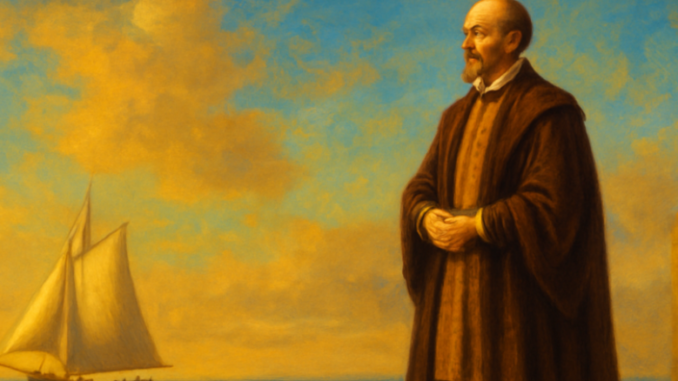
This attitude feels remarkably modern, yet it has ancient roots. Seneca and Marcus Aurelius — the Stoic thinkers Montaigne so admired — wrote extensively about the art of acceptance. The difference is that Montaigne writes in a radically personal way. He does not speak from within a doctrinal system but from the intimacy of his own experience. He explores, weighs, and doubts. It is precisely this approach that Freemasonry will deeply recognize.
Self-Reflection as Shared Ground
The heart of Freemasonry beats in the willingness to turn inward. The rough ashlar — that classic symbol of the unworked self — is not polished by someone else. That is labor every Mason must perform alone, with hammer and chisel, in silence and honesty. Montaigne did essentially the same thing, but with pen and paper. His essays are not finished arguments; they are the working stones of a mind that continually examines itself. He wrote not to convince others, but to know himself better.
When Montaigne writes about aging, he practices the most fundamental Masonic value there is: self-reflection. He looks at his own transformation without fleeing into nostalgia or vanity. That is precisely the courage asked of every brother and sister in the lodge — not the courage of the battlefield, but the quiet courage to face your own shortcomings and keep working on the stone regardless.
Anyone who looks honestly at their own mortality, as Montaigne did, performs the same inner labor that Freemasonry asks of its members: the courage to keep shaping the rough ashlar, even when the sand in the hourglass is already halfway through.
The Chain of Generations: Brotherhood Across Time
There is a deeper layer in Montaigne’s essay that touches on Freemasonry in a profound way. Aging is not only a personal experience — it places us in a chain. As we grow older, we become aware of the generations who came before us and the generations who will follow. Montaigne writes about his father, about the ages at which earlier generations died, about the relative brevity of his own lifespan. In doing so, he touches on a concept of great importance in Freemasonry: the fraternal chain.
In the lodge, younger and older members stand side by side. The experience of one enriches the insight of another. This connection is not casual. It reminds every Freemason that wisdom is not the property of one person or one era, but something that is passed down, shared, and continually rediscovered. Montaigne understood this intuitively. He read Plato, Aristotle, and Plutarch not as dead authorities, but as conversation partners. His essay on aging is, in essence, a dialogue with time itself — a dialogue that takes place in every lodge, each time a new member is initiated and an older member shares their experience.
Virtue as a Compass in a Changing Body
Montaigne makes a distinction in his essay that will feel familiar to Freemasons. The body changes, strength diminishes, but the inner self need not decay along with it. In fact, the loss of outward strength can be the very catalyst for digging deeper into what is truly valuable. This is exactly what Freemasonry means by the search for light — not the light of youthful energy or physical glory, but the light of knowledge, insight, and moral clarity.
The pursuit of virtue, in both traditions, is not a final destination but a continuous process. Montaigne would have regarded the word “perfection” with suspicion, because he knew the human tendency toward self-deception. But the aspiration toward moral improvement — toward a more honest, just, and conscious life — he shared fully with Masonic thought. The square and compasses are not tools for delivering a perfect edifice; they exist to give direction to the act of building itself.
What Both Traditions Share
When we place Montaigne’s philosophy alongside Masonic principles, several striking commonalities emerge. Both traditions value self-reflection as a daily practice rather than an abstract theory. Both embrace the willingness to accept impermanence without falling into cynicism. Both hold a view of life that prizes the process above the result. Both find meaning and growth through connection with others. And both are committed to seeking light, even — perhaps especially — when the shadows grow longer.
These are not superficial parallels. They point to a shared understanding of what it means to live a considered life. Montaigne never stood in a lodge, as far as we know, but his writing embodies the kind of honest, searching spirit that Freemasonry cultivates in its members. In that sense, his essays can be read as the work of a kindred soul — someone engaged in the same ancient labor of shaping the self.
Return now to that hourglass on the table. The sand is still flowing. But after reading Montaigne, and after stepping into the lodge, we see the image differently. The emptiness forming above is not loss — it is space. Space for insight, for connection, for the conversation we carry on with ourselves and with others. The fullness gathering below is not dead weight — it is experience, earned grain by grain, ready to be shared with those who will one day turn the glass again.
Copyright text & image: devrijmetselaar.nl
Texts are based on the ideas and content of the author of devrijmetselaar.nl, reviewed, corrected, and supplemented with the assistance of OpenAI. Images are created based on the ideas of the author of devrijmetselaar.nl using OpenAI/DALL-E.
Frequently Asked Questions
What is the connection between Montaigne's essay on aging and Freemasonry?
Montaigne's essay on aging resonates with Freemasonry through their shared emphasis on self-reflection and honest self-examination. Both encourage individuals to look inward without fleeing into nostalgia or vanity, accepting the inevitable changes that come with time as part of human existence. Montaigne practices this through his essays, while Freemasons symbolize it through the rough ashlar—the unworked stone that each Mason must polish through personal labor and honest introspection.
How does Montaigne approach the topic of aging differently from other philosophers?
Unlike Stoic thinkers such as Seneca and Marcus Aurelius, whom Montaigne admired, he does not speak from within a doctrinal system. Instead, Montaigne writes from the intimacy of his own personal experience, exploring, weighing, and doubting rather than presenting finished arguments. He observes matter-of-factly that aging changes us both physically and mentally, without glorifying it or despising it, inviting acceptance of aging as an inseparable part of human existence.
What does the rough ashlar symbolize in Freemasonry, and how does it relate to Montaigne's work?
The rough ashlar symbolizes the unworked self that each Mason must polish through their own labor, using hammer and chisel in silence and honesty—work that cannot be done by someone else. This mirrors Montaigne's approach of using his essays as working stones of the mind to continually examine himself. Both practices embody the fundamental Masonic value of self-reflection and the quiet courage required to face one's own shortcomings and continue the work of self-improvement.

Be the first to comment