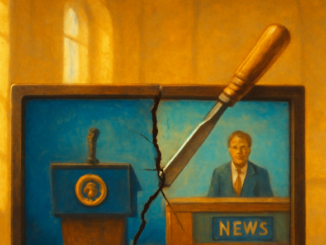
The headlines are alarming: artificial intelligence can now expose weaknesses in digital systems within thirty seconds, leading to catastrophic data breaches. We encrypt our passwords, fortify our networks, and build firewalls. But what about the vulnerabilities within ourselves? Behind every lock there is a key, behind every wall a crack. And it is precisely within that crack that an ancient insight cherished by Freemasons for centuries comes to life: only those who truly know their own vulnerabilities can genuinely build upon themselves.
The Crack in the Structure
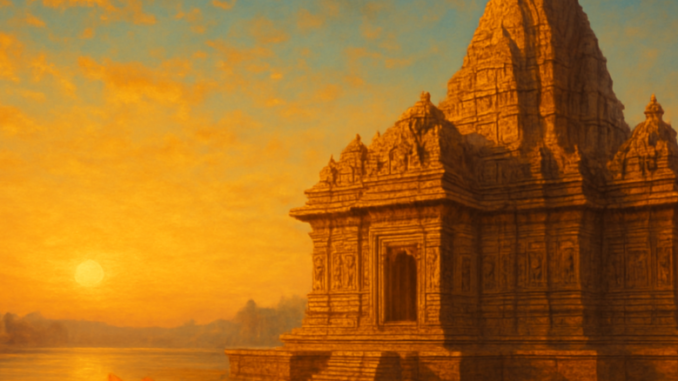
Imagine a massive stone building. From the outside it looks impenetrable — tight joints, deep foundations, solid craftsmanship. But somewhere, invisible to the naked eye, a hairline fracture runs through the mortar. A human inspector might take weeks to find it. An AI-driven automated system finds it in thirty seconds. That is precisely what cybersecurity researchers are reporting today: algorithms scan thousands of lines of code and pinpoint the weakness in the blink of an eye. The building still stands, but it is already compromised.
This image of the crack in the structure is no accidental metaphor. In Freemasonry, building is everything. The rough ashlar — unworked, irregular, full of imperfections — is the starting point of every personal journey. That stone is you. And just as an automated system relentlessly identifies the weakest point in a digital network, the Masonic path asks you to look honestly at your own fractures. Not to conceal them, but to understand them.
Vulnerability as a Gateway
In the digital world, a vulnerability is something to fear. A breach means loss — of data, of trust, of security. But in our inner world, the equation is entirely different. The Greek philosopher Socrates taught that the beginning of all wisdom lies in recognizing one’s own ignorance. His famous declaration that he only knew that he knew nothing was not an admission of weakness but a powerful act of self-knowledge. Marcus Aurelius, the Stoic emperor-philosopher, wrote extensively in his Meditations about his own shortcomings — not to diminish himself, but to see himself more clearly and act more wisely.
In Freemasonry, this attitude is woven into the ritual itself. Working the rough ashlar is not about creating a flawless surface. It is about recognizing the irregularities, feeling where the stone resists, and applying patience and craftsmanship precisely there. A person’s character is like that piece of stone: full of unique patterns, unexpected veins, and yes, weak spots. It is exactly those spots that demand our attention.
Anyone who lacks the courage to examine their own weaknesses builds a personality upon a foundation they do not know.
The Mirror No One Asks For
What artificial intelligence does when detecting data breaches is essentially mirroring. It holds up a merciless mirror to the digital infrastructure and declares: here is your flaw. That mirror is effective, but also impersonal. There is no judgment in it, no compassion, no context. It is pure analysis.
Freemasonry offers a different kind of mirror. In the lodge, a Brother or Sister meets like-minded seekers who are undertaking the same inner journey. The ritual creates a space where honesty becomes possible without condemnation. Where an algorithm merely points out the flaw, the Brotherhood also provides the warmth needed to work with that flaw constructively. Johann Wolfgang von Goethe, himself a Freemason, wrote that a person only truly comes to know himself in the mirror of others. That is what the lodge offers: not the cold scan of a machine, but the warm, human confrontation with who you truly are.
Personality as a Life’s Work
It is tempting to view personality as something fixed. “You are who you are,” we often say with a shrug. But both the philosophical tradition and Freemasonry challenge this assumption. Aristotle distinguished between who a person is and who a person can become. His concept of virtue ethics revolves around precisely this point: virtues are not innate traits but skills developed through practice and repetition. Courage, justice, temperance, and wisdom — they are not found but forged.
In Freemasonry, this idea returns in the degrees of apprenticeship. An Entered Apprentice does not begin with answers but with questions. The first step is not a display of strength but an acknowledgment of imperfection. This is the opposite of what we do in the digital world, where every weakness must be patched as quickly as possible. In the personal domain, the task is to dwell with the weakness, to understand it deeply, and from that understanding to consciously choose the direction you want to grow.
Three Questions the Rough Ashlar Asks
The work of self-improvement in Freemasonry is never abstract. It is concrete, personal, and often uncomfortable. Consider these three questions that arise naturally from the symbolism of the rough ashlar:
Which trait of mine do I most avoid confronting? We all have blind spots — aspects of our character that we instinctively look away from. Identifying them is the first stroke of the gavel.
When did I last trust someone with my vulnerability? Strength in Freemasonry is not about invulnerability. It is about the courage to be seen as you are, imperfections and all, within a circle of trust.
What would change if I treated my greatest weakness not as an enemy but as a teacher? The rough ashlar does not become a perfect cube by ignoring its flaws. It is shaped by working with them deliberately and thoughtfully.
Building Beyond the Firewall
The world is rightly concerned about the speed at which artificial intelligence can breach digital defenses. But behind that concern lies a deeper question that receives far less attention: we are becoming ever more sophisticated at securing our systems, but are we investing with equal care in knowing and strengthening our own character? Michel de Montaigne, the great essayist and a thinker whose spirit resonates through Masonic philosophy, wrote that the hardest battle a person can fight is the battle with oneself. No firewall in the world protects you against self-deception.
Freemasonry offers no quick scan and no ready-made solution. What it offers is a path, a method, and a Brotherhood within which the work on one’s personality is not a side project but the main endeavor. In an age when machines can penetrate our outer defenses in seconds, it becomes all the more essential to turn inward — to know the stone from which we are building, crack by crack, layer by layer.
Every data breach begins with a vulnerability that went unnoticed. Every failure of character begins the same way. The Masonic tradition teaches us that true security — the kind that no algorithm can provide and no firewall can guarantee — starts with the willingness to face our own rough edges. Not with fear, but with the patient confidence of a craftsman who knows that every flaw in the stone is an invitation to build something stronger, truer, and more enduring. The gavel is in your hands. The question is whether you have the courage to use it.
Copyright text & image: devrijmetselaar.nl
Texts are based on the ideas and content of the author of devrijmetselaar.nl, reviewed, corrected, and supplemented with the assistance of OpenAI. Images are created based on the ideas of the author of devrijmetselaar.nl using OpenAI/DALL-E.
Frequently Asked Questions
What is the main connection between data breaches and personal vulnerability according to this article?
The article draws a parallel between digital vulnerabilities in computer systems and personal weaknesses within ourselves. Just as AI can identify security flaws in digital infrastructure in seconds, the Masonic path encourages individuals to honestly examine their own vulnerabilities and imperfections. The article suggests that understanding our internal 'cracks' is essential to genuine self-improvement, rather than concealing them.
What does the 'rough ashlar' represent in Freemasonry?
The rough ashlar is an unworked, irregular stone full of imperfections that serves as the starting point of every personal journey in Freemasonry. It symbolizes the individual self with all its flaws and vulnerabilities. The Masonic practice of working the rough ashlar is not about achieving perfection, but about recognizing irregularities, understanding where resistance exists, and applying patience and craftsmanship to personal development.
How does the article differentiate between vulnerability in the digital world versus the personal realm?
In the digital world, vulnerability is something to fear because a breach results in loss of data, trust, and security. However, in the personal and spiritual realm, vulnerability becomes a gateway to wisdom and self-knowledge. The article references Socrates and Marcus Aurelius to show that acknowledging one's own limitations and shortcomings is not weakness but rather a powerful act of self-awareness that leads to clearer understanding and wiser action.

Be the first to comment