Symbolic Masonic temple with light representing Voltaire's vision of tolerance
Symbolism & Rituals

Voltaire’s Prayer for Tolerance and Its Masonic Resonance

In a world that often seems fractured by misunderstanding and prejudice, it is remarkable that a text written in the eighteenth century can still move us so deeply. Voltaire’s prayer for tolerance, found in his Treatise on Tolerance, expresses a universal longing for mutual understanding that transcends centuries. For Freemasons, this prayer is far more than a historical curiosity — it touches the very heart of what the Craft has pursued for generations: a world where people of every background can meet one another as brothers. A Philosopher’s Prayer for All Humanity Voltaire did not address his prayer to the god of any single religion. Instead, he directed it to the Supreme Being who might unite all people. “You did not give us hearts to hate one another,” he wrote, “nor hands to murder one another.” These words grew from his deep revulsion toward religious fanaticism. The Calas affair — in which an innocent Protestant father was wrongfully sentenced to death — had shaken him to the core. His prayer was no theological treatise; it was a cry from the heart for human dignity. For Voltaire, tolerance was never passive acceptance. It was an active, deliberate choice. He acknowledged that […]
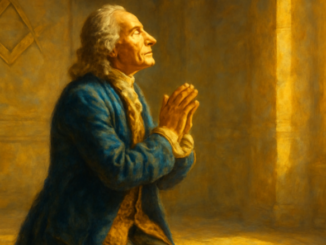
Open book with Voltaire's prayer for tolerance illuminated by candlelight
Symbolism & Rituals

Voltaire’s Prayer for Tolerance: Its Philosophical Roots

Imagine reading a text nearly three centuries old, yet feeling how strikingly relevant every word remains. Voltaire’s prayer for tolerance, found in his Treatise on Tolerance, still resonates deeply. But where did these ideas come from? Which philosophers whispered in his ear, and which intellectual currents nourished the soil from which this extraordinary plea for human decency grew? In this article, we trace the philosophical roots of a text that distills the entire Enlightenment into a handful of sentences. The Legacy of Stoicism When Voltaire writes about universal human brotherhood and the primacy of inner virtue over outward forms, we hear unmistakable echoes of Stoic philosophy. Thinkers such as Marcus Aurelius, Seneca, and Epictetus emphasized that all human beings belong to a single cosmic community. The Stoics believed that reason connects us, regardless of origin or religious conviction. This idea — that we are all citizens of the same world — forms the foundation of Voltaire’s call to bear with one another despite our differences. Seneca wrote extensively in his letters about the necessity of clemency and the mastery of anger. He regarded wrath as a disease of the mind that disrupts our rational faculties. Voltaire, who knew Seneca’s work […]

Open book showing Voltaire's Prayer for Tolerance with candlelight
Symbolism & Rituals

Voltaire’s Prayer for Tolerance: Meaning and Key Lessons

Imagine standing in a room filled with people from vastly different backgrounds, beliefs, and worldviews. What is the common thread that binds them all together? Voltaire grappled with precisely this question when he wrote his famous Prayer for Tolerance in 1763. This short but powerful text forms the emotional climax of his Treatise on Tolerance. In it, we find a core idea, central themes, and concrete lessons that remain strikingly relevant — lessons you can apply in your own life today. The Context: Why Voltaire Wrote This Prayer Voltaire’s Prayer for Tolerance did not emerge in a vacuum. He wrote it in direct response to the Jean Calas affair — the case of a Protestant merchant who was wrongfully convicted and executed for the alleged murder of his own son. In reality, the son had taken his own life, but religious prejudice fueled a horrific miscarriage of justice. Voltaire was so deeply shaken by this event that he launched a campaign to rehabilitate Calas and, at the same time, penned a sweeping analysis of the urgent need for tolerance. The prayer forms the closing passage of his treatise, and its tone is remarkably personal. Where the rest of the work […]

Portrait of Voltaire symbolizing Enlightenment tolerance and Freemasonry
Symbolism & Rituals

Voltaire on Tolerance: Philosophical Roots of a Virtue

Imagine you’re in a heated discussion with someone whose views are radically different from your own. You feel the urge to push back, to correct, perhaps even to condemn. But then something stops you: tolerance is not weakness — it’s a deliberate choice. François-Marie Arouet, better known as Voltaire, understood this better than most. His writings on tolerance drew from centuries of philosophical tradition. Which thinkers shaped his ideas? And how can their insights still guide us today? The Stoic Foundation: Seneca and Marcus Aurelius Voltaire was an avid reader of the Roman Stoics. Seneca, the philosopher and statesman, taught that anger and intolerance spring from flawed judgments about reality. When someone insults or contradicts you, it is not the other person who wounds you — it is your own interpretation of their words. This insight echoes powerfully through Voltaire’s case for tolerance: once we accept that people think differently because of their upbringing, culture, and experiences, the grounds for condemnation simply dissolve. Marcus Aurelius, the philosopher-emperor, took the idea even further. In his Meditations, he wrote that we should regard even our opponents as fellow human beings who act according to their own logic. Voltaire translated this into a […]

Voltaire portrait with Masonic symbols representing tolerance and Enlightenment
Symbolism & Rituals

Voltaire on Tolerance: Virtue as the Foundation of Society

Some ideas from the eighteenth century feel remarkably current — and Voltaire’s reflections on tolerance are a prime example. Writing during a period of religious persecution and deadly conflict, Voltaire articulated a vision of tolerance that went far beyond political convenience. In his second essay on the subject, he presented tolerance not merely as a practical necessity, but as a fundamental human virtue — a perspective that aligns seamlessly with the principles of Freemasonry. The Historical Context of Voltaire’s Plea Voltaire wrote his reflections on tolerance against the backdrop of the Calas affair, in which a Protestant father was wrongfully convicted and executed for the alleged murder of his son. This gross miscarriage of justice, fueled by religious fanaticism, struck Voltaire to his core and became the catalyst for his passionate defense of tolerance as a moral duty. In his second essay on the topic, he moved beyond practical arguments to make a bolder claim: tolerance is not a sign of weakness but a hallmark of civilization and inner strength. Voltaire placed his argument within a sweeping historical framework. He pointed to ancient civilizations such as the Roman Empire, where diverse religions coexisted for long periods. This tolerance did not […]

Voltaire writing his Treatise on Tolerance, symbolizing Masonic ideals
Symbolism & Rituals

Voltaire on Tolerance: The Calas Affair and Freemasonry

What drives a person to stand up against injustice when the rest of society looks the other way? In 1762, Jean Calas — a Protestant merchant from Toulouse — was sentenced to death on the strength of religious prejudice alone. Voltaire took up his pen and wrote his famous Treatise on Tolerance. But what does this eighteenth-century plea for humanity have to do with Freemasonry today? Far more than you might expect. What Actually Happened in the Calas Affair? Let’s start with the facts. Marc-Antoine Calas, Jean’s son, was found dead in the family home. In all likelihood, he had taken his own life. But a rumor spread quickly through Toulouse: that his father had murdered him to prevent his conversion to Catholicism. Without credible evidence, Jean Calas was tortured and broken on the wheel — a judicial murder driven by religious hysteria. Voltaire learned of the case and launched a years-long campaign for Calas’s posthumous rehabilitation. His Treatise on Tolerance is no dry legal argument. It is a passionate appeal for basic human decency. The question he posed remains just as relevant today: how can we call ourselves civilized while condemning our fellow human beings on the basis of […]

Voltaire writing by candlelight symbolizing Enlightenment tolerance and reason
Symbolism & Rituals

Voltaire and the Calas Affair: Philosophical Roots of Tolerance

In 1762, the Protestant merchant Jean Calas was executed in Toulouse on charges of murdering his own son. The trial was steeped in religious prejudice and judicial arbitrariness. Voltaire, deeply shaken by this judicial scandal, took up his pen and wrote his celebrated Traité sur la tolérance — Treatise on Tolerance. Yet this was no impulsive reaction. It was the culmination of centuries of philosophical thought on tolerance, reason, and human dignity. The intellectual heritage behind this essay reveals deep roots that continue to resonate in the principles of Freemasonry to this day. The Stoic Legacy: Universal Humanity The deepest roots of Voltaire’s thinking on tolerance reach back to the Stoic philosophy of antiquity. Thinkers such as Seneca, Epictetus, and Marcus Aurelius developed the concept of the cosmopolis — a world community in which all human beings share in the same universal reason. For the Stoics, every person, regardless of origin or creed, carried a divine spark within. Seneca wrote in his letters to Lucilius that we are all members of one great body and that nature has brought us forth as kindred. This idea formed a foundation upon which later arguments for tolerance could be built. Voltaire was an […]

Portrait of Voltaire symbolizing tolerance and Enlightenment ideals in Freemasonry
Symbolism & Rituals

Voltaire on Tolerance: The Calas Affair and Freemasonry

What happens when a society projects its deepest fears onto an innocent family? Voltaire’s treatise on tolerance opens with one of the most harrowing cases of religious intolerance in eighteenth-century Europe: the Calas affair. This was not merely a judicial error — it was a mirror held up to humanity, revealing how swiftly prejudice can escalate into murder. For Freemasons, who regard brotherhood and tolerance as pillars of their work, Voltaire’s writing resonates as powerfully today as it did over two and a half centuries ago. The Tragic Heart of the Calas Affair In 1761, the Protestant merchant Jean Calas of Toulouse discovered his son Marc-Antoine dead in the family home. The young man had hanged himself. What followed was not a search for truth but a hysterical wave of accusations. The local population, saturated with religious tension between Catholics and Protestants, quickly concluded that the father had murdered his son to prevent him from converting to Catholicism. Without credible evidence, Jean Calas was tortured and publicly executed on the breaking wheel in March 1762. Voltaire first heard about the case through friends and was initially uncertain about Calas’s guilt. But as he gathered more testimonies and studied the facts, […]

Symbolic contrast of darkness and light representing Voltaire and Pascal
Symbolism & Rituals

Voltaire vs Pascal: Optimism as a Bridge to Brotherhood

There are moments when the weight of the world feels unbearable — moments when you wonder whether humanity is simply destined for misery. Blaise Pascal, the brilliant seventeenth-century thinker, wrote from exactly that conviction. But what happens when another mind reads those same texts and arrives at radically different conclusions? Voltaire took up the challenge, and in his Philosophical Letters he delivered a response that not only ignited one of the great intellectual debates in Western thought but also articulated a philosophy of life that runs remarkably close to the heart of Freemasonry. Two Thinkers, Two Visions of the Human Condition Pascal saw humanity as a species torn between greatness and insignificance, trapped in a universe that appears deaf and blind to our existence. His famous Pensées breathe an atmosphere of existential unease: without God, man is lost, and even with faith, existence remains a precarious balancing act. When Voltaire read these fragments, he felt resistance rising within him — not because he underestimated Pascal’s intelligence, but because he held a fundamentally different view of what it means to be human. Where Pascal emphasized human weakness, Voltaire saw possibility. Where Pascal warned against the vanity of worldly pursuits, Voltaire celebrated […]

Symbolic contrast of light and darkness representing Voltaire and Pascal
Symbolism & Rituals

Voltaire vs Pascal: Two Visions of Human Nature

In his fifth Philosophical Letter, Voltaire took aim at one of the seventeenth century’s most influential thinkers: Blaise Pascal. Where Pascal saw humanity as a wretched creature lost between infinity and nothingness, Voltaire offered a radically different portrait. This was no dry academic dispute — it was a collision between two worlds: Jansenist pessimism and the rising confidence in human reason and progress. For the Freemason, who seeks light in the darkness and the elevation of the human spirit, this confrontation offers surprisingly relevant insights. The Intellectual World of Voltaire To understand Voltaire’s critique of Pascal, we must first understand the intellectual sources that shaped him. Voltaire was a child of the early Enlightenment, deeply influenced by the English empiricists John Locke and Isaac Newton. During his exile in England, he discovered an intellectual climate that was radically different from the dogmatic atmosphere of France. Locke’s idea that the human mind begins as a blank slate stood in direct opposition to Pascal’s notion of humanity stained by original sin. Newton demonstrated that the universe obeyed comprehensible laws rather than impenetrable mysteries. Voltaire also drew from the skeptical tradition of Michel de Montaigne, whose essays he studied closely. Montaigne’s gentle doubt […]

Reeds bending in wind symbolising Voltaire and Pascal philosophical dialogue
Symbolism & Rituals

Voltaire on Pascal: The Fifth Philosophical Letter Explored

A thinking reed. With this single image, Blaise Pascal captured the human condition — insignificant amid the vastness of the universe, yet elevated by the capacity for thought. Voltaire read these words and felt compelled to respond. In his fifth philosophical letter, he enters into dialogue with a thinker who both fascinated and unsettled him. The result is a text that still invites profound reflection: is humanity truly as wretched as Pascal claimed? The Heart of Pascal’s Thought Blaise Pascal wrote his famous Pensées as groundwork for a defence of the Christian faith. At its centre lies his conviction that humanity without God is lost. He describes human nature as broken, torn between greatness and insignificance. We seek distractions so we need not feel the void within. We entertain ourselves to forget death. Pascal’s analysis is saturated with a deep pessimism about humanity’s capacity for happiness outside divine grace. Voltaire acknowledges Pascal’s brilliance as both mathematician and prose stylist. At the same time, he resists Pascal’s bleak vision of human nature. In the fifth letter, he methodically dissects Pascal’s propositions and sets his own perspective against them. This is not destructive criticism — it is a dialogue between two fundamentally […]

Prism splitting light into a spectrum symbolizing Masonic pursuit of truth
Symbolism & Rituals

Voltaire on Newton: Light, Science, and Masonic Wisdom

What happens when a philosopher encounters a scientist who changes the world forever? Voltaire posed this question to himself when he wrote about Isaac Newton in his Letters on the English. But why should this matter to a Freemason in 2026? Perhaps because Voltaire’s admiration for Newton illuminates the very values that are cherished in the lodge: the pursuit of light, reverence for truth, and the understanding that knowledge only gains meaning when it is shared. Why Was Voltaire So Fascinated by Newton? In the early eighteenth century, Voltaire spent several years in England, where he encountered an intellectual climate radically different from what he had known in France. While the continent was still deeply immersed in the ideas of René Descartes, Newton had already sparked a revolution across the Channel. His laws of gravity and his groundbreaking work on light left a profound impression on Voltaire. Here was a thinker who did not merely speculate — he measured, proved, and demonstrated. What captivated Voltaire above all was Newton’s method. Newton did not begin with grand theories and then force the facts to fit. He observed, experimented, and let nature speak for itself. For Voltaire, this was a masterclass in […]

Voltaire and Newton symbolizing Enlightenment philosophy and Freemasonry
Symbolism & Rituals

Voltaire on Newton: Philosophical Roots of the Enlightenment

Imagine living in Paris in 1733. The salons are buzzing with new ideas, yet the Church and the State maintain a firm grip on what you are allowed to think and say. Then a book appears that turns everything upside down: Voltaire’s Philosophical Letters. His fourth letter, devoted to Isaac Newton, is far more than a tribute to a scientist. It is a philosophical manifesto that lays the foundation for an entirely new way of thinking about humanity, nature, and the cosmos — a way of thinking that resonates powerfully with the principles of Freemasonry. The Intellectual World Voltaire Wrote In To understand why Voltaire’s letter on Newton was so revolutionary, you need to step into the intellectual landscape of early eighteenth-century France. The Cartesian philosophy of René Descartes still dominated the academies. Descartes had promoted a mechanistic worldview in which nature operated like an enormous clock, driven by swirling particles in a filled universe. For the French elite, this was the officially sanctioned framework of thought. Voltaire returned from his English exile carrying a radically different message. During his stay in London, he had encountered the empirical philosophy of John Locke and the scientific revolution set in motion by […]

Prism splitting white light into a spectrum symbolizing Masonic enlightenment
Symbolism & Rituals

Voltaire on Newton: Light as a Symbol of Insight

When a ray of light passes through a prism and splits into a rainbow of colors, we witness more than a physical phenomenon — we witness a revelation. Voltaire understood this profoundly when he introduced Isaac Newton’s ideas to continental Europe in his fourth Philosophical Letter. What he described was not merely science, but an entirely new way of seeing reality — one that resonates deeply with the symbolic language of Freemasonry. The Context of Voltaire’s Admiration Voltaire wrote his Philosophical Letters after a period of forced exile in England between 1726 and 1729. Those years changed his thinking fundamentally. Back in France, the natural philosophy of René Descartes still held sway, with its vortex theories and mechanistic explanations of the universe. Newton offered a radically different perspective: no speculation about invisible matter, but measurable forces and mathematical laws. Voltaire saw in Newton far more than a scientist — he saw a liberator of the human mind. His fourth letter reads as a tribute, but one that consistently invites the reader to investigate for themselves. What made Voltaire’s approach remarkable was his ability to make Newton’s complex work accessible without oversimplifying it. He described the discovery of gravity, the laws […]

Symbolic representation of Voltaire, Locke, and Freemasonry's pursuit of light
Symbolism & Rituals

Voltaire on Locke: Knowledge and Connection in Freemasonry

Can a person truly know anything, or are we merely grasping at shadows? This is the question Voltaire raises in his third philosophical letter, where he examines the ideas of John Locke. His answer — a radical rejection of innate ideas and a full embrace of sensory experience as the source of all knowledge — touches on a fundamental tension that lives at the very heart of Freemasonry. How do knowledge and mystery relate to one another? And what does it mean to search for truth within a brotherhood that acknowledges both light and darkness? The Blank Slate and the Searching Mind Voltaire presents Locke as the philosopher who finally had the courage to say aloud what others had only whispered: the human mind is not born as a storehouse of eternal truths, but as a blank slate. All knowledge arises from experience — from the impressions our senses deliver and the reflections our minds perform upon them. While this idea was not entirely new in the history of philosophy, Locke gave it a systematic treatment that Voltaire deeply admired. For the Freemason, this image of the tabula rasa stirs a remarkable sense of recognition. The candidate enters the lodge […]

Philosophical books representing Voltaire and Locke's Enlightenment ideas
Symbolism & Rituals

Voltaire on Locke: Philosophical Roots of the Third Letter

What is it about a seventeenth-century philosopher that still echoes through modern conversations about knowledge, freedom, and the limits of human understanding? When Voltaire devoted his third philosophical letter to John Locke, he did far more than introduce an English thinker to a French audience. He opened a door to an entirely new way of philosophizing — a method that would leave its mark on Enlightenment thought and, perhaps less obviously, on the principles embraced within Freemasonry. Why Did Voltaire Choose Locke as His Guide? The question is worth pausing over. In early eighteenth-century France, the ideas of René Descartes still dominated intellectual life. His rationalism — with its emphasis on innate ideas and the certainty of thought — formed the bedrock of philosophical culture. But during his exile in England from 1726 to 1728, Voltaire encountered a radically different approach. John Locke had argued in his Essay Concerning Human Understanding that the human mind at birth is a blank slate, a tabula rasa. All knowledge, Locke maintained, arises from sensory experience and our reflection upon it. This empiricism appealed deeply to Voltaire. It offered an antidote to what he saw as the hollow speculations of scholasticism and the dogmatic […]

Rough ashlar and open book symbolizing Locke's blank slate in Freemasonry
Symbolism & Rituals

Voltaire on Locke: The Soul as a Blank Slate

In a dimly lit London study sometime in the 1720s, a young French exile bent over the works of an English philosopher who had died just decades earlier. François-Marie Arouet — better known as Voltaire — discovered in the writings of John Locke a revolutionary idea: the human mind is born a blank slate. No innate ideas, no predetermined truths, only the pure possibility of growth through experience. This discovery would change Voltaire forever, and it forms the heart of his third philosophical letter. The Context of Voltaire’s Exile When Voltaire lived in England between 1726 and 1728, he was fleeing not only the Bastille but also the suffocating intellectual climate of Louis XV’s France. In England, he encountered a society where freethinkers could debate openly, where Isaac Newton’s science was celebrated, and where John Locke’s philosophy was considered common knowledge. He later gathered these experiences into his Philosophical Letters, a collection of essays that introduced English thought to the French public. The third letter, devoted to Locke, stands out because Voltaire does more than simply report on scientific discoveries. He poses a fundamental question about human nature itself: Who are we, and how do we arrive at our knowledge? […]

Voltaire reflecting on religious tolerance and Freemasonry in England
Symbolism & Rituals

Voltaire on the Anglicans: Religious Freedom and Brotherhood

What happens when one of history’s sharpest minds flees his homeland and discovers, in exile, a society where religious diversity leads not to chaos but to prosperity? François-Marie Arouet — better known as Voltaire — had exactly that experience in England. He wrote about it in his Letters on the English, and his second letter, devoted to the Anglicans, paints a religious landscape that filled him with both astonishment and admiration. For those familiar with Freemasonry, his observations resonate in a remarkably powerful way. Voltaire touches on values the Craft has cherished for centuries: tolerance, the art of living together, and the ability to bridge differences without erasing them. The Paradox of a State Church Voltaire opens his letter with an apparent contradiction. England has a state church — the Church of England — which officially claims to represent the one true faith. Yet at the same time, he observes a society in which dissenters, Catholics, Quakers, and Jews live and trade alongside one another. How can a state church exist without producing the tyranny Voltaire knew so well from France? This question forces us to reconsider the very nature of religious institutions. Is a church by definition an instrument […]

Voltaire writing at a desk with philosophical texts and Anglican church in background
Symbolism & Rituals

Voltaire on the Anglicans: Philosophical Roots and Influences

When Voltaire fled to England in 1726, forced into exile by political circumstances, he carried more than just his razor-sharp pen. He brought with him a mind shaped by the great thinkers of his era. His observations on the Anglican Church, recorded in his famous Letters on the English (also known as the Philosophical Letters), were far more than superficial travel writing. They revealed a deeply rooted philosophical vision of religion, tolerance, and human freedom. What intellectual currents and thinkers shaped that vision? And what can modern seekers of wisdom — including those who walk the Masonic path — learn from the sources Voltaire drew upon? The Legacy of John Locke: Reason as the Measure of All Things No thinker influenced Voltaire’s view of religion more profoundly than John Locke. The English philosopher, whose works Voltaire studied extensively during his exile, had put forward a revolutionary thesis: religious convictions must be able to withstand the test of reason. In his Letter Concerning Toleration, Locke argued that the state has no right to impose matters of conscience. Voltaire embraced this principle wholeheartedly and saw in Anglican practice an embodiment of this rational approach. Where the Catholic Church of Voltaire’s homeland based […]

Voltaire reflecting on the Anglican Church and religious tolerance in England
Symbolism & Rituals

Voltaire on the Anglicans: Tolerance as a Religious Virtue

In his second philosophical letter, Voltaire turns his sharp gaze toward the Anglican Church. Having already shared his observations on the Quakers, he now examines an established state church that, despite its official status, displays a remarkable degree of religious tolerance. By placing two worlds side by side — the rigid French Catholicism of his era and the pragmatic English approach to faith and state power — Voltaire reveals not only differences in ecclesiastical organization, but touches on deeper questions about freedom, hierarchy, and the symbolic meaning of religious institutions. The Heart of Voltaire’s Argument Voltaire describes the Anglican Church as a curious blend of Protestant theology and Catholic aesthetics. The bishops still wear their mitres, the cathedrals retain their grandeur, and the liturgy carries a solemnity reminiscent of Rome. Yet the doctrine is fundamentally different. The monarch stands at the head of the church, not the Pope. This institutional break with Rome, Voltaire argues, has not led to chaos but rather to a workable order in which religious disagreements are far less likely to result in bloodshed. The central theme of this letter is the relationship between state power and religious authority. Voltaire observes that the English have found […]