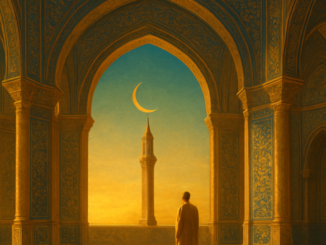
Open sacred text with Masonic symbols representing Surah Fussilat and inner truth
Islam

Surah Fussilat: Unfolded Truth and the Inner Journey

What does it mean when a sacred text describes itself as ‘clearly expounded’? Surah Fussilat, the forty-first chapter of the Quran, carries its name for a profound reason. The word refers to something that has been made clear, unfolded, and rendered accessible to those who truly wish to understand. This idea touches on a fundamental question that also lies at the heart of Freemasonry: how do we unveil the hidden truth concealed within ourselves and within the world around us? Why Is This Surah Called ‘Clearly Expounded’? The name Fussilat derives from an Arabic verb meaning ‘to explain in detail’ or ‘to clearly distinguish.’ The opening verses speak of a book whose signs have been expounded — an Arabic proclamation for a people who truly listen. Here we already find a striking parallel with Masonic thought: truth is not automatically accessible. It demands unfolding, and a willingness to listen beyond the superficial. The text invites the reader to look beyond the obvious. Just as a Freemason does not regard the rough stone as a finished product, but rather as raw material for refinement, Fussilat presents revelation as something that must be understood step by step. It is a spiritual pedagogy […]

Symbolic image of Surah Qaf and Freemasonry exploring the inner voice
Islam

Surah Qaf: The Mountain and the Inner Voice in Two Traditions

There are moments when two entirely different traditions seem to whisper the same truth. The Muslim who recites Surah Qaf and the Freemason who silently reflects on his inner temple appear, at first glance, to inhabit separate worlds. Yet they touch upon the same fundamental questions: What shapes our conscience? What reminds us of our mortality? And what compels us toward a more authentic life? In this article, we explore these two perspectives side by side — not to equate them, but to discover what they share. Surah Qaf: A Brief Overview Surah Qaf is the fiftieth chapter of the Quran and takes its name from the mysterious letter Qaf with which it opens. This letter belongs to the so-called muqatta’at — disconnected letters whose meaning has never been fully deciphered. The surah addresses themes of resurrection, divine proximity, and human conscience. At its center lies a striking image: God is closer to each person than their own jugular vein. This is a powerful declaration — it suggests that the divine is not distant or abstract, but intimately present within every individual. The surah also speaks of two angels who record every deed a person commits, serving as a metaphor […]

Open Quran beside Masonic square and compasses symbolizing interfaith brotherhood
Islam

The Chambers: Lessons on Brotherhood from Surah 49

What does it truly mean to belong to a community? This question rises to the surface when you open the forty-ninth chapter of the Quran. Known as Al-Hujurat — The Chambers — this surah says nothing about great battles or sweeping prophetic visions. Instead, it addresses something far more immediate: how people treat one another. For Freemasons, who regard brotherhood as the very foundation of their work, this ancient text holds up some remarkably familiar mirrors. Why Is This Chapter Called The Chambers? The name refers to the private quarters of the Prophet Muhammad. According to tradition, some Bedouin visitors would come to his rooms shouting impatiently, without any regard for courtesy or privacy. The surah counsels patience and respect: wait until someone comes out to meet you; do not yell through walls. It may seem like a small detail, but it touches something fundamental. The threshold of someone’s private space is sacred. We build walls not only from stone but also from trust. Freemasons understand this principle intuitively. The lodge is a closed space where brethren gather, shielded from the outside world — not out of secrecy, but because certain conversations flourish only in privacy. The Chambers reminds us […]

Ancient tree symbolizing brotherhood and the inner victory in Masonic tradition
Islam

Victory in the Quran: Inner Triumph and Masonic Brotherhood

What if the greatest victory is not won on the battlefield, but in the silence of one’s own heart? This paradox lies at the heart of Surah Al-Fath — The Victory — the forty-eighth chapter of the Quran, and it touches on a deeply rooted truth within Freemasonry. The text does not celebrate a military triumph in the conventional sense, but rather a peace treaty that opened the way to inner and communal growth. For the inquiring mind that seeks connections between diverse spiritual traditions, a fascinating landscape of shared wisdom unfolds here. A Victory Without Swords Surah Al-Fath was revealed after the Treaty of Hudaybiyyah in the year 628 CE, when the Prophet Muhammad and his followers entered into an agreement with their adversaries from Mecca. On the surface, this treaty appeared to be a retreat — a compromise that disappointed many among the faithful. Yet the Quran calls this moment a “clear victory.” Herein lies the paradox: true triumph does not always manifest in the form we expect. Sometimes the ability to let the sword rest is the greatest strength of all. This idea resonates deeply with the spiritual journey undertaken by the Freemason. In the rituals of […]

Open Quran beside Masonic tools symbolizing steadfastness and inner struggle
Islam

Surah Muhammad: Steadfastness and the Inner Struggle

In the quiet of an evening lodge, a Freemason sits alone after the ritual has ended. He leafs through an old book on world religions and stumbles upon a passage from the Quran. The words strike a chord: they speak of steadfastness, of persevering on a path despite opposition. He recognizes something of his own inner quest. How can a text from an entirely different tradition feel so familiar? What Is Surah Muhammad? Surah Muhammad is the forty-seventh chapter of the Quran, bearing the name of the Prophet himself. It was revealed in Medina during a period when the early Muslim community was under considerable pressure and steadfastness was essential for survival. The text addresses themes such as maintaining faith under difficult circumstances, the consequences of sincerity versus hypocrisy, and the promise of inner peace for those who persevere on the righteous path. Unlike some of the Meccan surahs, which tend to be poetic and contemplative, this Medinan text has a more practical tone. It speaks directly to the community, drawing a clear line between genuine devotion and superficial compliance. For the devout Muslim, this surah provides an anchor in times of trial. But what might someone outside this tradition […]

A person kneeling in humble reflection symbolizing humility in Freemasonry and Islam
Islam

Surah Al-Jathiyah: Humility in Islam and Freemasonry

There are moments when a person bends the knee — not in submission to any earthly power, but in recognition of something far greater than oneself. In the Islamic tradition, Surah Al-Jathiyah describes precisely such a moment of cosmic humility. For the Freemason, this image carries a familiar resonance: within the lodge, too, bowing is understood as the beginning of wisdom. Two worlds, two traditions, one universal experience. The Essence of Surah Al-Jathiyah Surah Al-Jathiyah is the forty-fifth chapter of the Quran. Its name, often translated as “The Kneeling” or “Crouching,” derives from verse 28, which depicts all communities kneeling on the Day of Judgment. Revealed in Makkah, this surah draws attention to the signs of God present throughout creation: the heavens, the earth, the animals, the alternation of day and night. Each of these is an invitation to reflection for those who truly wish to see. The message is clear: knowledge and gratitude are central. Those who recognize the signs embedded in nature are called to humility. At the same time, the surah warns against arrogance and indifference. Those who mock the divine message or allow themselves to be guided solely by their own whims become blind to the […]

Gold ornaments symbolizing worldly wealth contrasted with Masonic inner light
Islam

Surah Az-Zukhruf and the Masonic Quest for Inner Richness

What truly makes a person valuable? Is it the glitter of gold and silver, the grandeur of palaces, or does real wealth reside somewhere deeper? These questions lie at the heart of Surah 43 of the Quran, known as Az-Zukhruf — The Ornaments. It is a text that invites us to look beyond the surface and rediscover the essence of spiritual growth. For Freemasons, who are equally concerned with distinguishing appearance from reality, this surah offers remarkably resonant insights. Why Is This Surah Called The Ornaments? The name refers to the gold and silver ornaments mentioned in the text as symbols of worldly wealth. But there is a paradox at work: the surah uses these very images to demonstrate how fleeting material splendor truly is. The Arabic word Az-Zukhruf denotes ornamentation, embellishment, decoration. The surah poses a striking question: if we could build houses of gold, would we actually be happier? The answer that reverberates through the text is unmistakable — no. True ornamentation is not what you accumulate around you, but what you cultivate within. This theme resonates deeply across the spiritual traditions of many cultures. The philosopher Plato warned in his Allegory of the Cave about confusing shadows […]

Brethren gathered in consultation around a table in a Masonic lodge
Islam

Consultation: Spiritual Wisdom from the Forty-Second Surah

There is an act so commonplace that we barely notice it, yet it carries within it one of the deepest spiritual truths known to humanity: the moment when people come together to consult with one another. In the forty-second surah of the Quran, known as Ash-Shura — The Consultation — this seemingly simple practice is elevated to the status of a divine principle. For those willing to look, an extraordinary vision of human interconnectedness unfolds here, one that reveals striking parallels with the spiritual traditions of Freemasonry. The Round Table as Sacred Space Imagine a round table. Not an ordinary piece of furniture, but a place where voices converge, where the ego yields to collective listening. The forty-second surah describes how believers conduct their affairs through mutual consultation. This Arabic concept of deliberation — shura — not only gives the surah its name but forms its beating heart. It is not the table itself that matters, but what emerges there: a space where individual wisdom blends into something greater than any single mind could produce. In Freemasonry, we recognize this principle in the lodge, where brethren gather not to debate or persuade, but to build. The gavel wielded by the […]

Light and darkness symbolism connecting Quranic wisdom and Masonic thought
Islam

The Groups: A Quranic Perspective and Masonic Thought

The thirty-ninth surah of the Quran speaks of a fundamental separation: groups moving toward the light and those remaining in darkness. This imagery resonates strikingly with a theme that lies at the very heart of Freemasonry. Both traditions know the journey from ignorance to insight, from roughness to refinement. In this article, we place two worlds side by side — not to judge, but to discover what they share in their vision of the human soul. The Essence of Surah Az-Zumar (The Groups) Surah Az-Zumar, revealed in Mecca, takes its name from the description of crowds being gathered into groups on the Day of Judgment. Some are guided toward paradise; others are led to a different destination. The surah emphasizes purity of intention in worship and warns against idolatry and false piety. At its core lies the idea that sincerity is the key to genuine spiritual connection. A central verse from this surah states that God created the heavens and the earth in truth, and that He wraps the night over the day and the day over the night. This cosmic rhythm between light and darkness is far more than an astronomical description. It points to the cyclical nature of […]

Ancient stone tools and open Quran symbolizing Freemasonry and Surah Sad parallels
Islam

Surah Sad and Freemasonry: Two Paths to Inner Truth

Picture two people sitting across from each other. One wears an apron and speaks of building an inner temple. The other recites verses about prophets enduring trials. On the surface, their worlds seem miles apart. Yet both are speaking about exactly the same thing: the difficult but necessary journey toward self-knowledge. Surah Sad, the 38th chapter of the Quran, offers striking parallels with the Masonic path. Today, we place these two worlds side by side. The Heart of Surah Sad: Trial as a School of Growth Surah Sad takes its name from the Arabic letter ص (Sad) with which it opens. The chapter tells the stories of prophets such as David, Solomon, and Job — all of whom passed through profound trials. David wrestled with power and justice. Solomon temporarily lost his kingdom as a lesson in humility. Job endured unimaginable suffering without ever losing his connection to the Divine. The central message is clear: spiritual growth does not happen in spite of hardship, but precisely because of it. For the devout Muslim, these stories serve as mirrors. They invite self-reflection: how do I behave when life becomes difficult? Do I lose my moral compass, or do I remain steadfast? […]

Symbolic rows representing spiritual order and Masonic brotherhood
Islam

Surah 37 – The Ranged Ones and the Power of Spiritual Order

Imagine standing shoulder to shoulder with others, all oriented toward the same purpose — something greater than any single individual. That sense of alignment, of collective devotion, is almost universally recognizable. It is precisely this image that lies at the heart of the thirty-seventh chapter of the Quran: As-Saffat, or The Ranged Ones. While the text is rooted in Islamic tradition, its themes of cosmic order, steadfast devotion, and purposeful formation resonate far beyond any single faith — not least within the tradition of Freemasonry. What Does Surah 37 Tell Us? The surah opens with a striking image: angels arrayed in rows, guiding humanity and reciting sacred words. This is not merely poetic ornamentation. It expresses a fundamental principle — that there exists a cosmic order in which everything and everyone has a place. The angels are not scattered at random; they stand in deliberate formation, oriented toward the Divine. As the surah unfolds, familiar narratives emerge. Noah, who remained steadfast when no one believed him. Abraham, who was willing to make the ultimate sacrifice. Moses and Aaron, who stood together against injustice. Elijah, who single-handedly confronted an entire people about their deviation from truth. These are not isolated anecdotes. […]

Open Quran displaying Surah Ya-Sin alongside Masonic square and compasses
Islam

Surah Ya-Sin: The Heart of the Quran and Freemasonry

There is a curious paradox in the way people engage with sacred texts: the deeper the meaning, the fewer words seem necessary. Surah Ya-Sin, often called the heart of the Quran, opens with two mysterious letters that defy translation. And it is precisely in that untranslatable, elusive quality that a truth resides which any Freemason will recognize — some insights cannot be explained, only experienced. The Mystery of the Opening Letters Anyone reading Surah Ya-Sin for the first time encounters an immediate riddle. The surah opens with the Arabic letters ya and sin, offered without explanation. Islamic scholars across the centuries have proposed countless interpretations, yet none is definitive. Some see a reference to the Prophet Muhammad; others view the letters as a reminder of the limits of human understanding. This is not a weakness of the text — it is its very strength. It compels the reader toward humility. For the Freemason, this evokes a deeply familiar attitude. The Masonic tradition likewise contains symbols that can never be fully deciphered. The rough ashlar, the compasses, the square — they all point beyond themselves toward meanings that emerge only in the silence of personal contemplation. As the Persian poet Rumi […]

Open Quran with Masonic square and compass symbolizing inner building
Islam

Surah Al-Fatir: Practical Lessons for Inner Building

You wake up in the morning, rush through your routine, and somewhere between the first cup of coffee and your commute, a question surfaces: what am I actually building? The thirty-fifth surah of the Quran, titled Al-Fatir — The Creator — confronts us with exactly this question. Not as some abstract philosophical puzzle, but as a concrete invitation to examine what we create each day through our thoughts, words, and actions. For Freemasons, who regard the building of the inner temple as their life’s work, this surah offers surprisingly practical guidance. The Heart of Surah Al-Fatir Surah Fatir, which literally means “The Originator” or “The Creator,” is among the Meccan revelations and consists of forty-five verses. It opens with a powerful praise of the Creator who sends angels as messengers, and then explores the contrasts between truth and falsehood, light and darkness, knowledge and ignorance. At its core lies the theme that human beings are responsible for what they do with their lives — that every action carries consequences. The surah reminds us that creation is not random. Everything has a purpose, a pattern, a meaning. This aligns closely with the Masonic understanding that the Grand Architect of the Universe […]

Ancient temple symbolizing the Masonic quest for inner wisdom and gratitude
Islam

Surah Saba and the Masonic Quest for Inner Wisdom

What happens to a civilization that has everything but forgets to be grateful for it? The Quran tells the story of the Kingdom of Sheba in Surah Saba — a land of abundance that collapsed under the weight of spiritual blindness. This story, over a thousand years old, raises questions that remain strikingly relevant today, and that resonate deeply with the spiritual journey undertaken by Freemasons. What Does Surah Saba Actually Tell Us? Surah Saba, the 34th chapter of the Quran, takes its name from the ancient Kingdom of Sheba, located in present-day Yemen. The Queen of Sheba, a figure known from both the Bible and the Quran, once visited King Solomon, drawn by his legendary wisdom. But the surah itself extends far beyond that historical encounter. It paints a picture of a people blessed with fertile gardens, an ingenious irrigation system, and material prosperity — yet who ultimately came to take all of these blessings for granted. The central message is as simple as it is profound: gratitude and awareness are the keys to a meaningful life. When the people of Saba lost this inner orientation, their civilization fell apart. The gardens withered, the community fractured. It is a […]

Vrijmetselarij - De Romeinen in de Koran: lessen over vergankelijkheid en hoop
Islam

The Romans in the Quran: Lessons on Impermanence and Hope

Imagine living in the seventh century and hearing that the mighty Byzantine Empire has suffered a crushing defeat at the hands of the Persians. The world as you knew it seems to teeter on the edge. Then a text appears — one that not only offers consolation but makes a remarkable prediction: within a few years, the tide will turn. This is the essence of Surah Ar-Rum, the thirtieth chapter of the Quran, which deals with the Romans. Today, we explore this text through two lenses: that of the faithful Muslim and that of the seeking Freemason. What can both perspectives teach us about impermanence, resilience, and spiritual growth? The Historical Context of Surah Ar-Rum Surah Ar-Rum opens with a reference to a concrete historical event: the defeat of the Byzantines — referred to in the Islamic tradition as “the Romans” — by the Persian Empire around 614 CE. The verses speak of a victory that will follow within “a few years.” Historically, this prediction proved accurate when Emperor Heraclius turned the tide and defeated the Persians in 627 CE. For believers, this is a sign of divine knowledge; for historians, it is a fascinating example of prophetic literature intersecting […]

An ant colony symbolizing wisdom and brotherhood in Freemasonry
Islam

Surah The Ants: Wisdom in the Small for Freemasons

What if the greatest wisdom is not found in the stars or in the writings of kings, but in the organized activity of an anthill? It is a thought that feels both strange and familiar to anyone engaged in the inner search for light. Surah An-Naml — The Ants — the twenty-seventh chapter of the Quran, invites us into a paradox: that true greatness resides in the small, and that profound insight sometimes whispers from the most inconspicuous of places. For Freemasons, who are accustomed to reading the world as a book full of hidden meanings, this surah opens a window onto a spirituality that resonates deeply with their own quest. The Paradox of the Insignificant Surah The Ants takes its name from a seemingly incidental detail: a passage in which the Prophet Suleiman — the biblical Solomon — passes by an ant colony. One ant warns her fellow ants to take shelter, lest they be crushed beneath Solomon’s advancing army. Solomon, who according to tradition understood the language of animals, smiles and thanks God for this gift. Here the reader encounters something remarkable. Why would an entire chapter be named after this tiny creature? Why not after Solomon himself, […]

Candle illuminating an open book in a Masonic lodge symbolizing discernment
Islam

The Criterion: Surah Al-Furqan and Masonic Discernment

A candle flickers in the silence of the lodge. A Freemason opens an ancient book and reads words about light separating darkness, about truth distinguishing itself from illusion. For a brief moment, everything falls into place: this power of discernment — this ability to see clearly — is precisely what he seeks within these walls. In the twenty-fifth Surah of the Quran, known as Al-Furqan or The Criterion, we encounter a theme that runs through all spiritual traditions and resonates deeply with the inner journey of the Freemason. The Heart of The Criterion Surah Al-Furqan takes its name from the Arabic word that denotes the ability to separate truth from falsehood, good from evil, light from darkness. The Surah opens with praise for the Creator who bestowed this power of discernment upon humanity as a gift. This is no trivial matter: the capacity to truly distinguish what is true and good forms the foundation of every spiritual quest. In the Islamic tradition, this criterion refers to divine revelation itself — the standards by which a person can determine the course of their life. But its meaning reaches far beyond any single religious context. At its core lies a universal human […]

Open Quran beside Masonic square and compasses symbolizing shared spiritual wisdom
Islam

Surah Al-Mu’minun: Lessons for Freemasons’ Spiritual Growth

Standing before the mirror each morning, you might ask yourself: am I truly living according to my own values? It is a question people have posed for centuries, regardless of background or tradition. The twenty-third surah of the Quran, known as Al-Mu’minun — The Believers — opens with a remarkable description of what sincere spirituality looks like in practice. This text from the Islamic tradition offers surprisingly concrete guidance that resonates with Freemasonry’s enduring quest for moral refinement and inner growth. The Heart of Surah Al-Mu’minun Surah Al-Mu’minun was revealed in Mecca and consists of 118 verses. It opens directly with the qualities of believers who will succeed in life. What stands out is how tangible these qualities are. The surah names specific actions: humility in prayer, avoiding idle talk, keeping promises, and safeguarding one’s integrity. These are not lofty ideals that feel out of reach — they are daily choices available to every human being. The surah continues with stories of prophets who called their communities to reflection. Names such as Noah and Moses appear alongside references to creation itself as a sign of a greater whole. A central theme keeps returning: true spirituality reveals itself not in words […]

Ancient prophets symbolizing the spiritual chain in Surah 21 and Freemasonry
Islam

The Prophets in the Quran: Surah 21 and Freemasonry

What do Abraham, Moses, David, and Solomon have in common? According to Surah 21 of the Quran — titled The Prophets — they all share the same spiritual core: a devotion to truth, justice, and reverence for the divine. For a Freemason, this connecting thread raises fascinating questions. How do the ancient prophetic traditions relate to the pursuit of light and inner growth that lies at the heart of the lodge? What Does Surah 21 Actually Tell Us? Surah 21, consisting of 112 verses, presents a remarkable panorama of prophetic figures. From Noah’s deliverance from the flood to Solomon’s wisdom, from Job’s patience to Jonah’s liberation from the darkness of the whale — the scope is vast. But what makes this chapter truly distinctive is that the Quran does not present these figures as isolated stories. They form a chain, an unbroken line of individuals who all carried the same message: live righteously, seek the truth, and recognize that something greater exists beyond the individual self. This idea of continuity is crucial. The prophets do not stand in opposition to one another — they stand side by side. They are like building blocks of the same spiritual edifice. Abraham is […]

Ancient temple entrance facing east symbolizing spiritual light and purity
Islam

Maryam in the Quran: Spiritual Purity and Inner Light

What can a Freemason learn from a woman who received a divine message in complete surrender? Surah Maryam, the nineteenth chapter of the Quran, tells the story of Mary in a way that resonates deeply with universal spiritual themes. This is a story that invites contemplation far beyond the boundaries of Islamic tradition — and one that speaks directly to the heart of the Masonic journey. Why Does an Entire Chapter Bear Her Name? In the Quran, Maryam is the only woman who has an entire chapter named after her. This is no coincidence. The Islamic tradition regards her as the ultimate embodiment of purity, devotion, and trust in the unseen. Remarkably, her story does not begin with her at all, but with the prophet Zechariah, who prays for a successor. This immediately establishes a theme that runs throughout the entire surah: the longing for continuity, for passing the light on to the next generation. For Freemasons, this strikes a familiar chord. The idea that knowledge and wisdom are transmitted from generation to generation lies at the very core of the fraternal ideal. Zechariah does not pray for wealth or power — he prays for someone who can continue his […]