
What can a Freemason learn from a woman who received a divine message in complete surrender? Surah Maryam, the nineteenth chapter of the Quran, tells the story of Mary in a way that resonates deeply with universal spiritual themes. This is a story that invites contemplation far beyond the boundaries of Islamic tradition — and one that speaks directly to the heart of the Masonic journey.
Why Does an Entire Chapter Bear Her Name?
In the Quran, Maryam is the only woman who has an entire chapter named after her. This is no coincidence. The Islamic tradition regards her as the ultimate embodiment of purity, devotion, and trust in the unseen. Remarkably, her story does not begin with her at all, but with the prophet Zechariah, who prays for a successor. This immediately establishes a theme that runs throughout the entire surah: the longing for continuity, for passing the light on to the next generation.
For Freemasons, this strikes a familiar chord. The idea that knowledge and wisdom are transmitted from generation to generation lies at the very core of the fraternal ideal. Zechariah does not pray for wealth or power — he prays for someone who can continue his work. Here we see the Master Builder who does not build for himself, but for those who will come after him.
The Meaning of Maryam’s Withdrawal
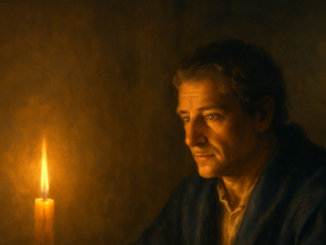
A pivotal moment in the surah occurs when Maryam withdraws to a secluded place. The Quran describes how she separates herself from her family and retreats to the east — the direction of the rising light. There, the angel Gabriel appears to her. This moment of seclusion is not an act of flight but a deliberate choice for inner silence.
Spiritual growth demands moments of stillness in which the inner light can be perceived.
Does this not echo the ritual practice of Freemasonry? The act of entering the temple, leaving the outer world behind, and creating a sacred space for reflection mirrors Maryam’s retreat precisely. Her withdrawal toward the east reflects the orientation of the Masonic lodge, where the east represents the source of light and wisdom. Spinoza might have recognized this as the necessity of freeing the mind from external disturbances in order to arrive at true knowledge.
How Does Surrender Relate to Strength?
When Maryam learns that she will bear a son without a human father, she responds with astonishment but not resistance. Her question is sincere, not distrustful. And when she receives her answer, she surrenders to the divine will. In modern culture, surrender is often confused with weakness. But is that confusion justified?
Stoic philosophy, which Marcus Aurelius wrote about so compellingly, teaches us that true strength lies in accepting what falls beyond our control while taking full responsibility for our own responses. Maryam’s surrender is not passivity. She bears the consequences of her situation with dignity, even when her community meets her with suspicion. This is moral courage in its purest form — the kind of courage that every Freemason aspires to when walking the path of integrity in an uncomprehending world.
What Does the Speaking of the Newborn Teach Us?
One of the most remarkable passages in Surah Maryam is the moment when the newborn Jesus speaks to defend his mother. The infant declares himself a servant of God, a bearer of the Book, and emphasizes the duty of prayer and charity. This miracle does not serve as spectacle — it serves as confirmation of Maryam’s purity.
For the contemplative reader, a profound question arises here: why does truth sometimes speak through the most unexpected sources? In Freemasonry, there is a deep understanding that wisdom is not bound by age, position, or origin. The youngest Entered Apprentice may share an insight that gives the most seasoned Past Master pause. Truth recognizes no hierarchy.
Universal Themes That Bridge Traditions
Beyond the story of Mary, Surah Maryam contains passages about Abraham, Moses, Ishmael, and Idris. All of these figures are presented as exemplars of devotion and righteousness. The surah concludes with a warning against ascribing children to God — a theological point that underscores Islamic monotheism.
Yet when we look more closely, several universal themes emerge that transcend any single tradition: purity of intention as the foundation for spiritual growth; the necessity of inner silence to receive the light; moral courage to carry unpopular truths; the passing of wisdom to future generations; and the unity of the Divine as the source of all truth.
These themes are not exclusively Islamic. They form the shared language of mystical traditions worldwide. Voltaire, who devoted much of his thinking to religious tolerance, might well have observed that the essence of all great traditions contains the same moral intuitions, simply clothed in different symbolic garments.
What Do We Carry Forward from This Encounter?
Reading Surah Maryam as a Freemason is not an exercise in comparison or judgment. It is an invitation to recognize what we share with other seekers. The temple we build is not made of stone alone. It is an inner construction, raised from purity, surrender to higher principles, and the courage to carry the light — even when the world does not understand us.
Maryam stands in the Quran as a symbol of someone who accepts the impossible and, through that acceptance, becomes the bearer of something that changes the world. For the Freemason building his own inner temple, her story is a powerful reminder: spiritual growth does not require perfect circumstances — it requires a pure heart willing to receive the light, wherever it may come from.
Copyright text & image: devrijmetselaar.nl
Texts are based on the ideas and content of the author of devrijmetselaar.nl, reviewed, corrected, and supplemented with the assistance of OpenAI. Images are created based on the ideas of the author of devrijmetselaar.nl using OpenAI/DALL-E.
Frequently Asked Questions
Why does the Quran dedicate an entire chapter to Maryam (Mary)?
Maryam is the only woman in the Quran who has an entire chapter named after her. The Islamic tradition regards her as the ultimate embodiment of purity, devotion, and trust in the unseen. The chapter begins with the prophet Zechariah's prayer for a successor, establishing the theme of transmitting light and wisdom across generations—a concept central to Freemasonry's fraternal ideals of passing knowledge from generation to generation.
What is the spiritual significance of Maryam's withdrawal to a secluded place?
When Maryam withdraws to the east away from her family, she creates a sacred space for inner silence and reflection. This act mirrors Masonic ritual practice, where initiates enter the temple, leaving the outer world behind to create a space for spiritual contemplation. Her withdrawal toward the east reflects the Masonic lodge's orientation, where the east represents the source of light and wisdom, emphasizing that spiritual growth requires moments of stillness.
How does Maryam's surrender to divine will relate to strength in Freemasonry?
When Maryam learns she will bear a son without a human father, she responds with sincere questions but without resistance, ultimately surrendering to divine will. This demonstrates that surrender is not weakness but a form of strength—a theme that resonates with Masonic teachings about aligning personal will with higher principles and universal truths, suggesting that true strength comes through acceptance and trust in greater wisdom.


Be the first to comment