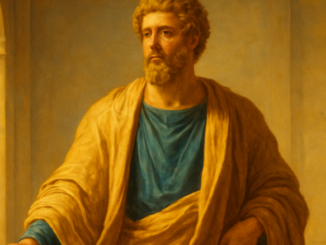
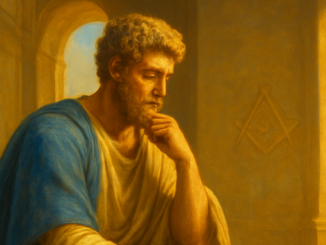
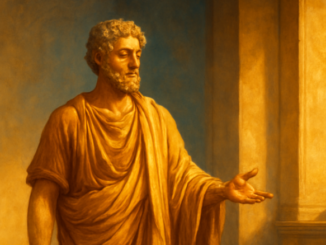
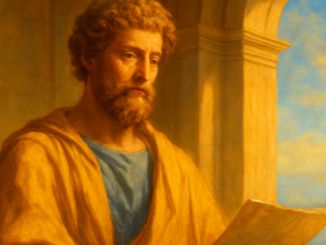
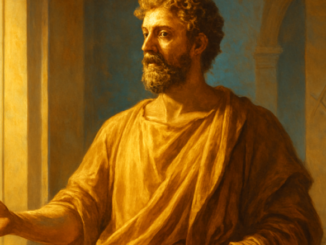
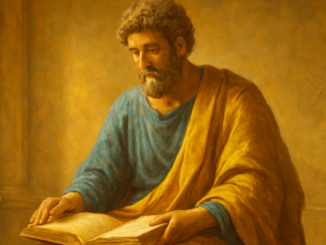
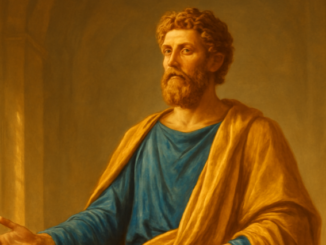
Ancient Roman bust of Marcus Aurelius with Masonic square and compass symbols
Marcus Aurelius – Freemasonry & Connection

Marcus Aurelius Book VII: Fate and Masonic Wisdom

What if everything that happens to us — the good fortune and the misfortune alike — ultimately leads to the same point? In the seventh book of his Meditations, Marcus Aurelius examines the unpredictability of fate with a clear-eyed sobriety that still resonates nearly twenty centuries later. For Freemasons, his philosophy raises a familiar question: how do we relate to the inevitable changes of life, and what does our response reveal about the state of our inner selves? The Paradox of Fate in Marcus Aurelius Marcus Aurelius, the Roman emperor-philosopher who reigned from 161 to 180 AD, wrote his Meditations as private reflections — never intended for publication. In Book VII, he turns his attention to a fundamental paradox: fate appears random, yet the wise person can still adopt a meaningful stance toward it. The unpredictability of life is not an enemy to be conquered, but a teacher that compels self-examination. He writes that the same events which destroy one person make another stronger. It is not the event that determines the outcome, but the way we receive it. This is not passive resignation — it is an active choice for inner sovereignty. The Stoic tradition in which Marcus Aurelius […]
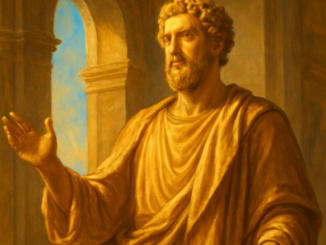
Open copy of Marcus Aurelius Meditations with Masonic square and compasses
Marcus Aurelius – Freemasonry & Connection

Marcus Aurelius on Evil: Book VII Wisdom for Freemasons

A candle flickers as a Freemason sits in silence after the evening’s labor. In his hands rests a worn copy of the Meditations. He reads a passage from Book VII — about people who do harm without realizing it — and recognizes something familiar, something discussed in lodge: how do you respond to injustice without losing your own inner balance? Marcus Aurelius, the Roman emperor-philosopher who lived nearly nineteen centuries ago, turns out to be remarkably relevant for anyone seeking moral clarity. The Heart of Book VII: Justice in the Face of Evil In the seventh book of his Meditations, Marcus Aurelius wrestles with a question that occupies every thoughtful person: how should you respond to those who do wrong? The emperor, who dealt daily with intrigue, betrayal, and human weakness, chose an unexpected path. Rather than anger or retaliation, he advocated understanding. Not because wrongdoing should be condoned, but because anger damages one’s own soul. Marcus Aurelius writes that those who do evil act out of ignorance about what is truly good. This idea, which traces back to Socrates and Plato, forms the backbone of his approach. Evil is not a deliberate choice of wrong over right, but a […]

Ancient Roman bust of Marcus Aurelius symbolizing Masonic brotherhood and Stoic wisdom
Marcus Aurelius – Freemasonry & Connection

Marcus Aurelius Book VI: Brotherhood as the Art of Living

Have you ever wondered why certain ancient wisdom still strikes such a powerful chord? Nearly two thousand years ago, Marcus Aurelius wrote about the art of living among others, and his words feel as though they could have been penned yesterday. In Book VI of his Meditations, the Roman emperor-philosopher reveals what it truly means to live as a human being among human beings. For Freemasons, these reflections sound remarkably familiar — because the values Marcus Aurelius describes also form the very foundation of the Craft. Humanity as One Body Throughout Book VI, Marcus Aurelius returns again and again to the theme of human interconnectedness. He does not see humanity as a collection of isolated individuals, but as parts of a single great organism. Just as a hand or a foot only finds its purpose as part of the body, so too does a person discover meaning through relationship with others. This is not idle philosophical musing — it is a call to action. When you wake in the morning and feel annoyed at the people you will encounter that day, Marcus Aurelius reminds you that they are your kindred. Not because you share the same blood, but because you […]

Marble bust of Marcus Aurelius with Masonic square and compass symbolism
Marcus Aurelius – Freemasonry & Connection

Marcus Aurelius on Virtue as the Only True Value

What if everything you own — your status, your reputation, even your body — were to vanish tomorrow? Would anything of real value remain? Marcus Aurelius, the Roman emperor-philosopher who ruled nearly nineteen centuries ago, posed this question to himself again and again. In the sixth book of his Meditations, he arrives at an answer that is both radical and consoling: only virtue holds genuine worth. This insight resonates profoundly with Freemasonry, where the pursuit of moral perfection and the cultivation of inner qualities stand at the very center of practice. Both traditions converge on a fundamental conviction: who you are matters far more than what you have. The Paradox of the Powerful Philosopher Here we enter curious territory. Marcus Aurelius wielded virtually unlimited power. As emperor, he could amass wealth, destroy enemies, and have his name chiseled in marble for all eternity. Yet night after night, he wrote in his private journal that none of these things moved him. More than that — he regarded them as distractions from what truly matters. Throughout Book VI, he repeats like a mantra that external circumstances are neither good nor bad. They are indifferent, neutral, merely the raw material with which the […]

Rough ashlar stone with gavel symbolizing Stoic obstacles in Freemasonry
Marcus Aurelius – Freemasonry & Connection

Marcus Aurelius on Obstacles: Stoic Wisdom for Freemasons

In 172 AD, Emperor Marcus Aurelius sat along the Danube frontier, surrounded by war and personal loss, and wrote some of the most penetrating observations ever recorded about the human capacity to transform adversity. His fifth book of the Meditations contains a core insight that still resonates in Masonic lodges around the world nearly two thousand years later: the obstacle becomes the way. This philosophical legacy connects the ancient Stoic tradition with the ongoing pursuit of moral perfection that lies at the heart of Freemasonry. The Historical Context of Book V Marcus Aurelius never intended his Meditations for publication. They were private notes — a journal of self-examination written during one of the most turbulent periods of his reign. Book V emerged during the Marcomannic Wars, a grueling campaign against Germanic tribes that kept the emperor far from Rome, surrounded by death and hardship. And yet, amid all of it, he turned his gaze inward. He asked himself a deceptively simple question: how do I remain a good man when the world around me descends into chaos? This was no rhetorical exercise. Marcus Aurelius buried children, lost trusted advisors, and watched soldiers fall around him. His own health was failing. […]

Rough ashlar stone with hammer and chisel symbolizing Masonic character building
Marcus Aurelius – Freemasonry & Connection

Marcus Aurelius on Duty: The Stone as a Symbol of Character

Every morning, before the first light slips through the window, every human being faces the same inner struggle. The warmth of the bed pulls at us while the day and its obligations wait. In Book V of his Meditations, Marcus Aurelius describes exactly this moment — the instant when character is forged. For Freemasons, this struggle resonates with a deeply rooted symbol: the working of the rough stone. Both traditions understand that the fulfillment of duty is not a burden but the very hammer with which we shape ourselves into something enduring. Waking Up as a Moral Turning Point Marcus Aurelius opens Book V with a scene every reader recognizes. He addresses himself at the break of day: rise, for you were made for the work that befits a human being. The emperor does not philosophize from an ivory tower but from the mud of military campaigns and the weight of administrative burdens. His words carry the gravity of lived experience. In his writing, this daily act of waking becomes a metaphor for a greater awakening. Not only must the body rise, but the mind must orient itself toward its true calling. In Freemasonry, we find a kindred idea: the […]

Candle-lit Masonic lodge with open book of Marcus Aurelius Meditations
Marcus Aurelius – Freemasonry & Connection

Marcus Aurelius on Change: Stoic Wisdom and Freemasonry

It is evening in the lodge. Candle flames flicker gently as the brethren sit in silence, each absorbed in thought after a night of ritual and reflection. An older brother opens a well-worn book and reads aloud: “Consider how much has already changed in the world. Everything flows.” The words of Marcus Aurelius, nearly two thousand years old, fill the room as though they were written yesterday. What the Roman emperor-philosopher captured in his Meditations about change and constant flux touches the very heart of what Freemasons seek: wisdom that endures amid the eternal cycle of becoming and passing away. The River of Heraclitus in the Roman Camp Marcus Aurelius likely wrote the fourth book of his Meditations during his military campaigns along the northern frontiers of the Roman Empire. Surrounded by war and uncertainty, he sought solace in Stoic philosophy — a tradition inherited from thinkers such as Epictetus and Seneca. Central to Book IV is the idea that everything exists in constant motion, an echo of the ancient Greek philosopher Heraclitus, who famously declared that one can never step into the same river twice. For Marcus Aurelius, this was no cause for despair. Rather, it was a path […]

Ancient Roman bust symbolizing Marcus Aurelius and Masonic inner retreat
Marcus Aurelius – Freemasonry & Connection

Marcus Aurelius and Freemasonry: The Art of Inner Retreat

There is a remarkable kinship between the Stoic wisdom of a Roman emperor and the ritual practice of an ancient fraternity. When Marcus Aurelius writes about retreating into oneself in Book IV of his Meditations, he touches upon a theme that also runs deep within Freemasonry. How do these two traditions — separated by nearly two thousand years — relate to one another? And what can they still teach us today about the art of finding inner peace in a restless world? The Stoic Perspective: The Citadel of the Mind Marcus Aurelius never intended his Meditations for publication. They were personal notes, often written at the front lines during military campaigns. In Book IV, he unfolds a core idea that underpins his entire philosophy: a person can, at any moment and regardless of circumstances, retreat into their own inner world. He compares the mind to a citadel — an impregnable fortress that can only be surrendered from within. The outside world, with all its chaos and demands, has no real power over our inner state unless we voluntarily hand that power over. For the Roman emperor, this was no idle philosophical exercise. He ruled a vast empire and faced wars, […]

Marcus Aurelius bust symbolizing Stoic philosophy and Masonic virtue
Marcus Aurelius – Freemasonry & Connection

Marcus Aurelius on the Good: Living According to Nature

What did Marcus Aurelius actually mean when he wrote about living in accordance with nature? And why does this ancient idea resonate so deeply with what Freemasons strive for? In the third book of his Meditations, the Roman emperor unfolds a vision of the good that remains strikingly relevant today. These are thoughts worth exploring together — as seekers of truth have always done. What Did Marcus Aurelius Mean by ‘Nature’? This is perhaps the first question that arises when reading Book III. Marcus Aurelius speaks constantly about living according to nature, but he does not mean the romantic ideal of untouched forests and flowing rivers. For the Stoics, nature carried a far deeper meaning: the rational order that permeates the universe, the logos that connects all things. The emperor saw each person as part of a greater whole. When we act in harmony with our rational nature, we act rightly — almost by definition. This may sound abstract, but its practical implication is remarkably clear: to live virtuously means to recognize and fulfill your role in the larger fabric of existence. Is this not precisely what a Freemason pursues when working on his rough ashlar? The Connection Between Stoic […]

Ancient Roman bust of Marcus Aurelius with Masonic square and compass symbolism
Marcus Aurelius – Freemasonry & Connection

Marcus Aurelius on Reason: A Stoic Mirror for Freemasonry

Picture a Roman emperor sitting alone by candlelight after a grueling day of affairs of state and military decisions. He reaches not for a sword, but for a stylus. In the stillness of the night, he writes words meant for no one else — only for himself. Words about reason, about the inner life, about what it truly means to be human. Nearly two thousand years later, Freemasons gather in their lodges to wrestle with the very same questions, searching for the same light that Marcus Aurelius sought in the quiet hours before dawn. Reason as an Inner Compass In the third book of his Meditations, Marcus Aurelius turns his attention to the essence of human existence: the ruling faculty, or hegemonikon. This inner capacity is what sets human beings apart from all other creatures. It enables us to distinguish truth from illusion, substance from noise. The emperor writes not to impress or instruct others, but to remind himself of what genuinely matters. That personal quest for inner truth runs remarkably parallel to the Masonic journey. For the Freemason, every journey begins in darkness. The candidate is symbolically blindfolded before receiving the light — a light that is not physical, […]

Marcus Aurelius statue symbolizing Masonic presence and self-reflection
Marcus Aurelius – Freemasonry & Connection

Marcus Aurelius on the Here and Now: Freemasonry & Connection

You probably know the feeling: you’re sitting in a conversation, but your mind has already drifted to tomorrow. You’re walking through the city, but you’re mentally somewhere else entirely. The present moment sometimes feels like the hardest place to truly inhabit. Marcus Aurelius, the Roman emperor-philosopher, wrestled with exactly the same challenge more than eighteen centuries ago. In the second book of his Meditations, he wrote some of his most penetrating thoughts on presence and connection. For Freemasons, his words touch on something essential — the question of how to be truly present, both for yourself and for your Brothers. The Burden of Past and Future Marcus Aurelius never wrote his Meditations for publication. They were private notes — a conversation with himself. That’s precisely why they feel so raw and honest. In Book II, he confronts himself with the waste that occurs when the mind constantly slips away to what has been or what is yet to come. He reminds himself that the present is the only thing anyone truly possesses. The past is gone, the future uncertain. Only this moment offers space for action, for growth, for genuine connection. This wasn’t idle philosophizing. For Marcus Aurelius, it was […]

Ancient Roman bust of Marcus Aurelius symbolizing Stoic wisdom and Freemasonry
Marcus Aurelius – Freemasonry & Connection

Marcus Aurelius and Impermanence: What Truly Connects Us?

Why would a Roman emperor from the second century still have something meaningful to say about human connection? And what does his reflection on the brevity of life have to do with the brotherhood that Freemasons strive for? In the second book of his Meditations, Marcus Aurelius confronts himself with an uncomfortable truth: everything passes, including ourselves. Yet within that very acknowledgment lies a surprising lesson about what truly binds us together as human beings. What Does Marcus Aurelius Actually Mean by Impermanence? Let us first consider what the emperor actually writes. In Book II of the Meditations, Marcus Aurelius describes how everything we know passes like waves on a river. Our bodies decay, our names are forgotten, and even the memory of our deeds eventually fades. This may sound bleak, but for the Stoic, it is no cause for despair. It is an invitation to clarity. The impermanence Marcus Aurelius describes is not nihilism. It is a call to distinguish between what is truly valuable and what is merely appearance. Fame, possessions, power — these are fleeting things. But virtue, character, and the way we treat others carry a different quality. Not because they last forever, but because they […]

Marcus Aurelius bust symbolizing Stoic gratitude and Masonic wisdom
Marcus Aurelius – Freemasonry & Connection

Marcus Aurelius on Gratitude: Lessons for Freemasons

Picture a Roman emperor who, in the midst of wars and the weight of governing an empire, sits down to write about what he learned from his grandfather, his mother, his teachers — even people he only met in passing. Marcus Aurelius does not open his Meditations with pride in his own accomplishments. He opens with gratitude. That first book is a practical lesson that remains strikingly relevant today, especially for anyone seeking connection and personal growth. For Freemasons, it offers a familiar mirror: who have your teachers been, and how do you carry their wisdom forward? The Power of Recognition In Book I of his Meditations, Marcus Aurelius names a series of people individually. His great-grandfather taught him the value of a good education. From his mother, he received simplicity and a distaste for extravagance. His philosophy tutor Rusticus introduced him to Stoicism. Each person transmitted a specific virtue. This is not vague sentimentality — it is a concrete inventory of what he received from others. This practice of deliberate recognition is something anyone can apply immediately. Take a moment and ask yourself: who shaped you? Perhaps a grandfather who modeled patience, a colleague who lived with integrity, or […]