Symbolic image of antimatter and Masonic square and compasses representing science and faith
Angels & Demons

Angels & Demons: Antimatter, CERN, and Freemasonry

Imagine being able to create matter from nothing — to conjure something tangible from pure energy. Would that be a divine act or a scientific achievement? In his thriller Angels & Demons, Dan Brown weaves a story around antimatter as the ultimate weapon, stolen from CERN’s particle accelerator. The novel suggests that science has crossed into sacred territory. But how much of it is actually true? And more importantly, what can Freemasons — who have sought harmony between reason and spirituality for centuries — learn from the tension between physics and fiction? Creation Is Not an Exclusive Domain Let’s start with a paradox. In Angels & Demons, Dan Brown presents antimatter as proof that humanity can create — that science has seized the monopoly on creation from religion. The dramatic tension in the book springs precisely from this premise: a substance that can both annihilate everything and demonstrate that matter arises from energy. But is this truly a conflict between faith and science, or is Brown projecting a false dichotomy that barely exists in the actual history of scientific inquiry? For Freemasons, this question is anything but new. Since the eighteenth century, Brethren such as Isaac Newton and later members […]
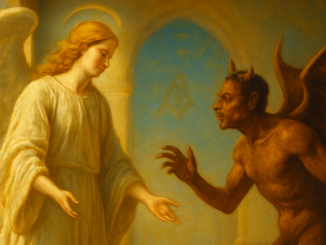
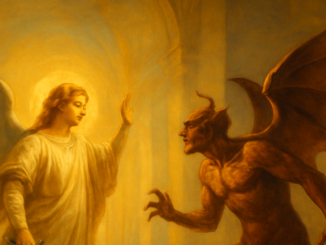
CERN particle accelerator tunnel representing antimatter research and science
Angels & Demons

Angels & Demons: Antimatter at CERN, Fact or Fiction?

In 2000, Dan Brown published his thriller Angels & Demons, in which a stolen container of antimatter from the European research center CERN threatens to obliterate Vatican City. The tension between science and faith lies at the heart of the story — but how much of this spectacular premise is grounded in actual science? As Freemasons, we cherish the pursuit of truth as one of our highest values. Let us, therefore, separate the facts from the fiction. Antimatter: From Theoretical Concept to Laboratory Reality The history of antimatter begins in 1928, when British physicist Paul Dirac formulated an equation that predicted the existence of antiparticles. Four years later, in 1932, Carl Anderson discovered the positron — the antiparticle of the electron — earning him the Nobel Prize. This was no longer science fiction; it was experimental science. Dan Brown’s Angels & Demons builds on this reality by presenting antimatter as a kind of ultimate energy source, albeit with considerable artistic license. At CERN, the European Organization for Nuclear Research in Geneva, antimatter is indeed produced. The Antiproton Decelerator and the ALPHA experiment are working facilities where scientists create and study antihydrogen atoms. So far, Dan Brown’s story checks out: CERN […]

Antimatter containment concept representing the themes of Angels and Demons
Angels & Demons

Angels & Demons: Antimatter as a Weapon of Destruction

Imagine that science could create the ultimate force of destruction — a substance so pure and so powerful that it could undermine the very foundations of faith. This is not an idle thought experiment. It is the central premise of Dan Brown’s bestselling thriller Angels & Demons, a novel that places antimatter at the heart of a conflict between reason and religion, between laboratory and cathedral. But what does Brown actually suggest about this mysterious substance, and how does his fictional narrative connect to the symbolic quest that Freemasons have pursued for centuries? The Promise of Total Annihilation In Angels & Demons, Dan Brown presents antimatter as the most destructive material humanity has ever produced. According to the storyline, a minuscule quantity — captured within a specially designed containment system — would be enough to obliterate an entire city. The energy released when matter and antimatter collide, the book suggests, surpasses every conventional bomb and even nuclear weapons. Brown paints a scenario in which scientists at the European particle research center manage to produce and store measurable quantities of antimatter, unwittingly placing the key to apocalyptic devastation in human hands. This depiction raises a fundamental tension that runs through the […]

Ambigram design with Masonic square and compasses on a dark background
Angels & Demons

Angels & Demons: Ambigrams and the Illuminati Myth Debunked

You’ve read the thriller or watched the film. The suspense, the mysterious symbols, the secret societies. Dan Brown’s bestseller Angels & Demons has captivated millions of readers with tales of the Illuminati and their alleged war against the Catholic Church. But how much of that symbolism is actually real? And what do Freemasons have to do with any of it? If you’ve ever wondered where the line falls between gripping fiction and historical fact, this article offers practical tools to help you tell the difference for yourself. What Are Ambigrams — and Why Are They So Fascinating? In Angels & Demons, ambigrams play a central role. These are words or designs that can be read from multiple orientations — most commonly, they look the same when turned upside down. In the novel, branding irons featuring this property are presented as ancient Illuminati symbols. The fascinating thing about ambigrams is that they do exist as an art form, but they are modern typographic creations from the twentieth century, not relics of a bygone era. The ambigrams in the book were specially designed for the novel by a contemporary graphic artist named John Langdon (whose surname, not coincidentally, Brown borrowed for his […]

Ambigram design inspired by Dan Brown's Angels and Demons novel
Angels & Demons

Angels & Demons Ambigrams: Fact-Checking Dan Brown’s Symbols

The premise seems airtight at first glance: the ambigrams in Dan Brown’s thriller Angels & Demons prove the existence of an ancient secret society that concealed its messages through ingenious symbols. But what if this premise works in exactly the opposite direction? What if the symbols don’t confirm the fiction — but the fiction invented the symbols? This article examines the boundary between literary imagination and historical symbolism, and asks a question that is seldom posed aloud: what do we actually know about ambigrams, and what have we simply believed because a novel suggested it? The Claim: Ancient Secret Symbols In Angels & Demons, Dan Brown presents ambigrams as mysterious marks used by the Illuminati to signal their presence. The story suggests that these symmetrical word-images have existed for centuries and were recognized by initiates as signs of a hidden brotherhood. The protagonist discovers brands bearing words that are legible both right-side up and upside down. The implication is unmistakable: these are authentic historical artifacts of a secret society. And here is where the trouble begins. Historical reality tells an entirely different story. The ambigrams in the book were not unearthed from archives or excavated from old lodges. They were […]

Ambigram design illustrating the relationship between fiction and Masonic symbolism
Angels & Demons

Ambigrams in Angels & Demons: Fiction vs. Real Symbolism

Imagine a word that reads exactly the same when you flip it upside down — symmetrical, mysterious, and seemingly impossible. In Dan Brown’s bestselling thriller Angels & Demons, these typographic designs called ambigrams play a starring role as alleged secret symbols of an ancient brotherhood. But what does the novel actually claim? And how do those claims hold up against what we genuinely know about symbols, secret societies, and Freemasonry? What Exactly Are Ambigrams? Let’s start at the beginning. The word “ambigram” derives from the Latin ambi (both sides) and gramma (letter). An ambigram is a typographic design that can be read in more than one way — most commonly by rotating it 180 degrees. It is an art form that truly came into its own during the twentieth century, developed by graphic designers and calligraphers experimenting with symmetry and legibility. Here’s the critical question: if ambigrams are a modern invention, how could they possibly be the secret signs of an eighteenth-century secret society? That contradiction takes us straight to the heart of what the novel claims. What Does the Novel Actually Claim? In Angels & Demons, ambigrams are presented as authentic, historical symbols of the Illuminati — the Bavarian […]