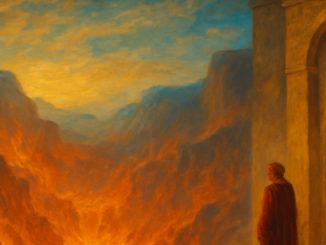
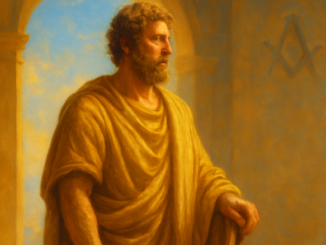
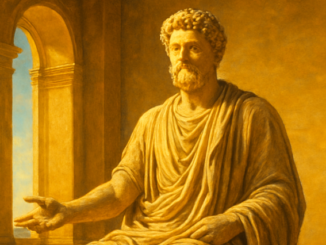
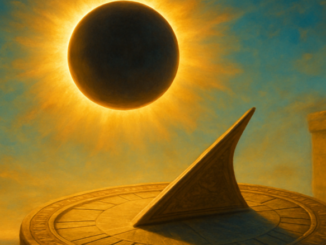
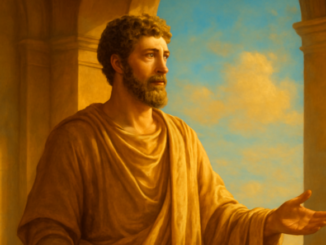
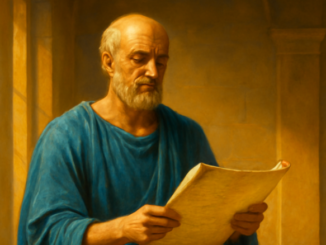
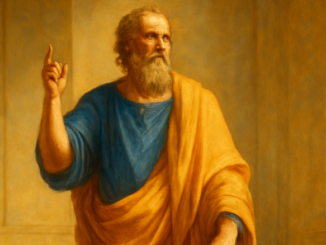
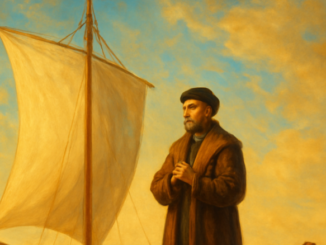
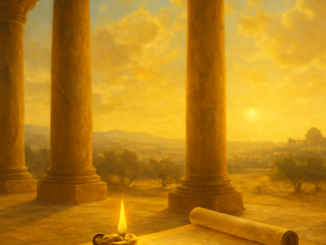
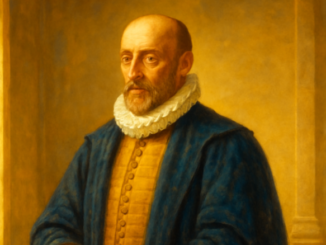
Hourglass and rough ashlar symbolizing Stoic philosophy and Freemasonry
Marcus Aurelius – Content & Summary

Marcus Aurelius Book II: The Art of Living in the Present

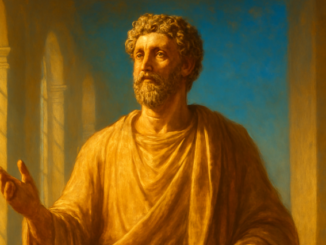
When you turn an hourglass, every grain of sand falls irreversibly downward. No single grain returns, no moment ever repeats itself. In the second book of his Meditations, Roman Emperor Marcus Aurelius confronts himself with this unforgiving truth. He wrote these reflections during a military campaign along the Danube, far from the comforts of Rome, surrounded by death and impermanence. It was precisely there, in those raw and unrelenting circumstances, that a philosophy crystallized — one that still resonates powerfully today: the art of being truly present in the only moment we ever possess. The Morning as a Mirror of Life Book II opens with a remarkable passage in which Marcus Aurelius mentally prepares himself for the day ahead. He warns himself that he will encounter difficult people — the meddlesome, the ungrateful, the jealous. But rather than arming himself with resentment, he chooses understanding. These people act the way they do out of ignorance about what is truly good and evil. With this morning reflection, Marcus sets the tone for the entire book: each new day is an exercise in conscious living. This morning ritual takes on a symbolic dimension. Just as the sun appears on the horizon each […]

Hourglass in a Masonic lodge symbolizing Seneca's philosophy of time
Lucius Annaeus Seneca – Letters to Lucilius

Seneca’s First Letter: The Philosophy of Time in Freemasonry

A candle flickers in the early morning as a Freemason opens his journal. Before him lies a translation of Seneca’s letters, turned to the very first one. He reads words written nearly two thousand years ago and feels an uncanny recognition: time slipping away unnoticed, the urgent need to claim every moment. In the stillness of the lodge, where the hourglass stands prominently displayed, these ancient words take on an unexpected immediacy. The Stoic Roots of Time Awareness Lucius Annaeus Seneca wrote his first letter to Lucilius around 63 AD, during a period when he was withdrawing from political life at the court of Emperor Nero. That this letter on the use of time opens his entire correspondence is no accident. Seneca immediately lays the foundation of Stoic philosophy as a way of life: the realization that time is our only true possession, and simultaneously our most vulnerable one. The Stoic school, founded by Zeno of Citium around 300 BC, regarded time as an ethical category. Where other philosophical traditions focused on knowledge or happiness as the highest good, the Stoics saw virtuous action in the here and now as the essence of a life well lived. Seneca inherits this […]

Ancient Greek temple columns symbolizing Plato's philosophy and Masonic self-knowledge
Plato – Philosophical Background

Plato’s Apology: The Philosophical Roots of Self-Knowledge

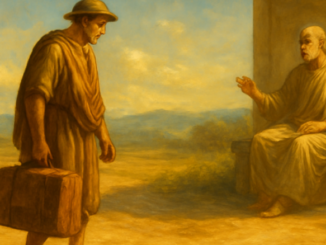
There is a paradox at the very heart of Western philosophy: the wisest man in Athens claimed to know nothing. When Socrates stood before the court, he was not so much defending his life as defending a way of life. The Apology that Plato recorded is far more than a legal document — it is a philosophical manifesto whose influence has echoed through the centuries, from the Stoics to Freemasonry. The question it raises still lingers: what does it truly mean to know yourself? The Legacy of Delphi Above the entrance to the Temple of Apollo at Delphi stood the famous inscription: “Know Thyself.” This oracle would become the starting point for Socrates’ entire philosophical quest. When his friend Chaerephon asked the oracle whether anyone was wiser than Socrates, the priestess answered that no one was. This response presented Socrates with a riddle that would define the rest of his life. How could he be the wisest man when he was so acutely aware of his own ignorance? The Apology shows how Socrates resolved this apparent contradiction. By questioning politicians, poets, and craftsmen, he discovered that they believed they knew things they did not actually know. His own wisdom, he […]

Rough stone being shaped into a perfect ashlar symbolizing constancy
Michel de Montaigne – Philosophical Background

Montaigne on Constancy: The Philosophical Roots Revealed

A stone that stands unmoved while the storm rages around it. This image, as familiar in the builder’s craft as in philosophy, strikes at the heart of what Michel de Montaigne explores in the twelfth essay of his first book: human constancy. But which thinkers whispered those ideas into his ear? Which philosophical traditions formed the foundation upon which he built his reflections on steadfastness? The answers lie hidden in a rich intellectual heritage reaching back to antiquity. The Stoic Foundation When Montaigne writes about constancy, he is unmistakably walking through the colonnades of the Stoa. Stoic philosophy, founded by Zeno of Citium in the third century BC, placed the imperturbability of the human mind at its center. For the Stoics, true virtue lay in accepting what lies beyond our control while mastering our own reactions. This idea forms the backbone of Montaigne’s approach to the subject. Particularly influential was the work of Seneca, the Roman philosopher and statesman whose letters and essays Montaigne studied with great enthusiasm. Seneca’s De Constantia Sapientis (On the Constancy of the Wise Man) addresses precisely the theme Montaigne would later rework. The wise man, Seneca argued, cannot truly be insulted or harmed, for his […]

Ancient temple columns symbolizing Freemasonry building metaphors from Corinthians
Christianity

First Corinthians: Building Metaphors and Brotherhood

Around the year 55 CE, Paul of Tarsus sat down in Ephesus to write a letter to the fledgling Christian community in Corinth. This bustling port city, perched on a strategic isthmus between two seas, thrived on commerce, philosophy, and religious diversity. The letter we know as First Corinthians contains some of the most compelling imagery in early Christian literature: the community as a temple, believers as building stones, and the imperative to build upon a solid foundation. For those familiar with the symbolic language of Freemasonry, these metaphors sound remarkably familiar. A Letter to a Divided Community Understanding the historical context of this letter is essential to grasping its symbolism. First-century Corinth was a cosmopolitan city where Greeks, Romans, Jews, and freedmen lived side by side. The young congregation Paul had founded there was struggling with internal division. Different factions rallied behind different leaders, threatening to fracture the community’s unity. It is against this backdrop that Paul develops his powerful building metaphor. In the third chapter, he compares the community to a building whose foundation he himself has laid. Others build upon it, but the quality of their work will be tested by fire. This image of the skilled […]

Montaigne essay on constancy and its connection to Masonic self-knowledge
Michel de Montaigne – Content & Summary

Montaigne on Constancy: What Essay 12 Teaches Us About Courage

Imagine standing at the threshold of a difficult decision. You feel the tension in your body, the doubt racing through your mind. How do you remain steadfast when circumstances seem to conspire against you? Michel de Montaigne wrestled with precisely this question when he wrote his twelfth essay. In ‘On Constancy,’ he examines what it truly means to be resolute — and why we should not be too quick to congratulate ourselves when we merely appear courageous. The Core Idea of the Essay In this brief but powerful essay, Montaigne poses a surprising question: is constancy really what we think it is? He argues that true constancy does not simply mean standing in the face of danger. What matters is how you respond inwardly to threat. You might appear brave as you stride toward a drawn sword, but if you are trembling with fear on the inside and only pressing forward out of shame, can that really be called courage? Montaigne draws a sharp distinction between outward behaviour and inner disposition. He observes that many people we regard as courageous actually act out of impulse, pride, or even ignorance of the danger they face. The true test of constancy lies […]

Open Gospel of Mark with Masonic symbols representing the inner journey
Christianity

Mark: The Gospel of Action and the Inner Journey

Why does the Gospel of Mark begin so abruptly — no birth narrative, no genealogy — just a voice crying out in the wilderness? And what does that raw, urgent opening have to do with the path walked by every seeker of truth? In this second installment of our series on sacred texts, we examine the Gospel of Mark through the lens of symbolism and inner transformation. What Makes Mark Different from the Other Gospels? It is a fair question. Where Matthew dwells on lineage and Luke on angelic announcements, Mark plunges straight into the story. No family tree, no shepherds, no wise men. Just a voice in the desert and a baptism in the river. This is the shortest gospel, the fastest, and the most action-driven. The Greek word euthys — meaning “immediately” or “at once” — appears dozens of times. Mark is less concerned with telling us who Jesus was than with showing us what he did. For those familiar with the symbolism of inner development, this emphasis on action is deeply significant. It is not about origin or theory — it is about the steps you take. The journey is the destination. And that journey begins, as […]

A silversmith's crucible over fire symbolizing the refiner's purification
Christianity

Malachi: The Messenger Who Brings Refinement

A crucible sits upon the fire. The metal within begins to glow, impurities rise to the surface and are skimmed away. What remains is purer, stronger, more valuable. This image from the daily life of ancient craftsmen carries a timeless truth within it. The last book of the Hebrew prophets — Malachi — speaks precisely about this process, not of metal, but of the human soul. As the closing chapter of the Old Testament, this brief text forms a bridge between what was and what is to come, between outward ritual and inner transformation. The Crucible as Mirror At the heart of Malachi stands the image of the refiner. The prophet describes a coming messenger who will sit as a silversmith, refining and purifying silver. This is not a destructive fire but a transformative one — and the distinction is essential. Destruction annihilates what is flawed, but refinement separates the valuable from the worthless so that the former can truly shine. The crucible in the silversmith’s workshop is, in this light, a symbol of conscious self-improvement. The fire that melts the metal is not random; it is carefully controlled by a craftsman who knows precisely when the purification is complete. […]

Golden seven-branched lampstand flanked by two olive trees in soft light
Christianity

Zechariah’s Golden Lampstand: A Mirror of the Inner Self

In the Book of Zechariah, there stands a lampstand. Not an ordinary one, but a golden lampstand with seven lamps, fed by two olive trees that channel their oil directly into its reservoir. This striking image from the fourth chapter of the prophetic text invites us to pause and reflect. What does it mean to receive light without effort of your own? And what might this ancient vision tell us about the way we build ourselves — and the world around us — today? A Lampstand That Feeds Itself Imagine a lamp that never needs refilling. The oil flows on its own; the flame never dies. In Zechariah’s vision, this golden lampstand stands at the center, flanked by two olive trees. The prophet asks what it all means, and the answer is profound: “Not by might, nor by power, but by my Spirit.” With those words, the focus shifts away from human effort toward a deeper, inexhaustible source. The lampstand becomes a symbol of what happens when we open ourselves to something greater than our own will. In Freemasonry, light plays a central role. The search for light is the search for knowledge, for insight, for that which was hidden […]

Ancient temple ruins symbolizing rebuilding and Masonic transformation
Christianity

Second Chronicles: The Temple as a Living Symbol of Rebuilding

Imagine a structure that is destroyed time and again, yet keeps rising from the dust. Not just a building of stone and timber, but a living symbol of hope, resilience, and the human longing to connect with something greater. Second Chronicles — the fourteenth book of the Old Testament — tells precisely this story. It chronicles kings who fall and rise, a temple that is built, neglected, and rebuilt. But look deeper, and you’ll find more than history: this book speaks to the eternal human task of building ourselves. The Temple: More Than Stone and Mortar In Second Chronicles, the Temple of Jerusalem occupies center stage. Originally erected by King Solomon, it is described with breathtaking precision. Every pillar, every ornament, every golden vessel has its designated place. But what does such meticulous detail truly signify? Why would an ancient text devote so much attention to architectural specifications? The answer lies in the symbolic layer beneath the concrete. The Temple is not merely a house of prayer. It is a reflection of the cosmos — a meeting point between heaven and earth, between the divine and the human. For anyone familiar with Masonic symbolism, this resonates deeply. The lodge itself […]

Ruins of the Temple of Solomon symbolizing inner exile and Masonic renewal
Christianity

Second Kings: Fall and Exile as an Inner Journey

A kingdom that once flourished collapses into ruin. The temple built with such devotion is consumed by flames. What remains is exile — a foreign land, lost glory, and the ashes of what once was. Second Kings tells this story of downfall, but those who look deeper will discover a mirror for the human soul. Viewed through two lenses — that of the Bible reader and that of the Freemason — a wealth of meaning unfolds that reaches far beyond historical fact alone. The Story Through the Eyes of Tradition For those who read Second Kings as part of biblical history, a dramatic epic unfolds. The book spans more than two centuries, during which the kingdom of Israel fractures and both the northern and southern kingdoms are eventually overrun by powerful neighboring empires. Kings succeed one another — some righteous, many corrupt. The Temple of Solomon, once the radiant heart of worship, is plundered and destroyed. From this perspective, Second Kings is a cautionary tale about the consequences of unfaithfulness. Kings who stray from the path of wisdom bring calamity upon their people. The prophets — Elijah and Elisha among them — call for repentance, but their voices often go […]

Ruth gleaning in the cornfields symbolizing loyalty and Masonic transformation
Christianity

Ruth and the Cornfield: Loyalty and Symbolism in Freemasonry

Loyalty is a word that rolls easily off the tongue, but it only reveals its true nature when everything else falls away. What remains of a promise when there is nothing left to gain? When following someone leads not to prosperity but to uncertainty, poverty, and exile? The Book of Ruth poses exactly this question — and the answer it gives is so radical that it still unsettles us three thousand years later. Ruth does not choose loyalty because it is wise. She chooses loyalty because it is essential. The Paradox of Gaining Through Loss Let us begin at the beginning — which is to say, at the end. The Book of Ruth opens with a cascade of loss. Naomi loses her husband, then both her sons. She stands in a foreign land without protection, without a future, without a name that still carries weight. She renames herself Mara — the bitter one. It is a gesture of total surrender to emptiness. And precisely at that lowest point, in that absolute desolation, something takes root that proves stronger than any material certainty: the loyalty of a daughter-in-law who refuses to leave. Here we touch a paradox that Freemasonry knows intimately. […]

Masonic gavel on a workbench symbolizing the cycle of growth and renewal
Christianity

Judges and the Cycle of Falling and Rising: Symbols of Growth

A hammer rests on the workbench. It is motionless, yet it carries within it the potential for both creation and destruction. In much the same way, the Book of Judges lies before us — a collection of stories about leaders who rise and vanish, about a people who fail and recover, fail and recover again. What does this ancient text tell us about the human soul? And how does the symbolism of this seventh book of the Old Testament mirror the path that every Freemason walks? The Cycle as an Archetypal Pattern The Book of Judges does not describe a linear history — it traces a spiral. The people turn away from their path, fall into oppression, cry out for help, and a leader emerges to deliver them. After a period of peace, the cycle begins anew. This pattern repeats itself twelve times, like a mantra carved into the very fabric of the text. For the Freemason, this cycle is deeply familiar. The rough ashlar is not shaped into a perfect cube in a single stroke. It is a process of failure and correction, of straying and returning to center. The cycle in Judges is not a sign of weakness […]

A candle flame burning on a Masonic altar symbolizing hope and renewal
Freemasonry & Society

Fire and Oil: On Destruction and the Courage to Rebuild

The old Master gazed at the candle on the altar. The flame danced restlessly, as though it had something to say. That morning, he had read the news — burning storage tanks, columns of smoke rising miles into the sky, a refinery consumed by fire. He reflected on the strange paradox of fire: the very element that illuminates the temple can also devour everything in its path. When Fire Destroys Instead of Illuminates This week, images emerged of a large-scale attack on an oil refinery near Moscow — reportedly the largest in the region. Massive walls of flame, thick black smoke, and the unmistakable sense of destruction that seems to seep through the screen itself. For many, this is simply another piece of war news to scroll past. But for those who look with a contemplative eye, there is more to see than strategic targets and economic damage. Fire has always carried a dual meaning in human history. It is the symbol of civilization — of warmth and community gathered around the hearth. But it is equally the instrument of devastation, of cities reduced to ash. In Freemasonry, fire stands as one of the most powerful symbols we know: the […]

Underground gas pipeline symbolizing hidden Masonic connections and flowing energy
Freemasonry & Society

The Gas Pipeline as Symbol: When Energy Flows Freely Again

A pipe buried underground. Invisible, forgotten — until the news reminds us it exists. European gas prices drop following a peace agreement between the United States and Iran, and suddenly the pipeline becomes what it always was: a vein in the body of civilization. But what do we truly see when we look at that pipe? A piece of infrastructure? Or an invitation to reflect more deeply on what it means when energy flows freely once again? The Invisible Network Beneath our feet lies a world we rarely consider. Pipes, cables, conduits — they form a network that makes daily life possible without us sparing it a second thought. Only when the flow stops, when the warmth fails to arrive, do we realize how dependent we are on this hidden infrastructure. The peace accord now calming the energy markets makes visible something that was always there: our profound interconnectedness. Freemasonry has a rich tradition of contemplating what is hidden and what is revealed. The building of the Temple, so central to our symbolism, is not merely about stones and columns. It is about the invisible structures that support a building — the foundations no one sees, but without which nothing […]

A darkened chamber with Masonic symbols representing reflection and inner wisdom
Freemasonry & Society

The Power of Departure: Why Walking Away Can Be the Best Move

A race car sits idle in the pit lane. The driver climbs out, leaves the circuit, and seeks silence. Hours later, he returns and delivers the qualifying lap of his lifetime. The story made headlines around the world yesterday: sometimes you have to leave in order to truly arrive. For those familiar with the symbolism of Freemasonry, an ancient truth resonates here — one that reaches far deeper than any racetrack. The Circuit as a Mirror of Society A racing circuit is more than asphalt and crash barriers. It is a closed system where pressure, expectation, and performance converge in a relentless rhythm. Lap after lap, second after second — everything is measured, compared, and judged. In many ways, this mirrors the society in which we all operate: a world of deadlines, targets, and the unceasing demand for more, faster, better. The driver who chose to temporarily step away from this system did something that defies every rule of our performance-driven culture. He stopped when pushing forward was expected. He sought distance when proximity was demanded. And yet, it was precisely this departure that became the key to his finest performance. The Chamber of Reflection: The Symbolism of Withdrawal In […]

The lodge building of Concordia Sneek with its symbolic entrance door
Lodges in the Netherlands

Concordia Sneek: The Door as a Threshold to the Inner Self

In the Frisian canal city of Sneek, there stands a building that most passersby would scarcely notice. Yet behind its unassuming exterior, the lodge building of Concordia Sneek holds a world of symbolic depth. Today, we turn our attention not to the rituals performed within its walls, but to something seemingly ordinary: the door. What can a door tell us about the transition from outside to inside, from the everyday to the essential? And what does the architecture of a Masonic lodge reveal about the construction of the inner self? The Name Concordia: Architecture of Harmony To hear the name Concordia is to think of an abstract ideal. Yet there is a deeply architectural principle embedded in this Latin word for harmony or unity of spirit. Just as stones only form an arch when they hold each other in perfect balance, so concordia only emerges when diverse elements align themselves to a shared pattern. The lodge in Sneek carries this name for good reason. Every Masonic lodge is a symbolic workshop — a space where brethren practice the art of building something greater than themselves. The architecture of a lodge building is never accidental. Every wall, every window, every proportion […]

Crowbar as a Masonic symbol of breakthrough, leverage, and moral wisdom
Freemasonry & Society

The Crowbar as a Symbol of Breakthrough in Freemasonry

Among the oldest lever instruments known to humanity, the crowbar carries a symbolic weight that far exceeds its physical function. In the tradition of Freemasonry, where every tool holds a moral lesson, the crowbar stands as a compelling emblem of breakthrough — the art of opening what has become sealed, of creating passage where none existed before. But like every tool in the symbolic workshop, its meaning depends entirely on the hands that wield it and the intention behind the act. The Crowbar in Historical Perspective The crowbar belongs to the most ancient class of lever tools. Builders and craftsmen in antiquity relied on it to move massive stones and pry open tightly sealed joints. The English word “crowbar” itself derives from the tool’s split tip, which resembles a crow’s foot — a detail that reveals something essential about its nature. This is not a sledgehammer designed to shatter. It is an instrument of intelligence, one that seeks the right gap, the vulnerable point where minimal effort produces maximum effect. By the nineteenth century, the crowbar had become a symbol of the working class. Miners, railroad laborers, and construction workers carried it as their daily companion. It represented honest labor […]

Flickering candle casting warm light as a symbol in Freemasonry
Symbolism & Rituals

The Flickering Candle: Spiritual Light in Freemasonry

There are moments when the world seems to stand still. You sit in a darkened room, and a flickering candle speaks to you — not in words, but in something far older and deeper. That trembling flame, vulnerable yet persistent, reaches a part of us that reason alone cannot touch. Within Freemasonry, this ancient symbol holds a place of profound significance, for where light exists, the work on the rough stone of the self begins. The Language of Candlelight in Spiritual Traditions Ever since humanity first learned to master fire, the candle has played a central role in ritual and reflection. It is no coincidence that virtually every spiritual tradition on earth uses candlelight as a vehicle for meditation, prayer, or sacred ceremony. The flickering flame is universal — it speaks a language that needs no translation. But what makes the flickering itself so meaningful? A steady, unwavering flame would be static, predictable. A candle that flickers, however, reminds us of the impermanence of existence. It dances with invisible currents of air, responds to every breath, and in doing so mirrors the human condition. We are not fixed or unchanging — we flicker too, between hope and doubt, between knowing […]

Masonic trowel symbolizing the art of binding and character building
Personal Development & Leadership

Lodge De Troffel: Where Personality Is Forged

When you first hear the name Lodge De Troffel — “The Trowel” — it might conjure images of construction sites and tradesmen. Yet behind this humble name lies a profound meaning that strikes at the very heart of what Freemasonry seeks to achieve: working on the self. The trowel, that unassuming tool used by masons to spread mortar between stones, symbolizes the art of binding. Not only binding people together, but also uniting the many facets of one’s own character into a harmonious whole. The Trowel as a Tool of the Soul In the symbolic world of Freemasonry, every working tool carries its own meaning. The trowel occupies a special place among them. Where the gavel represents willpower and the square stands for moral uprightness, the trowel represents the capacity to connect and to heal. It is no coincidence that several lodges across the Netherlands and beyond bear this name. They deliberately choose this symbol because it speaks to the gentler side of the Craft — not the hewing and breaking, but the careful bringing together. A personality does not form in isolation. It emerges through the interplay between inner tendencies and outward influences, between nature and experience. The trowel […]