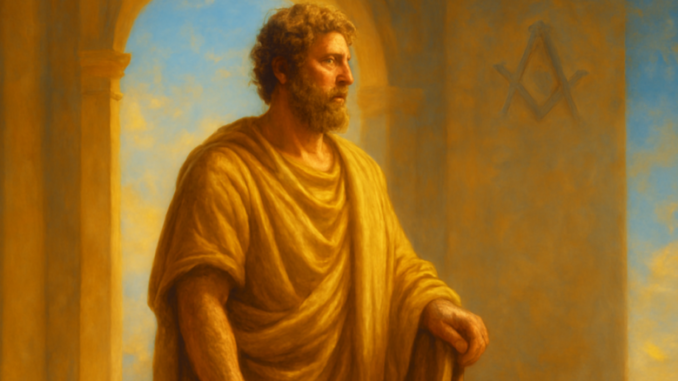
Imagine waking up and facing the day ahead like a mountain you must climb. Everything inside you resists. Your mind searches for excuses, and the warm blankets feel like a safe harbour. It is precisely in moments like these that the Roman Emperor Marcus Aurelius addressed himself with words that still resonate nearly two thousand years later. In the fifth book of his Meditations, he explores how we need not see obstacles as enemies — but as the path itself.
The Context of Book V
Marcus Aurelius never wrote his Meditations for publication. They were personal exercises in the art of living — private reflections set down during some of the most turbulent years of the Roman Empire. Book V was most likely composed during military campaigns along the Empire’s northern frontiers, amid war, plague, and personal loss. These circumstances make the text all the more powerful: this is not a philosopher speaking from an ivory tower, but a man confronting the harshest realities of existence on a daily basis.
The book opens with a passage that almost everyone can relate to. Marcus describes the moment of waking, when the temptation to stay in bed is at its strongest. He reminds himself that he was born to act, not to lie idle under blankets. This seemingly simple observation sets the stage for the central theme of Book V: every obstacle contains an invitation to grow.
The Core Idea: The Obstacle Is the Way
The most celebrated insight from Book V is what has since been summarised as “the obstacle is the way.” Marcus Aurelius puts it this way: that which stands in the path becomes the path. A hindrance to one course of action can become an aid to another. What holds you back can, at the same time, carry you forward.
The obstacle that blocks you reveals precisely the virtue you need to develop in order to overcome it.
This idea hinges on a fundamental shift in perspective. Rather than viewing obstacles as external enemies that hold us back, Marcus invites us to recognise them as teachers. A difficult colleague becomes an exercise in patience. A financial setback becomes a lesson in simplicity. An illness becomes a reminder of what truly matters. The adversity itself is the curriculum.
Vivid Examples from the Text
Marcus Aurelius uses several concrete images in Book V to bring his insights to life. He compares human life to the work of craftsmen. A carpenter who encounters a knot in the wood does not hurl his axe to the ground in frustration. He adjusts his technique and uses the resistance of the material to refine his skill.
Another recurring image is that of fire. Marcus writes that a strong fire turns everything thrown into it into fuel. Where a small flame would be smothered by too much wood, a great blaze leaps higher. In the same way, a strong mind can transform adversity into strength. The image is striking: the goal is not to avoid difficulties but to cultivate an inner fire powerful enough to consume whatever comes its way.
The Stoic Foundation
The philosophical roots of Book V lie in the Stoic tradition Marcus Aurelius inherited from thinkers such as Epictetus, Seneca, and Zeno of Citium. At its centre is the distinction between what lies within our power and what does not.
Beyond our control: the weather, other people’s actions, illness, death.
Within our control: our judgments, our choices, our attitude.
The key: shifting our focus from the external to the internal.
Marcus reminds himself that pain, humiliation, or setback only have real power over us if we grant them that power. An insult wounds only if we decide to feel insulted. A setback breaks us only if we decide to be broken. This radical responsibility for our inner state is the beating heart of the Stoic approach — and it is a principle that rewards a lifetime of practice.
Resonance with Masonic Tradition
The themes of Book V resonate powerfully with the symbolism found in Freemasonry. The image of the rough ashlar that must be shaped into a perfect cube mirrors precisely what Marcus describes: obstacles are the very tools with which we work upon ourselves. Every resistance, every knot in the material of our character, offers an opportunity for refinement.
The building metaphor that stands at the heart of Masonic symbolism connects seamlessly with Marcus’ comparison to craftsmen. Just as a master mason learns to work with imperfections in his material, so the wise person learns to work with the imperfections of fate. The goal is not a life free of resistance, but a character that is shaped and strengthened by it. In both the Stoic and the Masonic tradition, the work is never finished — it is a daily labour of self-improvement, carried out with patience, humility, and steadfast purpose.
Practical Applications for Daily Life
What makes a text written nearly two thousand years ago still relevant today? Marcus Aurelius offers no abstract philosophical system. Instead, he provides concrete exercises for daily living. He invites you to consider each morning which difficult people you will encounter and to prepare yourself for patience. He recommends that when adversity strikes, you immediately ask: which virtue can I practise here?
This practical approach makes Book V accessible to anyone wrestling with the challenges of modern life. Whether you are dealing with work pressure, relationship difficulties, or health concerns, the Stoic framework offers a way not to be overwhelmed by circumstances but to emerge from them stronger. It is philosophy not as theory but as a daily discipline — remarkably similar to the way Freemasonry encourages its members to apply symbolic teachings in their everyday conduct.
Book V of the Meditations of Marcus Aurelius is a timeless guide for anyone who wishes not to flee from obstacles but to embrace them. Its core message is as simple as it is demanding: every obstacle contains the key to its own overcoming. By shifting our focus from what happens to us to how we respond, we transform adversity into fuel for growth. It is an invitation to choose action over passivity, courage over comfort, and the steady labour of shaping the rough stone of our character — day after day, one deliberate stroke at a time.
Copyright text & image: devrijmetselaar.nl
Texts are based on the ideas and content of the author of devrijmetselaar.nl, reviewed, corrected, and supplemented with the assistance of OpenAI. Images are created based on the ideas of the author of devrijmetselaar.nl using OpenAI/DALL-E.
Frequently Asked Questions
What is the main theme of Marcus Aurelius' Book V of Meditations?
The central theme of Book V is that obstacles should not be viewed as enemies, but as opportunities for growth and development. Marcus Aurelius teaches that 'the obstacle is the way' — meaning that what stands in your path can become the path itself, and each hindrance reveals the specific virtue you need to develop to overcome it.
When and why did Marcus Aurelius write Book V of Meditations?
Book V was likely composed during military campaigns along the Roman Empire's northern frontiers during some of the most turbulent times, including war, plague, and personal loss. Importantly, Marcus Aurelius never wrote Meditations for publication — they were personal exercises in the art of living and private reflections, which makes his insights even more powerful as they came from directly confronting harsh realities.
How does Marcus Aurelius suggest we should respond to obstacles in daily life?
Rather than resisting obstacles or making excuses, Marcus Aurelius invites us to recognize them as teachers. He uses practical examples, such as comparing life to a carpenter's work — just as a carpenter adjusts his technique when encountering a knot in wood rather than giving up, we should view difficulties like challenging colleagues, financial setbacks, or illness as curriculum for developing virtues like patience, simplicity, and perspective on what truly matters.


Be the first to comment