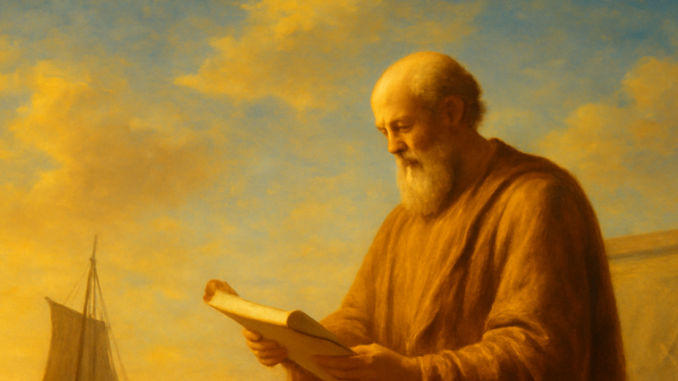
A gate is never merely an opening in a wall. Anyone who has ever crossed a threshold knowing there was no turning back understands the shiver that accompanies such a moment. In his seventieth letter to Lucilius, Lucius Annaeus Seneca invites us to contemplate the ultimate gate — the gate of death. But where others look away, Seneca sees an invitation to connection: with ourselves, with the time we have left, and with the brotherhood of all who share this journey.
The Threshold as a Meeting Place
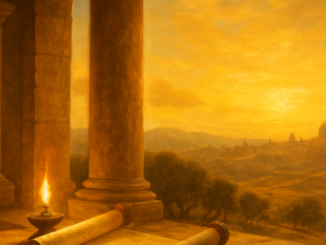
Picture an ancient gate, weathered by centuries, standing half open in the early morning light. On either side rise pillars adorned with symbols that speak of wisdom and impermanence. This image is no accidental metaphor. In Freemasonry, the act of crossing a threshold carries profound symbolic meaning. Every degree advancement begins with a passage — a deliberately chosen moment when the candidate leaves the familiar behind and steps into the unknown.
In Letter LXX, Seneca does not write about death as a dead end but as a doorway. He argues that while we may not fully control the timing of this passage, we can choose the attitude with which we approach it. Herein lies a deeper lesson: the gate invites self-reflection. Who am I at the moment I reach this threshold? What do I carry with me, and what do I leave behind?
Brotherhood Beyond Time
The Stoic philosopher emphasizes that all of us — regardless of rank or wealth — are making the same journey. This realization creates a remarkable bond. In Freemasonry, we call it brotherhood: a connection founded not on blood or possessions but on shared values and a mutual awareness of our common human condition. Seneca expresses something strikingly similar when he writes that death is the great equalizer — not as a threat, but as a reminder of what unites us.
Death is not an endpoint but a gate that reminds us of the brotherhood of all the living.
This idea resonates deeply with the Masonic concept of the chain — the invisible bond linking brothers who may never have met, yet who cherish the same values. Those who meditate on the finite nature of life often find their compassion deepening. The petty irritations of daily existence fade when you realize that the person beside you is approaching the same threshold.
The Rough Stone and the End of Life
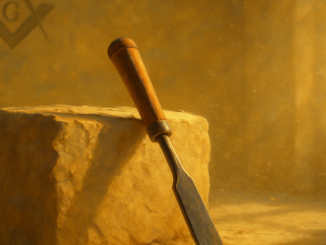
One of the most recognizable symbols in Freemasonry is the rough ashlar — the unfinished stone that must be shaped into a perfect cube. This process of refinement takes a lifetime. Seneca seems to harbor a parallel conviction in Letter LXX: what matters is not the length of life but its quality. A short life, lived with intensity and awareness, surpasses a long existence spent sleepwalking.
From this perspective, the timing of death matters far less than whether we have completed our work. Have we shaped the rough stone? Have we pursued virtue — not for the sake of reward, but because it is the only meaningful path? Seneca forces us to be honest with ourselves: if today were the last day, would we be satisfied with the stone we leave behind?
Light in the Shadow
In Freemasonry, light plays a central role. The search for truth is often portrayed as a movement from darkness toward light. Seneca’s meditation on death may at first glance seem like a walk through shadow, but a careful reading reveals something quite different — illumination. By accepting death as an inevitable part of existence, the light falls more sharply on life itself.
This is not morbid fascination but a practice of clarity. The Stoic who daily reflects on mortality does not live in fear but in wakefulness. He chooses more deliberately, acts with greater integrity, and experiences a deeper connection with others. The gate casts its shadow forward, and within that shadow the outlines of what truly matters become visible.
The Choice That Remains
In Letter LXX, Seneca underscores that we cannot control everything — but we can govern our inner disposition. This aligns beautifully with the Masonic ideal of inner growth: the world outside us may be unyielding, but the workshop of the soul is always open. Death comes when it comes, but the manner in which we meet it is ours to decide.
At the intersection of Seneca’s Stoicism and Masonic philosophy, several core values emerge that deserve daily practice:
Self-reflection — pausing each day to consider what truly matters. Virtue — acting from integrity rather than fear. Brotherhood — recognizing that we are all making the same journey. Seeking light — refusing to shy away from truth, even the truth of our own mortality.
In these principles, Seneca and Freemasonry find common ground. Both traditions call us to live not in denial of death, but in conscious embrace of what it means to be mortal.
The gate always stands half open. Seneca teaches us not to flee or to fear, but to approach with our heads held high. Freemasonry offers a symbolic language to make sense of this journey: the threshold, the rough stone, the light that awaits. Those familiar with both traditions recognize a shared wisdom. Death is not the end of connection — it is the ultimate invitation to forge, right now in this very moment, the bonds that will endure long after we ourselves have passed through the gate.
Copyright text & image: devrijmetselaar.nl
Texts are based on the ideas and content of the author of devrijmetselaar.nl, reviewed, corrected, and supplemented with the assistance of OpenAI. Images are created based on the ideas of the author of devrijmetselaar.nl using OpenAI/DALL-E.

Be the first to comment