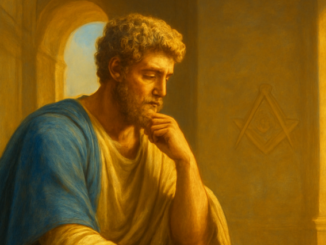
Masonic square and compasses with rough ashlar symbolizing ethical growth
Philosophy & Ethics

Ethics Without Dogma: The Philosophical Quest of Freemasons

In an age where ethical debates are increasingly reduced to rigid positions and online discussions devolve into moral tribunals, a pressing question emerges: is there still room for nuanced thinking about right and wrong? Freemasonry offers a surprising answer — not by prescribing ready-made rules, but by practicing an ancient philosophical method in which doubt is not a weakness, but the first step toward wisdom. The Return of the Great Ethical Conversation The societal debate about ethics has reached a new intensity. From artificial intelligence to climate justice, from genetic modification to the boundaries of free speech — moral convictions clash at every turn. What stands out is not so much the diversity of opinions, but the absolute certainty with which they are proclaimed. Nuance has become a rare commodity. Yet there is a place where the ethical conversation unfolds differently. Within the privacy of the Masonic lodge, the goal is never to have the final word, but to reach the next insight. Here, philosophy is not practiced as an academic discipline but as a living art. The question is not who is right, but what does justice to human dignity. Philosophy as a Tool, Not a Doctrine Freemasonry has […]

Open book with classical philosophy text symbolizing Montaigne and Freemasonry
Michel de Montaigne – The Essays

Montaigne on Passions and False Objects: Philosophical Roots

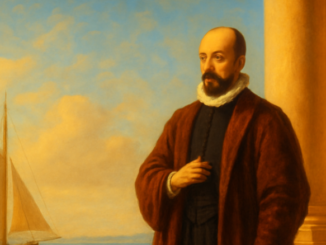
In the fourth essay of his first book, Michel de Montaigne investigates a curious phenomenon: how the human soul directs its emotions toward objects that are not the true cause of those feelings. This insight did not arise in a vacuum. Montaigne drew deeply from a long philosophical tradition reaching back to Greek and Roman thinkers. The question of how we handle our passions — and why we sometimes aim them at the wrong targets — had occupied philosophers for centuries before Montaigne ever picked up his pen in his tower library in Bordeaux. The Stoic Legacy: Mastery Over Emotion The influence of Stoicism on Montaigne’s thinking is especially tangible in this essay. The Stoics — notably Seneca and Epictetus — argued that human suffering does not arise from external events, but from the judgments we form about them. When we feel anger toward an object that has hurt us, or when we direct grief at a symbol rather than the real cause, we are demonstrating precisely what the Stoics meant: our passions are often misplaced. Seneca wrote at length about how anger can seduce us into irrational behavior. In his treatise On Anger, he gave countless examples of people […]