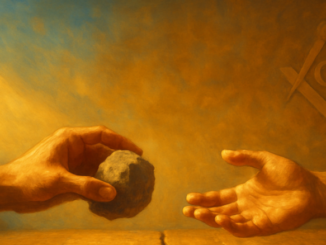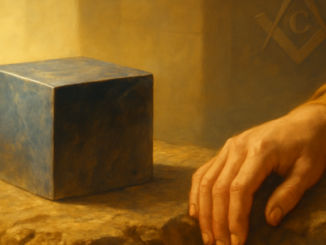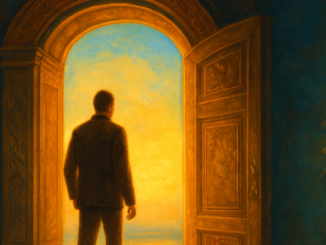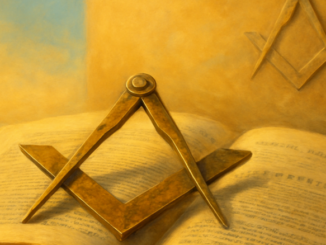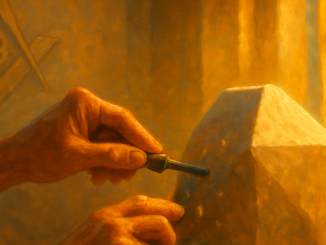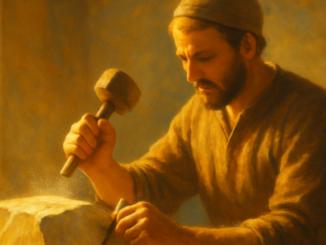
Rough ashlar stone symbolizing Masonic self-improvement and personal identity
Personal Development & Leadership

Pancreatic Cancer and Identity: Who Are You When Time Runs Out?

In a small living room, a sixty-seven-year-old man sits across from his children. Three weeks ago, he received the diagnosis: metastatic pancreatic cancer. Now, with news that a new medication may offer hope, his daughter gently asks, ‘Dad, how are you feeling?’ He is silent for a long time. Then he says something no one expects: ‘For the first time, I know who I really am.’ This article explores the profound connection between mortality, identity, and the ancient wisdom of Freemasonry. A Breakthrough That Reaches Beyond Medicine The news that a drug for metastatic pancreatic cancer may soon become available brings hope to thousands of patients and their families. Pancreatic cancer is one of the most ruthless forms of the disease, often detected only after it has already spread. A treatment capable of extending life is nothing short of revolutionary. Yet medical breakthroughs like this inevitably raise questions that reach far beyond survival rates and side effects. When people are confronted with their own mortality — and then unexpectedly given a second chance — something remarkable happens to their sense of self. The question ‘Who am I?’ suddenly acquires an urgency rarely felt in the routine of everyday life. Freemasonry […]
Masonic level tool symbolizing balance and inner equilibrium
Personal Development & Leadership

Balance and Personality: What Imbalance Teaches Us

When someone is suddenly struck by the loss of hearing or balance, it shakes the very foundation of daily life. Recent news about a well-known television personality being sidelined by an inner ear disorder raises a deeper question: what does it truly mean to be in balance? And what does the moment we lose that balance reveal about who we really are? From a Masonic perspective, equilibrium is far more than a physical condition — it is a symbolic cornerstone for the development of character and personality. The Level as a Mirror of the Self In Freemasonry, the level is one of the most essential working tools. This simple instrument, which indicates the horizontal plane, points toward the necessity of equality and balance in human conduct. But the level is more than a moral compass for how we treat others. It also directs our gaze inward, toward the equilibrium each person must cultivate within themselves. When physical balance suddenly fails — as with disorders of the inner ear — the fragility of that inner stability becomes painfully visible. Aristotle wrote about the golden mean as the ideal for a virtuous life. Not the extreme, but the middle path leads to […]

Rough ashlar stone symbolizing personal character building in Freemasonry
Personal Development & Leadership

Financial Setbacks and Character Building: Lessons from Sports

When a prestigious sports club finds itself drowning in debt, the questions it raises go far beyond the balance sheet. How did things go so wrong? What choices led to this point? And what does it reveal about our deeply human tendency to live beyond our means? These questions touch on something fundamental — the formation of character and the courage to take an honest look in the mirror. Why Does Financial Mismanagement Hit So Close to Home? News of massive losses at a major football club stirs up outrage — but also a quiet sense of recognition. Who among us hasn’t spent more than was wise at some point? Our reaction to such stories reveals something about ourselves. We recognize the lure of short-term success, the pressure to perform, and the fear of being left behind. These very human tendencies are precisely the terrain that Freemasonry addresses: the development of a balanced character capable of resisting such temptations. Aristotle wrote extensively about the virtue of temperance, which he defined as the golden mean between excess and deficiency. An organization that consistently spends more than it earns has lost that equilibrium. But doesn’t the same apply to individuals? The philosopher […]

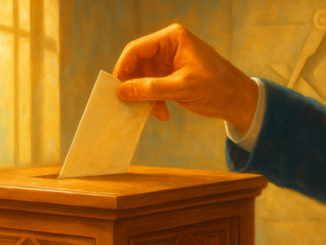
Symbolic representation of elections and Masonic self-reflection
Personal Development & Leadership

Complex Elections and Personality: Two Worlds Compared

As the world braces for what many consider the most complex elections in modern history, a fascinating question emerges: what does the way we vote reveal about who we truly are? The outside world sees elections as a democratic mechanism — a practical necessity. The Freemason recognises something deeper: a mirror of human personality, with all its contradictions and possibilities for growth. The Outsider’s View: Complexity as Obstacle For the average observer, complex electoral systems are above all confusing. Multiple parties, coalition-building, rounds of voting, electoral thresholds, and regional representation make it difficult to understand what a single vote actually means. The focus remains firmly on outcomes: who wins, who loses, which coalition emerges. The person behind the vote stays invisible, reduced to a statistical data point. In this worldview, the voter is a passive participant in a system larger than themselves. Complexity is treated as a problem to be solved, not as an invitation to reflect. People search for simple answers in a world that stubbornly refuses to be simple. Political commentators analyse voting behaviour as though it should be predictable, while the true motivations of millions of individuals remain elusive. The Freemason’s View: Choosing as an Inner Process […]

Vrijmetselarij - Solo van 175 kilometer: wat uithoudingsvermogen ons leert
Freemasonry & Society

What a 175km Solo Ride Teaches Us About Perseverance

The cycling world was recently turned upside down by a breathtaking 175-kilometer solo breakaway. Commentators called it madness and genius in equal measure. But beyond the athletic spectacle lies a deeper truth — one that resonates far beyond the world of sport. A feat like this demands more than physical strength. It requires mental fortitude, discipline, and the ability to keep going when every fiber of your being screams at you to stop. These are precisely the qualities that Freemasons have cultivated for centuries — not to win races, but to become better human beings and contribute meaningfully to society. The Power of Going It Alone Imagine this: you’re riding alone, kilometer after kilometer, while the peloton hunts you down from behind. No one sets your pace. No one cheers you on. It’s just you, your thoughts, and the road ahead. This scenario is familiar to anyone who has ever undertaken a major personal challenge — building a career from scratch, overcoming an addiction, or working through a difficult relationship. Sometimes, you simply have to push through on your own. In Freemasonry, we call this working on the rough stone. Every Mason begins as unrefined material and must shape himself, […]

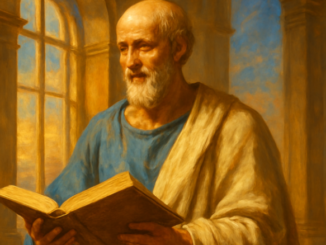
Ancient philosophical text symbolizing Seneca's reflections on mortality and life
Lucius Annaeus Seneca – Content & Summary

Seneca on Death and Life: Lessons from Letter XXVI

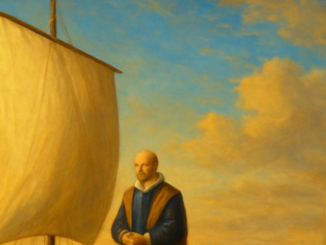
You wake up each morning, start your day, and rarely pause to consider that every day lived is one fewer remaining. Lucius Annaeus Seneca did exactly that. In his twenty-sixth letter to his friend Lucilius, he writes with striking candor about aging, mortality, and the question of how to truly live when the end draws near. Far from being a gloomy meditation, this letter offers a practical guide for anyone who wants to live more consciously. What can we still learn from this wisdom, written nearly two thousand years ago? The Heart of Letter XXVI: Old Age as a Teacher Seneca writes this letter as an elderly man. He describes how his body shows unmistakable signs of decline, how his physical strength is fading — yet how his mind seems to grow clearer with each passing year. The central idea is surprisingly optimistic: old age is not a punishment but a gift. It is the period in which you can finally test whether your philosophical convictions truly hold up under pressure. Seneca compares life to a voyage at sea. As long as you are sailing, you can claim you are unafraid of the storm. But only when the harbor comes […]

Open book with Montaigne's essays beside Masonic building tools and rough ashlar
Michel de Montaigne – Content & Summary

Montaigne on Profit and Loss: Dissecting Zero-Sum Thinking

Have you ever wondered whether your success automatically means someone else loses out? It’s a deeply ingrained assumption in our culture — the idea that the world is a fixed pie, and every slice you take leaves less for everyone else. Michel de Montaigne, the sixteenth-century French philosopher and father of the personal essay, examined precisely this assumption in one of his shortest yet most provocative pieces of writing. Centuries later, his reflections still challenge the way we think about wealth, value, and what it truly means to build something together. The Heart of the Essay In Essay 21 of the first book of his Essais, Montaigne investigates the ancient belief that profit and loss are always perfectly balanced. The title says it all: “That the profit of one man is the damage of another.” He opens with a reference to Demades, an Athenian orator who condemned a trader on the grounds that his profession could only be profitable at the expense of others. This classical conviction serves as Montaigne’s launching point for deeper reflection. The essay is remarkably brief — even by Montaigne’s own standards. Yet within its compact frame, it delivers a fundamental critique of the economic thinking […]

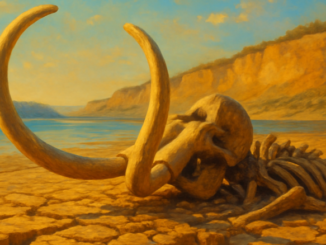
Mammoth bones exposed along the Danube River banks during low water levels
Freemasonry & Society

Mammoth Bones in the Danube: What the Depths Reveal About Us

Imagine walking along the banks of the Danube River in Bulgaria and spotting something protruding from the mud — something that last saw the light of day tens of thousands of years ago. Mammoth bones, exposed by historically low water levels this summer. It’s the kind of discovery that stops you in your tracks and makes you wonder: what lies hidden beneath the surface of our world, our society, and ourselves? And what happens when those hidden layers are unexpectedly revealed? When the River Reveals Its Secrets The Danube has flowed through the heart of Europe for millennia, carrying far more than water. It carries history, culture, and apparently the remains of creatures that roamed these plains long before the first human ever set foot on its banks. This summer’s extreme drought dropped water levels so dramatically that these ancient relics became visible once more. It’s a striking image: what normally stays hidden beneath the current of daily life suddenly surfaces when conditions change. You may recognise this feeling from your own experience. There are moments in life when something forces you to look deeper than you’re accustomed to — a crisis, a loss, an unexpected event. Suddenly you see […]

Masonic rough ashlar and perfect cube symbolizing personal growth amid division
Personal Development & Leadership

Division and Character: Masonic Lessons for Divisive Times

You know the moment. A family dinner, a meeting at work, a conversation with friends. Someone brings up a loaded topic, and suddenly the tension is palpable. How do you respond? Do you get swept up in the emotion, withdraw entirely, or look for a third way? The deep divisions currently visible in political movements around the world show just how sharply disagreements can cut. But it’s precisely in moments like these that we have the opportunity to reveal our true character. Freemasonry offers concrete, practical tools for staying grounded when division swirls around you. When Convictions Collide Picture this: you’re sitting with a group of people you respect. Maybe colleagues, maybe brethren in your lodge, maybe old friends. A discussion erupts over a sensitive subject. You notice your heart rate climbing. You feel the urge to raise your voice — or to say nothing at all. This is the moment when your personality is truly tested. It’s not your opinion that defines who you are, but how you express it and how you treat those who see things differently. Current tensions within political movements worldwide illustrate just how difficult this is. People who worked side by side for years […]

Crested mangabey symbolizing the Masonic journey of departure and return
Personal Development & Leadership

What an Escaped Monkey Teaches Us About Personal Growth

For a full month, a crested mangabey roamed the Dutch countryside, far from his familiar enclosure at the Beekse Bergen safari park. Eventually, he was captured and returned to his group. This small news item from July 2026 raises a timeless question that lies at the very heart of Freemasonry: what happens to our personality when we break free from the familiar — and what changes when we return? The Primal Urge to Escape In the eighteenth century, when modern Freemasonry was establishing its first lodges, the understanding of human nature was deeply intertwined with ideas about freedom and constraint. Philosophers of that era wrestled with a fundamental question: is man by nature a social creature, or does he possess a deep-rooted longing to escape every structure that binds him? The English thinkers who laid the foundations of the lodge were well acquainted with their contemporaries’ writings on the social contract. They understood that brotherhood can only exist when individuals voluntarily choose to be part of something greater than themselves. The crested mangabey who spent a month wandering through the Brabant countryside acted on an impulse we all recognize. There is something in every living being that wants to cross […]

A contemplative man standing at a crossroads symbolizing agnostic doubt and growth
Philosophy & Ethics

Agnosticism in Practice: How Doubt Can Enrich Your Life

You’re standing at a crossroads and you simply don’t know. Maybe it’s a major life question, maybe something small. That uncertainty feels uncomfortable — as though you’re falling short somehow. But what if that very uncertainty is actually a strength? Agnosticism, the honest acknowledgment that some things remain unknowable, is often mistaken for indecisiveness. Yet this philosophical stance offers surprisingly practical tools for anyone who wants to live more consciously. In this article, you’ll discover how to put doubt to work — not as a weakness, but as an instrument for personal growth. What Agnosticism Really Means for Everyday Life Agnosticism derives from the Greek word meaning “not knowing.” It isn’t a rejection of faith or science — it’s the honest recognition that certain questions have no definitive answer. You encounter this more often than you might realize. What’s the right career move? How do you know for certain that you’re on the right path? An agnostic attitude means accepting this uncertainty without being paralyzed by it. This is precisely where philosophy and Freemasonry intersect. Within Freemasonry, no definitive truth is imposed. There is no catechism to recite, no creed to sign. Instead, you’re invited to seek, to question, and […]

A gavel resting on a rough ashlar stone symbolizing Masonic decision-making
Personal Development & Leadership

What Eurovision Teaches Us About Character and Decision-Making

A national broadcaster faces a momentous choice: whether or not to participate in an international music competition that has stirred public debate for years. It’s a question that goes far beyond programming schedules or budgets. What does the act of deciding actually reveal about who we are? And how do such pivotal moments shape our character — as individuals or as organizations? Let’s examine this through the lens of an ancient tradition that has reflected on character formation for centuries. Why Is Decision-Making So Difficult? Ask yourself: when was the last time you postponed a decision — not out of laziness, but because the choice itself stirred something deep within you? The Dutch public broadcaster deliberating over its participation in the Eurovision Song Contest is a compelling illustration. It’s not merely a question of logistics or funding. It’s about values, identity, and the fundamental question: who do we want to be on the world stage? In Freemasonry, this moment of deliberate, weighed choosing is recognized as a fundamental element of personal growth. The rough ashlar — that symbol of the unpolished self — is not shaped into a perfect cube with a single blow. It requires reflection, careful consideration, and […]

Open book with Montaigne essays and candlelight evoking quiet contemplation
Content & Summary

Montaigne on Idleness: An Essay on the Restless Mind

You may recognise this: a day off with no obligations, a chance to finally relax — and yet your thoughts race in every direction. Your mind feels busier than ever. The sixteenth-century philosopher Michel de Montaigne described exactly this phenomenon in his short but powerful essay On Idleness. He discovered that an empty mind does not lead to peace, but to chaos. What begins as a search for rest turns out to be a confrontation with ourselves. The Core Idea of the Essay In this eighth essay from his first book, Montaigne examines a paradox that remains strikingly familiar today: when we fail to engage our mind with purposeful activity, it does not settle into calm — it runs wild. Montaigne writes that an unoccupied mind gallops off in every direction, like a horse without a rider. Thoughts multiply, take on bizarre shapes, and produce what he calls “monsters” and “chimeras.” The essay is deeply personal in tone. Montaigne describes how, after retiring from public life, he settled on his country estate fully expecting his mind to find peace. The opposite happened. Without the discipline of daily obligations, his thoughts began to churn uncontrollably. This unsettling experience became the very […]

A rough ashlar stone symbolizing personal growth through crisis in Freemasonry
Personal Development & Leadership

What Our Crises Reveal About Who We Truly Are

Sometimes a person disappears — not just physically, but inwardly. A young athlete withdraws from the world, overwhelmed by pressure and expectations. When he returns, he speaks openly about regret and self-awareness. This kind of story raises questions that reach far deeper than the headline itself. What does a moment of crisis actually reveal about who we truly are? And how does a Freemason view such turning points in a human life? Why Do People Sometimes Vanish From the Stage? The outside world tends to see a disappearance as either a mystery or a scandal. A news article presents the facts, quotes bystanders, and searches for explanations. But anyone who looks at the story from the inside recognizes something different: a human being who could no longer function under the weight of the expectations placed upon him. Pressure, perfectionism, fear of failure — these are universal themes that can touch any one of us. For the outsider, such a disappearance is a news item. For the Freemason, it is a mirror. In the lodge, we learn that a person is never a finished work, and that every crisis contains the possibility of growth. Disappearing is not an ending — sometimes […]

Rough ashlar stone symbolizing personal growth and resilience in Freemasonry
Personal Development & Leadership

Chance and Vulnerability: Two Perspectives on Fate

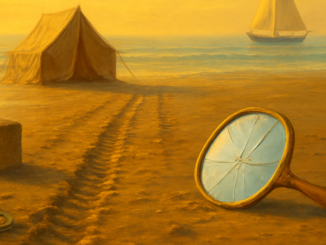
A man falls asleep in his tent on a beach in the Netherlands. Morning approaches, the sea murmurs, and life seems peaceful. Then the unthinkable happens: a maintenance tractor drives over his tent. The news is shocking — not just for its tragedy, but for what it reveals about the fragility of human existence. How do we process such random events? And does it matter whether we have spent time consciously examining our own character? Two worldviews, two perspectives on the same brutal reality. The Outsider: Chance as Chaos For many people, an accident like this simply confirms the randomness of life. The world is unpredictable, even dangerous, and we are at the mercy of forces beyond our control. This response is deeply human and entirely understandable. We look for someone to blame, for explanations, for ways to reassure ourselves that something like this could never happen to us. The outsider — here meaning someone unaccustomed to systematic self-reflection — tends to experience fate as something purely external. It is something that happens to you, something you react to, but over which you have little influence. Personality is seen as more or less fixed: you are who you are, and […]

Search dog working through building rubble symbolizing Masonic brotherhood
Personal Development & Leadership

The Search Dog as Teacher: Finding Brotherhood in the Rubble

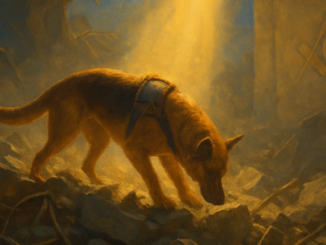
A search dog picks its way through the rubble of an exploded building in Amsterdam. The footage circulated across the Netherlands this past week, drawing millions of eyes. But for those willing to look beyond the headlines, the images reveal something far more profound than breaking news: a creature moving without hesitation toward what has been lost. In that unconditional devotion lies a lesson Freemasons have been trying to understand for centuries — what does it truly mean to show up for another person? Searching Without Knowing What You Will Find The search dog knows no doubt. It follows its nose, trusts its training, and surrenders completely to the task at hand. Whether the search will lead to a living person, a body, or nothing but emptiness — the animal does not know. And yet it searches. This posture of unconditional action without any guarantee of results strikes at one of the core paradoxes of human connection. We humans hesitate because we cannot see the outcome. The dog reminds us that true devotion needs no certainty. In Freemasonry, we speak of the search for light — a symbolic journey toward insight and truth. But just like the search dog, the […]

Vrijmetselarij - Klaar voor de vrijmetselarij? Zet vandaag nog jouw eerste stap
Personal Development & Leadership

Ready for Freemasonry? Take Your First Step Today

You’ve explored the symbolism, studied the history, and read about how Freemasonry shapes personal growth and community. But this may be the most important moment of all — the moment where everything comes together. The moment you ask yourself one simple but powerful question: Am I ready for Freemasonry? This question isn’t about knowledge. It’s not about how much you know — it’s about how deep you’re willing to go. It’s about openness. About the willingness to move beyond reading and thinking, and to actually take that first step. Freemasonry Is Not a Destination — It’s a Path Becoming a Freemason is not an endpoint. It’s not a status you achieve or a club you walk into to look around. It’s a conscious choice for growth, reflection, and connection. Above all, it’s a path you don’t walk alone. You’ll be surrounded by brothers who — just like you — strive for depth and ethical living in their everyday lives. In the lodge, you won’t find judgment, competition, or pretense. What you will find is stillness, attention, symbolism, and meaning. And you’ll find yourself — again and again. What to Expect When You Take the Step If you decide you’re ready, […]

Vrijmetselarij - Vrijmetselarij en filosofie: ontdek hoe denken en handelen samenkomen
Philosophy & Ethics

Freemasonry and Philosophy: Where Thought Meets Action

Philosophy might conjure images of dusty lecture halls, dense textbooks, or endless debates about the nature of existence. But within Freemasonry, philosophy takes on an entirely different character. It’s not abstract theorizing — it’s a living, practical way of engaging with the world. Freemasonry and philosophy walk hand in hand, forming a powerful path toward personal growth and deeper meaning. What Role Does Philosophy Play in Freemasonry? Philosophy in Freemasonry isn’t a standalone academic exercise. It’s woven into the very fabric of the craft’s ritual and symbolic system. Every degree, every ceremony, and every symbol is steeped in philosophical insight. The goal isn’t to promote a single school of thought, but to cultivate a way of life rooted in reflection, openness, and ethical awareness. Freemasonry invites you to live philosophically — to search for meaning, to embrace doubt, and to ask questions that go beyond the surface. Most importantly, it challenges you not only to think about your answers but to embody them in the way you act and treat others. Inspired by Great Thinkers Throughout the centuries, Freemasonry has drawn inspiration from some of history’s most influential philosophical traditions. Here are a few that have left a lasting mark […]

Vrijmetselarij - Vrijmetselarij en Zelfontwikkeling – Groeien naar de Beste Versie van Jezelf
Personal Development & Leadership

Freemasonry and Self-Development: Becoming Your Best Self

Freemasonry carries an air of mystery for many people. Some imagine secret rituals behind closed doors; others picture an exclusive, impenetrable society. But anyone who looks beneath the surface discovers something quite different: a practical, time-tested path for personal growth. Freemasonry and self-development are, in fact, inseparable — not as theory or dogma, but as a living practice of self-knowledge, reflection, and purposeful action. So what makes Freemasonry such a unique wellspring of self-development? In this in-depth guide, you’ll discover how this centuries-old tradition helps you bring out the best in yourself — and why that may matter more today than ever before. Self-Development: The Backbone of Freemasonry Self-development isn’t a luxury — it’s a necessity. In a world saturated with distraction, superficiality, and relentless pace, Freemasonry offers a powerful alternative. It’s a space where you’re encouraged to pause, reflect on your life, examine your behavior honestly, and take deliberate steps toward inner growth. In Freemasonry, everything revolves around who you truly are — not what you own or what title you hold. Whether you’re a CEO or a carpenter, an academic or an artist, only one question really matters: are you willing to work on yourself? Working the Rough […]

Vrijmetselarij - Freemasonry and Ethics – Building Your Best Self
Philosophy & Ethics

Freemasonry and Ethics – Building Your Best Self

In a world increasingly driven by superficiality and snap judgments, many of us long for something deeper. For integrity. For authenticity. For a way to grow — not just in knowledge, but in character. This is where Freemasonry enters the picture: an ancient system that doesn’t just offer philosophical insights, but actively invites you to put them into practice. And nowhere is that invitation more powerful than in the realm of ethics. What Does Ethics Mean in Freemasonry? Ethics in Freemasonry is not a rigid set of rules or dogmas. It functions as a living compass — an inner guide that is continually sharpened through self-reflection, ritual, and fraternal interaction. You don’t learn a standard answer to what is “good.” Instead, you learn to ask yourself the right questions: What are my true intentions? What is my responsibility? How can I contribute to the greater good — in my community, my work, my relationships? Freemasonry invites you to see ethics not as abstract theory, but as something you experience, apply, and develop in your daily life. Ethics Begins with Yourself Freemasons work with a powerful symbol: the rough ashlar. This unworked stone represents your unrefined self — full of potential, […]