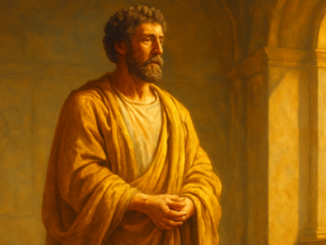
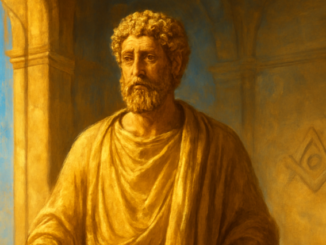
Ancient Roman oil lamp illuminating a writing tablet with Masonic symbols
Marcus Aurelius – Meditations

Marcus Aurelius and the Present Moment: Philosophical Roots

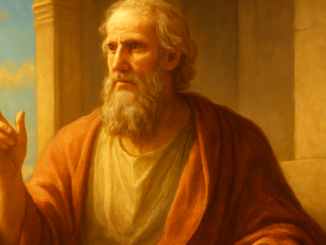
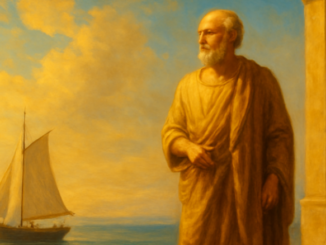
An oil lamp flickers softly as a Roman emperor, weary after a day of warfare on the northern frontiers, reaches for his writing tablet. It is deep into the night, somewhere around 170 AD. Marcus Aurelius begins to write — not for publication, but for himself. Sentences about impermanence, the present moment, the urgent need to live now. Where did these thoughts originate? What philosophical currents shaped this imperial mind that continues to inspire millions to this day? The Stoic Roots of the Present Moment In Book II of his Meditations, Marcus Aurelius turns with remarkable intensity to the theme of living in the here and now. This focus was no casual whim but the product of centuries of Stoic philosophical tradition. The Stoic school, founded by Zeno of Citium around 300 BC, developed a philosophy centered on mastering one’s own thinking. Marcus Aurelius inherited this tradition through a chain of teachers and writings stretching back to Greek antiquity. At the heart of Stoic thinking about time lies a fundamental insight: only the present moment is truly ours. The past is gone and unchangeable; the future is uncertain and beyond our control. Epictetus, the former slave whose teachings Marcus Aurelius […]

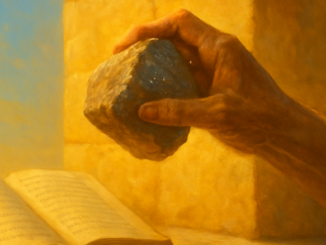
Rough and polished stones symbolizing Masonic transformation and spiritual growth
Christianity

First Epistle of Peter: Living Stones and the Building Soul

A stone lies on the ground. Rough, unworked, seemingly without meaning. Yet within that simple stone hides an entire universe of possibilities. The Apostle Peter knew this. In his first epistle, he addressed persecuted Christians in Asia Minor, but his words reach far beyond that time and place. He invited his readers to see themselves as living stones, destined to form a spiritual house together. For anyone familiar with the symbolic language of Freemasonry, this letter opens a door to recognition and deeper understanding. The Rough Stone as a Starting Point In Freemasonry, every journey begins with the rough stone. The Entered Apprentice receives this symbol as a representation of himself — unpolished, full of imperfections, yet carrying the promise of form and beauty. Peter uses a strikingly similar image when he writes about living stones being built up into a spiritual building. The Greek phrase he employs, lithoi zōntes, carries a deliberate tension within it. Stones are dead material, and yet he calls them living. It is precisely in that paradox that the depth resides. The epistle opens with a reminder of suffering and trial. Peter writes to people who are being oppressed for their convictions. But rather than […]

Golden valley symbolizing Voltaire's El Dorado as a Masonic mirror of the self
Symbolism & Rituals

Voltaire’s El Dorado: The Utopia as a Mirror of Ourselves

Somewhere in the heart of Voltaire’s satirical masterpiece Candide lies a hidden valley where gold rolls across the roads like gravel and children play with gemstones as though they were marbles. This is El Dorado — a place that appears on no map yet dwells deep within human consciousness. Voltaire was not merely painting a fairy-tale kingdom. He was holding up a mirror, asking a question that resonates across centuries: what does our longing for a perfect world reveal about who we really are? Discovering the Undiscoverable Land Candide and his companion Cacambo reach El Dorado only after a long and perilous journey through hostile terrain. They drift along a river that carries them into a valley surrounded by unscalable cliffs. Voltaire chose this route with deliberate care: the hidden paradise cannot be reached through the usual paths of ambition or conquest. The river carries them there passively, as if in an act of surrender to the unknown. This symbolism speaks to a deeper truth about spiritual discovery — the highest things are not seized but received. In El Dorado, the travelers encounter a society that defies everything they have ever known. There is no poverty, no injustice, no religious […]

Montaigne essay on envoys and the Masonic balance of obedience and judgment
Michel de Montaigne – Content & Summary

Montaigne on Envoys: When Obedience Falls Short

What happens when a messenger carries out his orders to the letter, without stopping to consider whether circumstances have changed? Michel de Montaigne poses this question in his brief but provocative essay ‘On the Custom of Some Ambassadors.’ His answer touches on a fundamental tension that resonates deeply within Freemasonry: the balance between obedience and personal judgment. What Is This Essay Really About? In the sixteenth essay of Book One of his Essays, Montaigne examines the role of envoys and ambassadors in diplomatic missions. Though it is one of his shorter reflections, the central question is far from simple. Montaigne asks to what extent an envoy has the right — or even the duty — to deviate from his literal instructions when the situation demands it. Should a messenger obey blindly, or should he use his own insight to better serve the intentions of the one who sent him? The essay was written in an age when diplomacy was a perilous affair. Communication was slow, decisions often had to be made on the spot, and a single miscalculation could mean the difference between war and peace. Montaigne knew this world from the inside. As a former mayor of Bordeaux and […]

Flickering candles in a Masonic temple reflecting on faith and building
Christianity

The Epistle to the Hebrews: Faith as Foundation for Builders

A brother pauses to reflect on the words just read aloud. It is evening, the candles flicker, and the text lingers in the silence of the temple room. The passage comes from the Epistle to the Hebrews — words about faith as a foundation, about a heavenly city being built, about perseverance on a path that is not always visible. Something in those ancient words strikes a chord, touching on his own journey as a Freemason. A Letter on Faith and Perseverance The Epistle to the Hebrews occupies a unique place within the New Testament. Unlike most of the Apostle Paul’s letters, the author of this work remains unknown. As early as the third century, the Church Father Origen wrote that only God knows who truly penned it. Yet its message has inspired people for millennia. At its core, the epistle revolves around faith as a driving force, perseverance in times of trial, and the building of something that transcends the earthly realm. For Freemasons, this letter contains striking parallels. The eleventh chapter — often called the “faith chapter” — describes faith as the substance of things hoped for, the evidence of things not seen. This definition has resonated through […]

Candlelit Masonic lodge with artistic tools and creative works by brethren
Culture & Media

The Eighth Child as Philosopher and Brother: Art in the Lodge

Candlelight flickers softly as a young man sets down his brush and stares at the canvas. As the eighth child in a large family, he learned early to observe, to listen, and above all, to wait his turn to be heard. Now, years later, he stands in a Masonic lodge where brethren have gathered around the art he has created. The story of the eighth child who becomes both philosopher and brother is a story about creativity born from necessity, wisdom cultivated in the shadows, and the art that emerges when a searching spirit finally finds a home. The Philosopher Who Grew Up as the Eighth Child Throughout the history of philosophy and the arts, we find a remarkable number of thinkers and artists who grew up among the youngest children in large families. The eighth child — whether literally or figuratively the youngest — learns early that the world does not revolve around him. This position creates a unique perspective on reality: observing, reflecting, and often developing a deep need to find meaning beyond the well-trodden path. Jean-Jacques Rousseau, the eighteenth-century philosopher whose ideas helped shape the Enlightenment, knew this experience of being an outsider. His philosophy about the […]

Ancient letter symbolizing forgiveness and Masonic brotherhood
Christianity

The Epistle to Philemon: Symbolism of Forgiveness & Brotherhood

A letter of just 25 verses, written on a papyrus scroll small enough to hold in one hand. Yet this tiny document contains one of the most profound lessons on human dignity and reconciliation in all of biblical literature. Paul’s Epistle to Philemon tells the story of a runaway slave, a creditor, and a mediator. But look deeper, and you’ll discover a symbolic edifice that touches the very heart of what it means to live together as brothers. A Chain and an Embrace Consider two images side by side. The first: a man in chains, imprisoned in Rome, writing by the flickering light of an oil lamp. The second: that same man welcoming a runaway slave named Onesimus — not as an inferior, but embracing him as a beloved brother. The entire symbolism of the Epistle to Philemon lies in the tension between these two images. The physical chains of the prisoner are transformed into a spiritual bond of equality. Paul of Tarsus likely wrote this letter around the year 60 AD, during his Roman imprisonment. Onesimus, the runaway slave of the wealthy Philemon, had found his way to Paul and undergone a profound conversion. Now Paul sends him back […]

Open copy of Voltaire's Candide with Masonic square and compasses symbol
Symbolism & Rituals

Voltaire’s Candide: The Struggle for Good in Masonic Light

A candle flickers in the study as a young Freemason opens a yellowed copy of Candide. Voltaire’s razor-sharp wit, first published in 1759, still sparks after nearly three centuries. What drove this towering Enlightenment thinker to tear so relentlessly into the optimism of his era? And what can we — as modern seekers of wisdom — learn from this satirical journey through human suffering and the stubborn struggle for good? The Central Idea: Optimism Under Fire Voltaire wrote Candide as a devastating attack on the philosophical optimism of Gottfried Wilhelm Leibniz. The German philosopher argued that we live in “the best of all possible worlds” — a thesis that absolves God of evil by insisting that every instance of suffering is necessary for some greater good. Voltaire found this reasoning intolerable, particularly after the catastrophic Lisbon earthquake of 1755, which killed tens of thousands of people in a matter of minutes. The title character, Candide, grows up in the castle of Baron Thunder-ten-Tronckh in Westphalia, where his tutor Pangloss instructs him in “metaphysico-theologo-cosmo-nigology.” This absurd academic discipline teaches only one lesson: everything is for the best. When Candide is thrown out of the castle for kissing the baron’s daughter, Cunégonde, […]

Torch being passed between hands symbolizing Masonic mentorship
Christianity

2 Timothy and Freemasonry: Passing the Torch

Imagine you have reached the end of a long journey. Everything you have learned, everything you have built, is at risk of being lost — unless you pass it on to someone else. This was precisely the situation the Apostle Paul found himself in when he wrote his second letter to Timothy. For Freemasons, this scenario resonates deeply. The question of how we transmit our insights and virtues to the next generation lies at the heart of both this New Testament epistle and Masonic ritual. The Heart of Paul’s Second Letter to Timothy The second letter to Timothy is often regarded as Paul’s spiritual last will and testament. Written from a Roman prison, Paul knew his time was short. Yet the letter contains no self-pity or fear. Instead, he focuses entirely on preparing his student Timothy to carry the work forward. The epistle offers concrete guidance on steadfastness, preserving sound doctrine, and enduring hardship like a good soldier. What makes this letter remarkable is its deeply personal tone. Paul mentions specific people by name, shares memories, and speaks candidly about his own struggles. He compares the spiritual life to an athletic contest and to a farmer patiently waiting for the […]

Open Bible at 2 Thessalonians with Masonic square and compasses in soft light
Christianity

2 Thessalonians and the Masonic Light of Perseverance

What does it mean to stand firm when everything around you seems to shift and tremble? The Second Epistle to the Thessalonians — a brief but powerful text from the New Testament — poses this question with striking urgency. Written to a young Christian community grappling with confusion and doubt, the letter offers a timeless meditation on perseverance, labor, and the strength found in brotherly bonds. For the Freemason, accustomed to symbolic language and moral reflection, this ancient text opens surprisingly resonant perspectives. A Letter Born from Uncertainty The paradox at the heart of 2 Thessalonians lies in its origin: a community so fervently convinced of imminent salvation that it was in danger of neglecting the present. Some had abandoned their work, certain that the end of days was upon them. Others had been thrown into confusion by false messages and counterfeit letters. The epistle, traditionally attributed to the Apostle Paul, calls for reflection — not by denying the vision of hope, but by reminding its readers of their duty to the here and now. This tension between future expectation and daily responsibility touches on a universal human theme. How often do we lose ourselves in dreams of what is […]

Open book with Montaigne essays beside Masonic rough ashlar and square symbol
Michel de Montaigne – Philosophical Background

Montaigne on Good and Evil: Philosophical Roots of Essay 14

Imagine waking up tomorrow under exactly the same circumstances as yesterday, yet suddenly feeling happier. Nothing in the outside world has changed — only the way you look at it. This simple thought experiment strikes at the heart of what Michel de Montaigne explores in his fourteenth essay. But where did this sixteenth-century thinker draw his ideas from? The philosophical sources he tapped into turn out to be remarkably relevant today, shedding light on how Freemasons, too, think about moral truth and personal perception. The Stoic Legacy in Montaigne’s Thought When you read Montaigne’s essay, you immediately taste the influence of Stoic philosophy. Thinkers like Seneca, Epictetus, and Marcus Aurelius shared a central conviction: it is not events themselves that determine our well-being, but our judgments about those events. Montaigne, who frequently quoted and admired Seneca, adopted this starting point and gave it his own distinctive twist. He observed how people experienced the same adversity in completely different ways, depending on their inner disposition. The Stoics drew a clear line between what lies within our control and what does not. You cannot command the weather, but you can choose how you respond to it. Montaigne applied this principle to the […]

Open book showing Voltaire's Candide with garden and Enlightenment imagery
Symbolism & Rituals

Voltaire’s Candide: The Best of All Worlds as a Mirror

Can a world filled with earthquakes, wars, and relentless human suffering truly be the best that God could have created? Voltaire posed this question with biting wit in his masterwork Candide, a satirical novella that has confronted readers since 1759 with the dangerous limits of naive optimism. This analysis explores the core ideas behind the story and why this eighteenth-century work continues to resonate with anyone searching for genuine meaning without self-deception. The Paradox of Optimism Voltaire wrote Candide as a direct attack on the philosophical optimism of Gottfried Wilhelm Leibniz, who argued that our world — despite all its misery — is the best of all possible worlds. On the surface, this sounds comforting. But Voltaire saw something dangerous lurking beneath: a complacency that kills initiative. If everything is already perfectly arranged by divine providence, why would anyone bother striving for improvement? The paradox Voltaire exposes is deeply unsettling: a philosophy designed to offer hope can easily become an excuse for passivity and moral blindness. In the story, the character Pangloss embodies this optimism in its most absurd form. As tutor to the naive young hero Candide, Pangloss insists that every misfortune ultimately serves the greater good — even […]

The Danube river at low water level reflecting ancient Masonic themes of impermanence
History

The Danube Runs Dry: What Rivers Teach Us About Impermanence

When a nuclear power plant in Hungary has to shut down because the Danube has dropped to historically low levels, most people see a technical problem. But what if this drought tells us something deeper — about the nature of civilizations, the fragility of everything we build, and the ancient wisdom that Freemasons have cherished for centuries? The river that once watched empire after empire rise and fall still whispers the same message. A River as Witness to Time The Danube has seen it all. Roman legions marched along her banks. Medieval cathedrals rose in her cities. Emperors and kings laid claim to her waters. Now, in August 2026, this same river has fallen so low that it can no longer provide the cooling water a modern nuclear power plant requires. It is a paradox worth sitting with: our most advanced technology, brought to a standstill by the simple absence of water. For Freemasons, this image raises a fundamental question. We build temples — not of stone alone, but of ideals, of brotherhood, of moral development. But how enduring are these structures when the current of time suddenly shifts direction? The history of the Danube offers an unexpected mirror. Heraclitus […]

Firefighters working together during Greek wildfires symbolizing brotherhood
Personal Development & Leadership

Greek Wildfires: What Fire Teaches Us About Brotherhood

Seventy wildfires are currently raging across Greece. Residents in suburbs around Athens are being evacuated. The flames consume everything in their path — without regard for property or status. And yet, amid the destruction, something remarkable emerges: strangers reach out to one another. Firefighters from across Europe rush to help. Neighbors open their doors to people they’ve never met. Isn’t this precisely what Freemasonry speaks of when it invokes brotherhood — not as an abstract ideal, but as a lived reality that only becomes visible when everything goes up in flames? The Paradox of Destruction and Connection There is an unsettling truth in the way disasters bring people together. The Greek philosopher Heraclitus, who saw fire as the primordial element from which all things arise and to which all things return, would perhaps not be surprised. Fire destroys — but in its destruction, it also reveals what truly endures. Possessions burn in minutes. But the impulse to help a stranger, to risk your own safety for another — that impulse proves fireproof. This is not a romanticization of suffering. The images from Greece are heartbreaking. Families are losing everything. Landscapes that served as home for generations are scorched black. But […]

Ancient letter symbolizing Paul's Epistle to the Philippians and Masonic wisdom
Christianity

Philippians: Joy in Captivity and the Masonic Path

Somewhere around the year 62 AD, a man sat in a Roman prison cell, chained to a soldier, uncertain of his fate. Yet from that confinement he produced one of the most joyful texts in Western history. Paul of Tarsus wrote to the faith community in Philippi — a Roman colony in northern Greece — and the letter he composed would be read for centuries as a masterwork on inner freedom amid outer constraint. For Freemasons, devoted to building the inner temple, this ancient text contains remarkably timely insights. A Letter From a Roman Dungeon The city of Philippi owed its name to Philip II of Macedon, father of Alexander the Great. By the first century, it had become a thriving Roman veterans’ colony on the Via Egnatia — the great trade route connecting East and West. It was here, around 50 AD during his second missionary journey, that Paul established a small community. The Philippians remained loyal supporters, even after he was imprisoned in Rome. They sent him gifts and dispatched a trusted companion named Epaphroditus to care for him. The letter Paul wrote in return is remarkably personal in tone. Unlike his other epistles, Philippians contains almost no […]

A rough ashlar stone illuminated by a single spark of light in a Masonic lodge
Philosophy & Ethics

The Question as Starting Point: What If Everything Began Today?

Imagine the world was created today. Imagine that all our memories, our history books, our fossil records and ancient manuscripts are nothing more than illusions — conjured into existence in this single moment of creation. It’s a thought that pulls the ground from beneath your feet, a question that destabilizes everything you think you know. And yet, this very disruptive question is one of the most powerful tools available to a thinking person. The Question Mark as a Tool In everyday life, we use question marks casually. We ask for directions, the time, the weather forecast. But there is another kind of question — one that doesn’t seek information but transformation. The philosopher René Descartes once subjected everything he believed to systematic doubt, until he arrived at his famous conclusion: “I think, therefore I am.” He wondered whether an evil demon might be deceiving him entirely about the nature of reality. It is no coincidence that precisely these kinds of radical questions laid the foundations of modern philosophy. In Freemasonry, the question plays a distinctive and central role. The seeker who knocks at the door of the lodge arrives not with answers but with a question in the heart. The […]

Masonic temple symbolism representing unity and the building of community
Christianity

Ephesians and Freemasonry: Building Unity in Practice

You’ve been there before: sitting in a meeting, a team, or a community where everyone has the best of intentions, yet genuine connection never materializes. Everyone talks, but nobody builds. The Epistle to the Ephesians, written in the first century, speaks directly to this challenge. And remarkably, this ancient text resonates deeply with what Freemasons have been striving to do for centuries — building a community that goes far beyond words alone. The Heart of the Epistle to the Ephesians The Epistle to the Ephesians, traditionally attributed to the Apostle Paul, was addressed to the faith community in Ephesus, a thriving port city in what is now modern-day Turkey. Unlike some other letters in the New Testament, this epistle doesn’t revolve around specific conflicts or misconduct. Its central theme is the unity of all believers, regardless of background. The author employs a powerful metaphor that any Freemason will immediately recognize: the community as a building, a temple under construction, with Christ as the cornerstone. What makes this letter truly remarkable is its emphasis on the concrete and practical. Rather than offering abstract theological musings, it provides actionable guidance for daily life. How do you handle anger? How do you speak […]

Broken chains and Masonic symbols representing spiritual freedom and growth
Christianity

Galatians and Freedom: When Chains Symbolically Fall

You may know the feeling: you follow every rule, meet every expectation, and yet something inside you feels imprisoned. As though you’re doing exactly what you’re supposed to, but somewhere along the way you’ve stopped hearing your own voice. The Letter to the Galatians, written by the Apostle Paul around the year 50 CE, speaks directly to that tension. It is a text about freedom — not the freedom to do whatever you please, but the freedom to become who you truly are. A Letter Against Regression The Galatians were communities in Asia Minor that Paul had previously visited. After his departure, other teachers arrived insisting that, in addition to their new convictions, followers must also observe the old Mosaic laws in order to be truly redeemed. Paul responds with fire. For him, this is no theological footnote — it is a fundamental issue. If you have found freedom, why would you voluntarily return to a system of obligations that never transformed your inner self? This tension between outward form and inward transformation is something every sincere seeker recognizes. You can follow every ritual, recite every word, know every symbol, and still remain hollow inside. The question Paul puts to […]

Aircraft mechanic tools symbolising Masonic craftsmanship and character building
Personal Development & Leadership

KLM Under Scrutiny: What Craftsmanship Reveals About Character

Imagine stepping onto an aircraft, trusting that every bolt, every cable, every engine has been meticulously inspected by someone who has mastered their craft to its very core. That trust is no small thing. The recent news that KLM’s engineering and maintenance division has been placed under heightened regulatory oversight since May touches on something fundamental: the question of who we are when no one is watching — and how our daily work shapes the person we become. When Oversight Becomes a Mirror Heightened oversight sounds like a punishment, but there is another way to look at it. It is a moment of confrontation with a simple yet profound question: are we doing what we promised? Are we living up to the standards we set for ourselves? For an aircraft mechanic, this is literally a matter of life and death. For the rest of us, the stakes may be subtler — but they are no less real. In Freemasonry, we call this working on the rough ashlar. Every Brother enters the lodge as unfinished material, full of rough edges and imperfections. The goal is not to achieve perfection but to work consciously and deliberately on oneself. That work doesn’t happen […]

Symbolic veil falling away revealing light in a Masonic temple setting
Christianity

2 Corinthians: The Veil That Falls From the Heart

A veil is more than a piece of fabric. It is a boundary between seeing and not seeing, between the known and the hidden. In Paul’s Second Letter to the Corinthians, this veil plays a central role as a symbol for the transformation of human consciousness. For those familiar with the symbolic language of Freemasonry, the text opens up a rich dialogue between two traditions that both speak of breaking through darkness and discovering inner light. The Earthen Vessel and the Hidden Treasure Picture a simple clay pot — rough, unglazed, the kind you might find in any archaeological museum. In 2 Corinthians, Paul uses precisely this everyday object as a metaphor for the human condition. “We have this treasure in earthen vessels,” he writes, referring to the divine light that dwells within the fragile human body. It is an image that resonates directly with Freemasonry, where the rough ashlar represents the unworked human being who is transformed through labor and reflection. The pot itself is not worthless because of its simplicity. On the contrary, it is precisely the vulnerability of the material that makes the presence of the treasure within all the more remarkable. Paul invites his readers to […]