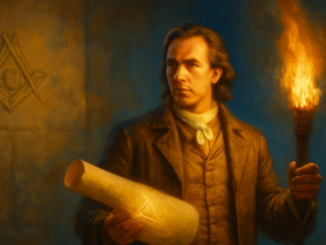
Nicolas Cage in National Treasure with Masonic symbols and the Declaration of Independence
Culture & Media

National Treasure (2004): Freemasonry Mysteries on the Screen

Freemasonry has captivated the imagination of people for centuries, and Hollywood has never been shy about tapping into that mystique. Few films have done it quite as memorably as National Treasure (2004), directed by Jon Turteltaub and starring Nicolas Cage. The movie places Freemasonry at the heart of an epic adventure that blends real history with thrilling fiction — and in doing so, it introduced millions of viewers to the symbols and legacy of the Craft. The Plot: A Quest for Lost Treasures In National Treasure, we follow Benjamin Franklin Gates, a historian and treasure hunter who has devoted his life to solving a centuries-old mystery. According to his family’s legend, an immense treasure was hidden by the Founding Fathers of the United States — many of whom were Freemasons. The treasure was concealed to keep it from falling into the wrong hands, and only those who can decipher the cryptic clues will ever find it. The adventure kicks off with a pivotal discovery: an invisible map hidden on the back of the Declaration of Independence. This revelation sets off a chain of events that takes Gates through historic landmarks, intricate puzzles, and cryptic symbols. The story is steeped in […]
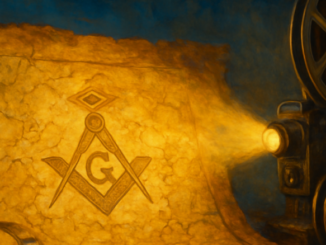
Classic film reel with Freemasonry symbols representing mystery and symbolism in cinema
Culture & Media

7 Classic Films Exploring Freemasonry, Mystery & Symbolism

Freemasonry has been shrouded in mystery for centuries. Known for its rituals, rich symbolism, and ideals of brotherhood and self-improvement, the Craft has inspired countless stories across literature and cinema. Films that delve into secrets, hidden symbols, and intrigue frequently draw from the world of Freemasonry — and the results are often riveting. Here are seven films and series where mystery, secret societies, and symbolism take center stage. 1. National Treasure (2004) Starring Nicolas Cage, National Treasure is an action-packed adventure about hidden treasures linked to the Founding Fathers and the Freemasons. The film is packed with symbols and riddles that must be unraveled, blending high-energy action with historical puzzles in a way that feels like a treasure hunt through American history itself. Why watch it? If you love adventure and history, this film offers a playful take on how Masonic symbolism could be woven into the very fabric of the United States. It’s entertaining, fast-paced, and sparks genuine curiosity about the real symbols behind the fiction. 2. From Hell (2001) This dark thriller starring Johnny Depp explores the theory that Jack the Ripper had ties to Freemasonry. Blending historical facts with speculative fiction, the film paints a chilling picture […]

Thunderstorm over a harbor at night with lightning illuminating moored boats
Personal Development & Leadership

Storm and Character: What Thunder Reveals About Who You Are

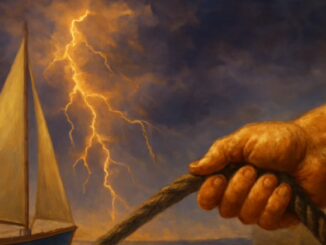
The evening sky above the harbor turns purple, and the first flash of lightning illuminates the masts of moored boats. A man walks calmly to his vessel and unplugs the shore power cable. Behind him, other boat owners laugh: “That storm is nothing to worry about!” But when the morning sun breaks through the clouds, every single one of them has quietly done the same thing. Sometimes a single action says more about character than a thousand words. The Silence Before the Storm There is a peculiar moment just before a thunderstorm breaks. The wind drops, birds fall silent, and the air itself seems to hold its breath. In that instant of tension, something essential about human behavior reveals itself. Some people ignore the signs and carry on as if nothing is happening. Others take quiet precautions — not out of fear, but out of prudence. It is precisely this distinction that Freemasonry has explored for centuries: the difference between outward display and inner authenticity. The man who unplugs his shore power is not acting out of panic. He is following an inner compass that tells him: take responsibility for what you can influence, and accept what you cannot control. […]

Open Book of Esther with Masonic square and compasses symbolizing hidden wisdom
Christianity

Esther: Courage and Hidden Wisdom in Freemasonry

In 478 BCE, a drama unfolded in the Persian Empire that is still commemorated to this day. A young woman, seemingly powerless at the court of an all-powerful king, changed the course of history through her courage and wisdom. The Book of Esther is unique within the Hebrew Bible: God’s name is never once mentioned, yet the divine is palpably present in every twist of the narrative. For Freemasons, this remarkable book offers a treasure trove of symbolism about hidden wisdom, moral courage, and the power of acting at precisely the right moment. A Historical Turning Point in Persia The story of Esther takes place at the court of King Ahasuerus, who ruled an empire stretching from India to Ethiopia. The historical backdrop is the Persian exile — a period when the Jewish people lived scattered under foreign rule. In this context, a young woman named Hadassah, later known as Esther, becomes queen. Her uncle Mordecai warns her to keep her heritage hidden. This element of concealment is not merely a practical survival strategy; it touches on a deeper truth about identity and the right moment of revelation. When the courtier Haman hatches a plot to annihilate all Jews in […]

Freemason in contemplation with square and compasses symbolizing mindfulness
Spiritual Traditions

Mindfulness in Freemasonry: The Art of Inner Awareness

In a world dominated by speed and distraction, mindfulness offers a powerful counterbalance. While Freemasonry doesn’t explicitly label it as such, mindfulness plays a crucial role in the practice of rituals, symbolism, and reflection within the Craft. It invites Freemasons to be fully present in the moment and to consciously work on the rough ashlar of their character. Mindfulness in Masonic Rituals One of the most striking aspects of Freemasonry is its use of ritual. Masonic rituals are carefully designed to draw Brethren out of their daily routines and guide them into a concentrated, almost meditative state of mind. The tracing board at the center of the lodge, the checkered floor, and the lesser lights all symbolize a balance between opposing forces — light and darkness, good and evil. Freemasons are encouraged to seek this balance not only in the world around them but also within themselves. This is the very essence of mindfulness: awareness of one’s inner processes and the pursuit of harmony. Symbolism as a Guide to Awareness Freemasons work on themselves through the language of symbolism. The square and compasses remind us of measure and justice, while the rough ashlar represents the ongoing journey of personal refinement. […]

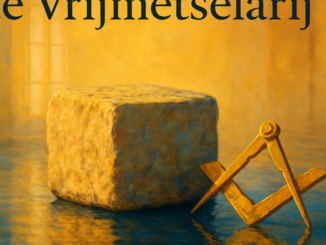
Rough ashlar stone and chisel symbolizing Masonic self-improvement journey
Personal Development & Leadership

The Broken Journey: Personality Beyond Appearances

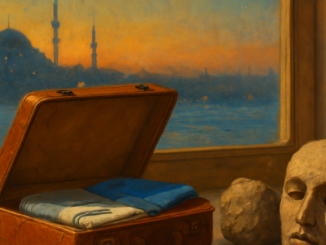
A journey begins with a suitcase. We pack clothes, toiletries, perhaps a book. But what we truly carry with us is invisible: our expectations, our fears, our hopes of escaping the routines of daily life. When a journey ends in tragedy — as happened recently with a German family in Istanbul — we are confronted with the fragility of existence. And with a deeper question: who were these people, really, beyond the headlines? This question touches on something essential that Freemasonry continually explores: the mystery of personality itself. The Mask and the Face The word “personality” derives from the Latin persona, which originally referred to the mask worn by actors in Roman theater. The mask concealed the actor’s true face while simultaneously amplifying the voice and making the character recognizable to the audience. There is a striking paradox here that deserves reflection: our masks both hide and reveal at the same time. When a court examines a case involving the loss of human life, it attempts to see through the masks. Judges weigh facts, but also intentions, backgrounds, and the inner state of those involved. They search for the essence behind the actions. This is a task we all perform […]

Symbolic representation of Nehemiah rebuilding the wall of Jerusalem
Christianity

Nehemiah and the Symbolism of the Rebuilt Wall

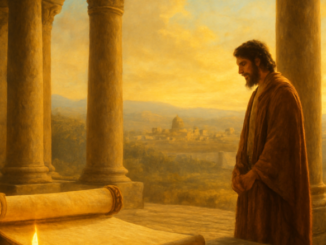
Picture an ancient city wall, neglected for generations, lying in ruins. Stones scattered, gates burned, the outline of what once offered protection barely recognizable. Then someone arrives — not merely to stack stones, but to restore an entire community. The story of Nehemiah, the sixteenth book of the Old Testament, tells exactly this. Beneath the historical narrative lies a rich vein of symbolism that touches the very heart of what Freemasons strive for: building something greater than oneself, stone by stone, shoulder to shoulder. The Wall as a Boundary Between Chaos and Order A wall is more than stacked stones. In everyday life, we experience walls as unremarkable dividers — things that simply exist. But look deeper, and you discover that every wall represents a decision: here one thing ends, and there another begins. The wall of Jerusalem that Nehemiah rebuilt was literally the boundary between the holy city and the disordered world beyond it. Symbolically, it marked the transition from chaos to order, from decay to restoration. In Freemasonry, this theme of demarcation plays an essential role. The temple we build also has walls — not of stone, but of principles, of ethical boundaries that define who we aspire […]

Steering wheel symbolizing choice and Masonic responsibility in life
Philosophy & Ethics

Guilt and Responsibility: A Symbolic Masonic Exploration

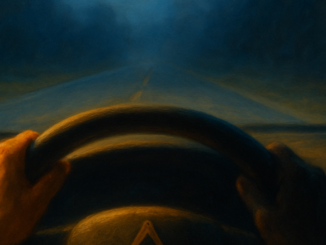
A steering wheel in human hands. A split second. A decision that can never be undone. When the news reports that someone is suspected of causing a fatal accident, it touches the deepest questions about human responsibility. What does it mean to carry guilt? How do our actions relate to our conscience? These questions reach far beyond the courtroom — they strike at the very foundation of what it means to be human. The Steering Wheel as a Symbol of Choice Every vehicle has a steering wheel, a rudder, a lever that sets its direction. This seemingly practical instrument carries a deeper meaning. The steering wheel represents the human will — our capacity to chart a course through life. Whoever takes the driver’s seat accepts a responsibility that extends far beyond their own destination. In Freemasonry, this symbolism finds a parallel in the image of the Master Builder wielding his tools. Just as the square and compasses are instruments for maintaining right angles and proper measure, the steering wheel is an instrument for giving direction. Both demand awareness, attention, and the recognition that every movement carries consequences. The Inescapable Question of Guilt When a tragic accident occurs, the question arises […]