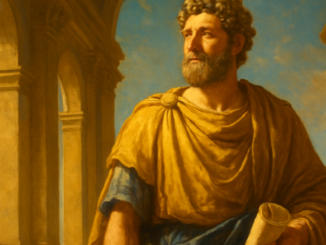
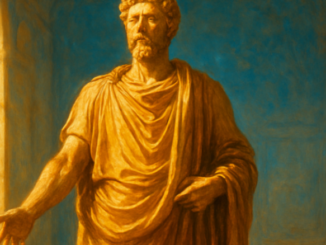
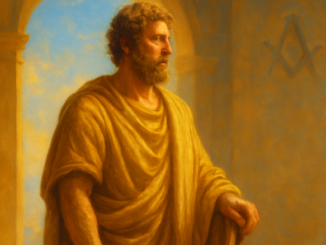
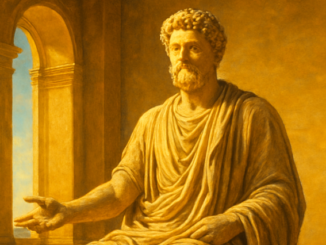
Ancient Roman bust of Marcus Aurelius symbolizing Stoic philosophy and fate
Marcus Aurelius – Meditations

Marcus Aurelius Book VII: Philosophical Roots of Fate

When a Roman emperor sat down by candlelight in the second century AD to record his private thoughts, he produced one of the most influential philosophical texts in Western history. Book VII of Marcus Aurelius’ Meditations tackles a theme that touches every human life: the unpredictability of existence. This essay explores the philosophical traditions that nourished these reflections and reveals a striking parallel with how Freemasonry approaches change, impermanence, and the shaping of character. The Stoic Legacy: From Zeno to the Imperial Age Stoicism was born around 300 BC in Athens, where Zeno of Citium taught his students in the Stoa Poikile — the painted colonnade that would give the school its name. The central idea was deceptively simple: while we cannot control external events, we can master our own responses to them. This philosophy was refined by thinkers such as Cleanthes and Chrysippus before reaching its Roman zenith in the works of Seneca, Epictetus, and ultimately Marcus Aurelius himself. In Book VII of the Meditations, we see Marcus Aurelius wrestling with the very questions that preoccupied his predecessors. The fickleness of fortune — what the Greeks called tyche — is not treated as an enemy but as a teacher. […]
Ancient Roman oil lamp illuminating a writing tablet symbolizing reflection
Marcus Aurelius – Content & Summary

Marcus Aurelius Book VII: On the Fickleness of Fortune

Deep in the night, the emperor picks up his writing tablet. Outside, wind howls past the legion tents along the Danube frontier. Inside, by the flickering light of an oil lamp, Marcus Aurelius bends over a question every human being knows: how do you remain steadfast when fortune turns against you? His answers, recorded in Book VII of the Meditations, still speak to anyone searching for inner peace amid uncertainty — and they carry a particular resonance for those who walk the path of self-improvement through Freemasonry. The Core Idea of Book VII The central theme of Book VII revolves around how we deal with change and adversity. Marcus Aurelius argues that external events are, in themselves, neutral. It is our judgment that turns them into disasters or blessings. This foundational Stoic principle receives a deeply personal and practical treatment in this book. The emperor does not write as an abstract philosopher but as a man who contends daily with illness, war, and political intrigue. What sets Book VII apart from the other books of the Meditations is its emphasis on the transience of all things. Marcus Aurelius reminds himself repeatedly that fame is fleeting, that bodies decay, and that […]

Open copy of Marcus Aurelius Meditations with Masonic square and compasses
Marcus Aurelius – Freemasonry & Connection

Marcus Aurelius on Evil: Book VII Wisdom for Freemasons

A candle flickers as a Freemason sits in silence after the evening’s labor. In his hands rests a worn copy of the Meditations. He reads a passage from Book VII — about people who do harm without realizing it — and recognizes something familiar, something discussed in lodge: how do you respond to injustice without losing your own inner balance? Marcus Aurelius, the Roman emperor-philosopher who lived nearly nineteen centuries ago, turns out to be remarkably relevant for anyone seeking moral clarity. The Heart of Book VII: Justice in the Face of Evil In the seventh book of his Meditations, Marcus Aurelius wrestles with a question that occupies every thoughtful person: how should you respond to those who do wrong? The emperor, who dealt daily with intrigue, betrayal, and human weakness, chose an unexpected path. Rather than anger or retaliation, he advocated understanding. Not because wrongdoing should be condoned, but because anger damages one’s own soul. Marcus Aurelius writes that those who do evil act out of ignorance about what is truly good. This idea, which traces back to Socrates and Plato, forms the backbone of his approach. Evil is not a deliberate choice of wrong over right, but a […]

Statue of Marcus Aurelius representing Stoic philosophy and justice
Marcus Aurelius – Meditations

Marcus Aurelius on Evil and Justice: Philosophical Roots

You’re facing a difficult decision. Someone has wronged you, and the urge to strike back burns hot. It’s precisely in moments like these that Book VII of Marcus Aurelius’ Meditations offers concrete guidance. But where did these insights originate? Which philosophical traditions shaped the thinking of this Roman emperor? And more importantly — how can you put this ancient wisdom to work in your life today? The Stoic Foundation: Mastering Your Reactions Marcus Aurelius wrote from within a tradition that began three centuries before his time. Around 300 BCE, Zeno of Citium founded the Stoic school in Athens. Its core principle was simple yet powerful: you have no control over what happens to you, but you have full control over how you respond. In Book VII, Marcus Aurelius applies this directly to questions of evil and justice. When someone insults or harms you, the event itself is neutral. It’s your judgment about it that turns it into something painful. This is not passivity. It’s an active choice to direct your energy toward what you can actually influence. Try it yourself: the next time someone’s behavior irritates you, ask yourself, “Can I change this?” If yes, take action. If not, accept […]

Marcus Aurelius statue symbolizing Stoic justice and Masonic inner temple
Marcus Aurelius – Content & Summary

Marcus Aurelius Book VII: On Evil and Justice

There may have been a moment in your life when someone wronged you and you felt anger rising like a tide. Or perhaps you recognize those times when your own thoughts tormented you more than the situation itself. Marcus Aurelius, the Roman emperor-philosopher, wrestled with exactly these questions. In Book VII of his Meditations, he examines what evil truly is, how justice guides our actions, and why inner peace never depends on the behavior of others. The Heart of Book VII: What Is True Evil? Marcus Aurelius opens Book VII with a radical proposition: the evil others inflict upon you does not damage your soul. What truly harms you is your own reaction to it. This is a foundational Stoic insight that he returns to again and again. When someone insults you, lies to you, or deceives you, the real danger lies not in the act itself but in how you choose to respond. If you allow yourself to be swept away by anger and resentment, you surrender your power. If you remain aligned with your inner compass, you preserve your freedom. The emperor wrote these reflections as private notes, never intended for publication. That is precisely what makes them […]

Ancient Roman bust of Marcus Aurelius symbolizing Masonic brotherhood and Stoic wisdom
Marcus Aurelius – Freemasonry & Connection

Marcus Aurelius Book VI: Brotherhood as the Art of Living

Have you ever wondered why certain ancient wisdom still strikes such a powerful chord? Nearly two thousand years ago, Marcus Aurelius wrote about the art of living among others, and his words feel as though they could have been penned yesterday. In Book VI of his Meditations, the Roman emperor-philosopher reveals what it truly means to live as a human being among human beings. For Freemasons, these reflections sound remarkably familiar — because the values Marcus Aurelius describes also form the very foundation of the Craft. Humanity as One Body Throughout Book VI, Marcus Aurelius returns again and again to the theme of human interconnectedness. He does not see humanity as a collection of isolated individuals, but as parts of a single great organism. Just as a hand or a foot only finds its purpose as part of the body, so too does a person discover meaning through relationship with others. This is not idle philosophical musing — it is a call to action. When you wake in the morning and feel annoyed at the people you will encounter that day, Marcus Aurelius reminds you that they are your kindred. Not because you share the same blood, but because you […]

Ancient Stoic philosophical texts symbolizing Masonic brotherhood and wisdom
Marcus Aurelius – Meditations

Marcus Aurelius Book VI: Philosophical Roots of Brotherhood

What drives a Roman emperor to write about the interconnectedness of all people while camped in a war zone? And why do those thoughts still resonate nineteen centuries later in the rituals of Masonic lodges around the world? The answers lie buried deep in the philosophical traditions that shaped Marcus Aurelius — traditions that continue to provide the foundations for fraternal bonds to this day. Where Did Marcus Aurelius Draw His Ideas From? This is perhaps the first question that arises when reading Book VI of the Meditations. Marcus Aurelius did not write in a vacuum. He stood on the shoulders of giants — generations of Stoic thinkers who had laid the groundwork before him. The Stoa, founded by Zeno of Citium around 300 BC, taught that all human beings are part of one cosmic community. This concept, the cosmopolis, forms the backbone of everything Marcus wrote about our obligations to one another. But the emperor did not limit himself to a single source. He drank from multiple philosophical rivers: the practical ethics of Epictetus, the letters of Seneca, and the moral biographies of Plutarch. Each of these thinkers contributed a unique stone to the edifice of his thought on […]

Statue of Marcus Aurelius representing Stoic brotherhood and philosophy
Marcus Aurelius – Content & Summary

Marcus Aurelius Book VI: On Brotherhood and Humanity

In the year 170 AD, amid grueling military campaigns along the Danube frontier, the Roman Emperor Marcus Aurelius sat down in the solitude of his army tent and wrote some of the most penetrating reflections ever composed on what it means to be connected to our fellow human beings. Book VI of his Meditations, nearly two thousand years later, still speaks powerfully to anyone who contemplates brotherhood, community, and the art of living together. The Historical Context of Book VI Marcus Aurelius ruled as emperor from 161 to 180 AD, a reign marked by wars, plagues, and political turmoil. Yet this philosopher-king found time to examine his inner life with remarkable honesty. Book VI was most likely composed during the Marcomannic Wars, when the emperor was confronted daily with the rawest dimensions of human existence — violence, betrayal, and death. It was precisely under these harsh conditions that he developed his deepest insights into human connection. The Stoic philosophy in which Marcus Aurelius had been educated by teachers such as Junius Rusticus and Apollonius of Chalcedon formed the bedrock of his thinking. The Stoics taught that all human beings are part of a single cosmic community, bound together by the […]

Marble bust of Marcus Aurelius with Masonic square and compass symbolism
Marcus Aurelius – Freemasonry & Connection

Marcus Aurelius on Virtue as the Only True Value

What if everything you own — your status, your reputation, even your body — were to vanish tomorrow? Would anything of real value remain? Marcus Aurelius, the Roman emperor-philosopher who ruled nearly nineteen centuries ago, posed this question to himself again and again. In the sixth book of his Meditations, he arrives at an answer that is both radical and consoling: only virtue holds genuine worth. This insight resonates profoundly with Freemasonry, where the pursuit of moral perfection and the cultivation of inner qualities stand at the very center of practice. Both traditions converge on a fundamental conviction: who you are matters far more than what you have. The Paradox of the Powerful Philosopher Here we enter curious territory. Marcus Aurelius wielded virtually unlimited power. As emperor, he could amass wealth, destroy enemies, and have his name chiseled in marble for all eternity. Yet night after night, he wrote in his private journal that none of these things moved him. More than that — he regarded them as distractions from what truly matters. Throughout Book VI, he repeats like a mantra that external circumstances are neither good nor bad. They are indifferent, neutral, merely the raw material with which the […]

Bust of Marcus Aurelius symbolizing Stoic virtue and philosophical wisdom
Marcus Aurelius – Meditations

Marcus Aurelius and the Stoic Roots of Virtue as Supreme Good

When Marcus Aurelius writes in the sixth book of his Meditations that only virtue possesses real value, he is not speaking as a solitary thinker philosophizing in his tent. He is articulating a tradition that began more than four centuries before him in the colonnades of Athens, was shaped by exiles and slaves, and ultimately reached the throne of the Roman Empire. The claim that virtue is the sole good forms the beating heart of Stoicism — but what does it actually mean? And which thinkers forged this conviction before an emperor committed it to his private journal? The Paradox of the Stoic Good Here lies a philosophical paradox that deserves careful examination. Stoicism asserts that virtue — and only virtue — is good. Wealth is not good. Health is not good. Even life itself is not good. How can such an extreme position be reasonable? The answer lies in the Stoic definition of the good: something is truly valuable only if it always, under all circumstances, leads to well-being. Wealth can breed greed, health can foster arrogance, and a long life can descend into idleness. But a virtuous character, the Stoics argued, can never be misused. You can have […]

Ancient Roman bust of Marcus Aurelius symbolizing Stoic virtue and Freemasonry
Marcus Aurelius – Content & Summary

Marcus Aurelius Book VI: Virtue as Compass in a Faltering Empire

Somewhere around 173 AD, amid military campaigns along the Danube, a Roman emperor sat down by candlelight to write his thoughts. Not for publication, not for fame, but as an exercise in inner discipline. Marcus Aurelius knew that external circumstances could be stripped from him at any moment — his throne, his health, even his life. But one thing no one could take away: his character. In the sixth book of his Meditations, he distills this insight into a philosophical core that still resonates today, not least within Freemasonry. The Historical Context of Book VI To truly understand Book VI, we must transport ourselves to the Roman Empire in the second century. Marcus Aurelius ruled from 161 to 180 AD, a period marked by plague, frontier wars, and internal instability. Unlike the philosophers of his day, who could contemplate in relative tranquility, this Stoic emperor wrote his reflections quite literally on the battlefield. The Meditations are not a systematic treatise but a collection of personal notes, originally titled Ta eis heauton — “To Himself.” Book VI was most likely composed during the Marcomannic Wars, when the emperor confronted mortality on a massive scale. It is precisely within this chaos that […]

Rough ashlar stone with gavel symbolizing Stoic obstacles in Freemasonry
Marcus Aurelius – Freemasonry & Connection

Marcus Aurelius on Obstacles: Stoic Wisdom for Freemasons

In 172 AD, Emperor Marcus Aurelius sat along the Danube frontier, surrounded by war and personal loss, and wrote some of the most penetrating observations ever recorded about the human capacity to transform adversity. His fifth book of the Meditations contains a core insight that still resonates in Masonic lodges around the world nearly two thousand years later: the obstacle becomes the way. This philosophical legacy connects the ancient Stoic tradition with the ongoing pursuit of moral perfection that lies at the heart of Freemasonry. The Historical Context of Book V Marcus Aurelius never intended his Meditations for publication. They were private notes — a journal of self-examination written during one of the most turbulent periods of his reign. Book V emerged during the Marcomannic Wars, a grueling campaign against Germanic tribes that kept the emperor far from Rome, surrounded by death and hardship. And yet, amid all of it, he turned his gaze inward. He asked himself a deceptively simple question: how do I remain a good man when the world around me descends into chaos? This was no rhetorical exercise. Marcus Aurelius buried children, lost trusted advisors, and watched soldiers fall around him. His own health was failing. […]

Ancient Roman statue of Marcus Aurelius representing Stoic philosophy and wisdom
Marcus Aurelius – Meditations

Marcus Aurelius Book V: The Philosophy of Overcoming Obstacles

When Marcus Aurelius wrote about overcoming obstacles in the fifth book of his Meditations, he drew on a rich philosophical tradition stretching back to the earliest Stoics in ancient Greece. To the modern reader, his words can feel strikingly relevant. To the Freemason, they carry a particular resonance — echoing the ideal of the rough ashlar that must be shaped and polished through sustained inner effort. But how does the outsider’s reading of these texts differ from that of someone steeped in initiatory traditions? This article compares both perspectives and reveals what they share in the search for meaning. The Stoic Roots of Book V Marcus Aurelius never intended his Meditations for publication. They were personal exercises in the art of living — spiritual journal entries composed, most likely, during gruelling military campaigns along the Danube frontier. Book V breathes the spirit of Stoicism as it was founded by Zeno of Citium around 300 BCE. The core idea is straightforward: we cannot control the external world, but we can control how we respond to it. Obstacles are not enemies — they are teachers. This philosophy reached Marcus Aurelius through a chain of thinkers. Cleanthes and Chrysippus refined Zeno’s teachings, but […]

Open copy of Marcus Aurelius Meditations beside Masonic rough ashlar stone
Marcus Aurelius – Content & Summary

Marcus Aurelius Book V: Overcoming Obstacles as an Art

Imagine waking up and facing the day ahead like a mountain you must climb. Everything inside you resists. Your mind searches for excuses, and the warm blankets feel like a safe harbour. It is precisely in moments like these that the Roman Emperor Marcus Aurelius addressed himself with words that still resonate nearly two thousand years later. In the fifth book of his Meditations, he explores how we need not see obstacles as enemies — but as the path itself. The Context of Book V Marcus Aurelius never wrote his Meditations for publication. They were personal exercises in the art of living — private reflections set down during some of the most turbulent years of the Roman Empire. Book V was most likely composed during military campaigns along the Empire’s northern frontiers, amid war, plague, and personal loss. These circumstances make the text all the more powerful: this is not a philosopher speaking from an ivory tower, but a man confronting the harshest realities of existence on a daily basis. The book opens with a passage that almost everyone can relate to. Marcus describes the moment of waking, when the temptation to stay in bed is at its strongest. He […]

Rough ashlar stone with hammer and chisel symbolizing Masonic character building
Marcus Aurelius – Freemasonry & Connection

Marcus Aurelius on Duty: The Stone as a Symbol of Character

Every morning, before the first light slips through the window, every human being faces the same inner struggle. The warmth of the bed pulls at us while the day and its obligations wait. In Book V of his Meditations, Marcus Aurelius describes exactly this moment — the instant when character is forged. For Freemasons, this struggle resonates with a deeply rooted symbol: the working of the rough stone. Both traditions understand that the fulfillment of duty is not a burden but the very hammer with which we shape ourselves into something enduring. Waking Up as a Moral Turning Point Marcus Aurelius opens Book V with a scene every reader recognizes. He addresses himself at the break of day: rise, for you were made for the work that befits a human being. The emperor does not philosophize from an ivory tower but from the mud of military campaigns and the weight of administrative burdens. His words carry the gravity of lived experience. In his writing, this daily act of waking becomes a metaphor for a greater awakening. Not only must the body rise, but the mind must orient itself toward its true calling. In Freemasonry, we find a kindred idea: the […]

Statue of Marcus Aurelius symbolizing Stoic duty and Masonic character
Marcus Aurelius – Meditations

Marcus Aurelius Book V: The Philosophical Roots of Duty

Why would a Roman emperor force himself out of bed before sunrise, even when every fiber of his body resisted? This question confronts us when reading Book V of the Meditations of Marcus Aurelius. The answer lies not in imperial discipline alone, but in ancient philosophical traditions that laid the groundwork for his thinking about duty and strength of character — traditions that continue to resonate deeply within Freemasonry. The Core of Stoic Duty Stoic philosophy, founded by Zeno of Citium around 300 BCE, forms the bedrock upon which Marcus Aurelius built his reflections. The Stoics taught that every human being fulfills a specific role within the cosmic order. Duty, in this view, is not an external constraint imposed from above — it is the natural consequence of understanding your place in the greater whole. When Marcus Aurelius speaks in Book V about rising from bed as a duty, he is invoking this deeper principle: you were born to act in accordance with your nature as a rational, social being. The early Stoics, including Chrysippus and Cleanthes, developed the concept of kathêkon, often translated as “appropriate action” or “duty.” This idea differs from modern notions of obligation because it is […]

Ancient rock standing firm against ocean waves symbolizing Stoic resilience
Marcus Aurelius – Content & Summary

Marcus Aurelius Book V: Duty and Strength of Character

The fifth book of Marcus Aurelius’ Meditations opens with a remarkably intimate scene: the Roman emperor urging himself to get out of bed. This seemingly mundane moment carries a far deeper message. It is not about waking early — it is about the willingness to fulfill your duty, even when every fiber of your being resists. In Book V, Marcus Aurelius examines what it means to show true character when life pushes back, and how a sense of duty shapes us into who we are truly capable of becoming. The Morning as a Symbolic Starting Point Marcus Aurelius begins Book V with an inner dialogue that most of us will recognize instantly. He describes how the warmth of the bed beckons, how the mind invents reasons to stay lying down just a little longer. Yet he reminds himself that he was not born for comfort — he was born to act. The morning becomes a symbol for every new beginning, every choice where ease and duty stand in opposition. The moment of waking represents the awakening of consciousness to its responsibility. This image of the morning struggle touches on a universal human experience. It is not only the physical act […]

Candle-lit Masonic lodge with open book of Marcus Aurelius Meditations
Marcus Aurelius – Freemasonry & Connection

Marcus Aurelius on Change: Stoic Wisdom and Freemasonry

It is evening in the lodge. Candle flames flicker gently as the brethren sit in silence, each absorbed in thought after a night of ritual and reflection. An older brother opens a well-worn book and reads aloud: “Consider how much has already changed in the world. Everything flows.” The words of Marcus Aurelius, nearly two thousand years old, fill the room as though they were written yesterday. What the Roman emperor-philosopher captured in his Meditations about change and constant flux touches the very heart of what Freemasons seek: wisdom that endures amid the eternal cycle of becoming and passing away. The River of Heraclitus in the Roman Camp Marcus Aurelius likely wrote the fourth book of his Meditations during his military campaigns along the northern frontiers of the Roman Empire. Surrounded by war and uncertainty, he sought solace in Stoic philosophy — a tradition inherited from thinkers such as Epictetus and Seneca. Central to Book IV is the idea that everything exists in constant motion, an echo of the ancient Greek philosopher Heraclitus, who famously declared that one can never step into the same river twice. For Marcus Aurelius, this was no cause for despair. Rather, it was a path […]

Ancient Roman bust of Marcus Aurelius symbolizing Stoic philosophy and change
Marcus Aurelius – Meditations

Marcus Aurelius on Change: Philosophical Roots of Book IV

Picture a hectic Monday morning. You’re stuck in traffic, your schedule is falling apart, colleagues are on edge, and a mountain of tasks awaits you at home. In moments of chaos like these, wisdom written nearly two thousand years ago can prove remarkably practical. In the fourth book of his Meditations, Marcus Aurelius reflected on the constant flow of existence — the relentless current of change that defines every human life. But where did this Roman emperor draw his ideas from? And more importantly, how can those insights still serve you today? The River of Heraclitus as Foundation When Marcus Aurelius writes about change and flux, the voice of Heraclitus of Ephesus echoes through his words. This Greek philosopher, who lived around 500 BCE, articulated the famous insight that you can never step into the same river twice. The water flows constantly, and by the time you take that second step, you yourself have already changed. Marcus Aurelius adopted this image directly and applied it to everyday life. Strictly speaking, every morning you wake up, you are a different person than the day before. Your cells have renewed, your thoughts have shifted, your circumstances have altered. This may sound abstract, […]

Ancient Roman bust of Marcus Aurelius symbolizing Stoic wisdom and change
Marcus Aurelius – Content & Summary

Marcus Aurelius Book IV: On Change and Constant Flow

Why do we cling so desperately to what is inevitably passing away? This question runs like a golden thread through Book IV of the Meditations of Marcus Aurelius. The Roman emperor and Stoic philosopher invites us to see the constant flow of existence not as a threat, but as a fundamental truth capable of bringing deep inner peace. In this article, we explore the core ideas of this timeless work and discover how its wisdom on change can still guide us today — particularly those walking the Masonic path. What Is the Central Message of Book IV? Marcus Aurelius wrote his Meditations as private reflections, never intended for publication. That very fact gives them a sincerity that few philosophical works can match. In Book IV, everything revolves around one fundamental insight: change is not something that happens to us — it is the very essence of existence itself. Everything flows; nothing remains. The emperor returns to this theme in various ways, as though he needs to convince himself that this truth must not only be understood intellectually but felt in the marrow of one’s bones. But why should this insight offer comfort rather than despair? Marcus Aurelius answers by pointing […]