Open book showing Voltaire's Prayer for Tolerance with candlelight
Symbolism & Rituals

Voltaire’s Prayer for Tolerance: Meaning and Key Lessons

Imagine standing in a room filled with people from vastly different backgrounds, beliefs, and worldviews. What is the common thread that binds them all together? Voltaire grappled with precisely this question when he wrote his famous Prayer for Tolerance in 1763. This short but powerful text forms the emotional climax of his Treatise on Tolerance. In it, we find a core idea, central themes, and concrete lessons that remain strikingly relevant — lessons you can apply in your own life today. The Context: Why Voltaire Wrote This Prayer Voltaire’s Prayer for Tolerance did not emerge in a vacuum. He wrote it in direct response to the Jean Calas affair — the case of a Protestant merchant who was wrongfully convicted and executed for the alleged murder of his own son. In reality, the son had taken his own life, but religious prejudice fueled a horrific miscarriage of justice. Voltaire was so deeply shaken by this event that he launched a campaign to rehabilitate Calas and, at the same time, penned a sweeping analysis of the urgent need for tolerance. The prayer forms the closing passage of his treatise, and its tone is remarkably personal. Where the rest of the work […]

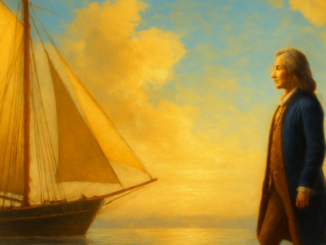
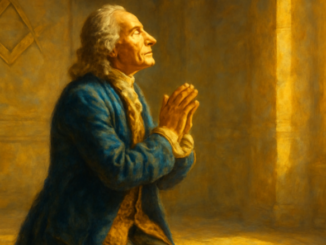
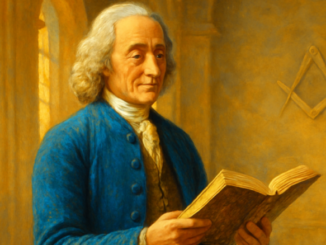
Voltaire portrait with Masonic symbols representing tolerance and Enlightenment
Symbolism & Rituals

Voltaire on Tolerance: Virtue as the Foundation of Society

Some ideas from the eighteenth century feel remarkably current — and Voltaire’s reflections on tolerance are a prime example. Writing during a period of religious persecution and deadly conflict, Voltaire articulated a vision of tolerance that went far beyond political convenience. In his second essay on the subject, he presented tolerance not merely as a practical necessity, but as a fundamental human virtue — a perspective that aligns seamlessly with the principles of Freemasonry. The Historical Context of Voltaire’s Plea Voltaire wrote his reflections on tolerance against the backdrop of the Calas affair, in which a Protestant father was wrongfully convicted and executed for the alleged murder of his son. This gross miscarriage of justice, fueled by religious fanaticism, struck Voltaire to his core and became the catalyst for his passionate defense of tolerance as a moral duty. In his second essay on the topic, he moved beyond practical arguments to make a bolder claim: tolerance is not a sign of weakness but a hallmark of civilization and inner strength. Voltaire placed his argument within a sweeping historical framework. He pointed to ancient civilizations such as the Roman Empire, where diverse religions coexisted for long periods. This tolerance did not […]

Portrait of Voltaire symbolizing tolerance and Enlightenment ideals in Freemasonry
Symbolism & Rituals

Voltaire on Tolerance: The Calas Affair and Freemasonry

What happens when a society projects its deepest fears onto an innocent family? Voltaire’s treatise on tolerance opens with one of the most harrowing cases of religious intolerance in eighteenth-century Europe: the Calas affair. This was not merely a judicial error — it was a mirror held up to humanity, revealing how swiftly prejudice can escalate into murder. For Freemasons, who regard brotherhood and tolerance as pillars of their work, Voltaire’s writing resonates as powerfully today as it did over two and a half centuries ago. The Tragic Heart of the Calas Affair In 1761, the Protestant merchant Jean Calas of Toulouse discovered his son Marc-Antoine dead in the family home. The young man had hanged himself. What followed was not a search for truth but a hysterical wave of accusations. The local population, saturated with religious tension between Catholics and Protestants, quickly concluded that the father had murdered his son to prevent him from converting to Catholicism. Without credible evidence, Jean Calas was tortured and publicly executed on the breaking wheel in March 1762. Voltaire first heard about the case through friends and was initially uncertain about Calas’s guilt. But as he gathered more testimonies and studied the facts, […]

Reeds bending in wind symbolising Voltaire and Pascal philosophical dialogue
Symbolism & Rituals

Voltaire on Pascal: The Fifth Philosophical Letter Explored

A thinking reed. With this single image, Blaise Pascal captured the human condition — insignificant amid the vastness of the universe, yet elevated by the capacity for thought. Voltaire read these words and felt compelled to respond. In his fifth philosophical letter, he enters into dialogue with a thinker who both fascinated and unsettled him. The result is a text that still invites profound reflection: is humanity truly as wretched as Pascal claimed? The Heart of Pascal’s Thought Blaise Pascal wrote his famous Pensées as groundwork for a defence of the Christian faith. At its centre lies his conviction that humanity without God is lost. He describes human nature as broken, torn between greatness and insignificance. We seek distractions so we need not feel the void within. We entertain ourselves to forget death. Pascal’s analysis is saturated with a deep pessimism about humanity’s capacity for happiness outside divine grace. Voltaire acknowledges Pascal’s brilliance as both mathematician and prose stylist. At the same time, he resists Pascal’s bleak vision of human nature. In the fifth letter, he methodically dissects Pascal’s propositions and sets his own perspective against them. This is not destructive criticism — it is a dialogue between two fundamentally […]

Prism splitting white light into a spectrum symbolizing Masonic enlightenment
Symbolism & Rituals

Voltaire on Newton: Light as a Symbol of Insight

When a ray of light passes through a prism and splits into a rainbow of colors, we witness more than a physical phenomenon — we witness a revelation. Voltaire understood this profoundly when he introduced Isaac Newton’s ideas to continental Europe in his fourth Philosophical Letter. What he described was not merely science, but an entirely new way of seeing reality — one that resonates deeply with the symbolic language of Freemasonry. The Context of Voltaire’s Admiration Voltaire wrote his Philosophical Letters after a period of forced exile in England between 1726 and 1729. Those years changed his thinking fundamentally. Back in France, the natural philosophy of René Descartes still held sway, with its vortex theories and mechanistic explanations of the universe. Newton offered a radically different perspective: no speculation about invisible matter, but measurable forces and mathematical laws. Voltaire saw in Newton far more than a scientist — he saw a liberator of the human mind. His fourth letter reads as a tribute, but one that consistently invites the reader to investigate for themselves. What made Voltaire’s approach remarkable was his ability to make Newton’s complex work accessible without oversimplifying it. He described the discovery of gravity, the laws […]

Rough ashlar and open book symbolizing Locke's blank slate in Freemasonry
Symbolism & Rituals

Voltaire on Locke: The Soul as a Blank Slate

In a dimly lit London study sometime in the 1720s, a young French exile bent over the works of an English philosopher who had died just decades earlier. François-Marie Arouet — better known as Voltaire — discovered in the writings of John Locke a revolutionary idea: the human mind is born a blank slate. No innate ideas, no predetermined truths, only the pure possibility of growth through experience. This discovery would change Voltaire forever, and it forms the heart of his third philosophical letter. The Context of Voltaire’s Exile When Voltaire lived in England between 1726 and 1728, he was fleeing not only the Bastille but also the suffocating intellectual climate of Louis XV’s France. In England, he encountered a society where freethinkers could debate openly, where Isaac Newton’s science was celebrated, and where John Locke’s philosophy was considered common knowledge. He later gathered these experiences into his Philosophical Letters, a collection of essays that introduced English thought to the French public. The third letter, devoted to Locke, stands out because Voltaire does more than simply report on scientific discoveries. He poses a fundamental question about human nature itself: Who are we, and how do we arrive at our knowledge? […]

Voltaire reflecting on the Anglican Church and religious tolerance in England
Symbolism & Rituals

Voltaire on the Anglicans: Tolerance as a Religious Virtue

In his second philosophical letter, Voltaire turns his sharp gaze toward the Anglican Church. Having already shared his observations on the Quakers, he now examines an established state church that, despite its official status, displays a remarkable degree of religious tolerance. By placing two worlds side by side — the rigid French Catholicism of his era and the pragmatic English approach to faith and state power — Voltaire reveals not only differences in ecclesiastical organization, but touches on deeper questions about freedom, hierarchy, and the symbolic meaning of religious institutions. The Heart of Voltaire’s Argument Voltaire describes the Anglican Church as a curious blend of Protestant theology and Catholic aesthetics. The bishops still wear their mitres, the cathedrals retain their grandeur, and the liturgy carries a solemnity reminiscent of Rome. Yet the doctrine is fundamentally different. The monarch stands at the head of the church, not the Pope. This institutional break with Rome, Voltaire argues, has not led to chaos but rather to a workable order in which religious disagreements are far less likely to result in bloodshed. The central theme of this letter is the relationship between state power and religious authority. Voltaire observes that the English have found […]

Voltaire meeting a Quaker in a simple English home, symbolizing Enlightenment ideals
Symbolism & Rituals

Voltaire on the Quakers: Philosophy, Simplicity & Tolerance

When Voltaire set foot in England in 1726, he encountered a community that fascinated him profoundly: the Quakers. His first Philosophical Letter is far more than a traveler’s curiosity piece about an unusual religious group. It is a carefully constructed mirror held up to French society — and, by extension, to any society that confuses outward ceremony with genuine virtue. For anyone interested in the deeper currents of Freemasonry, Enlightenment thought, and the quest for authentic inner truth, Voltaire’s encounter with the Quakers remains remarkably relevant. The Encounter: A Philosopher Among the Quakers Voltaire opens his letter with a vivid scene. He visits an elderly Quaker at his home, perhaps expecting an exotic encounter with an eccentric. Instead, he finds a man of modest prosperity — calm, receptive, and entirely free of the customary social formalities. The Quaker does not remove his hat. He addresses Voltaire with the familiar “thou” rather than the formal “you.” There is no trace of deference or subservience. For Voltaire, accustomed to the rigid hierarchical etiquette of the French court, the experience is both refreshing and unsettling. These seemingly trivial details form the heart of Voltaire’s argument. The hat that stays on is not a […]

A sunlit garden symbolizing Voltaire's Candide and the Masonic path of self-cultivation
Symbolism & Rituals

Voltaire’s Candide: The Garden as a Key to the Art of Living

After an odyssey of disasters, wars, and bitter disillusionment, Candide finally arrives at a small garden. There he speaks the famous words: “We must cultivate our garden.” This deceptively simple conclusion to Voltaire’s satirical masterpiece contains a philosophy of life that is both profoundly practical and deeply meaningful. What does it truly mean to tend your own garden? And how can this insight be applied concretely in your life today? Candide’s Journey: A Whirlwind Overview Voltaire wrote Candide in 1759 as a razor-sharp attack on the philosophical optimism of his era — specifically the doctrine that we live in “the best of all possible worlds.” The protagonist, Candide, grows up under the tutelage of the philosopher Pangloss, who instills this optimism in him with unwavering conviction. Voltaire then proceeds to plunge his hero into a relentless cascade of misfortunes: war, earthquake, the Inquisition, slavery, and betrayal. Every time Candide believes things cannot possibly get worse, reality proves him wrong. The story takes the reader from Lisbon to South America, from Paris to Constantinople. Along the way, Candide encounters a gallery of characters who each embody the absurdity of human existence in their own way. Cunégonde, his beloved, loses both her […]

Symbolic journey from darkness to light inspired by Voltaire's Candide
Symbolism & Rituals

Voltaire’s Candide IV: Suffering and Hope in the Best of Worlds

In 1759, a slim satirical novel burst onto the scene and upended the European intellectual world. Voltaire wrote Candide during an era scarred by earthquakes, wars, and religious persecution. The fourth chapter plunges its young hero into the depths of misery — yet also offers the first glimmer of hope. More than two and a half centuries later, this passage still speaks powerfully to anyone wrestling with an enduring question: how do we find meaning in the midst of incomprehensible suffering? The Historical Context of Candide Voltaire penned his masterpiece in the shadow of the devastating Lisbon earthquake of 1755, a catastrophe that killed tens of thousands. The disaster shattered the optimistic worldview championed by philosophers like Gottfried Wilhelm Leibniz, who argued that we live in “the best of all possible worlds” because an omniscient God would never create anything inferior. Voltaire, deeply shaken by the senseless suffering he witnessed all around him, resolved to unmask this optimism mercilessly through the power of his pen. Chapter Four of Candide marks a turning point in the story. After being expelled from the paradisiacal castle of Baron Thunder-ten-Tronckh, brutalized by soldiers, and left to wander aimlessly, our hero reaches his absolute nadir. […]

Golden valley symbolizing Voltaire's El Dorado as a Masonic mirror of the self
Symbolism & Rituals

Voltaire’s El Dorado: The Utopia as a Mirror of Ourselves

Somewhere in the heart of Voltaire’s satirical masterpiece Candide lies a hidden valley where gold rolls across the roads like gravel and children play with gemstones as though they were marbles. This is El Dorado — a place that appears on no map yet dwells deep within human consciousness. Voltaire was not merely painting a fairy-tale kingdom. He was holding up a mirror, asking a question that resonates across centuries: what does our longing for a perfect world reveal about who we really are? Discovering the Undiscoverable Land Candide and his companion Cacambo reach El Dorado only after a long and perilous journey through hostile terrain. They drift along a river that carries them into a valley surrounded by unscalable cliffs. Voltaire chose this route with deliberate care: the hidden paradise cannot be reached through the usual paths of ambition or conquest. The river carries them there passively, as if in an act of surrender to the unknown. This symbolism speaks to a deeper truth about spiritual discovery — the highest things are not seized but received. In El Dorado, the travelers encounter a society that defies everything they have ever known. There is no poverty, no injustice, no religious […]

Open copy of Voltaire's Candide with Masonic square and compasses symbol
Symbolism & Rituals

Voltaire’s Candide: The Struggle for Good in Masonic Light

A candle flickers in the study as a young Freemason opens a yellowed copy of Candide. Voltaire’s razor-sharp wit, first published in 1759, still sparks after nearly three centuries. What drove this towering Enlightenment thinker to tear so relentlessly into the optimism of his era? And what can we — as modern seekers of wisdom — learn from this satirical journey through human suffering and the stubborn struggle for good? The Central Idea: Optimism Under Fire Voltaire wrote Candide as a devastating attack on the philosophical optimism of Gottfried Wilhelm Leibniz. The German philosopher argued that we live in “the best of all possible worlds” — a thesis that absolves God of evil by insisting that every instance of suffering is necessary for some greater good. Voltaire found this reasoning intolerable, particularly after the catastrophic Lisbon earthquake of 1755, which killed tens of thousands of people in a matter of minutes. The title character, Candide, grows up in the castle of Baron Thunder-ten-Tronckh in Westphalia, where his tutor Pangloss instructs him in “metaphysico-theologo-cosmo-nigology.” This absurd academic discipline teaches only one lesson: everything is for the best. When Candide is thrown out of the castle for kissing the baron’s daughter, Cunégonde, […]

Open book showing Voltaire's Candide with garden and Enlightenment imagery
Symbolism & Rituals

Voltaire’s Candide: The Best of All Worlds as a Mirror

Can a world filled with earthquakes, wars, and relentless human suffering truly be the best that God could have created? Voltaire posed this question with biting wit in his masterwork Candide, a satirical novella that has confronted readers since 1759 with the dangerous limits of naive optimism. This analysis explores the core ideas behind the story and why this eighteenth-century work continues to resonate with anyone searching for genuine meaning without self-deception. The Paradox of Optimism Voltaire wrote Candide as a direct attack on the philosophical optimism of Gottfried Wilhelm Leibniz, who argued that our world — despite all its misery — is the best of all possible worlds. On the surface, this sounds comforting. But Voltaire saw something dangerous lurking beneath: a complacency that kills initiative. If everything is already perfectly arranged by divine providence, why would anyone bother striving for improvement? The paradox Voltaire exposes is deeply unsettling: a philosophy designed to offer hope can easily become an excuse for passivity and moral blindness. In the story, the character Pangloss embodies this optimism in its most absurd form. As tutor to the naive young hero Candide, Pangloss insists that every misfortune ultimately serves the greater good — even […]