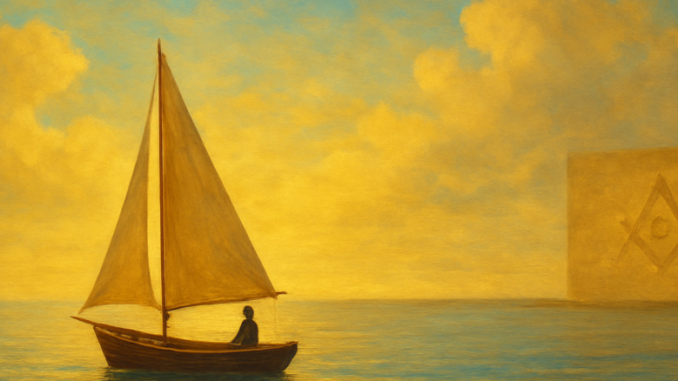
Some ideas from the eighteenth century feel remarkably current — and Voltaire’s reflections on tolerance are a prime example. Writing during a period of religious persecution and deadly conflict, Voltaire articulated a vision of tolerance that went far beyond political convenience. In his second essay on the subject, he presented tolerance not merely as a practical necessity, but as a fundamental human virtue — a perspective that aligns seamlessly with the principles of Freemasonry.
The Historical Context of Voltaire’s Plea
Voltaire wrote his reflections on tolerance against the backdrop of the Calas affair, in which a Protestant father was wrongfully convicted and executed for the alleged murder of his son. This gross miscarriage of justice, fueled by religious fanaticism, struck Voltaire to his core and became the catalyst for his passionate defense of tolerance as a moral duty. In his second essay on the topic, he moved beyond practical arguments to make a bolder claim: tolerance is not a sign of weakness but a hallmark of civilization and inner strength.
Voltaire placed his argument within a sweeping historical framework. He pointed to ancient civilizations such as the Roman Empire, where diverse religions coexisted for long periods. This tolerance did not breed chaos — it fostered stability and prosperity. Voltaire contrasted this with the religious wars that had torn Europe apart, asking pointedly why humanity seemed condemned to relearn this lesson time and again.
Tolerance as an Inner Virtue
What makes this essay particularly compelling is Voltaire’s shift from the political to the personal domain. For him, tolerance was not simply a rule for governments to enforce — it was a quality that every individual must actively cultivate. He compared it to other virtues such as justice and compassion. Just as these qualities must be practiced and developed over time, so too does tolerance demand conscious dedication.
Tolerance is not merely enduring another person despite their differences — it is recognizing their humanity through those differences.
Voltaire emphasized that true tolerance springs from humility. Those who acknowledge that their own beliefs are not infallible can approach the convictions of others with genuine openness. This does not mean abandoning your own values. It means creating space for dialogue and mutual understanding. This posture requires courage, because it is far easier to hide behind certainties than to embrace the complexity of multiple truths.
Lessons from History and Everyday Life
Voltaire supported his argument with vivid, memorable examples. He described how merchants of different faiths conducted business together in Amsterdam’s coffeehouses without religion ever becoming an obstacle. He referenced Spinoza, the philosopher who, despite his excommunication from the Jewish community, was able to continue his work in the relatively tolerant Dutch Republic. These examples demonstrate that tolerance is not only morally right but practically beneficial for any society.
At the same time, Voltaire was careful to mark the limits of tolerance. He made it clear that being tolerant does not mean accepting intolerance itself. Fanaticism that oppresses others or justifies violence deserves no protection under the guise of open-mindedness. This nuance is what makes his argument timelessly relevant, particularly in today’s debates about where the boundaries of tolerance should lie.
Voltaire and Freemasonry
Voltaire’s ideas dovetail naturally with the core values of Freemasonry. The Craft places the pursuit of truth and personal development at its center, without prescribing any specific religious doctrine. In the lodge, people from diverse backgrounds come together, united by shared principles of brotherhood and moral growth. This is tolerance put into practice.
Voltaire himself became a Freemason in the final months of his life, initiated into the Parisian lodge Les Neuf Sœurs. Whether he fully absorbed the rituals and symbolism in that brief time is uncertain. But his life’s work reflects the same spirit that animates Freemasonry: the pursuit of an enlightened society in which reason and humanity triumph over dogma and oppression.
The Building Blocks of a Tolerant Society
Voltaire’s metaphors in this essay are strikingly reminiscent of Masonic symbolism. He spoke of society as an edifice that can only stand when all its stones fit together properly. Every citizen, regardless of faith or origin, forms a stone in this greater structure. When we exclude or break stones because of their color or shape, we weaken the entire building. The roughness of individual differences should not be chiseled away — it should be incorporated into the larger design.
Several key insights emerge from Voltaire’s essay that remain as relevant as ever. Tolerance begins with self-reflection and the acknowledgment of one’s own limitations. It is an active virtue that must be practiced daily, not a passive state of indifference. A diverse society is inherently stronger than a homogeneous one. And standing firm against fanaticism is not a contradiction of tolerance — it is its necessary companion.
These insights offer a compass for anyone wrestling with the question of how to navigate difference in a polarized world. Voltaire challenges us to look beyond our first reaction, to see the person behind the conviction. That is not naivety — it is wisdom that has endured across generations.
Voltaire’s second essay on tolerance is far more than a historical document. It is an invitation to examine your own attitude toward difference. Tolerance as a virtue demands daily practice — the repeated choice of openness over fear. In an era when division often speaks louder than connection, Voltaire reminds us that the true strength of a society lies in its capacity to make room for everyone. For Freemasons and thoughtful individuals alike, his words remain a powerful call to build — stone by stone — a world worthy of the Enlightenment ideals he championed.
Copyright text & image: devrijmetselaar.nl
Texts are based on the ideas and content of the author of devrijmetselaar.nl, reviewed, corrected, and supplemented with the assistance of OpenAI. Images are created based on the ideas of the author of devrijmetselaar.nl using OpenAI/DALL-E.
Frequently Asked Questions
What historical event inspired Voltaire to write about tolerance?
The Calas affair inspired Voltaire's reflections on tolerance. In this case, a Protestant father was wrongfully convicted and executed for the alleged murder of his son based on religious fanaticism. This gross miscarriage of justice struck Voltaire deeply and became the catalyst for his passionate defense of tolerance as a moral duty.
Does Voltaire view tolerance as merely a practical necessity?
No. While tolerance may serve practical purposes, Voltaire argued in his second essay that tolerance goes far beyond political convenience. He presented tolerance as a fundamental human virtue—a hallmark of civilization and inner strength that must be actively cultivated by individuals as part of their moral development.
How does Voltaire connect tolerance to other virtues?
Voltaire compared tolerance to other virtues such as justice and compassion, arguing that all these qualities must be practiced and developed over time through conscious dedication. He emphasized that true tolerance springs from humility and the acknowledgment that one's own beliefs are not infallible, allowing for genuine openness and dialogue with others.



Be the first to comment