Explore the truth behind “The Da Vinci Code” theories. Discover fact-checks on Freemasonry, secret societies, and historical mysteries debunked.
Symbolism & Rituals
Mary Magdalene and the Holy Grail: Fiction or Fact?
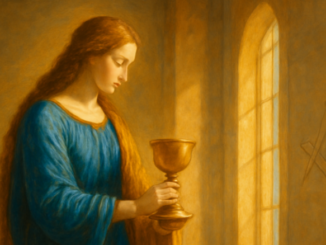
Perhaps you’ve experienced it too: you’re halfway through Dan Brown’s The Da Vinci Code, and you find yourself wondering — could any of this actually be true? The claim that Mary Magdalene was the wife of Jesus and that the Holy Grail actually represents their bloodline is so ingeniously constructed that it almost sounds plausible. But how much of this theory holds up under scrutiny? In this article, we examine the historical facts, the exaggerations, and the pure fiction behind one of the most talked-about claims in popular culture. Dan Brown’s Central Claim In The Da Vinci Code, Dan Brown presents the theory that Mary Magdalene was not merely a follower of Jesus, but his wife. According to the novel, she fled to France after the crucifixion while pregnant, and their bloodline continued through the centuries. The Holy Grail, then, is not a chalice at all — it is a metaphor for the womb of Mary Magdalene and the royal lineage that descended from her. It’s a bold hypothesis that has captivated millions of readers around the world. But how does it measure up against what historians and biblical scholars actually know? What the Historical Sources Actually Say The canonical […]