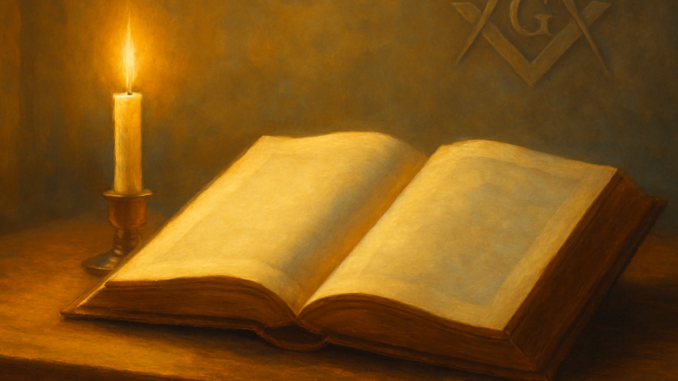
You’re standing at a crossroads and you simply don’t know. Maybe it’s a major life question, maybe something small. That uncertainty feels uncomfortable — as though you’re falling short somehow. But what if that very uncertainty is actually a strength? Agnosticism, the honest acknowledgment that some things remain unknowable, is often mistaken for indecisiveness. Yet this philosophical stance offers surprisingly practical tools for anyone who wants to live more consciously. In this article, you’ll discover how to put doubt to work — not as a weakness, but as an instrument for personal growth.
What Agnosticism Really Means for Everyday Life
Agnosticism derives from the Greek word meaning “not knowing.” It isn’t a rejection of faith or science — it’s the honest recognition that certain questions have no definitive answer. You encounter this more often than you might realize. What’s the right career move? How do you know for certain that you’re on the right path? An agnostic attitude means accepting this uncertainty without being paralyzed by it.
This is precisely where philosophy and Freemasonry intersect. Within Freemasonry, no definitive truth is imposed. There is no catechism to recite, no creed to sign. Instead, you’re invited to seek, to question, and to reflect for yourself. The lodge functions as a workshop for thought — not a temple of certainties.
The Agnostic Foundation of Seeking
A practical application of agnosticism begins with asking the right questions. Not “What is true?” but “What works for me right now?” Not “What must I believe?” but “What can I investigate?” This shifts your focus from endpoints to processes. You become a seeker rather than a guardian of fixed positions.
In the philosophical tradition, we find this idea echoed by thinkers who placed not-knowing at the center of wisdom. A famous saying from antiquity holds that true wisdom begins with the realization that you know nothing. This isn’t false modesty — it’s a workable method. Those who acknowledge they don’t know everything remain open to new insight. Those who believe they know it all have locked themselves in a prison of their own making.
The person who knows that they do not know is further along than the person who thinks they know what they do not know.
Concrete Steps to Make Doubt Productive
How do you translate these insights into daily practice? Here are concrete actions you can take, regardless of your background or beliefs.
First, ask yourself one question each day that you don’t know the answer to — and resist the urge to immediately search for it online. Let the question ripen first. Second, when someone expresses a strong opinion, ask them: “How do you know that for certain?” Not to provoke, but out of genuine curiosity. Third, write down three things each week that you’ve changed your mind about. This trains your mental flexibility. Fourth, seek out conversations with people who think fundamentally differently from you. Listen to understand, not to refute.
These exercises may seem simple, but they break habitual patterns. You train yourself to tolerate uncertainty — and even to enjoy it. This is not passivity. It is active not-knowing: a deliberate choice to maintain space for growth.
Philosophy and Brotherhood in the Workshop
Within Freemasonry, members gather in what is symbolically called a workshop. Here, no one preaches — instead, the work is done. The tools are not made of stone but of thought. A brother with an agnostic disposition fits seamlessly into this environment, because the tradition itself is built upon the collective search for light, for insight, for improvement.
In practical terms, this means entering conversation without the need to be right. You listen to another person’s experience, even when it clashes with your own. You acknowledge that your truth need not be the only truth. This requires courage, because it’s tempting to cling to what you think you know.
Doubt as a Connecting Force
Here’s what’s fascinating: shared doubt actually brings people together. Where firm convictions often create division, a shared search draws people closer. In a Masonic lodge, you’ll find people from vastly different backgrounds sitting side by side — entrepreneurs alongside artists, believers next to freethinkers. What binds them is not a shared answer, but a shared question.
You can apply this principle beyond the lodge as well. Look for people in your own circles who are willing to doubt — not cynically, but constructively. Start a reading group, a walking club with meaningful conversation, or a monthly coffee meetup where you discuss life’s big questions without the pressure to reach conclusions.
Why This Is Worth the Effort
You might be wondering: why embrace doubt when certainty feels so comfortable? The answer lies in the quality of your life. Those who accept their uncertainty experience less stress when reality doesn’t meet expectations. You become more resilient because you’re not dependent on one specific outcome.
Beyond that, you become a more pleasant person to be around. Nobody enjoys the company of someone who’s always right. People are drawn to those who truly listen, who suspend judgment, who make room for someone else’s story. An agnostic approach to life is, in that sense, also a powerful social skill.
Finally, it offers inner freedom. You no longer need to defend what you believe. You’re allowed to change without losing face. You’re allowed to grow without having to prove that you were wrong before. This is liberating in a way that’s difficult to describe — but immediately felt once you experience it.
Agnosticism is not weakness or indecision — it is a conscious choice for openness. It is the recognition that life becomes richer when you leave room for wonder. In both philosophy and Freemasonry, this attitude serves as a foundation for personal growth and genuine connection with others. Start today: ask a question you don’t know the answer to, and let that question shape your day.
Copyright text & image: devrijmetselaar.nl
Texts are based on the ideas and content of the author of devrijmetselaar.nl, reviewed, corrected, and supplemented with the assistance of OpenAI. Images are created based on the ideas of the author of devrijmetselaar.nl using OpenAI/DALL-E.
Frequently Asked Questions
Does Freemasonry require you to believe in a specific religion or creed?
No. Freemasonry welcomes men of all faiths and backgrounds. Rather than imposing a catechism or creed, the fraternity invites members to seek, question, and reflect on truth for themselves, making it compatible with many different belief systems and worldviews.
How does Freemasonry view doubt and uncertainty?
Freemasonry sees doubt and questioning as valuable tools for personal growth rather than weaknesses. The lodge functions as a workshop for thought where members are encouraged to investigate ideas and pursue their own understanding, recognizing that not-knowing is often the beginning of true wisdom.
Is it possible to be both agnostic and a Freemason?
Yes, absolutely. Freemasonry's philosophical foundation actually aligns well with agnosticism—both honor honest inquiry and the acknowledgment that some questions may not have definitive answers. The fraternity welcomes those who approach life with an open, questioning mind.
What practical benefits does Freemasonry offer beyond philosophy?
Freemasonry provides a supportive community of like-minded men committed to personal development and mutual aid. Members develop critical thinking skills, expand their perspectives through diverse conversations, and participate in charitable work—all while growing intellectually and morally through ritual and reflection.

Be the first to comment