Have you ever wondered why certain works of art move you so deeply? A symphony that sends shivers down your spine. A building that stops you in your tracks. An opera in which light and darkness engage in an unmistakable dance. Behind many of these masterpieces stand famous Freemasons worldwide — creators who wove their inner quest for truth into the very fabric of their art. Their work is more than aesthetics. It is an invitation to look, to feel, and to discover something within yourself.
Famous Freemasons Worldwide in Music
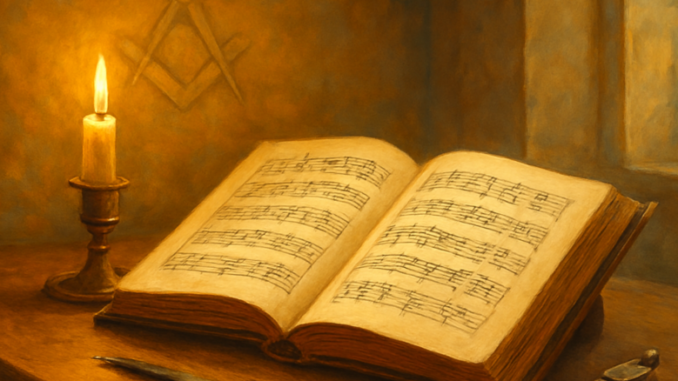
Consider the great composers of the eighteenth and nineteenth centuries. Many of them were members of a Masonic lodge. Their music was no random arrangement of notes — it was a deliberate attempt to make harmony audible. The Viennese composer who wrote The Magic Flute filled his opera with initiation rituals, with the tension between light and darkness, and with the journey from ignorance to wisdom. Every aria is a step along that path.
What these composers had in common was their belief that music is far more than entertainment. They saw sound as a building block for an inner temple. Just as a lodge works toward the betterment of each individual, these musicians crafted compositions that invite the listener to reflect. The pause between two chords, the unexpected turn in a melody — those are the moments when you, as a listener, stand still for just a heartbeat. And in that stillness, the real work happens.
Architecture as Silent Philosophy
When you walk through a historic city and look up at a stately building, you may be seeing more than stone and glass. Many renowned architects from earlier centuries were connected to the Royal Art, as Freemasonry is sometimes called. They designed buildings that were not only functional but deeply symbolic. The proportions, the placement of windows, the direction of light — every detail was intentional.
The term “Freemason” originally referred to the stonemasons who built the great cathedrals of Europe. That craft-based origin lives on in Masonic thinking about architecture. A building is not merely a shell. It is a space that does something to you. It invites reverence, introspection, and a connection to something greater than yourself. Many famous master builders worldwide understood this intuitively and let that understanding speak through their designs.
The Painter and the Hidden Light
The visual arts, too, carry traces of Masonic thought. Painters working in the eighteenth and nineteenth centuries often played with light and shadow, with veiled messages and layered meanings. The brush was to them what the hammer and chisel are to the stonemason: an instrument for refining raw material into something refined and meaningful.
“Art is not what you see, but what you make others see.”
This quote, attributed to a famous painter, captures something essential. The artist who belongs to a lodge sees his work as a mirror — not to glorify himself, but to confront the viewer with questions. What do you see? What does this stir in you? Art becomes a dialogue, an exchange between maker and observer that reaches far beyond the surface.
Literature and the Search for Meaning
Writers and poets connected to Freemasonry used their words to explore deeper truths. Their stories often revolve around transformation — the hero who descends into darkness only to find the light at last. You can recognize this pattern in countless classic works, and it is no accident. It is a deliberate choice to take the reader on a journey that runs parallel to one’s own inner development.
“The pen is mightier than the sword,” the saying goes. For these writers, the pen was above all an instrument of self-examination. Every chapter, every verse, every word was a step in their own quest. And by reading their work, you are invited to take those same steps — not because they hold the answers, but because they ask the right questions.
What You Can Learn from Famous Brethren in Art History
You might wonder what any of this has to do with you. After all, you are probably not a composer, architect, or painter. But here is the point: the art that these famous Freemasons worldwide left behind is not a closed system. It is an invitation open to everyone. You do not need to be an expert to be moved by a piece of music. You do not need to be a structural engineer to feel the calm of a well-designed space.
What these artists show us is that beauty and wisdom go hand in hand. That creating something beautiful can simultaneously be an act of self-discovery. And that truly experiencing art — with your full attention — is itself a form of inner work. Just as the lodge serves as a workshop for personal growth, so too can a museum, a concert hall, or a book serve that purpose for you.
Listen consciously to music that moves you and ask yourself why. Visit a historic building and pay attention to its proportions and light. Pause before a painting and let it speak to you. Read a classic work with the question: what journey does the protagonist undertake? These are simple practices, yet they can open doors you never knew existed.
The legacy of these artists is not only their work itself. It is the attitude with which they created it: with dedication, with attention to the invisible, and with the conviction that beauty can be a path toward insight. That attitude is something you can adopt — in everything you do and experience.
Famous Freemasons worldwide have left us far more than masterpieces alone. They have shown us that art and inner growth can be inseparably connected. Their symphonies, buildings, paintings, and stories are invitations — not to worship, but to get to work yourself. To listen, to look, to read with a willingness to be moved. And in that willingness lies perhaps the greatest art of all: the art of continually beginning anew on yourself.
Copyright text & image: devrijmetselaar.nl
Texts are based on the ideas and content of the author of devrijmetselaar.nl, reviewed, corrected, and supplemented with the assistance of OpenAI. Images are created based on the ideas of the author of devrijmetselaar.nl using OpenAI/DALL-E.
Frequently Asked Questions
What is the connection between Freemasonry and famous composers like Mozart?
Many great eighteenth and nineteenth-century composers were Freemasons who viewed music as more than entertainment—they saw it as a path to inner enlightenment and self-discovery. Their compositions, such as Mozart's 'The Magic Flute,' deliberately incorporated Masonic themes like initiation rituals, the journey from ignorance to wisdom, and the interplay between light and darkness. These musicians crafted works that invite listeners to reflect deeply and experience moments of profound stillness and connection.
How did Freemasonry influence architecture and building design?
Freemasonry traces its origins to the stonemasons who built Europe's great cathedrals, and this craft-based heritage profoundly shaped how Masonic architects approached design. Master builders understood that a building is far more than a functional structure—every proportion, window placement, and use of light was intentional and symbolic, designed to evoke reverence, introspection, and connection to something greater. This philosophy transformed buildings into spaces that do something meaningful to those who inhabit them.
What role did Masonic painters play in visual art?
Freemason painters in the eighteenth and nineteenth centuries used their art as a mirror to confront viewers with deeper questions, employing techniques like symbolic use of light and shadow, veiled messages, and layered meanings. Rather than creating art for self-glorification, these artists saw their work as an instrument for refining raw material into something spiritually meaningful, much like a stonemason refines stone. Their approach transformed painting into a tool for enlightenment and self-discovery.
Is there a common philosophy behind Masonic contributions to the arts?
Yes—Masonic artists across all disciplines shared the belief that their work should facilitate personal transformation and inner reflection in their audiences. Whether through music, architecture, or painting, these creators deliberately wove their quest for truth and wisdom into their work, viewing their artistic practice as parallel to Masonry's mission of individual betterment. The result is art that transcends mere aesthetics and becomes an invitation to look deeper, feel more profoundly, and discover something meaningful within oneself.

Be the first to comment