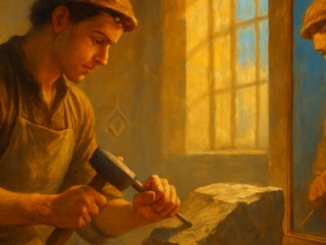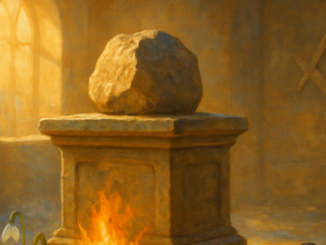
Rough ashlar stone beside a calm candle symbolizing Masonic inner strength
Personal Development & Leadership

Artificial Energy vs Inner Strength: A Masonic Perspective

As more people report heart palpitations, insomnia, and anxiety from stimulant supplements, a fundamental question emerges: where do we truly draw our energy from? The modern individual reaches for pills and powders to get through the day. The Freemason seeks something different — a force that doesn’t come from a bottle, but from within. Two paths, two views of human nature, yet both share the same search for vitality and meaning. The Modern Quest for Energy In a world that never stops, many feel the pressure to be perpetually switched on. Employers demand alertness, social media calls for constant engagement, and the body is simply expected to keep up. Stimulant supplements in powder or capsule form promise an easy fix: focus without effort, energy without rest. But reality tells a different story. Users increasingly report nervousness, a racing heart, or a restless mind. The promise of artificial energy carries a shadow side that no label warns you about. These complaints are not merely physical. They touch on something deeper: the feeling of losing control over one’s own body. When someone becomes dependent on external substances to function, they gradually lose contact with their natural rhythms. The question then shifts from […]

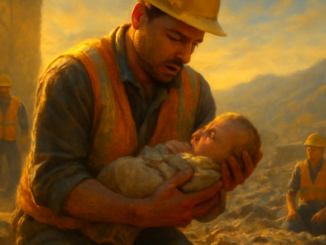
Rescue workers digging through rubble symbolizing brotherhood and hope
Freemasonry & Society

Rescue Under Rubble: What Rescue Workers Teach Us About Hope

For two days, a baby lay buried beneath the rubble of collapsed buildings in Venezuela. Rescue workers dug tirelessly, hour after hour, until their hands finally reached a living child. This story touches something universal within us — the refusal to give up when a human life is at stake. It also resonates deeply with the principles of Freemasonry: the power of organized cooperation, perseverance, and practical charity in action. Chaos and Determination After earthquakes struck Venezuela, rescue workers faced an overwhelming challenge. Mountains of debris, unstable structures, limited resources, and the terrible knowledge that time was working against them. Yet they refused to stop. Every stone they removed, every inch of progress, was an act of hope. For two days, teams worked in rotating shifts — coordinated, disciplined, and driven — until the impossible became possible. Moments like these confront us with fundamental questions. What drives people to keep going when the odds seem insurmountable? How do you organize hope in a situation of utter chaos? And perhaps more importantly: what can we, in our everyday lives, learn from this kind of determination? Practical Brotherhood in Action Freemasonry speaks often of brotherhood, but that word only gains true meaning […]

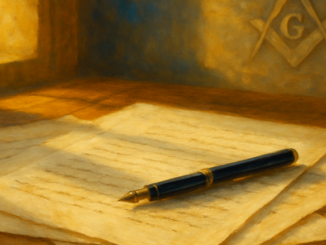
Pen and rough stone symbolizing essay writing as Masonic inner work
Culture & Media

Essay Writing: The Art of Personal Argument in Freemasonry

You probably know the feeling. Something stirs within you — a thought that won’t let go, a subject that captivates your mind. You want to write about it, but where do you begin? An essay offers precisely that space: a form where your personal voice is not only welcome but essential, where you’re allowed to explore and doubt, and where you ultimately reveal something of yourself. In Freemasonry, we call this kind of work “building” for good reason. Let’s explore together how to shape such a written piece of work. What Exactly Is an Essay? The word “essay” comes from the French essayer, meaning “to try” or “to attempt.” And that says everything about what an essay truly is. It’s not a scientific proof, not a journalistic report, and not fiction. It’s an attempt to explore a thought, to weigh it, to get to the heart of it. You try to understand something by writing about it — not by pinning it down definitively. In the sixteenth century, the French philosopher Michel de Montaigne began writing short pieces in which he reflected on everyday subjects: friendship, education, death, habits. He called them essais — attempts, trials. Since then, the essay […]

February symbolism and purification represented through Freemasonry traditions
Freemasonry & Society

February Symbolism: Purification and Its Role in Society

February carries a depth of meaning that stretches back thousands of years, rooted in ancient traditions of purification, reflection, and societal renewal. The very name comes from the Latin word februare, meaning to cleanse. For the Romans, this was the month of purification — a time to settle old debts and prepare the community for a fresh start. This timeless symbolism resonates powerfully with Freemasonry, where the work of building a better society always begins with inner purification. The Origins of February: Symbolism of Cleansing The Roman festival of Februalia was devoted entirely to ritual purification. During this period, homes were scrubbed clean, offerings were made to the gods, and the city of Rome was swept clean — both literally and figuratively. This was no casual tradition. The Romans firmly believed that a society could only flourish when its members freed themselves of what no longer served them. In Freemasonry, we recognize this same principle in the concept of the rough ashlar. Every Freemason begins as an unworked stone and spends a lifetime chipping away at imperfections. This is not a selfish pursuit of perfection — it is a deeply social commitment. After all, how can we contribute to a […]

Masonic square and compasses symbolizing self-knowledge and leadership
Personal Development & Leadership

Leadership Begins with Self-Knowledge: Lessons from Freemasonry

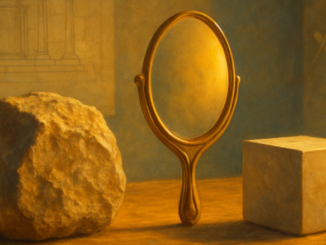
In an age that cries out for authentic leadership, the centuries-old tradition of Freemasonry offers surprisingly relevant insights. The Masonic lodge is not merely a place of brotherhood — it is, above all, a laboratory for personal development and self-knowledge. And as it turns out, that inner work may be exactly what modern leadership is missing. The Call for a New Kind of Leadership Everywhere you look — in politics, business, and civil society — there is a growing hunger for leaders who can provide direction in uncertain times. The conversations dominating public discourse make one thing clear: people are dissatisfied with the leadership they see. They long for something different, something genuine. But what truly makes someone a real leader? Is it charisma? Decisiveness? Or is there something deeper behind effective leadership? Freemasonry, a tradition that has guided individuals on their personal journeys for centuries, offers a remarkably timely perspective on this question. Know Thyself: The Foundation of Leadership Above the entrance to the ancient Temple of Delphi stood the words Gnothi seauton — Know thyself. This principle lies at the very heart of Freemasonry. Before a Freemason can lead or guide others, he must first undertake a journey […]

Vrijmetselarij - Freemasonry and Religion – A Bridge, Not a Wall
Spiritual Traditions

Freemasonry and Religion – A Bridge, Not a Wall

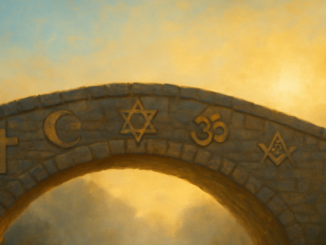
In a world where religion often draws dividing lines, Freemasonry offers something rare: a space where differences are not obstacles but invitations to dialogue. Freemasonry is not a religion. Nor is it a counter-movement. It is a centuries-old brotherhood where people — believers and non-believers alike — come together to work on themselves, their values, and their contribution to the world. This naturally raises questions. If Freemasonry isn’t a religion, why does spiritual symbolism play such a central role? And how can a community that prescribes no particular belief still be so profoundly meaningful and morally grounded? Let’s take a closer look at the unique relationship between Freemasonry and religion — and what it means for your personal development and ethical growth. No Dogma, But Genuine Depth Freemasonry makes no demands on your faith. Whether you are Christian, Muslim, Jewish, Hindu, humanist, or agnostic — as long as you believe in something greater than yourself, you are welcome. That “higher power” doesn’t need a name. What matters is that you recognize that humanity is not the center of everything, but part of a larger whole. There is no theological debate, no creed to recite, no prescribed path. Instead, Freemasonry offers […]

Open book of Psalms with Masonic square and compasses symbolizing wisdom
Christianity

Psalms and Masonic Symbolism: Practical Wisdom for Daily Life

We all know those moments — a chaotic day spiraling out of control, a difficult decision that refuses to resolve itself, or a stretch of uncertainty that just won’t lift. The Psalms, a collection of 150 songs from the Old Testament, offer surprisingly practical guidance for exactly these situations. In Freemasonry, these ancient texts serve as a rich source of symbolism that can help you take concrete steps in your personal development. This article explores how to translate the imagery of the Psalms into everyday application. The Psalms as a Toolbox for Life Written over the course of centuries, the Psalms contain songs for every human experience: joy, sorrow, fear, gratitude, and wonder. For Freemasons, this is especially relevant because the Volume of the Sacred Law holds a central place in the lodge. The Psalms are often found open upon it as a symbol of wisdom and direction. But how do you translate ancient poetry into something meaningful for your life today? The answer lies in recognizing universal patterns. When a psalmist sings of walking through a dark valley, you may recognize your own season of uncertainty. When the text speaks of building a house upon a rock, you can […]

Masonic square and compasses symbolizing Freemasonry and brotherhood
Philosophy & Ethics

What Is Freemasonry? A Journey of Self-Discovery and Brotherhood

This article on Freemasonry has been recently updated to give you the clearest and most current picture of what this ancient brotherhood is all about. Whether you’re encountering Freemasonry for the first time or have been curious for a while, read on to discover what it truly means to be a Freemason — and why a growing number of people are choosing this path of self-discovery. Freemasonry has a way of sparking curiosity. Perhaps you’ve heard references to rituals, symbols, or lodges. Maybe you’ve been drawn in by the rich history and the air of mystique that surrounds it. But what is Freemasonry really, and why do people choose to join this centuries-old brotherhood? What Is Freemasonry? At its core, Freemasonry is a philosophy of life that places personal development and ethical living at the center of everything it does. It is not a religion, but it welcomes people of all faiths — provided they acknowledge the existence of a higher power, however they choose to define it. Freemasons work on becoming better versions of themselves through symbolism, ritual, and the bonds of brotherhood. The goal? To become a better person. Not better than someone else, but better than the […]

Vrijmetselarij - Montaigne over moed en menselijkheid
General

Montaigne on Courage and Humanity

In the opening chapter of his Essays, Michel de Montaigne immediately shows what kind of thinker he is. He offers no rules, no instructions, and no moral conclusions. He observes. He compares. And he invites the reader to think for themselves. His central idea is simple, yet unsettling: completely different attitudes can sometimes lead to the same outcome. Humility may work. Fearless courage may also work. But just as often, neither does. With that, Montaigne sets the tone. Anyone looking for fixed answers will not find them here. No fixed formula for right action Montaigne describes situations in which people seek mercy from a victor. Sometimes by pleading and submitting. Sometimes by standing firm and refusing to show weakness. At times this evokes compassion. At other times, respect. And sometimes it provokes even greater cruelty. His point is clear: human behavior cannot be reduced to rules. What moves one person may irritate another. What inspires admiration today may provoke jealousy tomorrow. For those interested in Freemasonry, this feels familiar. Freemasonry does not promise ready-made answers but teaches how to deal with complexity. Not by judging, but by understanding. Compassion and admiration One of the most striking moments is Montaigne’s honesty […]

Vrijmetselarij - De Betekenis van Gnosis in het Westen
General

The Meaning of Gnosis in the West

Gnosis is a word derived from Greek that simply means ‘knowledge.’ However, it is not ordinary knowledge, such as facts you learn in school. Gnosis refers to a deeper, spiritual form of knowledge. Moreover, it is a direct experience or insight into the divine and the truth of existence. It is an inner knowing that cannot be acquired through books or teachings but through personal experience and self-exploration. In the Western world, Gnosis is often associated with esoteric traditions like Gnosticism. This is a religious-philosophical tradition that emerged in the early centuries after Christ. Therefore, the Gnostics believed that the material world is imperfect. They proposed that there is a deeper, spiritual reality that we can access through self-knowledge and inner development. What does Gnosis mean for the Western individual? In the West, Gnosis has often been linked to mystical and esoteric traditions throughout history. Think of groups like the Cathars in the Middle Ages and Hermetic philosophy during the Renaissance. Furthermore, even Freemasonry and other symbolic societies have connections to Gnosis. These traditions emphasize that Gnosis is about self-discovery and finding inner truth. Today, Gnosis does not always carry a religious connotation. It is often seen as a path […]

Vrijmetselarij - De Code van de Ziel van James Hillman, Ontdek de Blauwdruk
Psychology

The Soul’s Code with James Hillman’s, Discover Your Blueprint

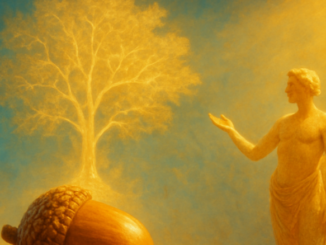
A Deeper Look at The Soul’s Code James Hillman’s groundbreaking work, The Soul’s Code, offers a revolutionary perspective on human nature and the purpose of our existence. This book is more than a psychological treatise; it’s an invitation to uncover our inner calling and embrace the power of our unique potential. Hillman’s concepts of the “acorn” and the “daimon” provide a fresh take on how we find meaning in our lives. Let’s delve into the key insights and explore how you can use this book to discover your own life’s purpose. The Core of Hillman’s Philosophy: The “Acorn” Hillman introduces the metaphor of the “acorn” as a symbol for the soul. Just as an acorn holds the potential to grow into a mighty oak tree, every individual carries a unique blueprint from birth. This blueprint is not a rigid plan but rather an inner calling that guides our life’s direction. The idea suggests that we are not solely shaped by upbringing or external influences but by a deeper essence that defines our destiny. The Role of the “Daimon” According to Hillman, the “daimon” is an inner guide that helps us discover the blueprint of our soul. This idea is drawn […]