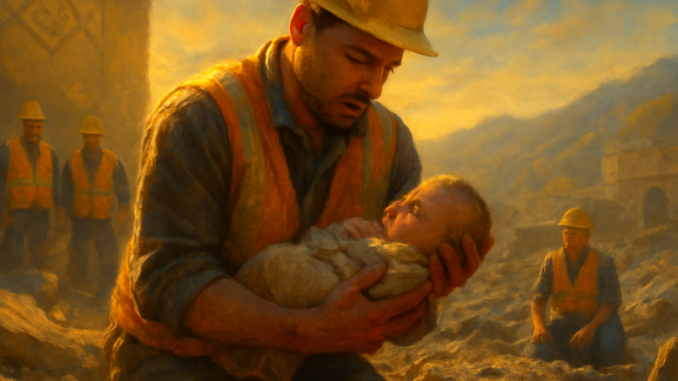
For two days, a baby lay buried beneath the rubble of collapsed buildings in Venezuela. Rescue workers dug tirelessly, hour after hour, until their hands finally reached a living child. This story touches something universal within us — the refusal to give up when a human life is at stake. It also resonates deeply with the principles of Freemasonry: the power of organized cooperation, perseverance, and practical charity in action.
Chaos and Determination
After earthquakes struck Venezuela, rescue workers faced an overwhelming challenge. Mountains of debris, unstable structures, limited resources, and the terrible knowledge that time was working against them. Yet they refused to stop. Every stone they removed, every inch of progress, was an act of hope. For two days, teams worked in rotating shifts — coordinated, disciplined, and driven — until the impossible became possible.
Moments like these confront us with fundamental questions. What drives people to keep going when the odds seem insurmountable? How do you organize hope in a situation of utter chaos? And perhaps more importantly: what can we, in our everyday lives, learn from this kind of determination?
Practical Brotherhood in Action
Freemasonry speaks often of brotherhood, but that word only gains true meaning when it is translated into concrete action. Rescue workers form a brotherhood in the most literal sense: people who trust one another, take over each other’s tasks, and work collectively toward a goal far greater than themselves. There is no room for ego when you are on your knees digging through rubble with your bare hands.
This principle applies directly to your own life. Brotherhood is not merely a feeling of connection — it is a verb. It means showing up when things get difficult, putting your shoulder to the wheel without asking what you will get in return, and trusting in the efforts of others while being someone they can rely on in turn.
True brotherhood reveals itself not in fine words, but in the willingness to kneel in the dust beside another person.
Perseverance as a Way of Life
Two days may sound brief, but for someone digging without any certainty of success, those hours are endless. The rescue workers had no guarantee they would find a living child. Yet they kept digging. This is perseverance in its purest form: pressing on without guarantees, driven only by the possibility of a good outcome.
In Freemasonry, perseverance is regarded as a core virtue. The path of personal development demands patience and determination. You work on yourself — sometimes for years — without the final result being visible. But just as in a rescue operation beneath the rubble, every small action contributes to the greater whole.
How can you put this into practice? Start with small, consistent steps. Great breakthroughs are born from daily dedication. Learn to accept uncertainty — not every effort yields immediate results, but that does not make the effort meaningless. And seek support from others, because perseverance becomes far easier when you know you are not alone.
The Value of Organized Help
One of the most striking aspects of any rescue operation is its organization. Random individual attempts would create chaos and endanger more lives. Instead, teams follow established protocols, divide tasks clearly, and maintain constant communication. This structured approach makes the difference between hope and despair.
Structure plays an equally vital role in Freemasonry. Lodges do not function despite their rituals and traditions — they thrive because of them. Structure creates space for depth. It provides a safe environment in which people can grow, contribute, and receive. Without organization, brotherhood fades into a vague concept; with it, brotherhood becomes a powerful instrument for change.
From News Story to Personal Reflection
It is tempting to read stories like this as something that happens far away, something that happens to other people. But the heart of this story is universal. All of us encounter moments when we face a choice: give up or keep going. Sometimes the stakes are small; sometimes they are life-defining.
The question is not whether you will ever pull a baby from the rubble. The question is: how do you respond when someone in your own life needs help? Are you willing to invest time without seeing immediate results? Can you trust in the commitment of others while remaining trustworthy yourself?
Concrete Steps for Everyday Life
This week, look around you. Who in your immediate circle could use some practical help? Offer your assistance without waiting to be asked — sometimes people simply do not know how to reach out. Collaborate wherever possible, because two pairs of hands accomplish far more than one. And be patient with yourself and with others, because real change takes time.
The image of a baby pulled alive from the rubble after two days is a powerful reminder of what becomes possible when people work together with determination and hope. The rescue workers in Venezuela showed us brotherhood in action, perseverance without guarantees, and the profound value of organized effort. These principles are not reserved for emergencies. They are applicable in our daily lives, in every relationship, and in every endeavor we hold dear. Let this story be more than a distant news report — let it be an invitation to roll up your sleeves, to trust in others, and to keep going when the path ahead seems uncertain.
Copyright text & image: devrijmetselaar.nl
Texts are based on the ideas and content of the author of devrijmetselaar.nl, reviewed, corrected, and supplemented with the assistance of OpenAI. Images are created based on the ideas of the author of devrijmetselaar.nl using OpenAI/DALL-E.
Frequently Asked Questions
What does Freemasonry teach about helping others in crisis?
Freemasonry emphasizes practical charity and brotherly action, as demonstrated by rescue workers who selflessly work together toward saving lives. The article shows that true Masonic principles come alive when we organize our efforts with discipline and compassion to help those in desperate need. Brotherhood means showing up and taking concrete action, not just speaking kind words.
How does Freemasonry view perseverance and working toward difficult goals?
Freemasonry considers perseverance a core virtue that drives personal development and meaningful achievement. Like the rescue workers who dug for two days without certainty of success, Masons understand that great accomplishments come from consistent daily effort and determination, even when results aren't immediately visible. Each small action contributes to the greater whole, and the journey itself has value.
What is the Masonic meaning of brotherhood?
In Freemasonry, brotherhood is not merely a feeling but a verb—it means showing up during difficult times, working alongside others without ego, and being someone others can trust and rely upon. True brotherhood reveals itself through willingness to kneel in the dust beside another person and contribute to goals far greater than yourself. It requires sacrifice, coordination, and unwavering support for one another.
How can Masonic principles help me in my everyday life?
The principles illustrated in the rescue story—organized cooperation, perseverance without guarantees, and practical brotherhood—apply directly to personal growth and community involvement. By starting with small, consistent steps, accepting that not every effort yields immediate results, and seeking support from others, you can embody Masonic values in daily life and contribute meaningfully to your community.


Be the first to comment