February carries a depth of meaning that stretches back thousands of years, rooted in ancient traditions of purification, reflection, and societal renewal. The very name comes from the Latin word februare, meaning to cleanse. For the Romans, this was the month of purification — a time to settle old debts and prepare the community for a fresh start. This timeless symbolism resonates powerfully with Freemasonry, where the work of building a better society always begins with inner purification.
The Origins of February: Symbolism of Cleansing
The Roman festival of Februalia was devoted entirely to ritual purification. During this period, homes were scrubbed clean, offerings were made to the gods, and the city of Rome was swept clean — both literally and figuratively. This was no casual tradition. The Romans firmly believed that a society could only flourish when its members freed themselves of what no longer served them.
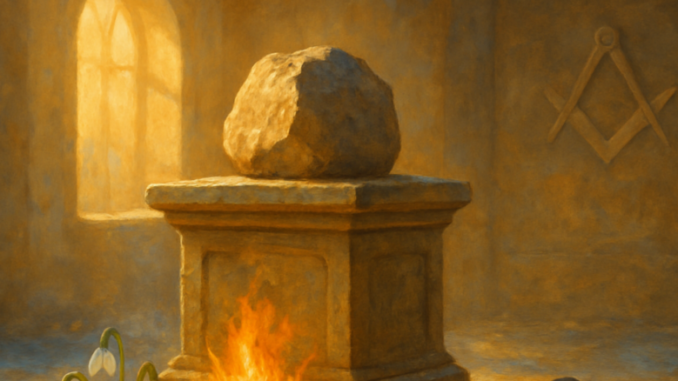
In Freemasonry, we recognize this same principle in the concept of the rough ashlar. Every Freemason begins as an unworked stone and spends a lifetime chipping away at imperfections. This is not a selfish pursuit of perfection — it is a deeply social commitment. After all, how can we contribute to a just society if we refuse to confront our own shadows?
What February’s Symbolism Means for Modern Society
Contemporary society seems to be in perpetual motion, with little room for pause or genuine reflection. Yet we need collective rituals of purification more than ever. The polarization of public discourse, the erosion of trust in institutions, the widening gap between communities — these are symptoms of a society that has forgotten how to cleanse itself.
Purification is not a weakness — it is the highest form of societal courage.
Freemasonry offers an alternative model. In the Lodge, people from vastly different backgrounds come together — not to argue about who is right, but to work collectively toward shared values. This demands precisely what the Romans understood by februare: letting go of prejudices, acknowledging personal shortcomings, and creating space for others.
Ritual as a Mirror for Society
What makes rituals so powerful? They create a defined space in which transformation becomes possible. The symbolism of February as a month of purification reminds us that change does not happen on its own. It requires deliberate action, clear intention, and communal dedication.
In Freemasonry, every ritual carries multiple layers of meaning. The symbols we use — from the compasses to the square, from light to darkness — are not decorations but tools for inner work. When a Freemason enters the temple, he leaves the outside world behind. Not to escape it, but to return to it stronger and better prepared.
- Purification means daring to release old patterns that no longer serve us
- Reflection demands honesty — with ourselves and with others
- Renewal only comes through conscious, deliberate action
- Community grows through shared rituals and values
From Personal Purification to Collective Healing
The deeper lesson embedded in February’s symbolism is that personal and societal purification are inseparably connected. A society cannot become healthier than its individual members. At the same time, the individual needs the community in order to grow. This is not a paradox — it is a fundamental truth that Freemasonry has embraced for centuries.
In an age where individualism is often glorified and community spirit seems to evaporate, the ancient meaning of February offers a counterbalance. It reminds us that we do not stand alone in our quest for improvement. Every act of self-reflection contributes to the greater whole. Every hand extended to a fellow human being strengthens the social fabric that binds us together.
The Meaning of Seasons for Society’s Rhythms
Ancient cultures understood that the human psyche needs cyclical patterns. Winter invites introspection; spring beckons new beginnings. February, caught between the deepest darkness and the first hints of light, symbolizes that crucial period of transition. It is the moment when the seed is planted for what will later bloom.
Freemasonry recognizes these natural rhythms in its own annual cycle. Active work is balanced with periods of rest and reflection. This stands in stark contrast to a society that demands constant productivity and views stillness as weakness. Perhaps that is the greatest lesson February’s symbolism has to teach us: that pause and purification are not interruptions of the work — they are the work.
The rich symbolism of February — with its emphasis on purification, reflection, and preparation for renewal — speaks directly to the heart of what Freemasonry means for society. In a world that yearns for connection and healing, this ancient wisdom offers a compass. It invites us not merely to dream of a better society, but to actively work on our own refinement as the first step on that journey. Because every society, in the end, is nothing more or less than the sum of its striving, working, and self-purifying individuals.
Copyright text & image: devrijmetselaar.nl
Texts are based on the ideas and content of the author of devrijmetselaar.nl, reviewed, corrected, and supplemented with the assistance of OpenAI. Images are created based on the ideas of the author of devrijmetselaar.nl using OpenAI/DALL-E.
Frequently Asked Questions
What does the Masonic concept of the 'rough ashlar' have to do with February's symbolism of purification?
In Freemasonry, every Mason begins as an unworked stone (rough ashlar) and spends a lifetime refining themselves by chipping away at imperfections, much like February's ancient Roman tradition of cleansing. This personal purification is not selfish but a deeply social commitment, as Masons believe they cannot contribute to a just society without first confronting their own shortcomings. The parallel between the rough ashlar and February's symbolism reminds us that inner work directly strengthens our ability to serve our communities.
How do Masonic rituals help with personal and societal purification?
Masonic rituals create a defined sacred space where transformation becomes possible through deliberate action and clear intention. The symbols used in these rituals — such as the compasses and square — are not mere decorations but tools for inner work that help Masons release old patterns and prejudices. By participating in these shared rituals, Masons return to the outside world stronger, better prepared, and more committed to building a more just society.
Why is purification considered an act of courage in Freemasonry?
Purification requires honest self-reflection and the willingness to acknowledge personal shortcomings, which demands genuine courage in a world that often encourages avoidance of difficult truths. In Freemasonry, this courage extends beyond the individual — it enables Masons to come together across different backgrounds and work toward shared values without prejudice. By embracing purification, Masons demonstrate that letting go of what no longer serves us is the highest form of strength.
How does Freemasonry address polarization and division in modern society?
Freemasonry offers an alternative model by bringing people from vastly different backgrounds together in the Lodge to work toward shared values, rather than argue about who is right. This practice embodies February's ancient principle of februare—letting go of prejudices and creating space for others—which directly counters the polarization affecting contemporary society. Through ritual, reflection, and communal dedication, Masons demonstrate that transformation and unity are possible when individuals commit to genuine purification and mutual respect.

Be the first to comment