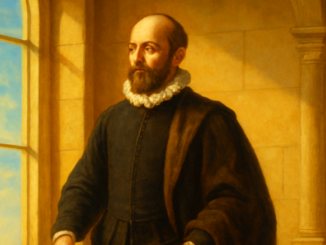
Symbolic bridge representing Masonic connection and Montaigne's philosophy
Michel de Montaigne – Freemasonry & Connection

Montaigne on Ambassadors: The Art of Connection in Masonry

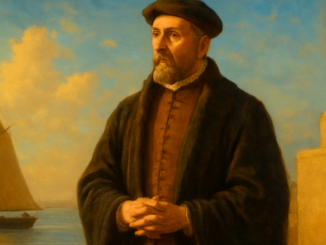
When Michel de Montaigne wrote about diplomats and their conduct in the sixteenth century, he touched on something universal: the art of building connections. How do you convey a message without distorting it? How do you serve as an intermediary without letting your own interests take over? These questions, posed amid political intrigue and religious conflict, find a surprising echo in Freemasonry — a tradition equally concerned with how human beings can connect with one another and with higher values. The Ambassador as a Mirror of Humanity In his brief but incisive essay, Montaigne examines the behavior of ambassadors who interpret their instructions either too literally or too freely. Some cling rigidly to their orders, even when circumstances clearly call for adaptation. Others take so much liberty that they cease to serve their master and begin pursuing their own agenda. Montaigne seeks the middle path: an ambassador must exercise judgment, but always within the boundaries of his commission. This dilemma is timeless. Anyone who carries a message — whether as a diplomat, a friend, or a member of a community — faces the same challenge. How do you remain faithful to the essence of what you are communicating, while also […]

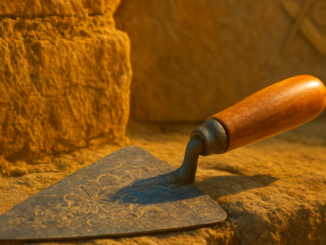
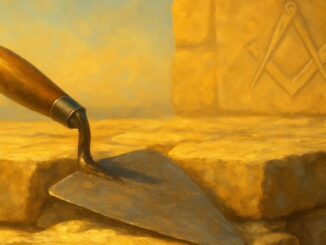
Masonic trowel resting on rough stone symbolizing the art of joining
Philosophy & Ethics

Lodge De Troffel: The Philosophy of Joining and Binding

A trowel rests on the work table. It is a simple tool, designed to spread mortar between stones, to fill gaps, to bind loose elements into a unified whole. Yet the lodge that bears this name — Lodge De Troffel — carries a philosophical mission that reaches far beyond the stonemason’s craft. Where other lodges choose names that evoke light, wisdom, or cosmic order, this brotherhood takes its identity from an instrument concerned with what lies between the stones. And it is precisely there, in the joints, in the spaces between, that the essence of human coexistence may well reside. The Tool That Builds Nothing but Binds Everything Pick up a trowel and you notice something remarkable. Unlike the gavel that strikes, the chisel that cuts, or the square that measures, the trowel is a tool without aggression. Its motion is smoothing, reconciling, complementary. It adds where something is missing. Strictly speaking, the trowel builds nothing — it only makes it possible for what has been built to remain standing. In Freemasonry, this instrument represents the art of connection. When a lodge takes the name De Troffel — The Trowel — it makes a deliberate philosophical choice. It places neither […]

Ancient philosophical symbols and Masonic tools representing the ethical foundation
Philosophy & Ethics

Freemasonry and Philosophy: The Ethical Foundation

Freemasonry and philosophy are inseparable. To truly understand the Craft, one must explore the philosophical roots that sustain it — because, at its core, the lodge is a space where people gather to reflect on the great questions of human existence. What does it mean to act rightly? How do we live in harmony with others? What does it take to become a truly good person? The philosophy of Freemasonry is not some abstract academic construct. It is a living, shared pursuit of ethical and moral development. In this article, we explore the historical background of this deep connection, the key concepts that underpin Masonic ethics, and the ways in which these ideas continue to resonate in the modern world. Historical Background: Philosophy as the Foundation of the Lodge Modern Freemasonry as we know it emerged in the early eighteenth century, most notably with the founding of the Grand Lodge of London in 1717. But the intellectual soil from which it grew had been cultivated for centuries. The late seventeenth and early eighteenth centuries were steeped in the ideals of the Enlightenment — a philosophical movement that placed reason, individual liberty, and universal brotherhood at the center of human progress. […]

Masonic lodge interior with symbolic tools representing allusive speech
Philosophy & Ethics

Allusive Speech: The Hidden Art of Meaning in the Lodge

When the first speculative lodges opened their doors in the eighteenth century, the brethren developed a remarkable way of communicating. They did not speak directly about the things that moved them most deeply. Instead, they chose allusive language — a style in which meaning lies hidden behind images, references, and symbols. The allusive meaning of their words opened doors that direct speech would have left firmly shut. This article explores how this subtle art of allusion still forms the backbone of philosophical transmission within Freemasonry. What Is Allusive Language? To speak allusively means to hint, to reference without making something fully explicit. The word comes from the Latin alludere, meaning “to play upon” or “to touch lightly.” When someone speaks allusively, they approach a subject without spelling it out entirely. The listener must make the connection, fill in the missing piece, and complete the meaning. This is not a sign of vagueness — it is an act of trust in the intelligence and sensitivity of the person listening. In the philosophical tradition, this kind of indirect speech has deep roots. Socrates asked questions rather than providing answers. The mystical poets of the Middle Ages wrapped their insights in allegory. Zen […]

Masonic lodge interior symbolizing tension and brotherhood among brothers
Personal Development & Leadership

Division in the Lodge: A Philosophy of Brotherhood

What if brotherhood is not a state of harmony but a state of sustained discomfort? What if the true test of connection lies not in the moments when everything runs smoothly, but precisely in the moments when tension becomes so palpable that walking away seems more attractive than staying? If that is the case, then everything we think we know about standing together in a lodge changes. The lodge is no longer a sanctuary — it becomes a crucible. And the division a brother feels with his lodge is not proof of failure, but perhaps the very beginning of genuine insight. The Paradox of Commitment There is a peculiar law that governs human communities: the more someone cares about a group, the more keenly they experience its shortcomings. Indifference, after all, knows no disappointment. Those who expect nothing are never hurt. But those who make themselves vulnerable, who invest time and energy in a collective ideal — they feel it when that ideal crumbles under the weight of habit, complacency, or misunderstanding. This is not weakness. It is the inevitable byproduct of sincere commitment. In Freemasonry, this paradox takes on a distinctive form. The lodge presents itself as a workshop […]

Symbolic representation of the 33rd degree in Scottish Rite Freemasonry
Spiritual Traditions

The 33rd Degree: Spiritual Growth in Everyday Practice

Few things in Freemasonry spark as much curiosity as the 33rd degree. Some see it as the ultimate secret, others as a mystical status reserved for a chosen few. But what if this highest step of the Scottish Rite is not merely a ceremonial pinnacle — but an invitation to make spiritual growth tangible in your everyday life? In this article, we explore how the principles behind this degree can help you become a better version of yourself, starting today. Why the 33rd Degree Captures the Imagination The 33rd degree is the highest degree within the Scottish Rite, one of the most prominent branches of Freemasonry. The number thirty-three carries a special resonance — it evokes ideas of life stages, symbolic completion, and timeless wisdom. Yet contrary to what movies and conspiracy theories might suggest, this degree has nothing to do with secret power or hidden knowledge. It is about service, wisdom, and a willingness to help others grow. In practice, the 33rd degree is conferred upon Freemasons who have dedicated years of effort to their brethren and their community. It is not a reward earned through examinations or tests. It is recognition of a way of life. And that […]

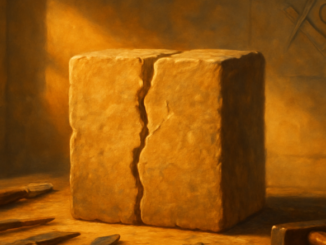
Rough ashlar stone symbolizing Montaigne's philosophy of the inconsistent self
Michel de Montaigne – The Essays

Montaigne and the Philosophy of the Inconsistent Self

A stone being worked bears the marks of many hammer blows. Some make it smoother; others leave cracks behind. This is precisely how the sixteenth-century thinker Michel de Montaigne viewed the human soul — as a piece of work that never quite reaches completion, continually shaped by contradictory forces. His essay on the inconsistency of our actions drew from a rich philosophical tradition reaching back to antiquity. Which thinkers whispered to him what it truly means to be human in all our inconsequence? The Rough Ashlar as Starting Point In Freemasonry, the rough ashlar is a well-known symbol: the unworked stone representing the apprentice at the beginning of his path. This stone is not flawed — it is simply unfinished. It awaits the work of reflection and experience. Montaigne would have recognized this image immediately. His essay on inconsistency opens with the observation that we human beings possess no fixed core, but instead consist of layers, fractures, and surprising turns. The philosopher treated himself as his own subject of study and discovered within a fundamental mutability that did not trouble him, but fascinated him. This view of the human being as a work in progress had deep roots in Renaissance […]

Masonic trowel symbolizing connection and the philosophy of building
Philosophy & Ethics

The Trowel: Masonic Philosophy of Building Yourself

You may have come across the name “Lodge The Trowel” — one of the well-known Masonic lodges in the Netherlands. But what does that name actually mean? And more importantly, what can you learn from the philosophy behind this symbol, whether you’re a Freemason or not? The trowel is far more than a builder’s tool. It’s an invitation to work daily on connection — with yourself, with others, and with the world around you. Why Name a Lodge After the Trowel? The name of a Masonic lodge is never chosen at random. Every lodge carries a name that points to an ideal, a symbol, or an aspiration. A lodge named after the trowel refers to the tool that masons use to spread mortar between stones. Without the trowel, a wall is nothing more than a loose pile of bricks. With the trowel, those individual pieces become a unified structure — one that endures. In Freemasonry, the trowel symbolizes the act of binding people together. Where the hammer and chisel shape and refine individual stones, the trowel is what creates cohesion. It is the tool of community, of brotherhood, of smoothing out the rough edges between people. A lodge that bears […]

Symbolic representation of the 33rd degree in Scottish Rite Freemasonry
Philosophy & Ethics

The 33rd Degree: Wisdom or Mystery?

Few numbers capture the imagination of those curious about Freemasonry quite like the number 33. It surfaces in conversations about the Craft, often shrouded in speculation and fascination. But what truly lies behind this thirty-third step on the ladder of Masonic knowledge? Let’s explore the philosophy behind the degrees, their meaning, and the deeper question of whether wisdom can ever be contained in a number. What Is the 33rd Degree, Really? Let’s start with the basics. Within the Scottish Rite — one of several appendant bodies in Freemasonry — there are thirty-three degrees. The first three are the so-called Blue Lodge degrees: Entered Apprentice, Fellow Craft, and Master Mason. Beyond these lie thirty additional degrees, with the thirty-third serving as the capstone. But does holding this degree automatically mean someone is wiser or more knowledgeable? The answer is more nuanced than you might expect. The 33rd degree is not an academic credential, nor is it proof of superiority. It is, above all, a recognition of years of dedication to the principles of brotherhood, self-improvement, and service to the community. The number itself carries symbolic weight, but the true value lies in the journey that leads to it. Why Thirty-Three? This […]

Masonic symbols including square and compasses in soft contemplative light
Symbolism & Rituals

Allusive Meaning: Symbols That Whisper in the Silence

The allusive meaning of a symbol does not unfold through explanation — it unfolds through experience. In a world that demands directness and clarity, the allusion offers a refined alternative: it invites reflection without imposing conclusions. For the Freemason, this is not a rhetorical device but a way of life. Today, we explore how the allusive dimension of symbolism bridges the visible and the hidden — the space between what can be spoken and what can only be felt. What Is the Allusive Meaning of a Symbol? When we speak of allusive meaning, we enter the realm of indirect reference. An allusion is never a straightforward statement. It is a nod, a wink toward something greater than the words or images being used. In literature, we recognize this as a reference to a well-known story or figure without naming it explicitly. In symbolism, the concept goes further: the entire medium of communication becomes a whisper. The square and compasses, the rough ashlar, the trowel, the plumb line — all of these objects from the stonemason’s craft carry meanings that extend far beyond their physical form. They point toward something else, something the initiated recognize without it ever needing to be […]

Freemason contemplating philosophical questions in a symbolic lodge setting
Philosophy & Ethics

Agnosticism as a Way of Life: The Questioning Freemason

Agnosticism is often mistaken for indifference or an inability to make up one’s mind, but nothing could be further from the truth. It is a deliberate philosophical stance — one that acknowledges certain questions may never be definitively answered. For the Freemason, who is constantly rearranging the building blocks of his inner life, this attitude offers remarkably fertile ground. The answer is not what matters most; what matters is the courage to keep asking the question. The Origins of Agnosticism The term “agnostic” was coined in the nineteenth century by British scientist Thomas Henry Huxley, who sought to express the idea that certain metaphysical truths lie beyond the reach of human knowledge. The Greek prefix “a” means “without,” and “gnosis” means “knowledge” — literally, without knowledge. But this bare translation fails to capture the richness of the concept. Agnosticism is not intellectual laziness; it is a sincere recognition of the limits of human understanding. Throughout the centuries, countless thinkers have wrestled with the question of what we can truly know about the transcendent, about the origins of existence, about what lies behind the veil of observable reality. The agnostic position refuses to answer these questions with certainties that cannot be […]

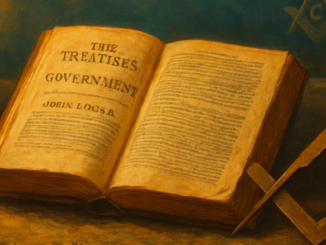
Open book with classical philosophy text symbolizing Montaigne and Freemasonry
Michel de Montaigne – The Essays

Montaigne on Passions and False Objects: Philosophical Roots

In the fourth essay of his first book, Michel de Montaigne investigates a curious phenomenon: how the human soul directs its emotions toward objects that are not the true cause of those feelings. This insight did not arise in a vacuum. Montaigne drew deeply from a long philosophical tradition reaching back to Greek and Roman thinkers. The question of how we handle our passions — and why we sometimes aim them at the wrong targets — had occupied philosophers for centuries before Montaigne ever picked up his pen in his tower library in Bordeaux. The Stoic Legacy: Mastery Over Emotion The influence of Stoicism on Montaigne‘s thinking is especially tangible in this essay. The Stoics — notably Seneca and Epictetus — argued that human suffering does not arise from external events, but from the judgments we form about them. When we feel anger toward an object that has hurt us, or when we direct grief at a symbol rather than the real cause, we are demonstrating precisely what the Stoics meant: our passions are often misplaced. Seneca wrote at length about how anger can seduce us into irrational behavior. In his treatise On Anger, he gave countless examples of people […]

A symbolic mirror reflecting multiple faces representing Masonic self-knowledge
Freemasonry & Connection

The Mirror with Many Faces: Montaigne and Freemasonry

Imagine a mirror that doesn’t show one reflection, but a hundred. Every time you look, you see a different face — not because the mirror is broken, but because you yourself are constantly changing. This image captures the essence of what sixteenth-century philosopher Michel de Montaigne described in his reflections on the inconsistency of human action. And it is precisely this insight that reveals a striking kinship with the symbolic journey Freemasons undertake in their quest for self-knowledge. The Unstable Ground Beneath Our Feet Montaigne observed something we all recognize but rarely dare to admit: we are not the consistent beings we believe ourselves to be. Yesterday’s hero is today’s coward. The generous hand closes into a fist by morning. This is not a moral failing — it is a fundamental feature of human existence. We do not move in a straight line from birth to death, but in circles, spirals, and sometimes seemingly random patterns. Freemasonry begins from a remarkably similar starting point. The rough ashlar with which every Freemason symbolically begins their journey is not rough because it is flawed. It is rough because it has not yet been worked — because it has not yet become conscious […]