
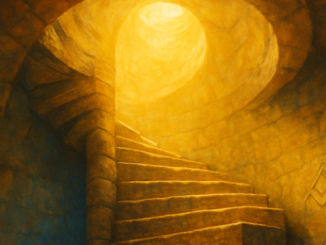
Few numbers capture the imagination of those curious about Freemasonry quite like the number 33. It surfaces in conversations about the Craft, often shrouded in speculation and fascination. But what truly lies behind this thirty-third step on the ladder of Masonic knowledge? Let’s explore the philosophy behind the degrees, their meaning, and the deeper question of whether wisdom can ever be contained in a number.
What Is the 33rd Degree, Really?
Let’s start with the basics. Within the Scottish Rite — one of several appendant bodies in Freemasonry — there are thirty-three degrees. The first three are the so-called Blue Lodge degrees: Entered Apprentice, Fellow Craft, and Master Mason. Beyond these lie thirty additional degrees, with the thirty-third serving as the capstone. But does holding this degree automatically mean someone is wiser or more knowledgeable?
The answer is more nuanced than you might expect. The 33rd degree is not an academic credential, nor is it proof of superiority. It is, above all, a recognition of years of dedication to the principles of brotherhood, self-improvement, and service to the community. The number itself carries symbolic weight, but the true value lies in the journey that leads to it.
Why Thirty-Three?
This question fascinates many people, both inside and outside the Craft. The number 33 appears across a wide range of traditions and symbolic systems. Some point to the age at which certain historical teachers are believed to have completed their earthly work. Others draw connections to numerology or sacred geometry. Within Freemasonry itself, the number is often associated with the completion of a cycle — the attainment of a state of mature understanding.
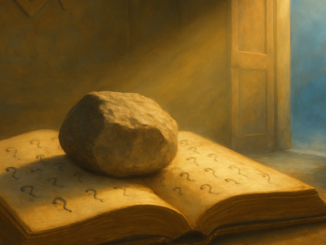
But here lies a philosophical paradox. Can spiritual growth ever truly be complete? Freemasonry teaches that the work on the inner temple is never finished. Every degree — including the thirty-third — marks not an endpoint but a new beginning. It’s like climbing a mountain: when you reach the summit, you see new horizons that were previously hidden from view.
Is the 33rd Degree Available to Everyone?
No — and that naturally raises questions. Within the Scottish Rite, this highest degree is not automatically conferred after completing the preceding ones. It is an honorary degree, bestowed upon brethren who have demonstrated extraordinary service and merit. This decision rests with the Supreme Council of the relevant jurisdiction.
Some see this as a form of elitism. But from a philosophical standpoint, there’s another way to look at it. The 33rd degree reminds us that not all recognition can be earned through ambition alone. Some things come to us not when we chase them, but when our character and our actions speak for themselves.
The true measure of a person is not found in titles, but in the depth of their understanding and the warmth of their actions.
What Does the 33rd Degree Teach Us About Wisdom?
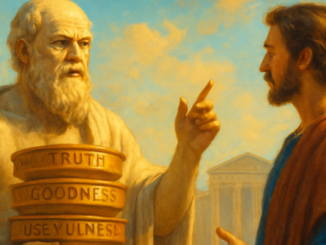
Here we arrive at the heart of the matter. The 33rd degree invites us to reflect on the very nature of wisdom. Is wisdom something you can accumulate, like knowledge stored in books? Or is it more of a way of being — an attitude toward life and toward your fellow human beings?
Freemasonry emphasizes that true knowledge always walks hand in hand with humility. The more you know, the more you realize how much you have yet to learn. The highest degree, then, is not a crown of omnipotence but an invitation to ongoing humility. It is the acknowledgment that you have come far, but that the journey never truly ends.
The Pitfall of the Number
There is a real danger in placing too much emphasis on degrees and numbers. Doing so can distract from what really matters: inner transformation, the refinement of character, and the deepening of human connections. A brother without a high degree who lives daily by the principles of truth and charity may carry more wisdom within him than someone who collects degrees like medals.
This is not a criticism of the degree system itself. It provides structure, direction, and a framework for study and reflection. But the system is a means, not an end. The 33rd degree reminds us of this precisely because it is not available to everyone. It prevents the journey from devolving into a competition.
How Do Degrees Relate to Personal Growth?
Imagine learning to play a musical instrument. There are exams and certificates that mark your progress. But true musicality doesn’t live in the diploma on the wall. It lives in the way you play, the emotion you convey, and the connection you forge with your listeners.
The same principle applies to Masonic degrees. Each degree offers new rituals, symbols, and lessons. But the real transformation happens when those lessons are integrated into daily life. The thirty-third degree, in this sense, is not a conclusion but a confirmation: you have demonstrated that you don’t merely learn — you live what you learn.
Consider these guiding principles:
- Degrees mark steps on a path, not the destination itself.
- Wisdom reveals itself in actions, not in titles.
- The highest degree demands the greatest humility.
- The degree system is a tool for inner architecture.
An Invitation to Reflect
Perhaps the most important lesson the 33rd degree offers is the invitation to examine our own standards. How do we measure progress? How do we define success in our spiritual lives? And are we willing to accept that some forms of recognition cannot be pursued — only received?
In a world that often revolves around measurable achievements and visible results, the philosophy behind the thirty-third degree offers a powerful counterbalance. It reminds us of the value of invisible work: the quiet growth, the daily choices in favor of what is good and right, and the faithfulness to principles when no one is watching.
The 33rd degree remains cloaked in an air of mystery for many. But those who look more deeply discover that the mystery does not reside in secret knowledge or hidden power. The real mystery lies in the question every seeker must eventually ask themselves: Am I willing to grow without any guarantee of recognition? Am I willing to walk a path whose end I cannot see? That question — honest, humble, and endlessly challenging — may be the truest degree of all.
Copyright text & image: devrijmetselaar.nl
Texts are based on the ideas and content of the author of devrijmetselaar.nl, reviewed, corrected, and supplemented with the assistance of OpenAI. Images are created based on the ideas of the author of devrijmetselaar.nl using OpenAI/DALL-E.
Frequently Asked Questions
What is the 33rd Degree in Freemasonry?
The 33rd Degree is the highest degree in the Scottish Rite of Freemasonry, serving as a capstone to thirty-two preceding degrees. Rather than being an academic credential, it represents recognition of years of dedication to brotherhood, self-improvement, and community service. It symbolizes the completion of a cycle, though Freemasonry teaches that spiritual growth and inner work never truly end.
Why is the number 33 significant in Freemasonry?
The number 33 carries symbolic weight across many traditions and is often associated with completion and mature understanding. In Freemasonry, it represents the attainment of a meaningful state of knowledge and wisdom. However, the number itself is less important than the journey and dedication required to reach this level, as it marks a new beginning rather than a final endpoint.
Can anyone achieve the 33rd Degree?
The 33rd Degree is not automatically conferred after completing preceding degrees; it is an honorary degree bestowed upon brethren who have demonstrated extraordinary service and merit. This selective approach reflects the principle that true recognition comes not from ambition alone, but from character and meaningful actions that speak for themselves.
Does the 33rd Degree make someone wiser or superior?
No—the 33rd Degree is a recognition of dedication and service, not proof of superiority or automatic wisdom. Freemasonry teaches that the true measure of a person lies in the depth of their understanding and the warmth of their actions, not in titles or degrees held. It represents progress on a continuous journey of self-improvement rather than the achievement of ultimate knowledge.

Be the first to comment