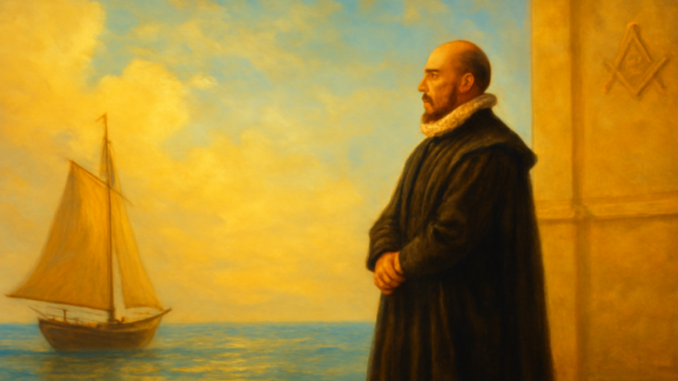
Can a person be brave and cowardly at the same time? Generous and greedy? Cruel and compassionate? Michel de Montaigne opens the second book of his famous Essays with exactly this paradox. In “Of the Inconsistency of Our Actions,” he examines an uncomfortable truth: we are not the unified, consistent beings we like to think we are. Written in the late sixteenth century, this essay remains one of the sharpest philosophical explorations of human fickleness — and it invites us to take an honest look in the mirror.
The Core Idea: Humanity as a Walking Contradiction
Montaigne opens with a striking claim: anyone who judges people based on isolated deeds is bound to get it wrong. A single heroic act does not make someone a hero, and a single mistake does not make someone a villain. According to Montaigne, human beings are fundamentally inconsistent. We are tossed back and forth by circumstances, moods, physical conditions, and the whims of the moment.
Where other thinkers tried to capture human nature in fixed categories, Montaigne refuses. He argues that our actions are like disconnected puzzle pieces that never quite form a coherent picture. This is not a weakness or a failing — it is an honest observation about what it means to be human.
Historical Examples: From Cato to Augustus to Alexander
As is typical of his essays, Montaigne draws heavily from classical antiquity to support his argument. He invokes Cato the Younger, the Roman general and consul long considered a paragon of steadfastness, yet whose behavior did not always follow a perfectly straight line. He discusses Augustus, the first Roman emperor, who displayed both ruthless cruelty and remarkable clemency throughout his life. Was Augustus a tyrant or a wise ruler? Montaigne refuses to choose. Both judgments are simultaneously true and false, because each describes only moments drawn from a life full of contradictions.
Montaigne also references Plutarch, whose biographies of famous Greeks and Romans he knew intimately. Plutarch always tried to sketch a coherent character portrait of his subjects. Montaigne admires the craft, but openly questions whether such a portrait can ever be fully accurate. Even Alexander the Great — the archetype of the fearless conqueror — had moments of doubt, drunkenness, and recklessness that sat uneasily with his heroic reputation.
Self-Knowledge as an Endless Quest
Beneath the examples and anecdotes lies a deeper philosophical layer. Montaigne argues that we know ourselves poorly, precisely because we tend to paper over our contradictions. We construct a narrative about who we are and conveniently ignore everything that doesn’t fit the story.
The essay is thus a plea for radical honesty. Montaigne does not ask us to become better or more consistent. Instead, he asks us to recognize that inconsistency is part of human nature. That recognition, he suggests, is the beginning of true wisdom.
In this, he connects to the tradition of the Delphic Oracle and the words Socrates made his own: “Know thyself.” But where Socrates still trusted reason as the instrument for uncovering the true self, Montaigne suggests that there may be no singular “true self” to discover at all. He teaches us that a human being is not a statue but a river — constantly in motion, never the same twice, and truthful precisely in that fluidity.
The Rough Ashlar as Mirror: Connections to Freemasonry
Anyone who reads Montaigne’s observations will notice a striking kinship with the philosophy underlying Freemasonry. In the Masonic tradition, the rough ashlar stands as a central symbol for the individual at the beginning of their journey. That roughness is not a condemnation — it is a starting point. The Freemason is invited to work upon themselves, not from the illusion that perfection is attainable, but from the understanding that the work itself is the destination.
Montaigne would have recognized this idea immediately. His entire essay revolves around accepting that we are never “finished,” that our actions will continue to surprise us, and that it is precisely the awareness of our fickleness that makes us more human and more compassionate.
Freemasonry also embraces the concept of progression through degrees, each one unlocking a new perspective on one’s own character. Every degree invites the Mason to re-examine previously held certainties. This ongoing process of breaking down and rebuilding mirrors exactly what Montaigne describes: human character as something that cannot be pinned down but must be continually re-examined.
The Structure and Style of the Essay
In terms of composition, this essay follows Montaigne’s characteristic approach: associative, personal, and richly interspersed with quotations from classical authors. He leaps from one example to another, seemingly without system, yet guided by an underlying logic that carries the argument like an undercurrent. He quotes Horace and Seneca, among others, to reinforce his points.
Montaigne does not write as a philosopher constructing an airtight argument. He writes as an observer thinking aloud. It is precisely this tone that makes the essay so accessible. The reader is not lectured at but drawn into a conversation.
The essay is relatively short compared to some other pieces in the collection, but it sets the tone for the entire second book. Where the first book of the Essays still leans heavily on discussions of classical virtues and vices, here Montaigne shifts into a more psychological register. He is no longer interested only in what people do, but above all in why they do the exact opposite from one moment to the next.
Why This Essay Still Matters Today
In an age where people carefully curate a consistent self-image on social media, Montaigne’s message may be more relevant than ever. We present ourselves as consistent and “authentic,” while Montaigne reminds us that true authenticity might actually lie in acknowledging our contradictions rather than hiding them.
The pressure to maintain a coherent personal brand — whether online or in everyday life — can become a prison. Montaigne offers liberation: you do not need to be one thing. You are allowed to change your mind, to surprise yourself, to act in ways that seem to contradict your “character.” This is not hypocrisy. It is being human.
For Freemasons, this insight carries a particular resonance. The Craft teaches that self-improvement is a lifelong endeavor, not a destination. The rough ashlar is never fully perfected into a smooth one. And perhaps it is in that perpetual state of becoming — in the honest acknowledgment that we are works in progress — that we find our deepest connection to both Montaigne’s philosophy and the Masonic path.
Montaigne’s “Of the Inconsistency of Our Actions” is far more than a historical curiosity. It is a timeless invitation to embrace the full complexity of who we are. By refusing to reduce human beings to simple categories, Montaigne offers a vision of self-knowledge that is humble, honest, and endlessly relevant. For those walking the Masonic path, his words serve as a powerful reminder: the work on the rough ashlar is never done, and it is in the working — not the finishing — that wisdom is found.
Copyright text & image: devrijmetselaar.nl
Texts are based on the ideas and content of the author of devrijmetselaar.nl, reviewed, corrected, and supplemented with the assistance of OpenAI. Images are created based on the ideas of the author of devrijmetselaar.nl using OpenAI/DALL-E.
Frequently Asked Questions
What is Montaigne's main argument in 'Of the Inconsistency of Our Actions'?
Montaigne argues that human beings are fundamentally inconsistent and cannot be understood as unified, coherent beings. He claims that our actions are like disconnected puzzle pieces that never form a complete picture, and that judging people based on isolated deeds is bound to be inaccurate. According to Montaigne, we are constantly tossed back and forth by circumstances, moods, physical conditions, and momentary whims, making it impossible to fit people into fixed categories.
What historical examples does Montaigne use to support his theory of human inconsistency?
Montaigne draws from classical antiquity to illustrate his point, citing figures such as Cato the Younger, Augustus, and Alexander the Great. He uses Augustus as a prime example—showing how the first Roman emperor displayed both ruthless cruelty and remarkable clemency throughout his life. Similarly, he notes that even Alexander the Great, the archetype of a fearless conqueror, had moments of doubt, drunkenness, and recklessness that contradicted his heroic reputation.
How does Montaigne critique Plutarch's approach to biographical writing?
While Montaigne admires Plutarch's craft in writing biographies of famous Greeks and Romans, he questions whether such coherent character portraits can ever be fully accurate. Plutarch always tried to sketch a unified picture of his subjects' character, but Montaigne argues this approach necessarily fails because it cannot capture the fundamental inconsistency and contradictions that define human nature. A biography that presents a consistent character is therefore inevitably incomplete or inaccurate.

Be the first to comment