A contemplative man standing at a crossroads symbolizing agnostic doubt and growth
Philosophy & Ethics

Agnosticism in Practice: How Doubt Can Enrich Your Life

You’re standing at a crossroads and you simply don’t know. Maybe it’s a major life question, maybe something small. That uncertainty feels uncomfortable — as though you’re falling short somehow. But what if that very uncertainty is actually a strength? Agnosticism, the honest acknowledgment that some things remain unknowable, is often mistaken for indecisiveness. Yet this philosophical stance offers surprisingly practical tools for anyone who wants to live more consciously. In this article, you’ll discover how to put doubt to work — not as a weakness, but as an instrument for personal growth. What Agnosticism Really Means for Everyday Life Agnosticism derives from the Greek word meaning “not knowing.” It isn’t a rejection of faith or science — it’s the honest recognition that certain questions have no definitive answer. You encounter this more often than you might realize. What’s the right career move? How do you know for certain that you’re on the right path? An agnostic attitude means accepting this uncertainty without being paralyzed by it. This is precisely where philosophy and Freemasonry intersect. Within Freemasonry, no definitive truth is imposed. There is no catechism to recite, no creed to sign. Instead, you’re invited to seek, to question, and […]
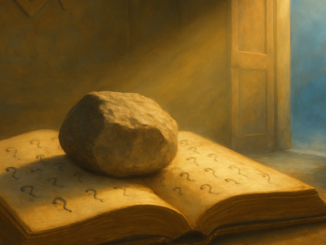
Symbolic representation of agnosticism and Freemasonry paths converging
Freemasonry & Society

Agnosticism and Freemasonry: Two Paths Toward the Unknowable

Agnosticism is often understood as a position of not-knowing — a philosophical stance that acknowledges certain questions about existence may be unanswerable. Freemasonry, on the other hand, is sometimes perceived as a fraternity defined by its rituals and symbols. But what happens when we place these two worlds side by side? Both share a fundamental recognition: that the human mind cannot fathom everything, and that within that very recognition lies a particular kind of wisdom. In this article, we explore how the agnostic outlook and Masonic philosophy mirror and enrich each other. The Agnostic Perspective: Living With Uncertainty The agnostic does not claim to know whether a higher power exists. This is not a weakness or a lack of conviction — it is a deliberate intellectual position. The term was coined in the nineteenth century by the British biologist Thomas Henry Huxley, who wanted to express that certain metaphysical questions lie beyond the reach of human knowledge. The agnostic stance demands humility: the ability to say “I don’t know” without abandoning the search for meaning. In modern society, agnosticism is frequently confused with indifference or atheism. Nothing could be further from the truth. Where the atheist asserts that no god […]

Freemason contemplating philosophical questions in a symbolic lodge setting
Philosophy & Ethics

Agnosticism as a Way of Life: The Questioning Freemason

Agnosticism is often mistaken for indifference or an inability to make up one’s mind, but nothing could be further from the truth. It is a deliberate philosophical stance — one that acknowledges certain questions may never be definitively answered. For the Freemason, who is constantly rearranging the building blocks of his inner life, this attitude offers remarkably fertile ground. The answer is not what matters most; what matters is the courage to keep asking the question. The Origins of Agnosticism The term “agnostic” was coined in the nineteenth century by British scientist Thomas Henry Huxley, who sought to express the idea that certain metaphysical truths lie beyond the reach of human knowledge. The Greek prefix “a” means “without,” and “gnosis” means “knowledge” — literally, without knowledge. But this bare translation fails to capture the richness of the concept. Agnosticism is not intellectual laziness; it is a sincere recognition of the limits of human understanding. Throughout the centuries, countless thinkers have wrestled with the question of what we can truly know about the transcendent, about the origins of existence, about what lies behind the veil of observable reality. The agnostic position refuses to answer these questions with certainties that cannot be […]

Masonic symbols representing the agnostic search for truth and meaning
Philosophy & Ethics

Agnosticism and Freemasonry: The Art of Not Knowing

What if the answer to life’s greatest questions isn’t a definitive yes or no, but an honest “I don’t know”? Agnosticism makes room for exactly that kind of intellectual humility. Far from being a position of weakness, it takes genuine courage to acknowledge that some truths may lie beyond our reach. In Freemasonry, we find a remarkable kinship with this philosophical stance — not as doctrine, but as a living practice of seeking without the pretense of final answers. What Does Agnosticism Actually Mean? The word “agnostic” has its roots in Greek: “a” means without, and “gnosis” means knowledge. An agnostic is, quite literally, someone who acknowledges that certain knowledge — particularly about the existence of a higher power or the ultimate purpose of the universe — may be fundamentally unattainable. This is not intellectual laziness. It is a deeply considered epistemological position. The agnostic doesn’t claim that truth doesn’t exist, but rather that we as human beings may lack the tools to fully grasp it. The term was first coined in the nineteenth century by the British biologist Thomas Henry Huxley, who grappled with the question of how we can truly know what we think we know. Since then, […]

Vrijmetselarij - Gnosis, Gnostiek en Agnostiek in de Vrijmetselarij
General

Gnosis, Gnosticism, and Agnosticism in Freemasonry

The quest for truth and knowledge is a fundamental aspect of the human experience. In esoteric and spiritual traditions, three concepts play a significant role: gnosis, gnosticism, and agnosticism. Each of these terms has its own meaning and philosophical implications. In this blog, we explore these concepts and how they relate to Freemasonry, a fraternity where personal development and spiritual insight are central. What is Gnosis? Gnosis is derived from the Greek word γνῶσις, meaning “knowledge.” Unlike scientific or intellectual knowledge, gnosis refers to inner, spiritual knowledge. It is a profound insight gained through personal experience rather than external teachings. Gnosis is often associated with mysticism and esotericism, emphasizing the direct experience of the divine or higher consciousness. In many spiritual traditions, including certain branches of Freemasonry, gnosis is a crucial concept. It signifies that true knowledge is not imparted through books or teachers but through personal transformation and inner enlightenment. In Freemasonry, gnosis is often symbolized by light. Freemasons speak of “seeking the light,” which is a metaphor for the quest for wisdom and understanding. This light represents not only rational knowledge but also spiritual awakening and awareness. Gnosticism: The Philosophy of Gnosis Gnosticism is a religious and philosophical […]