
When a prestigious sports club finds itself drowning in debt, the questions it raises go far beyond the balance sheet. How did things go so wrong? What choices led to this point? And what does it reveal about our deeply human tendency to live beyond our means? These questions touch on something fundamental — the formation of character and the courage to take an honest look in the mirror.
Why Does Financial Mismanagement Hit So Close to Home?
News of massive losses at a major football club stirs up outrage — but also a quiet sense of recognition. Who among us hasn’t spent more than was wise at some point? Our reaction to such stories reveals something about ourselves. We recognize the lure of short-term success, the pressure to perform, and the fear of being left behind. These very human tendencies are precisely the terrain that Freemasonry addresses: the development of a balanced character capable of resisting such temptations.
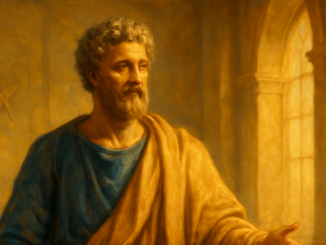
Aristotle wrote extensively about the virtue of temperance, which he defined as the golden mean between excess and deficiency. An organization that consistently spends more than it earns has lost that equilibrium. But doesn’t the same apply to individuals? The philosopher would argue that financial discipline is an expression of inner order — of a personality that knows and governs itself.
What Does It Mean to Work on the Self in Freemasonry?
In Freemasonry, we speak of working the rough ashlar. This powerful image refers to the ongoing process of self-development. The rough stone symbolizes each of us at the outset — with all our unpolished edges, blind spots, and unconscious patterns. Through reflection, ritual, and brotherly dialogue, the Freemason works to refine his character. The goal is not perfection but awareness.
True wealth lies not in what you possess, but in who you are when everything is stripped away.
This inner labor demands honesty. When a club — or a person — falls into financial trouble, the first step is acknowledging reality. Denial only makes things worse. Freemasons practice confronting uncomfortable truths, not to pass judgment, but to grow. This principle is universal: it applies to sports organizations, to businesses, and to every individual.
How Does External Pressure Conflict with Inner Values?
A compelling question is why organizations and individuals sometimes make choices that are clearly harmful in the long run. External pressure plays a significant role. Fans demand trophies, shareholders want returns, and the media draws constant comparisons. In such a climate, it is tempting to make short-term decisions that erode the very foundation you stand on.
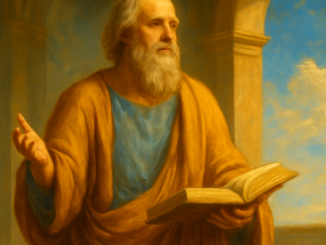
Seneca, the Stoic philosopher, warned long ago about the danger of living according to the expectations of others. He wrote that the crowd is a poor counselor and that wisdom begins with setting your own standards. This aligns closely with the Masonic practice of regular self-reflection. In the quiet of the lodge, away from the noise of the outside world, a Brother examines his own motivations. Is he acting from conviction — or from fear of disapproval?
What Can Adversity Teach Us About Personal Growth?
Paradoxically, crises often offer the greatest opportunities for growth. When the façade crumbles, the core is revealed. This is true for organizations and for individuals alike. The question is not whether we will ever fail, but how we respond to failure. Do we blame others, or do we take responsibility? Do we retreat into excuses, or do we use setbacks as a crucible for learning?
Freemasonry makes no promise that life will become easy. On the contrary, its rituals prepare the Brother for trials. The symbolic death and rebirth in the Master Mason degree points to exactly this process: passing through the darkest point to emerge on the other side wiser and stronger. This is not an abstract concept — it is a practical approach to life.
When facing adversity, whether financial or personal, certain principles can serve as guideposts:
- Acknowledge the situation honestly, without embellishment.
- Examine your own role in how it came about.
- Seek counsel from those you trust.
- Create a plan based on realistic expectations.
- Hold fast to your core values, especially under pressure.
What Can We Take Away from This?
The story of a club that lived beyond its means is ultimately a mirror. It invites a personal question: where in my own life am I making choices that are unsustainable? Where do I give in to external pressure at the cost of inner peace? Freemasonry does not offer ready-made answers, but it does offer a method: regular self-reflection, honest conversation with like-minded individuals, and the courage to change course when necessary.
Benjamin Franklin, himself a Freemason, kept a daily moral journal in which he measured his behavior against thirteen virtues — including temperance and frugality. He was not harsh with himself out of asceticism, but from the understanding that character is shaped by small, daily choices. The great derailments in life often begin with minor compromises that go unnoticed.
Financial figures tell a story, but never the whole story. Behind every loss lies a chain of decisions, and behind every decision stands a human being with drives, fears, and blind spots. The Freemason sees such news not as grounds for judgment but as an invitation to reflect. For the rough ashlar we work on is not somewhere outside of us. We carry it with us, every single day.
Copyright text & image: devrijmetselaar.nl
Texts are based on the ideas and content of the author of devrijmetselaar.nl, reviewed, corrected, and supplemented with the assistance of OpenAI. Images are created based on the ideas of the author of devrijmetselaar.nl using OpenAI/DALL-E.


Be the first to comment