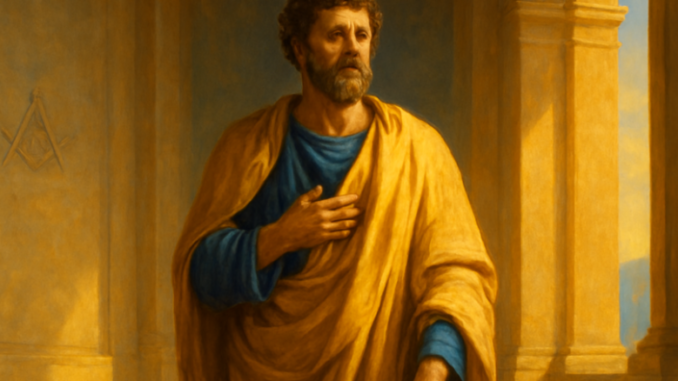
In the year 175 AD, amid grueling military campaigns along the Danube, a Roman emperor wrote notes that were never meant to be published. Marcus Aurelius kept an inner journal — an exercise in self-examination that we now know as the Meditations. Book XI of this remarkable work reveals a surprisingly human side of the Stoic philosopher-king: his reflections on humor, perspective, and the art of knowing yourself without condemning yourself. These thoughts, nearly two thousand years old, still speak powerfully to anyone engaged in the lifelong work of personal growth and self-improvement.
The Historical Context of Book XI
Marcus Aurelius most likely composed his eleventh book during the Marcomannic Wars — an exhausting series of conflicts along the northern frontiers of the Roman Empire. As emperor, he bore the heaviest responsibilities the empire could impose, and yet he found time for philosophical reflection. This book was not written in the quiet comfort of a library but in army tents, by candlelight, after days of life-and-death strategic decisions. These circumstances make the tone of Book XI all the more remarkable: instead of heavy moralizing, we encounter passages on the value of a light spirit.
The Stoic tradition in which Marcus Aurelius stood had a rich lineage. Epictetus, the formerly enslaved philosopher whose teachings Marcus studied as a young man, had already emphasized that it is not events that trouble us, but our judgments about them. Seneca, the Roman statesman and writer, added that wisdom often lies in the ability to step back from our own impulses. In Book XI, Marcus Aurelius builds on these insights but adds a personal dimension that is rarely so explicit in ancient philosophy.
The Core Idea: Learning to Laugh at Yourself
The central theme of Book XI revolves around a paradox of self-knowledge: the deeper we come to know ourselves, the more reason we have for gentleness. Marcus Aurelius observes that people are often harsh toward others while excusing themselves, but the truly wise person reverses this pattern. He is gentle toward others because he knows his own shortcomings, and he laughs at himself because he understands how absurd human vanity can be.
True self-knowledge does not lead to self-condemnation, but to the liberating smile of one who sees through his own limitations.
Marcus Aurelius uses the image of an actor who forgets his role the moment the play ends. We human beings, he suggests, take our roles in life far too seriously. The senator who gets worked up over protocol, the merchant who mourns lost profit, the soldier who dreams of glory — all of them forget that the curtain eventually falls. This sense of perspective is not cynicism; it is an invitation to inner freedom.
Examples from Everyday Life
In Book XI, Marcus Aurelius offers concrete examples that bring his abstract principles to life. He describes how he became irritated by a slave’s snoring, only to realize that his irritation said more about himself than about the snoring man. In another passage, he reflects on his reaction to flattering words: at first he enjoyed them, until he recognized that flattery is often a mask for self-interest.
Particularly striking is his description of a banquet where guests compete to outdo each other in wit. Marcus Aurelius observes that the sharpest humor often springs from insecurity, and that the truly self-assured person feels no need to shine. This insight, nearly twenty centuries old, resonates powerfully in an age when social media invites us into endless cycles of self-display and comparison.
The Symbol of the Mirror
A recurring symbol in Book XI is the mirror. Marcus Aurelius speaks of the necessity of examining yourself daily — not with the gaze of the vain, but with the honesty of someone who truly wants to recognize his own imperfections. The mirror shows us not only our outward appearance but invites us to turn inward. In the symbolic traditions of many brotherhoods, including Freemasonry, the mirror represents precisely this capacity for self-examination. The rough ashlar that must be shaped and refined is ultimately the person himself, and only through honest self-reflection can that work take place.
This symbolic way of thinking connects the ancient wisdom of Marcus Aurelius to later traditions of personal development. The mirror reminds us that self-knowledge is not a destination but an ongoing process. Every day offers new opportunities to see ourselves as we truly are, and every evening we can look back on what we have learned.
Humor as Liberation
One of the most refreshing aspects of Book XI is the role humor plays. Marcus Aurelius does not see humor as an escape from reality, but as a way to bear it more gracefully. When we can laugh at the absurdity of our own ambitions, those ambitions lose their grip on us. This is not resignation — it is active liberation.
Humor unmasks our vanity without wounding us. Self-deprecation creates healthy distance from our emotions. A light spirit makes heavy times bearable. Laughing at yourself is the beginning of genuine wisdom.
The image of a Roman emperor writing notes by candlelight about the importance of a smile offers us an example that transcends time. His words remind us that the path to self-improvement need not be paved with self-punishment but can be illuminated by gentleness and perspective.
Lessons for Today
What can we learn from Book XI in a world of constant stimulation and endless comparison? Marcus Aurelius invites us to look in the mirror each day — not to judge ourselves, but to know ourselves. He encourages us to smile when we recognize our own flaws and to be gentle with others who are fighting the same battles. This is not weakness; it is the quiet strength that comes from genuine self-awareness.
For those who walk the Masonic path, these lessons carry a particular resonance. The work of the Fellow Craft — refining the rough stone into something true and square — requires exactly the kind of honest, compassionate self-examination that Marcus Aurelius describes. The mallet and chisel are not instruments of punishment but tools of patient improvement, wielded best by a hand guided by both discipline and humor.
Marcus Aurelius’ Book XI is a reminder that the deepest wisdom often comes wrapped in a gentle smile. Nearly two thousand years after a weary emperor sat down in his tent to reflect on the absurdity of human ambition, his words still challenge us to look honestly at ourselves — and to meet what we find with compassion rather than condemnation. In the Masonic tradition, as in the Stoic one, the journey toward self-knowledge is never complete. But it is made infinitely lighter, and infinitely richer, when we learn to laugh along the way.
Copyright text & image: devrijmetselaar.nl
Texts are based on the ideas and content of the author of devrijmetselaar.nl, reviewed, corrected, and supplemented with the assistance of OpenAI. Images are created based on the ideas of the author of devrijmetselaar.nl using OpenAI/DALL-E.


Be the first to comment