
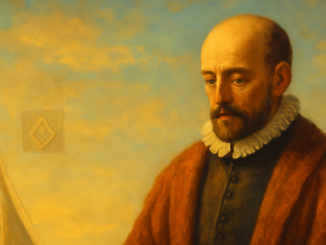
In 1580, Michel de Montaigne published a brief but penetrating essay on a subject that touches every human being: growing older. In ‘Of Age,’ the fifty-seventh essay from the first book of his famous Essays, he examines what age truly means, how the ancients regarded it, and why we should never confuse the length of a life with its value. Written by a man who was himself at the midpoint of his years, this essay offers surprisingly relevant insights into impermanence, self-knowledge, and the art of living with intention.
Age as a Relative Concept
Montaigne opens his essay with an observation that forms the heart of his argument: the average human lifespan is considerably shorter than we tend to assume. Drawing on Roman historians and classical authors, he demonstrates that in earlier times, reaching the age of thirty or thirty-five was already considered a respectable, fully lived life. Great generals and thinkers often reached the peak of their achievements before the age of forty. Alexander the Great died at thirty-two, having already conquered a vast empire. Augustus, Cato the Elder, and numerous other figures from the Roman world are presented as examples of men whose life’s work was already complete at an age we would today consider young.
With these examples, Montaigne poses a fundamental question: if so many people throughout history died young and still led fulfilled lives, why do we regard a long life as the standard? He pushes back against the idea that age in itself is an achievement. The quality of a life lived weighs far more heavily than the number of years one spends on earth.
Lessons from the Classics and Ancient Law
True to his characteristic style, Montaigne draws richly from classical sources. He cites Pliny the Elder on average life expectancy in antiquity and references Aristotle’s ideas about the stages of human life. Biblical tradition also makes an appearance: the patriarchs of the Old Testament reportedly lived for hundreds of years, but Montaigne puts this into perspective. He notes that the lifespan Moses cited as the measure of an ordinary human life — seventy years — was already more the exception than the rule in Montaigne’s own time.
Particularly fascinating is his discussion of Roman law. Certain legal provisions only applied from a specific age, based on the assumption that a man under twenty-five was not yet mature enough for certain responsibilities. At the same time, other laws ceased to apply after a certain age, as though society acknowledged that life beyond a particular point should demand less of a person. Montaigne does not present these historical details as dry facts but as mirrors in which the reader can recognise their own expectations and anxieties about growing older.
Montaigne’s Personal Reflection
What makes this essay particularly compelling is the candid way Montaigne weaves his own situation into the argument. At the time of writing, he was in his late forties, and he acknowledges that he had already far exceeded the life expectancy of his era. He reflects on his own body, on the signs of decline he observes, and on the fact that he can no longer hide behind the promise of the future. The time remaining, he writes, is likely shorter than the time already behind him.
Yet the tone is far from gloomy. Montaigne regards this awareness as a form of liberation. Those who recognise that life is finite and brief can approach each day with greater attention and gratitude. This theme closely aligns with the Stoic philosophy of Seneca and Marcus Aurelius — thinkers Montaigne read and quoted extensively. For him, accepting one’s own mortality is not a source of despair but of clarity.
The value of a human life is not measured in years but in the depth with which it is lived. That is the essential message Montaigne offers us in his essay on age.
The Measure of Life and Freemasonry
The idea that it is not the length but the depth of life that matters finds a remarkable resonance within Freemasonry. In the Masonic tradition, the individual is represented as a rough stone — an ashlar — that must be shaped during the course of life into a pure, polished cube. What matters is not how long one works on that stone, but the dedication and honesty with which the work is done. A short life lived consciously and virtuously can, in this view, achieve more completeness than a long life spent sleepwalking through the years.
The standard the Freemason applies is an inner measure. Rituals constantly remind the Brother that time is limited and that every moment calls for reflection. The famous adage memento mori — remember that you must die — which plays a significant role across the Masonic degrees, connects seamlessly with Montaigne’s argument: the awareness of death does not make life oppressive but rather gives it meaning. Those who know the day is finite choose more carefully how they spend it.
What This Essay Teaches Us Today
In an age when average life expectancy is higher than ever before, Montaigne’s message may seem less urgent. But the opposite is true. Precisely because we have more years at our disposal, we face the danger of procrastination — the notion that genuine reflection and real personal growth can always wait until tomorrow. Montaigne reminds us that this certainty is an illusion. Life can end at any moment, and the only age that truly matters is the present.
His essay is therefore far more than a historical reflection. It is an invitation to weigh one’s own life — not in calendar years, but in moments of genuine attention, honest self-knowledge, and conscious connection with others. It is precisely this invitation that echoes through the lodge when Brothers gather to work on themselves and reflect on the great questions of human existence.
Montaigne’s fifty-seventh essay remains a powerful reminder that the clock on the wall tells us very little about the richness of a life. Whether we encounter this wisdom through the pages of the Essays or through the rituals and symbols of Freemasonry, the lesson is the same: live deliberately, reflect honestly, and never mistake the passage of time for the purpose of living. The rough stone does not need eternity to become a masterpiece — it needs only a craftsman willing to work with full presence and intention.
Copyright text & image: devrijmetselaar.nl
Texts are based on the ideas and content of the author of devrijmetselaar.nl, reviewed, corrected, and supplemented with the assistance of OpenAI. Images are created based on the ideas of the author of devrijmetselaar.nl using OpenAI/DALL-E.
Frequently Asked Questions
What is the main argument Montaigne makes in Essay 57, 'Of Age'?
Montaigne argues that the quality and fulfillment of a life should not be measured by its length, but by its value and accomplishments. He uses historical examples like Alexander the Great and Roman figures to demonstrate that many great individuals achieved their life's work before reaching what we would consider old age today, challenging the assumption that a long lifespan is inherently desirable.
What historical evidence does Montaigne use to support his views on aging?
Montaigne draws extensively from classical sources, including Roman historians, Pliny the Elder, Aristotle, and biblical tradition. He cites examples of accomplished leaders who died young, such as Alexander the Great at age thirty-two, and references ancient legal provisions that defined maturity at age twenty-five and life expectancy at around seventy years to show that our modern expectations of lifespan differ significantly from historical norms.
When was 'Of Age' published and what was Montaigne's own life stage at that time?
Michel de Montaigne published 'Of Age' in 1580 as the fifty-seventh essay in the first book of his Essays. He wrote this essay while himself at the midpoint of his own life, which gives the work added perspective and relevance, as it reflects on aging from the vantage point of someone experiencing middle age firsthand.



Be the first to comment