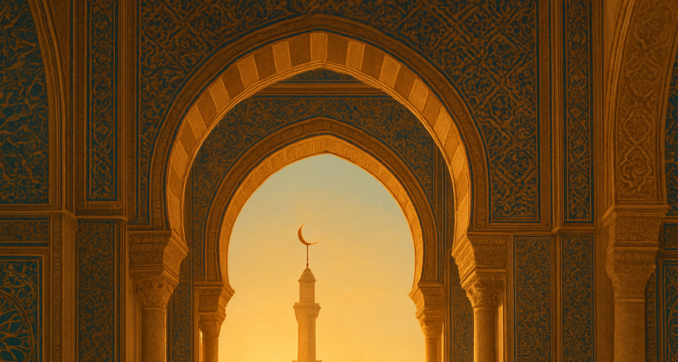
In 1143, the English scholar Robert of Ketton completed the first Latin translation of the Quran, commissioned by Peter the Venerable, Abbot of Cluny. This monumental work opened a window for medieval Europe onto a rich spiritual tradition that had remained largely unknown. Among the surahs that resonated in Latin for the first time was the fortieth: Ghafir — meaning “The Forgiver” or “The One Who Pardons.” Nearly nine centuries later, this surah still invites us to reflect on one of the most universal spiritual principles: forgiveness as a path to inner liberation.
The Historical Context of Surah Ghafir
Surah Ghafir belongs to the Meccan revelations, meaning it dates from the early period of the prophetic mission, before the migration to Medina in 622 CE. During this turbulent era, the young Muslim community was a small minority surrounded by hostility. The message of this surah addressed the fundamental question that occupies every searching mind: how does the human being relate to the divine, and which qualities make that connection possible?
The title “The Forgiver” refers directly to the opening verses, in which God’s forgiveness and mercy are proclaimed. In the Arabic tradition, “al-Ghafir” is one of the ninety-nine beautiful names of God. This name does not express mere passive forgiveness, but an active principle of purification and restoration. It is a divine attribute held before the believer as a mirror for their own conduct — an invitation to embody forgiveness in everyday life.
The Heart of the Message
Among the narratives woven into the surah is the story of a believing man at the court of Pharaoh who concealed his faith but ultimately rose against tyranny by pleading for justice. This passage within the surah is sometimes referred to separately as “The Believer.” The courage of this anonymous figure — to speak truth in the face of power — is a timeless motif that has echoed across centuries and cultures.
At the core of the surah lies the principle that forgiveness is not weakness but a demonstration of inner strength. The text emphasizes that those who seek forgiveness and who extend it to others walk a path toward spiritual elevation. This is no one-way street between humanity and the divine; it is a dynamic exchange that permeates the entire community.
Forgiveness is not the erasure of the past, but the building of a bridge toward a purer future.
Parallels with Freemasonry
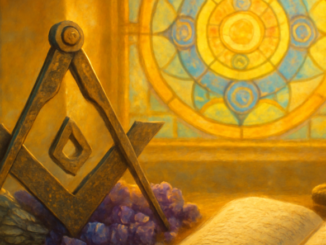
Freemasonry holds no dogmatic doctrines on forgiveness, yet the concept resonates deeply with its core values. Central to the Masonic tradition is the continuous labor on the “rough ashlar” — the shaping of one’s own character into a polished stone that fits into the greater edifice of humanity. This inner work presupposes the ability to acknowledge one’s shortcomings and to let them go.
The eighteenth-century English clergyman and Freemason James Anderson, whose Constitutions of 1723 laid the foundation for modern Freemasonry, stressed that brethren should treat one another with mutual respect and tolerance. This ideal of brotherly harmony can only exist where forgiveness is a living principle. Without the willingness to accept human fallibility, every lodge would fracture under the weight of resentment and division.
Light as a Shared Metaphor
Both in the Quran and in Freemasonry, light plays a central role as a symbol of knowledge, truth, and spiritual illumination. In Surah Ghafir, divine guidance is portrayed as a light that leads the seeker out of darkness. The Freemason likewise seeks “more light” — a ritual expression that represents the ongoing quest for wisdom and self-knowledge. Seen in this context, forgiveness can be understood as the removal of the shadows that darken our inner temple.
This shared symbolism is no coincidence. Across spiritual traditions, the movement from darkness to light mirrors the journey from ignorance to understanding, from bitterness to reconciliation. When a Mason enters the lodge seeking illumination, they are engaging in essentially the same inner journey that Surah Ghafir describes: the deliberate turning toward that which heals and elevates.
From Past to Present: A Living Wisdom
The medieval translators who first brought the Quran to Europe were seeking understanding in an age of crusades and conflict. Paradoxically, their work opened the door to dialogue and exchange. The humanists of the Renaissance — among them the philosopher Giovanni Pico della Mirandola — studied Eastern sources with an openness far ahead of their time. This tradition of cross-pollination between cultures and religions finds its echo in Freemasonry, which welcomes men of all faiths around shared values.
In our current era, where polarization and hardening of positions often dominate public discourse, the message of Surah Ghafir offers a counterweight. It reminds us that forgiveness is not capitulation but a conscious choice to refuse imprisonment in cycles of resentment. This is precisely the inner freedom that Freemasonry pursues: not bondage to the past, but the courage to build a better future.
Lessons for the Modern Seeker
What can the modern reader — Mason or not — learn from this ancient text? First, that forgiveness begins with self-knowledge. Only those who dare to examine their own shadow side can truly forgive and be forgiven. Second, that forgiveness is an active process, comparable to the patient shaping of the rough ashlar. It requires daily practice and dedication.
Consider these guiding principles drawn from both traditions: the recognition of one’s own shortcomings as a first step; the willingness to see others as fellow human beings worthy of compassion; the understanding of forgiveness as liberation rather than weakness; and the commitment to continuous inner work on one’s own character.
The believer at Pharaoh’s court ultimately chose truth over safety. His story reminds us that spiritual growth sometimes demands courage. To forgive those who have wounded us, or to seek forgiveness for our own missteps, is an act of inner strength. It is the kind of strength that transforms not only the individual but the entire community — whether that community is a lodge, a congregation, or the wider human family.
The meeting point between Surah Ghafir and Freemasonry reveals something profound: across centuries and cultures, human beings have recognized that forgiveness is not an act of surrender but a gateway to transformation. Whether we encounter this truth through the ninety-nine names of God or through the symbolism of the rough and perfect ashlar, the message endures. Forgiveness clears the way for light to enter — and it is in that light that we find the strength to keep building.
Copyright text & image: devrijmetselaar.nl
Texts are based on the ideas and content of the author of devrijmetselaar.nl, reviewed, corrected, and supplemented with the assistance of OpenAI. Images are created based on the ideas of the author of devrijmetselaar.nl using OpenAI/DALL-E.


Be the first to comment