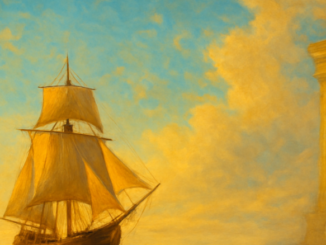
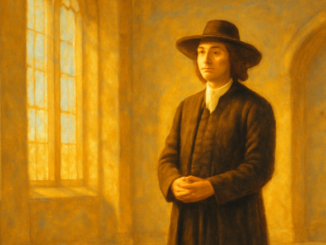
Historical illustration representing the founding of the Bavarian Illuminati in 1776
Illuminati

The Bavarian Illuminati: Origins and Spiritual Roots in 1776

On May 1, 1776 — while the American Declaration of Independence was taking shape across the Atlantic — a young professor in the Bavarian city of Ingolstadt founded a society that would captivate the imagination of historians and conspiracy theorists alike for centuries to come. Adam Weishaupt, a professor of canon law and former pupil of the Jesuits, established the Order of the Perfectibilists, later known as the Illuminati. This article examines the historical facts behind this eighteenth-century society and explores the spiritual ideals that connected Weishaupt’s vision to the Freemasonry of his era. The Intellectual Climate of the Late Eighteenth Century To understand the birth of the Bavarian Illuminati, we need to step into the Bavaria of the 1770s. The electorate was governed by a deeply conservative Catholic regime, even as the Enlightenment flourished elsewhere in Europe. Philosophers like Voltaire and Jean-Jacques Rousseau were spreading ideas about reason, natural rights, and religious tolerance. These ideas inevitably reached the university town of Ingolstadt, where the young Weishaupt immersed himself in ancient philosophy and contemporary Enlightenment thinkers. Weishaupt, born in 1748, had been orphaned at the age of five and entrusted by his godfather to the Jesuit order for his education. […]

Symbolic night journey from darkness to light representing Masonic initiation
Islam

The Night Journey: Spiritual Ascent in Surah Al-Isra

What if the deepest spiritual truth is not found in broad daylight, but precisely in the dark of night? The seventeenth surah of the Quran, Al-Isra, opens with an enigmatic nocturnal departure — and within it lies a paradox that every Freemason will recognize: the path toward light begins in total darkness. This essay explores the mystical layers of this surah and asks what the Night Journey can teach us about spiritual transformation. The Opening: A Journey Through the Night Al-Isra begins with the words: “Glory be to Him who carried His servant by night from the Sacred Mosque to the Farthest Mosque.” This single sentence has captivated the imagination of mystics, theologians, and seekers for centuries. This is no ordinary journey. It is a movement that transcends the boundaries of time and space — a passage from the earthly to the celestial, from the known to the unknown. The choice of night is deeply significant. Night is the time when the outer senses fail and the inner eye grows sharper. In many spiritual traditions, night does not symbolize the absence of light but rather the preparation for it. The soul must first wade through darkness before it can bear […]

A closed bridge shrouded in mist symbolizing Masonic self-reflection
Spiritual Traditions

The Closed Bridge as a Mirror for the Soul: A Masonic View

Imagine you’re driving down the highway, heading to a meeting, an appointment, or someone you love. Then a sign appears: the bridge ahead is closed. At least 48 hours. As a precaution. Your plans crumble, frustration rises. But what if this forced stop is more than an inconvenience? What if every blocked road in life is an invitation to turn inward? The Paradox of Precaution as Wisdom The word “precaution” carries a curious duality. On one hand, it implies fear of what lies ahead. On the other, it speaks of prudence — the ability to see beyond immediate utility. The decision to close a bridge is not a sign of weakness but of deeper insight: some structures deserve inspection before they collapse. This principle already echoed through the writings of Marcus Aurelius, who wrote in his Meditations about the importance of self-examination before the soul develops cracks. The Stoic emperors understood that prevention is not cowardice — it is wisdom. The same wisdom runs through Freemasonry, where ritual silence precedes every piece of work. Before the gavel falls, there is reflection. Stillness as a Spiritual Necessity Modern culture has an uneasy relationship with standing still. We are perpetually on the […]

A peaceful Quaker meeting house interior representing silent worship and reflection
Quakers

The Quakers: Origins and History of a Silent Movement

In the middle of the seventeenth century, amid religious turmoil and civil war in England, a movement emerged that was radically different from anything the Christian world had seen before. The Quakers — officially the Religious Society of Friends — rejected church hierarchy, ordained clergy, and even the sacraments. They believed that every human being has direct access to the divine, without the mediation of priests or rituals. This conviction that an inner light serves as the source of spiritual truth raises compelling parallels with other traditions that seek direct experience of the higher self, including Freemasonry. George Fox and the Birth of a Radical Movement The Quaker movement began with George Fox, a shoemaker’s son from Leicestershire who underwent a profound spiritual crisis during the 1640s. He visited countless preachers and churches but found no answers to his existential questions. In 1647, Fox experienced what he later described as a direct revelation: there was one who could speak to his condition — Christ himself — without the mediation of human institutions. This experience became the cornerstone of what would develop into Quaker theology. Fox began travelling across England, proclaiming his message wherever he went. He attracted followers who recognized […]

Honeybee on honeycomb symbolizing Masonic brotherhood and spiritual wisdom
Islam

The Bee as Teacher: Spiritual Wisdom from the Quran

What can a creature just a few centimeters long teach us about the deepest questions of human existence? The sixteenth Surah of the Quran bears the name An-Nahl — The Bee — and in doing so, it opens a surprising window onto spirituality, community, and the hidden order of creation. For those willing to look beyond the literal text, a meditative landscape unfolds, one that shares remarkable common ground with the spiritual quest at the heart of Freemasonry. A Paradox of Smallness and Greatness Our exploration begins with an apparent contradiction. The bee is a tiny creature, yet in a sacred text it is elevated to the status of a divine sign. The Quran speaks of how the Creator inspired the bee to build her dwellings in mountains, in trees, and in the structures that people raise for her. From within her body comes a drink of varying colors in which there is healing for humankind. The verse concludes that in this there is surely a sign for those who reflect. This passage is an invitation to contemplation. It is not really about biology or honey production — it points to a deeper truth: that wisdom can lie hidden in […]

Ancient rock-carved dwellings symbolizing spiritual lessons in Freemasonry
Islam

The Rock Formation: Spiritual Lessons from the Quran’s 15th Surah

Rock. A word that evokes steadfastness, protection, something that endures the test of time. In the fifteenth surah of the Quran, known as Al-Hijr or The Rock Formation, we encounter the story of a people who carved their homes directly into stone. What does this image mean for the devout Muslim? And what can the Freemason — accustomed to building symbolically — recognize in this ancient tale of stone and spirituality? A Warning Carved in Stone: The Believer’s Perspective For the Muslim, Surah Al-Hijr is a text of layered meaning. The name refers to a historical site in the northwest of present-day Saudi Arabia, where the people of Thamud once lived. This civilization had been gifted with the ability to carve magnificent dwellings out of solid rock. Their technical mastery was legendary. And yet they perished — not from a lack of skill, but from spiritual blindness. The surah tells how the prophet Salih warned his people, but they refused to listen. They placed their trust in material achievements, in the seeming indestructibility of their rock-hewn homes. The message is clear: no human construction, however impressive, offers true protection when the inner foundation is missing. The believer reads here a […]

Abraham as symbolic builder representing the journey from darkness to light
Islam

Surah Ibrahim: Abraham as Builder of Faith and Inner Light

Imagine leaving behind everything you know — your family, your security, every familiar comfort. Not out of despair, but from a deep inner conviction that something greater awaits, something worth dedicating your entire life to. This is exactly what the patriarch Abraham did, and his story continues to resonate across three world religions to this day. In Surah Ibrahim, the fourteenth chapter of the Quran, we find a rich spiritual source with striking parallels to the inner journey that Freemasons know so well. Let us explore what this ancient narrative still has to teach us. The Heart of Surah Ibrahim Surah Ibrahim bears the name of the great patriarch for good reason. Abraham — known as Ibrahim in Arabic — symbolizes unconditional trust and the willingness to devote one’s entire existence to a higher truth. The surah opens with a powerful statement about light and darkness, describing how people are guided from darkness into light. This is a theme every Freemason will immediately recognize. Revealed in Mecca and comprising 52 verses, the surah centers on a call to gratitude and the awareness that everything we possess has been bestowed upon us. Abraham appears here not as an abstract figure from […]

Starlit sky over an ancient temple symbolizing Abraham's search for light
Islam

Surah Ibrahim: The Patriarch and the Light of Surrender

A brother sits quietly in the back row of the lodge. The ritual has just begun, and the Worshipful Master’s words echo through the room: ‘Let there be light within you.’ He closes his eyes and thinks of Abraham — the patriarch who stood beneath a canopy of stars thousands of years ago, searching for something greater than himself. That ancient search for light and truth connects them across the centuries. The Patriarch as a Universal Symbol Ibrahim — as Abraham is known in the Quran — is one of the most revered figures in Islamic tradition. The fourteenth surah of the Quran bears his name and opens with a powerful declaration: this book was sent to lead people out of darkness and into the light. This theme of illumination, of the passage from ignorance to insight, resonates deeply with the spiritual quest that lies at the heart of Freemasonry. In the Quran, Abraham is described as a hanif — a pure monotheist who turned away from the idols of his forefathers. He literally smashed the images worshipped by his community to demonstrate that they held no power. This act of spiritual courage demanded inner strength and a willingness to […]

Thunder and lightning over a Masonic temple symbolizing spiritual awakening
Islam

Thunder in the Quran: Spiritual Echoes for Freemasons

What if thunder is not merely a meteorological event, but a voice speaking to those willing to listen? The thirteenth chapter of the Quran, known as Ar-Ra’d — The Thunder — presents us with a paradox that strikes at the heart of every spiritual quest: how can something that instills fear simultaneously be a sign of grace? This question resonates deeply within Masonic philosophy, where confronting our deepest uncertainties is often the very first step toward genuine insight. A Paradox as a Point of Departure The Thunder opens with a powerful assertion: the cosmic phenomena surrounding us are not random occurrences, but signs for those who reflect. The thunder rolling across the sky, the lightning illuminating the night, the rain awakening barren earth — according to this Quranic chapter, all of these are invitations to contemplation. But here the paradox emerges: the same thunder that commands awe also inspires fear. The same force that destroys also brings life. This ambiguity is not a contradiction to be resolved, but a wisdom to be embraced. The Freemason recognizes this pattern immediately. In the lodge, the candidate is confronted with darkness before light is bestowed. The rough stone must be shaped with tools […]

Ancient pit symbolizing Joseph's initiatory descent in Surah Yusuf
Islam

Joseph in the Quran: Forgiveness as Spiritual Elevation

Forgiveness is often mistaken for weakness — the surrender of one’s right to justice. But what if forgiveness is actually the ultimate demonstration of inner strength, a spiritual triumph that liberates the one who forgives far more than the one who is forgiven? In Surah Yusuf, the twelfth chapter of the Quran, the story of Joseph is told in a way that places this very paradox at its center. It is a narrative that holds particular resonance for Freemasons — not because it provides easy answers, but because it asks the right questions about the architecture of the human soul. The Fairest of Stories The Quran itself describes the story of Joseph as “ahsan al-qasas” — the fairest of stories. This designation is remarkable. In a book filled with prophetic histories and moral guidance, this single narrative receives a uniquely elevated status. What makes it so extraordinary? Perhaps it is the completeness: where other Quranic accounts are fragmentary, Joseph’s life unfolds as a continuous narrative, from a boy’s dream to a family’s reunion. Or perhaps it is the universality of the themes it touches: jealousy, betrayal, temptation, patience, and ultimately reconciliation. For the Freemason accustomed to working with symbols and […]

A mirror reflecting a rough ashlar stone symbolizing Masonic self-examination
Spiritual Traditions

Drug Violence and the Weekend Pill: A Spiritual Mirror

A middle-aged man sits at his kitchen table, shaking his head at yet another news report about a drug-related killing. ‘Terrible,’ he mutters over his morning coffee. That same evening, at a party, he accepts a pill from a friend without a second thought. The moment of moral reflection has vanished like mist in the sun. This everyday scene touches on a profound question that philosophers and spiritual traditions have posed for centuries: how can we truly know ourselves — and what do we do with that knowledge? The Modern Moral Contradiction Many Western societies find themselves in a peculiar moral split. On one hand, there is genuine horror at the violence fueled by the drug trade — assassinations, threats against journalists, lawyers murdered in broad daylight. These events shake our collective conscience. On the other hand, recreational drug use is deeply woven into weekend culture. This contradiction raises a fundamental question: how do we relate to our own role in the larger picture? It is easy to point the finger at criminal organizations, at failed policy, at someone else. It is far more difficult to turn the mirror toward ourselves. And it is precisely in that movement — the […]

Symbolic depiction of prophetic courage and Masonic building tools
Islam

Surah Hud and Prophetic Courage: A Spiritual Lesson

Perhaps you know the feeling: you know what the right thing to do is, but the world around you seems to be pulling in a different direction. You stand alone with your conviction, wondering whether your voice will ever be heard. This very human dilemma lies at the heart of Surah Hud, the eleventh chapter of the Quran. It tells the stories of prophets who swam against the tide, who kept speaking when no one wanted to listen. Their stories are timeless and touch on themes that also hold a central place in Freemasonry: steadfastness, truth, and the courage to follow your inner compass. The Heart of Surah Hud Surah Hud takes its name from the prophet Hud, a figure in the Arabian tradition who was sent to the people of Aad. But the surah reaches far beyond a single prophet. It contains the stories of Noah, Salih, Abraham, Lot, Shu’ayb, and Moses. Each of them confronts a people who refuse to listen — a people clinging to old habits and material certainties. The common thread is unmistakable: the prophets call for justice and spiritual purity, but are met with resistance, mockery, and sometimes outright violence. What makes this surah […]

Symbolic darkness and light representing Masonic initiation and spiritual rebirth
Islam

Surah Yunus: Darkness as a Gateway to Inner Light

There are moments when the world around you falls away completely. Moments of total darkness, where no horizon is visible and no direction is clear. Surah Yunus — the tenth chapter of the Quran — tells of precisely such a moment: a prophet swallowed into the belly of a great fish, surrounded by three layers of darkness. What initially appears to be a story of despair reveals, upon deeper reflection, a profound lesson in spiritual transformation — one that resonates powerfully with the principles and rituals of Freemasonry. The Belly of the Fish: A Concrete Darkness Imagine it: complete severance from light, sound, and orientation. The prophet Jonah — known as Yunus in the Islamic tradition — found himself in what scripture describes as a threefold darkness: the darkness of the night, the darkness of the sea, and the darkness inside the creature’s belly. This is not a metaphor for mild discomfort. It represents the total absence of every familiar reference point. No stars to navigate by. No horizon to orient yourself. No ground beneath your feet. In our own lives, we encounter comparable moments, though usually less dramatic. The loss of someone we love, a sudden health crisis, the […]

An open door at night symbolizing spiritual passage and Masonic transition
Spiritual Traditions

The Door That Opens: Rescue as a Spiritual Act

A school principal in Nepal opened the doors of his school in the middle of the night as floodwaters began to rise. Nearly nine hundred students found safety on the upper floors. It was a simple act — a door swinging open — yet within that movement lies something far deeper than practical emergency response. What does it mean to open a door in a moment of crisis? And what does this gesture reveal about spirituality in the most concrete sense of the word? The Door as a Symbol of Transition A door is never merely a physical object. In virtually every spiritual tradition, a door marks a transition — a threshold between two worlds. Think of the temple gates in ancient mystery schools, or the threshold the initiate crosses to enter a new life. Plato, in his Allegory of the Cave, described how the philosopher leaves the cave and steps toward the light. That exit is a door — an opening into a different level of reality. In Freemasonry, the door plays a strikingly similar role. The candidate seeking admission to the lodge knocks upon a closed door and waits until entry is granted. It is a ritual moment […]

Open Quran alongside Masonic rough ashlar symbolizing repentance and transformation
Islam

Repentance in the Quran: Inner Transformation and Freemasonry

What does it truly mean to repent? Not as a fleeting pang of guilt, but as a profound inner turning that transforms your entire being? The ninth surah of the Quran, known as At-Tawbah — The Repentance — confronts the reader with precisely this question. Its themes of self-examination, broken promises, and the courageous return to one’s deepest values carry striking parallels with the spiritual journey at the heart of Freemasonry. Why Does This Surah Break With Tradition? The very first thing that sets At-Tawbah apart is its opening — or rather, the absence of one. It is the only surah in the entire Quran that does not begin with the customary invocation, “In the name of God, the Most Gracious, the Most Merciful.” Islamic scholars have debated this omission for centuries. Some believe the gravity of its content warrants the departure. Others view it as a continuation of the preceding surah. Whatever the explanation, the effect is immediate: the reader senses that something weighty is about to be discussed, something that tolerates no gentle preamble. The surah was revealed during a turbulent period, shortly before the death of the Prophet Muhammad. It addresses loyalty, broken covenants, and the possibility […]

Ancient desert battlefield symbolizing the inner struggle in Freemasonry
Islam

The Spoils of War: From Badr to the Inner Struggle

In the year 624 CE, a decisive battle took place in the desert near Badr. A small band of followers of the Prophet Muhammad faced a far superior force from Mecca. The unexpected victory that followed — and especially the division of the spoils — gave rise to fundamental questions about possession, community, and surrender. The eighth chapter of the Quran, known as Al-Anfal or The Spoils of War, addresses this event. But beneath the historical narrative lies a deeper layer: a spiritual teaching about releasing the ego and placing trust in a higher order. For Freemasons, who likewise pursue moral growth and fraternal unity, this ancient text offers remarkably familiar ground. The Historical Context of Badr The Battle of Badr was far more than a military confrontation. It was a turning point in early Islamic history — a moment when a persecuted community stood its ground against its oppressors for the first time. The young Muslim community in Medina numbered only around three hundred men, while the Meccan army fielded nearly a thousand soldiers. The victory was experienced by the faithful as divine assistance, as proof that devotion to a higher ideal is stronger than numerical superiority. After the […]

Freemason lodge interior symbolizing spiritual homecoming and commitment
Spiritual Traditions

Coming Home as a Spiritual Choice: Lessons from Racing

In a world that glorifies mobility — where success is measured by the next step, the bigger opportunity, or the better offer — the declaration “this is my home” sounds almost rebellious. When a world champion in motorsport chooses to stay where he was shaped, it touches something far deeper than sporting sentiment. It touches an ancient spiritual principle that Freemasons have understood for centuries: the power of conscious commitment. The Historical Roots of Loyalty to a Community The history of Western spirituality is filled with examples of individuals who deliberately chose commitment over unlimited freedom. In the medieval building lodges — the direct predecessors of modern Freemasonry — loyalty to one’s workshop was not a limitation but a prerequisite for growth. A journeyman who drifted from lodge to lodge without ever settling lacked the depth that only sustained commitment can provide. The great cathedrals of Europe were not built by roaming adventurers but by generations of craftsmen who dedicated their entire lives to a single structure. Johann Wolfgang von Goethe, himself a Freemason and author of the celebrated novel about Wilhelm Meister’s formative years, described this principle with eloquence. For Goethe, true freedom was not the ability to go […]

Mountain ridge symbolizing liminal space between light and shadow in Freemasonry
Islam

The Heights: Liminal Space as a Spiritual Lesson

Imagine standing on a mountain ridge. On one side, a vast open valley stretches before you; on the other, a deep abyss drops away into shadow. You find yourself precisely on the boundary — not here, not there, but somewhere in between. That feeling of in-betweenness, of occupying a space where you haven’t yet arrived but can no longer turn back, is exactly what the seventh surah of the Quran speaks about. And it is an image that carries deep resonance within the traditions of Freemasonry. What Does This Surah Tell Us? The seventh surah of the Quran, known in Arabic as one of the longer chapters, bears a name that refers to elevated places or heights — Al-A’raf. Its central image is a liminal zone: a place where souls reside who do not immediately belong among the blessed, yet are not counted among those who have gone astray. These people on the heights can see both sides. They observe, they wait, and they hope. The surah also recounts the stories of prophets who called their communities toward righteousness. You read about Adam, Noah, and Moses — about the eternal struggle between truth and self-deception. But what makes this text […]

Ancient book open to a page with symbols of light, unity, and Freemasonry
Islam

The Cattle Surah: Spiritual Lessons for Freemasons

In the quiet of an evening lodge meeting, a brother leafs through an ancient book. His fingers come to rest on a passage about cattle — about herds finding their way through the twilight. Something stirs in him: not the cattle themselves, but the metaphor of seeking, of being guided toward light. That moment of recognition bridges ancient wisdom with the path every Freemason walks. What Does the Sixth Surah Tell Us? The sixth surah of the Quran, known as Al-An’am or The Cattle, is one of the longer chapters and belongs to the Meccan revelations. It addresses the most fundamental questions of existence: Who created the heavens and the earth? What does it truly mean to believe? And how does the seeker distinguish truth from error? While the title refers to passages in which cattle are mentioned as part of creation, the heart of the surah reaches far deeper — toward the oneness of the divine and humanity’s responsibility to recognize that unity. Ibrahim (Abraham), the patriarch who holds a central place in Jewish, Christian, and Islamic traditions alike, appears in this surah as a seeker of truth. He gazes at the stars, the moon, and the sun, and […]

A symbolic table set for a shared meal representing Masonic and spiritual brotherhood
Islam

The Table as Spiritual Symbol: Surah Al-Ma’ida & Brotherhood

There is a curious paradox at the heart of human spirituality: the deepest truths are often expressed through the most ordinary images. A table set for a meal. Bread being broken. Guests gathering around a shared dish. In the fifth surah of the Quran — known as Al-Ma’ida, or The Table — we encounter just such a deceptively simple image, one that reveals extraordinary layers of meaning upon closer examination. For Freemasons, who are intimately familiar with ritual meals and the symbolism of fraternal communion, this ancient text opens a fascinating dialogue about what it truly means to sit together at one table. The Heavenly Table: More Than a Miracle Story Surah Al-Ma’ida takes its name from a remarkable narrative in which the followers of Jesus — known as Isa in the Islamic tradition — ask for a table to descend from heaven as a sign of divine grace. At first glance, the request seems strange. Why would people who had already witnessed miracles need yet another sign? The text itself suggests that the table is not so much intended as proof, but as confirmation of a covenant. The heavenly feast becomes a space where the earthly and the transcendent […]