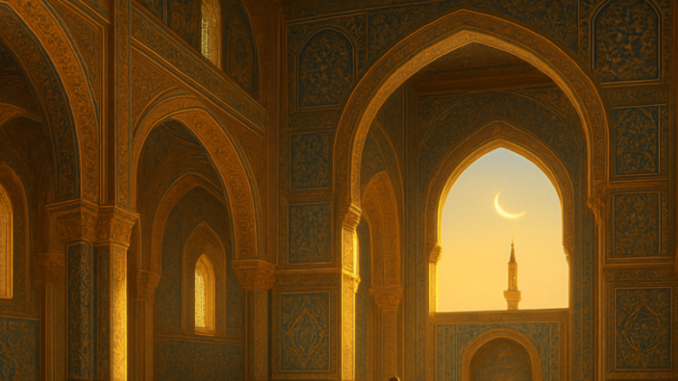
Imagine standing before the mirror one morning and quietly asking yourself whether you truly lived according to your beliefs yesterday. Not as some grand existential crisis — just an honest, still question. That question, it turns out, is precisely the kind of confrontation that the seventy-seventh surah of the Quran evokes. In this installment of our series exploring sacred books from a Masonic perspective, we turn to Surah Al-Mursalat — The Emissaries — and examine how its core message can concretely enrich your daily life.
What Is Surah Al-Mursalat About?
Surah Al-Mursalat is the seventy-seventh surah of the Quran and belongs to the shorter, powerful chapters revealed in Mecca. Its title refers to emissaries — messengers or winds sent forth with purpose. The surah opens with a series of oaths invoking natural forces and repeatedly poses a piercing rhetorical question: “Woe on that day to the deniers!” It is a text that confronts the reader or listener with the consequences of their choices and the inescapable accountability that awaits every human being.
The surah describes how creation itself bears witness to a higher order. The mountains, the water, the earth — everything points to a conscious design. Those who deny or ignore this order, the text suggests, risk losing their own inner compass. This is not a threat; it is a mirror. The text does not demand blind obedience but calls for honest self-reflection.
The Familiar Dilemma: Avoidance or Accountability
Everyone knows the moment when you realize something needs to be addressed but you would rather put it off. A difficult conversation with a colleague. A promise you made but haven’t kept. A principle you hold in high regard yet quietly abandon the moment it becomes uncomfortable. Surah Al-Mursalat speaks directly to that mechanism. Its repeated call to stop denying is not a theological abstraction — it is a universal appeal: do not run from what you already know in your heart.
This is exactly the point where the message of this surah touches the heart of Freemasonry. In the Masonic tradition, the concept of “working the rough stone” is central. That rough stone is nothing other than yourself — with all your imperfections, excuses, and blind spots. Shaping it requires honesty and the courage to face yourself squarely. Not tomorrow. Today.
Responsibility as a Spiritual Practice
The philosopher Aristotle wrote that virtue is not a state but a habit. You do not become just by thinking about justice once; you become just by making just choices day after day. Surah Al-Mursalat reinforces this insight by pointing to the order in creation as encouragement to create order in your own life. Nature does not procrastinate. The wind blows when it must blow. Water flows where it must flow.
Spirituality only becomes truly powerful when it moves beyond the mind and becomes visible in daily choices and concrete actions.
In Freemasonry, this principle is ritually anchored. Every ritual is a reminder of the promise a Brother has made to himself: to work toward a better self and a better world. Not as a vague ideal, but as an intention carried from every lodge meeting into everyday life. Spinoza might add here that understanding the natural order is equivalent to knowing yourself — for humanity is not separate from the world but inseparably woven into it.
Practical Steps: Bringing This Surah Into Your Life
How do you make the message of Al-Mursalat practical? It doesn’t have to be grand or complicated. Here are four concrete actions you can apply today, inspired by the interplay between this surah and the Masonic tradition:
1. Begin your day with a quiet question. Take thirty seconds before you reach for your phone and ask yourself: where am I most likely to stray from what I truly value today? The surah reminds us that denial begins with small things.
2. Choose one uncomfortable task. Pick up that one thing you have been postponing for days. The conversation, the decision, the letter. The emissaries in the surah are messengers who do not hesitate. Be your own emissary.
3. Seek order in the small things. Literally tidy something up — your desk, your inbox, a drawer. It may sound trivial, but the physical act of ordering works like a ritual. Freemasons know that outward order fosters inner clarity.
4. Close your day with a brief review. Not as self-punishment, but as an honest inventory. Did I live according to my convictions today? The Quranic text asks exactly that: not denial, but acknowledgment. In the lodge, this is called the moment of reflection — a habit every Brother carries home.
Sacred Texts and the Bond of Brotherhood
Freemasonry does not prescribe a specific faith. The Volume of the Sacred Law on the altar in the lodge may be the Quran, the Bible, the Torah, or another holy book. What matters is not which book lies there, but that the Brother acknowledges something greater than himself. Surah Al-Mursalat fits seamlessly into this tradition: it does not demand a specific dogma but asks for the willingness to hold yourself accountable to a higher standard — however you may define it.
Johann Wolfgang von Goethe, himself a Freemason, wrote that a person only truly lives when they strive. Al-Mursalat adds: and when they stop denying what that striving demands of them. This combination of aspiration and honesty is the engine of both spiritual growth and Masonic labor.
The beauty of Surah Al-Mursalat’s message is that it tolerates no delay — not because it threatens, but because it underscores the urgency of now. Every day is a chance to draw closer to your own truth. Freemasonry offers a framework, a brotherhood, and a set of timeless rituals to support that journey. But the work itself begins with you. Not in some distant future, not at the next lodge meeting — today, in the quiet honesty of a single question asked before the mirror. That is where transformation starts, one rough stone at a time.
Copyright text & image: devrijmetselaar.nl
Texts are based on the ideas and content of the author of devrijmetselaar.nl, reviewed, corrected, and supplemented with the assistance of OpenAI. Images are created based on the ideas of the author of devrijmetselaar.nl using OpenAI/DALL-E.
Frequently Asked Questions
What is Surah Al-Mursalat and why is it relevant to Freemasonry?
Surah Al-Mursalat is the seventy-seventh surah of the Quran, revealed in Mecca. Its title refers to emissaries or messengers sent forth with purpose. It is relevant to Freemasonry because both traditions emphasize self-reflection and accountability. The surah's core message of confronting oneself mirrors the Masonic concept of 'working the rough stone' — using honest self-examination to shape oneself and remove imperfections, blind spots, and excuses.
How does Surah Al-Mursalat address the problem of avoidance and denial?
Surah Al-Mursalat repeatedly poses the piercing rhetorical question 'Woe on that day to the deniers!' to confront readers with the consequences of their choices. The surah speaks directly to the universal human tendency to avoid difficult conversations, broken promises, and principles we abandon when they become uncomfortable. Rather than demanding blind obedience, it calls for honest self-reflection and encourages people not to run from what they already know in their hearts.
What is the connection between Surah Al-Mursalat and developing virtue as a spiritual practice?
The surah teaches that responsibility and self-accountability are spiritual practices, not one-time realizations. Like Aristotle's concept that virtue is developed through habit rather than single thoughts, Surah Al-Mursalat emphasizes that living according to your beliefs requires daily honest self-examination. The text encourages asking yourself each morning whether you truly lived according to your principles yesterday, making accountability an ongoing spiritual discipline rather than an abstract theological concept.

Be the first to comment