
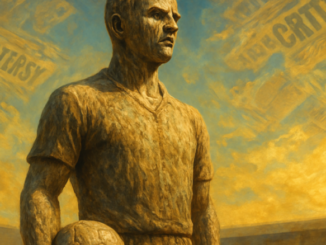
A seasoned 37-year-old footballer returns to the country where his career began. Some call it sentiment; others see a calculated move. But behind every homecoming lies a deeper question: what does it mean to return to your origins? And what does that choice reveal about someone’s character? When Dutch club NEC announced the return of a Serbian midfielder to Nijmegen, it offered a surprising mirror for an age-old ethical question — one that stands at the very heart of Freemasonry.
The Outside View: Romance or Calculation?
For the average football fan, a transfer like this stirs mixed feelings. Is this a veteran looking to perform one last trick on familiar turf? Or a seasoned professional eager to prove his worth in a league he knows inside out? The cynic sees a marriage of convenience: the club gains name recognition; the player gets game time. The romantic sees a man returning to his roots — to the place where it all started.
These two readings coexist without either being entirely right or wrong. The outside world tends to judge quickly. We search for motives, hidden agendas, the self-interest lurking behind every decision. That impulse is profoundly human, but it often says more about our own lens than about the reality of the person we’re judging.
The Masonic Perspective: Character and Consistency
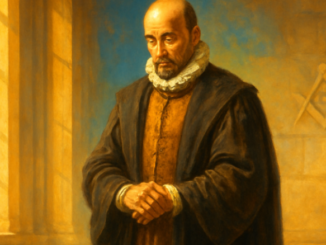
Within Freemasonry, a person is not judged by his words or by how the outside world perceives him, but by the consistency between his actions and his inner compass. The question is not: what do others think of this choice? The question is: does this choice align with who this person truly is?
Marcus Aurelius wrote in his Meditations that a person should act according to his nature, not according to the expectations of the crowd. Aristotle spoke of the importance of practical wisdom — the ability to do the right thing in concrete situations, not because rules dictate it, but because character demands it. A return to familiar ground can be an act of wisdom, provided it springs from sincerity rather than fear or complacency.
True loyalty reveals itself not in staying where you are, but in returning to what you are genuinely called to serve.
What Both Perspectives Share: The Search for Authenticity
Despite their differences, the cynical and the idealistic viewpoints share common ground: both are searching for authenticity. The cynic distrusts because he has been disappointed too often. The idealist hopes because he believes in the possibility of sincerity. Both are preoccupied with the same fundamental question: does this person truly mean what he does?
In Freemasonry, this tension is acknowledged and embraced. Every Brother enters the lodge with his own background, his own doubts, his own ideals. The lodge is not a place where one pretends to be perfect — it is a workshop where one labors upon the rough ashlar of one’s own character. To return is to acknowledge that there is still work to be done. That is not weakness; that is strength.
Homecoming as an Ethical Act
In many traditions, the return is considered an essential part of the journey. The hero departs, learns, and comes back transformed to serve his community. Goethe explored this theme throughout his masterwork on years of formation and wandering. The return is not a destination — it is a new beginning born from maturity.
When someone with years of international experience chooses a more modest stage, it can be a testament to self-knowledge. It takes courage to recognize that greatness does not lie solely in glory but also in service. The Freemason learns that true honor is found not in titles or applause, but in remaining faithful to one’s principles — especially when no one is watching.
The Lesson for All of Us
A footballer’s transfer may seem far removed from the dilemmas we wrestle with in daily life. Yet it touches on universal themes. Where do I truly belong? What do I owe to my past? How do I balance ambition with loyalty?
Consider these reflections:
- Loyalty is not a geographical matter — it is a matter of the heart.
- Returning sometimes requires more courage than pressing forward.
- Character is revealed through consistency, not applause.
- The outside world judges; the conscience knows.
Beyond Judgment: An Invitation to Reflect
Let this story not be an occasion to judge a sportsman we do not know. Let it be a mirror. Where in your own life are you facing the choice between moving forward and turning back? Where does your conscience call you to honor something you left behind? Freemasonry offers no ready-made answers to such questions. It offers a method: honest self-reflection, practiced in silence, among Brothers walking the same path.
The cynic and the idealist may both be right. Perhaps every homecoming is a blend of calculation and longing, of self-interest and service. What matters is not the purity of the motive, but the willingness to keep working on the person you aspire to become.
A transfer in the world of football is rarely more than a footnote in sporting history. But for those willing to look beyond the headlines, it contains an ancient question: what does it mean to be loyal? Freemasonry teaches that loyalty is not a matter of place, but of character. Not of staying, but of returning when that return is genuine. May this reflection invite you into your own quiet contemplation — wherever you stand on your path.
Copyright text & image: devrijmetselaar.nl
Texts are based on the ideas and content of the author of devrijmetselaar.nl, reviewed, corrected, and supplemented with the assistance of OpenAI. Images are created based on the ideas of the author of devrijmetselaar.nl using OpenAI/DALL-E.
Frequently Asked Questions
What does Freemasonry teach about loyalty and returning to one's origins?
Freemasonry teaches that true loyalty is not about staying in one place, but about returning to what you are genuinely called to serve with authenticity and purpose. The Fraternity values consistency between a person's actions and their inner character, viewing homecoming as a sign of strength and self-awareness rather than weakness. A return to one's roots, when motivated by sincerity rather than fear or complacency, reflects the Masonic principle of continuous self-improvement and genuine commitment.
How does Freemasonry judge a person's character and decisions?
In Freemasonry, a person is judged not by external appearances, public opinion, or what others think, but by the consistency between their actions and their true inner compass. The Fraternity embraces the philosophical principle that character is revealed through practical wisdom—doing the right thing in concrete situations because it aligns with who you truly are, not because rules or crowds demand it. This approach encourages Brothers to develop authentic integrity rather than seek approval.
Why does Freemasonry view the lodge as a 'workshop' for personal development?
The lodge is understood as a place where each Brother labors upon the rough ashlar of his own character, acknowledging that there is always work to be done in self-improvement. Freemasonry recognizes that every member enters with his own background, doubts, and ideals, and that returning to refine oneself is an act of strength, not weakness. This philosophy celebrates the ongoing journey of ethical development rather than the illusion of perfection.
How does Freemasonry bridge the gap between cynicism and idealism?
Freemasonry acknowledges and embraces the tension between cynical and idealistic worldviews, recognizing that both ultimately search for authenticity. The Fraternity teaches that whether one doubts or hopes, the fundamental question remains the same: does this person truly mean what he does? By focusing on genuine character and consistent action rather than outward perception, Masonry creates space for Brothers to prove their sincerity through their deeds and commitment to the Craft.

Be the first to comment