Candle-lit Masonic lodge symbolizing Plato's dialogue on courage and virtue
Plato – Freemasonry & Connection

Plato’s Laches and Freemasonry: Courage as a Binding Virtue

It is late in the evening. The candles in the lodge burn low as a Brother, still in his work attire, rises to speak. He does not talk about great deeds or heroic battles. Instead, he recounts a moment earlier that day when he stayed silent while a colleague was treated unjustly. The question lingers in the room: was that cowardice, or was it wisdom? It is precisely this struggle that Plato captured more than two thousand years ago in his dialogue Laches — a conversation about the true nature of courage that remains strikingly relevant for anyone who has ever wondered what it truly means to be brave. The Search for a Definition of Courage In the Laches, Plato stages a conversation between Socrates and two Athenian generals: Laches and Nicias. Both men have proven their courage on the battlefield, yet when Socrates asks them to define what courage actually is, their answers fall short. Laches initially proposes that courage simply means holding your ground in battle and refusing to flee from the enemy. Socrates dismantles this definition effortlessly by pointing to situations where retreat is actually the braver choice. This search for a definitive answer is far from […]

Ancient stone pathway symbolizing Seneca's reflections on aging and Masonic bonds
Lucius Annaeus Seneca – Freemasonry & Connection

Seneca on Aging: Freemasonry and the Art of Connection

Perhaps you know the moment: you walk down a familiar street and suddenly notice how old the trees have become. Or you meet a friend you haven’t seen in years and realize just how much time has passed. Lucius Annaeus Seneca described exactly such a moment in his twelfth letter to Lucilius. He visited his country estate and found crumbling walls, neglected trees, and an old gardener he barely recognized. What followed was not a lament about the passage of time, but a profound meditation on what truly connects us — to others, to time, and to ourselves. For those familiar with Freemasonry, this ancient letter resonates in a remarkably powerful way. The Mirror of Time Seneca opens his letter with a confrontation. The gardener Felicio, whom he had known as a child, now stands before him as an old man. For a moment, Seneca wants to protest — surely this cannot be the same boy? But then he turns his gaze inward. The aging of another becomes a mirror reflecting his own mortality. Rather than avoiding this realization, Seneca embraces it. He writes to Lucilius that every phase of life carries its own gifts, provided you are willing to […]

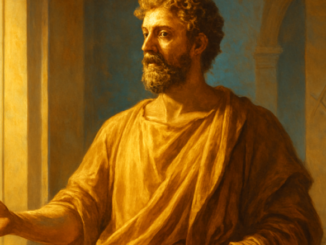
Marcus Aurelius statue symbolizing Masonic presence and self-reflection
Marcus Aurelius – Freemasonry & Connection

Marcus Aurelius on the Here and Now: Freemasonry & Connection

You probably know the feeling: you’re sitting in a conversation, but your mind has already drifted to tomorrow. You’re walking through the city, but you’re mentally somewhere else entirely. The present moment sometimes feels like the hardest place to truly inhabit. Marcus Aurelius, the Roman emperor-philosopher, wrestled with exactly the same challenge more than eighteen centuries ago. In the second book of his Meditations, he wrote some of his most penetrating thoughts on presence and connection. For Freemasons, his words touch on something essential — the question of how to be truly present, both for yourself and for your Brothers. The Burden of Past and Future Marcus Aurelius never wrote his Meditations for publication. They were private notes — a conversation with himself. That’s precisely why they feel so raw and honest. In Book II, he confronts himself with the waste that occurs when the mind constantly slips away to what has been or what is yet to come. He reminds himself that the present is the only thing anyone truly possesses. The past is gone, the future uncertain. Only this moment offers space for action, for growth, for genuine connection. This wasn’t idle philosophizing. For Marcus Aurelius, it was […]

A symbolic path leading back to familiar ground representing Masonic loyalty
Philosophy & Ethics

Return and Loyalty: What a Football Transfer Teaches About Ethics

A seasoned 37-year-old footballer returns to the country where his career began. Some call it sentiment; others see a calculated move. But behind every homecoming lies a deeper question: what does it mean to return to your origins? And what does that choice reveal about someone’s character? When Dutch club NEC announced the return of a Serbian midfielder to Nijmegen, it offered a surprising mirror for an age-old ethical question — one that stands at the very heart of Freemasonry. The Outside View: Romance or Calculation? For the average football fan, a transfer like this stirs mixed feelings. Is this a veteran looking to perform one last trick on familiar turf? Or a seasoned professional eager to prove his worth in a league he knows inside out? The cynic sees a marriage of convenience: the club gains name recognition; the player gets game time. The romantic sees a man returning to his roots — to the place where it all started. These two readings coexist without either being entirely right or wrong. The outside world tends to judge quickly. We search for motives, hidden agendas, the self-interest lurking behind every decision. That impulse is profoundly human, but it often says […]

Ancient stone path symbolizing Cathar spirituality and inner purification
Spiritual Traditions

Cathar Spirituality: Lessons in Inner Purification Today

Imagine standing before the mirror one morning, asking yourself what you truly want to contribute to the world today. That brief moment of reflection — however fleeting — touches on something that medieval Cathar spiritual practitioners understood centuries ago. They sought purity in a world saturated with distraction and material temptation. Although their movement was crushed in the thirteenth century, their insights into inner growth remain remarkably relevant. For Freemasons, who likewise devote themselves to personal refinement, these ancient practices offer concrete tools for everyday life. Who Were the Cathars and What Made Them Spiritually Remarkable? The Cathars — sometimes called “the Pure Ones” — were a religious movement that flourished between the eleventh and fourteenth centuries in southern France and northern Italy. Unlike the mainstream Christianity of their era, they placed personal spiritual experience above ecclesiastical authority. Their central conviction was that the material world stood as an obstacle to spiritual growth. This belief translated into an ascetic way of life built on simplicity, honesty, and compassion. What stands out about Cathar spirituality is its practical approach. It was never about abstract theological debate but about daily choices. What do you eat? How do you speak to others? What […]

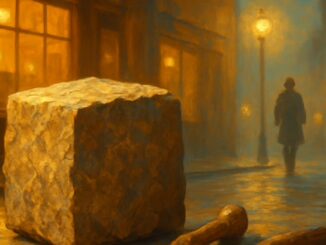
Rough ashlar stone and chisel symbolizing Masonic character building
Personal Development & Leadership

Violence in Public Spaces: How to Build Character in Chaos

A pleasant evening out can turn into a nightmare in an instant. Recent reports of violent assaults at public venues remind us that danger can strike anywhere — even in places where we feel completely safe. These events shake us to the core and raise uncomfortable questions: How do you respond when life suddenly turns violent? What does that moment reveal about who you truly are? In Freemasonry, the shaping of character plays a central role — especially for those moments when everything falls apart. This article offers practical tools to strengthen your inner compass. The Unexpected Moment as a Mirror Nobody plans to become a witness or victim of violence. Yet it happens — on the street, in a bar, in places where we feel secure. It is precisely in these unexpected moments that our true character surfaces. Not the person we like to think we are, but the person we actually become when there is no time to think. In Freemasonry, this principle is expressed through the symbol of the “rough ashlar.” Every person begins as an unworked block of stone — full of potential, but also full of imperfections. Life itself, with all its shocks and challenges, […]

Cup of coffee on a quiet harbor dock at sunrise with sailboats in the background
Personal Development & Leadership

Morning Coffee in the Harbor: Stillness as a Mirror for the Soul

Steam curls upward from the cup cradled between my hands. In the harbor, the boats lie still — finally still. After days of relentless wind, the morning has turned so soft that you can hear the water lapping gently against the hulls. As I take my first sip, engines begin to rumble all around me. One by one, sailboats leave the shelter of the harbor, heading home. And I remain seated, watching the departure of others, wondering: what does this moment actually reveal about who I am? The Boat or the Man It is a question seafarers often ask when the weather turns: can the boat handle this? But anyone who is honest knows that the real question is a different one entirely. It is rarely about the strength of the vessel. It is about the person at the helm. Can you withstand the wind, the uncertainty, the unknown waiting beyond the horizon? For the past few days, everyone stayed in port because conditions were too fierce. Not for the boats — for the souls steering them. This distinction touches something essential. In Freemasonry, we speak of working the rough ashlar, of shaping character and personality through labor upon oneself. […]

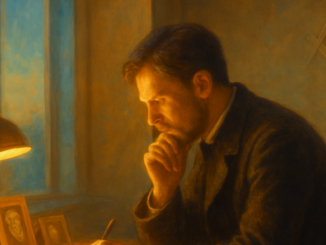
Candidate writing his personal life story for a Freemasonry committee
Joining & The Path Within

The Life Story for the Committee of Inquiry in Freemasonry

In Freemasonry, the personal life story plays a significant role in the admission process. When a candidate is invited to write his life story for the Committee of Inquiry, it is far more than a mere formality. It is an opportunity to pause and reflect on personal choices, motivations, and experiences. This document not only gives the committee insight into who the candidate truly is — it also offers the writer himself a powerful moment of self-reflection. What Is the Purpose of the Life Story? The life story helps the committee get to know the candidate on a deeper level. Freemasonry is fundamentally about personal growth and the willingness to work on oneself. The life story provides insight into what the candidate has experienced, what drives him, and how he views himself and the world around him. For the candidate, it serves as a tool to better understand his own motivation. Why did he knock on the door of the lodge? Which life experiences have shaped him into the person he is today? By putting these reflections on paper, a deeper connection with his own inner quest often emerges. What Should It Include? There is no fixed structure for the […]