A pleasant evening out can turn into a nightmare in an instant. Recent reports of violent assaults at public venues remind us that danger can strike anywhere — even in places where we feel completely safe. These events shake us to the core and raise uncomfortable questions: How do you respond when life suddenly turns violent? What does that moment reveal about who you truly are? In Freemasonry, the shaping of character plays a central role — especially for those moments when everything falls apart. This article offers practical tools to strengthen your inner compass.
The Unexpected Moment as a Mirror
Nobody plans to become a witness or victim of violence. Yet it happens — on the street, in a bar, in places where we feel secure. It is precisely in these unexpected moments that our true character surfaces. Not the person we like to think we are, but the person we actually become when there is no time to think.
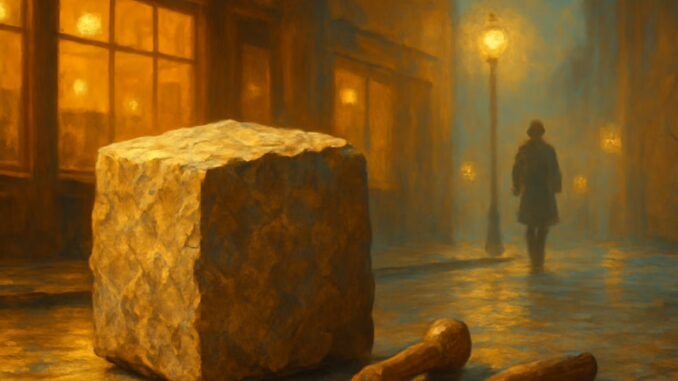
In Freemasonry, this principle is expressed through the symbol of the “rough ashlar.” Every person begins as an unworked block of stone — full of potential, but also full of imperfections. Life itself, with all its shocks and challenges, serves as the chisel with which we shape ourselves. A violent confrontation is one such moment of shaping, however painful it may be.
Three Response Patterns Under Pressure
When confronted with sudden violence, people generally respond in one of three ways. Recognizing your own pattern is the first step toward conscious growth.
Freeze: Your body and mind temporarily shut down. This is not cowardice — it is an ancient survival response hardwired into our biology.
Flight: You seek safety for yourself and possibly others. In many situations, this is the wisest course of action.
Fight: You engage the threat, physically or verbally. Sometimes necessary, often risky.
None of these responses is inherently right or wrong. What matters is the awareness that follows: What did I do, and why? This reflection is where character building begins.
The Masonic Practice of Self-Reflection
After every Lodge meeting, Freemasons take time for contemplation. They ask themselves questions such as: “Did I act in alignment with my values today?” and “Where did I fall short?” This habit of regular self-reflection prepares the mind for moments of crisis — not by rehearsing specific scenarios, but by cultivating inner clarity.
Know thyself. Master thyself. Shape thyself.
This ancient adage, rooted in the Temple of Delphi and cherished by Freemasons worldwide, offers a practical framework. Knowing yourself means understanding how you react under pressure. Mastering yourself means learning to guide that reaction. Shaping yourself means improving after every experience.
Concrete Steps for Inner Resilience
How do you build a character that holds firm when the world around you collapses? Below are practical exercises you can apply daily — inspired by centuries-old Masonic practices, but accessible to everyone.
The Evening Review
Each evening, take five minutes to review your day. Ask yourself three questions: What was I proud of? What am I ashamed of? What would I do differently tomorrow? Write down your answers. After a month, you will begin to see patterns that help you understand yourself more deeply.
The Breath Anchor
Train yourself to take three deep breaths before reacting in stressful situations. This sounds simple, but it requires practice. Start with small irritations — a traffic jam, a rude comment. Over time, you build an automatic response that can serve you even in extreme circumstances.
The Circle of Influence
After a shocking event, it is tempting to ruminate over everything you could not control. Imagine drawing a circle in your mind. Inside that circle, place only the things you could actually influence: your own reaction, your choices, your words. Everything outside that circle, you consciously release. This prevents unnecessary guilt and directs your energy toward growth.
From Victim to Architect of Your Own Life
Anyone who experiences violence may feel powerless. That feeling is understandable and deserves space. But Freemasonry teaches that we never have to remain entirely at the mercy of our circumstances. How we process an experience and integrate it into our life story — that remains in our own hands.
This does not mean we should minimize violence or rush to forgive those who harmed us before we are ready. It means we can take ownership of our inner response. Every day, we choose anew who we want to become — even after the darkest nights.
The rough ashlar does not become a perfect cube in a single blow. It is patient, daily work — a little smoothing here, a little polishing there. Violence leaves scars, but scars can also become signs of strength. They remind us of what we have endured, and that we are still standing.
When the world confronts us with its darkest sides, we face a choice — not over what happens to us, but over who we become afterward. The practices of self-reflection, breath control, and focusing our energy on what we can influence are not magic solutions. They are tools, much like the mallet and chisel of the stonemason. Pick them up, use them daily, and discover that your character is not defined by what happens to you, but by what you do with it. In that truth lies freedom — even after the blackest night.
Copyright text & image: devrijmetselaar.nl
Texts are based on the ideas and content of the author of devrijmetselaar.nl, reviewed, corrected, and supplemented with the assistance of OpenAI. Images are created based on the ideas of the author of devrijmetselaar.nl using OpenAI/DALL-E.
Frequently Asked Questions
How does Freemasonry help develop character for handling dangerous situations?
Freemasonry uses the symbol of the 'rough ashlar' to teach that every person begins as unworked potential that is shaped through life's challenges and experiences. Through regular self-reflection practices and the principles of 'Know thyself, Master thyself, Shape thyself,' Freemasons develop inner clarity and awareness that prepares them mentally for crisis moments. This continuous cultivation of character strength helps members respond thoughtfully rather than reactively when facing unexpected danger.
What are the three natural responses to sudden violence according to Masonic teachings?
Freemasonry recognizes that people typically respond to sudden violence in one of three ways: freeze (a natural biological survival response), flight (seeking safety for oneself or others), or fight (engaging the threat). None of these responses is considered wrong—what matters is the self-awareness and reflection that follows the experience. This reflection is where genuine character building and growth begins.
How can I practice the Masonic approach to self-reflection in my daily life?
Freemasonry teaches that regular contemplation and self-questioning strengthen your inner compass for moments of crisis. You can adopt the simple practice of evening review, taking just five minutes each day to reflect on questions like 'Did I act in alignment with my values today?' and 'Where did I fall short?' This daily habit of honest self-examination prepares your mind to respond with clarity and character when unexpected challenges arise.
Is the Masonic character-building approach only for Freemasons?
While Freemasonry has developed these character-building principles over centuries, the practical tools and exercises are accessible to everyone, regardless of membership. The article emphasizes that these time-tested Masonic practices can be applied by anyone seeking to strengthen their inner resilience and develop the kind of character that remains steadfast during life's most difficult moments.

Be the first to comment