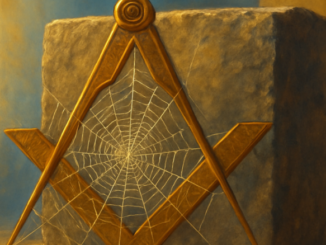
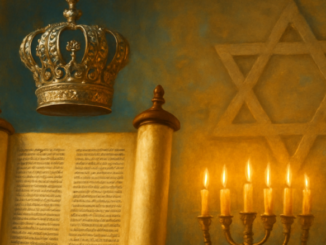
Masonic square and compass with Hebrew text symbolizing Shemot and liberation
Judaism

Shemot and Freemasonry: The Power of Names and Liberation

In a hushed lodge room, a voice reads out names. Not just any names, but names of generations — of ancestors, of people who built and who fell, who knew bondage and who found freedom. The Mason listening feels how each spoken word carries weight, how a name is far more than a collection of letters. This is the essence of Shemot, the second book of the Torah, which opens in the Jewish tradition with the words “And these are the names.” It is a book about liberation, about building something sacred, and about the transformation of a people learning what it truly means to be free. What Lies Behind a Name? In the Hebrew language, every word carries a deeper resonance. Shemot — literally “names” — does not begin with dramatic events but with a simple enumeration of the sons of Jacob who descended into Egypt. On the surface, this reads like a dry genealogy. But in the rabbinical tradition, it conveys a fundamental lesson: every person counts, and every name carries an entire world within it. Jewish wisdom teaches that a name reveals someone’s essence — their destiny and character. For Freemasons, this resonates deeply. The act of […]

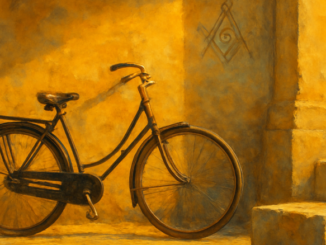
Bicycle workshop symbolizing resilience and Masonic character in uncertain times
Personal Development & Leadership

Character in Times of Crisis: Masonic Lessons from Uncertainty

Somewhere in the Netherlands, a bicycle mechanic stands quietly in his workshop, absorbing the news. For thirty years, he repaired Batavus bicycles — he knew every bolt and nut by heart. Now, uncertainty looms over the parent company, and he finds himself asking: what remains when the ground shifts beneath your feet? This isn’t just a question for employees and customers. It’s a question Freemasonry has been posing for centuries: who are you, truly, when everything around you changes? When Certainties Evaporate Recent news about the uncertain future of the parent company behind the iconic Dutch bicycle brands Batavus and Sparta has sent shockwaves through thousands of lives. Workers fear for their jobs. Customers worry about warranties and spare parts. An entire network of suppliers and dealers holds its breath. In moments like these, a fundamental truth reveals itself: economic structures we assumed to be permanent turn out to be as fleeting as the seasons. For those initiated into Freemasonry, this situation raises a deeper question — one that goes beyond financial outcomes or legal restructuring. It’s a question about human character. How do you conduct yourself when the foundation shakes? Which part of you remains standing when external certainties […]

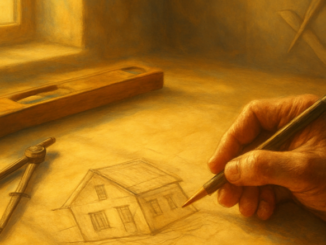
Masonic square and compasses resting on architectural blueprints of a home
Personal Development & Leadership

Home and Character: What Your House Says About Your Inner Build

Housing prices may be cooling off, but for many people, owning a home remains a distant dream. Yet beyond the economics, there’s a far more compelling question worth asking: what does it actually mean to dwell somewhere? And what does the place you build or buy reveal — not just about who you are, but about who you are becoming? Why Do We Long for a Home of Our Own? On the surface, the desire to own a home looks like a purely financial matter — security, equity, the freedom to shape your own space. But if we’re honest with ourselves, something deeper is at work. A house is more than walls and a roof. It is an expression of identity, a physical manifestation of how we wish to be seen and how we experience ourselves. In the Masonic tradition, each person is likened to a rough ashlar — an unfinished stone that must be shaped and refined. This metaphor extends beyond inner development. It also raises the question: what are you building with that stone once it’s been worked? What structure rises from the labor of your life? The home you inhabit, whether rented or owned, reflects something of […]

Symbolic ruins of a temple being rebuilt representing Masonic inner work
Christianity

Haggai and the Temple: Rebuilding as an Inner Calling

Imagine standing before the ruins of something that was once magnificent. Perhaps it’s a building, perhaps a relationship, perhaps a part of yourself you’ve long neglected. The foundations are still there, but the glory has faded. What do you do? Turn away and walk on — or pick up the first stone and start again? The brief biblical book of Haggai, just two chapters long, poses exactly this question. And the answers it offers resonate with striking power through the symbolism that Freemasons have cherished for centuries. A Prophet Standing Between Rubble and Possibility Haggai emerged during one of the most pivotal moments in the history of the Jewish people. After decades of exile in Babylon, a remnant of the nation returned to Jerusalem. What they found was a devastated city — and what struck them most deeply was the sight of Solomon’s Temple lying in ruins. This was no ordinary building. It was the spiritual heart of their community, the place where heaven and earth met in their experience of the divine. Yet despite their return, something curious happened. Instead of rebuilding the Temple, the people turned their attention to their own houses. They made their private dwellings comfortable […]

Jonah emerging from the whale as a symbol of Masonic transformation
Christianity

Jonah and the Whale: A Masonic Journey to Self-Knowledge

In the eighth century before the Common Era, a short but powerful story emerged within the Hebrew tradition: the Book of Jonah. Spanning just four chapters, it tells of a prophet who flees his divine calling, is swallowed by a great fish, and ultimately comes to a profound reckoning with himself. For centuries, this tale has captivated people not only as a religious text but as a timeless allegory about human resistance and the difficult path toward self-acceptance. For Freemasons, the Book of Jonah offers a surprisingly rich source of recognition and reflection. A Prophet in Flight The story opens with a clear command: Jonah must travel to Nineveh to warn its inhabitants about their moral decay. Nineveh was the capital of the Assyrian Empire at the time — a powerful and feared city notorious for its cruelty. Rather than obey, Jonah boards a ship sailing in the opposite direction, heading for Tarshish, believed to have been a trading port at the very edge of the known world. His flight is not mere cowardice. It is a deeper refusal to confront his own calling. Historically, the story reflects the tension that existed between the Israelites and their neighbors. The Assyrians […]

Ancient temple ruins symbolizing rebuilding and Masonic transformation
Christianity

Second Chronicles: The Temple as a Living Symbol of Rebuilding

Imagine a structure that is destroyed time and again, yet keeps rising from the dust. Not just a building of stone and timber, but a living symbol of hope, resilience, and the human longing to connect with something greater. Second Chronicles — the fourteenth book of the Old Testament — tells precisely this story. It chronicles kings who fall and rise, a temple that is built, neglected, and rebuilt. But look deeper, and you’ll find more than history: this book speaks to the eternal human task of building ourselves. The Temple: More Than Stone and Mortar In Second Chronicles, the Temple of Jerusalem occupies center stage. Originally erected by King Solomon, it is described with breathtaking precision. Every pillar, every ornament, every golden vessel has its designated place. But what does such meticulous detail truly signify? Why would an ancient text devote so much attention to architectural specifications? The answer lies in the symbolic layer beneath the concrete. The Temple is not merely a house of prayer. It is a reflection of the cosmos — a meeting point between heaven and earth, between the divine and the human. For anyone familiar with Masonic symbolism, this resonates deeply. The lodge itself […]

Temple of Solomon pillars representing Masonic symbolism and inner growth
Christianity

First Kings: The Temple as a Blueprint for Your Inner Life

Imagine you’re finally starting that great project you’ve been dreaming about for years. The building blocks are ready, the plans have been drawn, but now the real work begins. That must have been exactly how King Solomon felt when he received the charge to build the Temple. In the Book of First Kings, we find far more than a story about stone and cedar — we encounter a deeper truth about how to build something lasting, something greater than yourself. A Kingdom in Transition First Kings opens with the close of an era. King David — the shepherd who rose to become a ruler — passes his mantle to his son Solomon. This moment of succession is more than a political handover. It is a deeply human turning point: the moment you receive the torch from those who came before you and realize that the responsibility is now yours alone. You may recognize this feeling from your own life. A mentor stepping aside, a parent letting go, a role that suddenly falls on your shoulders. In every transition like this, there is both fear and possibility. When Solomon is given a choice, he does not ask for wealth or power. […]

Symbolic river scene representing Masonic brotherhood and self-sacrifice
Personal Development & Leadership

Self-Sacrifice and the Deepest Meaning of Brotherhood

Sometimes a story stops you in your tracks. A mother pulls her children to safety from a river’s current, only to be swept away herself. In that split second, she made a choice that touches the very essence of what it means to live for another. As Freemasons, we recognize in such moments something that reaches beyond words — something that strikes at the heart of brotherhood. The Choice No One Wants to Face You may have asked yourself what you would do in a life-or-death situation. Not as a theoretical exercise, but when the water is literally rising around you. Most of us, thankfully, know such moments only from stories or films. Yet it happens every day, somewhere in the world: someone faces a choice where their own life hangs in the balance in order to save another. What this mother did on the banks of the Waal River in the Netherlands was not a calculated decision. It was a response that rose from the deepest layer of her being — a place where love and responsibility merge into something greater than the individual. In Freemasonry, we call this the bond that reaches beyond words or rituals: the brotherhood […]

Stone foundation being built symbolizing Masonic inner kingdom building
Christianity

Second Samuel: Building an Inner Kingdom Stone by Stone

Imagine that after years of preparation, you finally receive the responsibility you’ve been working toward. A new leadership role, your own business, or perhaps parenthood. The question that arises isn’t just how you’ll fill that role — it’s who you want to be within it. Second Samuel, the tenth book of the Old Testament, tells exactly this kind of story. It chronicles the establishment of a kingdom, but its symbolism reaches far beyond political power. Read through the lens of Freemasonry, and it unfolds as a guide for building an inner kingdom — stone by stone. The Heart of Second Samuel: From Warrior to Builder Second Samuel covers the reign of King David, from his anointing to the later years of his rule. Where the first book centered on the struggle for recognition, this sequel explores what happens after that recognition has been won. David conquers the city that would become his capital. He brings the Ark of the Covenant to its resting place and receives a promise that will endure across generations. But the book also reveals his deeply human weaknesses: moral failings, family conflicts, and the anguish of loss. For the Freemason, this narrative follows a familiar pattern. […]

Ruined temple stones with light breaking through symbolizing Masonic rebuilding
Christianity

Lamentations and Freemasonry: Building After Destruction

You probably know the feeling: something valuable has been lost, and the void left behind seems impossible to bridge. A relationship, a dream, a certainty you always took for granted. In moments like these, you wonder whether anything new can ever grow on the rubble of what once was. The ancient Book of Lamentations speaks to exactly this kind of devastation — and yet, hidden within its raw poetry lies a surprising message that has inspired Freemasons for centuries: it is precisely in the ruins that rebuilding begins. A City in Ruins, a Soul in Mourning Lamentations is a collection of five poems describing the destruction of Jerusalem. Written after the fall of the city in 586 BCE — when the Temple was razed and the people driven into exile — the texts are raw, unpolished, and filled with despair. Streets that once bustled with life lie abandoned. The Temple, the spiritual heart of an entire people, is reduced to scorched stone. But here is something remarkable: these laments are not chaotic wailing. They follow a strict alphabetical structure — an acrostic in which each verse begins with a successive letter of the Hebrew alphabet. In the midst of the […]