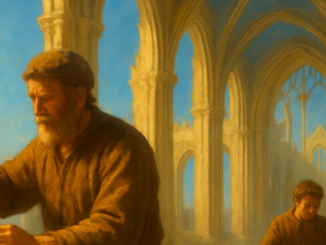
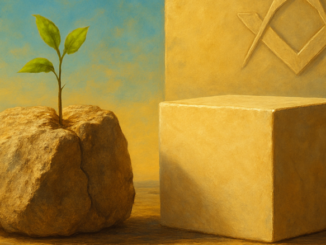
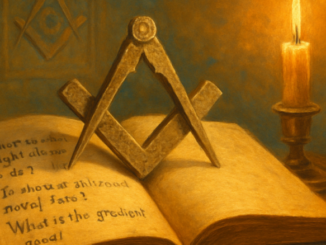
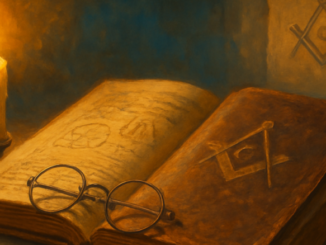
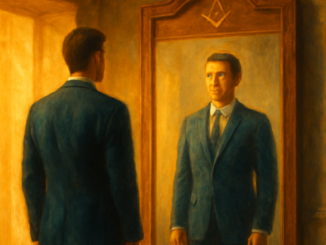
Freemason contemplating philosophical questions in a symbolic lodge setting
Philosophy & Ethics

Agnosticism as a Way of Life: The Questioning Freemason

Agnosticism is often mistaken for indifference or an inability to make up one’s mind, but nothing could be further from the truth. It is a deliberate philosophical stance — one that acknowledges certain questions may never be definitively answered. For the Freemason, who is constantly rearranging the building blocks of his inner life, this attitude offers remarkably fertile ground. The answer is not what matters most; what matters is the courage to keep asking the question. The Origins of Agnosticism The term “agnostic” was coined in the nineteenth century by British scientist Thomas Henry Huxley, who sought to express the idea that certain metaphysical truths lie beyond the reach of human knowledge. The Greek prefix “a” means “without,” and “gnosis” means “knowledge” — literally, without knowledge. But this bare translation fails to capture the richness of the concept. Agnosticism is not intellectual laziness; it is a sincere recognition of the limits of human understanding. Throughout the centuries, countless thinkers have wrestled with the question of what we can truly know about the transcendent, about the origins of existence, about what lies behind the veil of observable reality. The agnostic position refuses to answer these questions with certainties that cannot be […]

Masonic symbols representing the agnostic search for truth and meaning
Philosophy & Ethics

Agnosticism and Freemasonry: The Art of Not Knowing

What if the answer to life’s greatest questions isn’t a definitive yes or no, but an honest “I don’t know”? Agnosticism makes room for exactly that kind of intellectual humility. Far from being a position of weakness, it takes genuine courage to acknowledge that some truths may lie beyond our reach. In Freemasonry, we find a remarkable kinship with this philosophical stance — not as doctrine, but as a living practice of seeking without the pretense of final answers. What Does Agnosticism Actually Mean? The word “agnostic” has its roots in Greek: “a” means without, and “gnosis” means knowledge. An agnostic is, quite literally, someone who acknowledges that certain knowledge — particularly about the existence of a higher power or the ultimate purpose of the universe — may be fundamentally unattainable. This is not intellectual laziness. It is a deeply considered epistemological position. The agnostic doesn’t claim that truth doesn’t exist, but rather that we as human beings may lack the tools to fully grasp it. The term was first coined in the nineteenth century by the British biologist Thomas Henry Huxley, who grappled with the question of how we can truly know what we think we know. Since then, […]

Cathedral foundation stones symbolizing Masonic stewardship and sustainability
Philosophy & Ethics

Sustainability as Philosophy: The Freemason as Steward

Imagine this: a cathedral whose first stone was laid by someone who knew they would never live to see it finished. Medieval master builders didn’t work for themselves — they worked for generations yet to come. In an age where sustainability is largely defined by carbon targets and climate goals, Freemasonry invites us to ask a deeper question: what does it truly mean to build for eternity? The Operative Roots of Sustainable Thinking Freemasonry traces its origins to the guilds of stonemasons and master builders. These craftsmen didn’t build disposable architecture. Every stone was carefully selected, every joint crafted to endure for centuries. This wasn’t romantic idealism — it was necessity. A cathedral that collapsed meant the end of a reputation, and often the end of a life. When Freemasonry evolved from operative to speculative in the eighteenth century, it carried this mentality with it. The physical building blocks became symbols, but the philosophy remained intact: what you create must stand the test of time. Not because someone forces you, but because you understand that your work is part of something far greater than yourself. Stewardship: A Forgotten Philosophical Concept In modern sustainability discussions, you rarely hear the word stewardship. […]

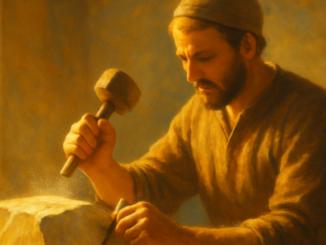
Rough and smooth ashlar stones symbolizing Masonic sustainability philosophy
Philosophy & Ethics

Sustainability as a Philosophical Foundation in Freemasonry

Picture this: two Freemasons sit together after a lodge meeting. One is an engineer specializing in circular economy. The other is a classicist, steeped in ancient philosophy. The conversation turns to sustainability. What follows is not a debate but a shared exploration — a dialogue that touches on what it truly means to bear responsibility for what comes after us. This conversation, reconstructed in essence, forms the foundation of this article. The Question That Opens Everything “What is sustainability, really?” the classicist asks, stirring his coffee with a pensive look. “We use the word as if everyone knows what it means. But is it a goal? A method? A moral duty?” The engineer smiles. “In my field, we talk about systems that can sustain themselves without exhausting their resources. But you’re right — that’s merely the technical definition. The philosophical question runs deeper: why should we care about what happens a hundred years from now?” This is precisely the question Freemasons have grappled with for centuries, albeit in different terms. The construction of the symbolic temple is not a project for a single lifetime. It is a work that transcends generations. The Stone You Leave Behind “Are you familiar with […]

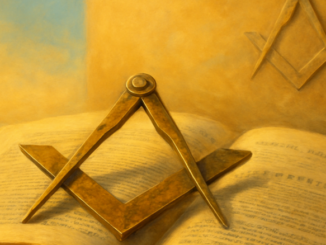
Masonic square and compasses with rough ashlar symbolizing ethical growth
Philosophy & Ethics

Ethics Without Dogma: The Philosophical Quest of Freemasons

In an age where ethical debates are increasingly reduced to rigid positions and online discussions devolve into moral tribunals, a pressing question emerges: is there still room for nuanced thinking about right and wrong? Freemasonry offers a surprising answer — not by prescribing ready-made rules, but by practicing an ancient philosophical method in which doubt is not a weakness, but the first step toward wisdom. The Return of the Great Ethical Conversation The societal debate about ethics has reached a new intensity. From artificial intelligence to climate justice, from genetic modification to the boundaries of free speech — moral convictions clash at every turn. What stands out is not so much the diversity of opinions, but the absolute certainty with which they are proclaimed. Nuance has become a rare commodity. Yet there is a place where the ethical conversation unfolds differently. Within the privacy of the Masonic lodge, the goal is never to have the final word, but to reach the next insight. Here, philosophy is not practiced as an academic discipline but as a living art. The question is not who is right, but what does justice to human dignity. Philosophy as a Tool, Not a Doctrine Freemasonry has […]

Vrijmetselarij - Vrijmetselaarsliteratuur en inspiratie: boeken en bronnen die je laten groeien
Philosophy & Ethics

Masonic Literature & Inspiration: Books and Sources for Growth

Freemasonry is not a one-time experience — it is a lifelong journey of self-awareness, personal development, and meaningful connection. Beyond what happens inside the lodge, Masonic books, essays, and online resources form an invaluable treasury of knowledge and inspiration. Masonic literature opens doors to deeper understanding and offers practical tools to better grasp the symbolism, rituals, and philosophy of the Craft — and to apply them in your everyday life. Whether you are a curious seeker, a newly initiated Entered Apprentice, or a seasoned Master Mason, Masonic literature enriches your thinking, sharpens your intuition, and encourages meaningful reflection. Why Masonic Literature Is So Powerful Freemasonry is not about dogmas or fixed truths. It is about asking questions, seeking meaning, and shaping your own path. Books and written works support that process. They provide not only historical context but also philosophical frameworks, interpretations of symbolism, and personal testimonies from fellow travelers on the same road. Think of Masonic literature not as a textbook, but as a toolbox: you choose the tool that fits your journey at any given moment. Recommended Books to Get Started If you are new to Freemasonry or looking to build a solid foundation, several accessible books serve […]

Vrijmetselarij - Vrijmetselarij en filosofie: ontdek hoe denken en handelen samenkomen
Philosophy & Ethics

Freemasonry and Philosophy: Where Thought Meets Action

Philosophy might conjure images of dusty lecture halls, dense textbooks, or endless debates about the nature of existence. But within Freemasonry, philosophy takes on an entirely different character. It’s not abstract theorizing — it’s a living, practical way of engaging with the world. Freemasonry and philosophy walk hand in hand, forming a powerful path toward personal growth and deeper meaning. What Role Does Philosophy Play in Freemasonry? Philosophy in Freemasonry isn’t a standalone academic exercise. It’s woven into the very fabric of the craft’s ritual and symbolic system. Every degree, every ceremony, and every symbol is steeped in philosophical insight. The goal isn’t to promote a single school of thought, but to cultivate a way of life rooted in reflection, openness, and ethical awareness. Freemasonry invites you to live philosophically — to search for meaning, to embrace doubt, and to ask questions that go beyond the surface. Most importantly, it challenges you not only to think about your answers but to embody them in the way you act and treat others. Inspired by Great Thinkers Throughout the centuries, Freemasonry has drawn inspiration from some of history’s most influential philosophical traditions. Here are a few that have left a lasting mark […]

Vrijmetselarij - Freemasonry and Ethics – Building Your Best Self
Philosophy & Ethics

Freemasonry and Ethics – Building Your Best Self

In a world increasingly driven by superficiality and snap judgments, many of us long for something deeper. For integrity. For authenticity. For a way to grow — not just in knowledge, but in character. This is where Freemasonry enters the picture: an ancient system that doesn’t just offer philosophical insights, but actively invites you to put them into practice. And nowhere is that invitation more powerful than in the realm of ethics. What Does Ethics Mean in Freemasonry? Ethics in Freemasonry is not a rigid set of rules or dogmas. It functions as a living compass — an inner guide that is continually sharpened through self-reflection, ritual, and fraternal interaction. You don’t learn a standard answer to what is “good.” Instead, you learn to ask yourself the right questions: What are my true intentions? What is my responsibility? How can I contribute to the greater good — in my community, my work, my relationships? Freemasonry invites you to see ethics not as abstract theory, but as something you experience, apply, and develop in your daily life. Ethics Begins with Yourself Freemasons work with a powerful symbol: the rough ashlar. This unworked stone represents your unrefined self — full of potential, […]

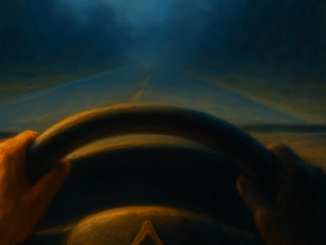
Steering wheel symbolizing choice and Masonic responsibility in life
Philosophy & Ethics

Guilt and Responsibility: A Symbolic Masonic Exploration

A steering wheel in human hands. A split second. A decision that can never be undone. When the news reports that someone is suspected of causing a fatal accident, it touches the deepest questions about human responsibility. What does it mean to carry guilt? How do our actions relate to our conscience? These questions reach far beyond the courtroom — they strike at the very foundation of what it means to be human. The Steering Wheel as a Symbol of Choice Every vehicle has a steering wheel, a rudder, a lever that sets its direction. This seemingly practical instrument carries a deeper meaning. The steering wheel represents the human will — our capacity to chart a course through life. Whoever takes the driver’s seat accepts a responsibility that extends far beyond their own destination. In Freemasonry, this symbolism finds a parallel in the image of the Master Builder wielding his tools. Just as the square and compasses are instruments for maintaining right angles and proper measure, the steering wheel is an instrument for giving direction. Both demand awareness, attention, and the recognition that every movement carries consequences. The Inescapable Question of Guilt When a tragic accident occurs, the question arises […]

Symbolic representation of a man of good repute in Freemasonry
Philosophy & Ethics

Man of Good Repute: What It Means in Freemasonry

In Freemasonry, the concept of being a “man of good repute” comes up frequently. It is one of the core values of the fraternity and often raises questions among those considering membership. What does it truly mean to be a man of good repute? And why does Freemasonry place such importance on this principle? A Moral Foundation A man of good repute is someone who lives with integrity and genuine respect for others. This does not mean you need to be perfect or that you can never make mistakes. Rather, it speaks to a moral foundation — honesty, reliability, and a sincere commitment to self-improvement. Freemasonry is a brotherhood in which members work together toward personal growth and the betterment of society. To achieve this, mutual trust is essential. A man of good repute is someone the brethren can rely on, someone they can place their confidence in, and someone who takes the values of Freemasonry seriously. Not About Status or Power It is important to understand that being a man of good repute has nothing to do with social status, wealth, or influence. It is entirely about character. Whether you are a carpenter, a lawyer, or an artist, what […]

Masonic square and compasses symbolizing Freemasonry and brotherhood
Philosophy & Ethics

What Is Freemasonry? A Journey of Self-Discovery and Brotherhood

This article on Freemasonry has been recently updated to give you the clearest and most current picture of what this ancient brotherhood is all about. Whether you’re encountering Freemasonry for the first time or have been curious for a while, read on to discover what it truly means to be a Freemason — and why a growing number of people are choosing this path of self-discovery. Freemasonry has a way of sparking curiosity. Perhaps you’ve heard references to rituals, symbols, or lodges. Maybe you’ve been drawn in by the rich history and the air of mystique that surrounds it. But what is Freemasonry really, and why do people choose to join this centuries-old brotherhood? What Is Freemasonry? At its core, Freemasonry is a philosophy of life that places personal development and ethical living at the center of everything it does. It is not a religion, but it welcomes people of all faiths — provided they acknowledge the existence of a higher power, however they choose to define it. Freemasons work on becoming better versions of themselves through symbolism, ritual, and the bonds of brotherhood. The goal? To become a better person. Not better than someone else, but better than the […]

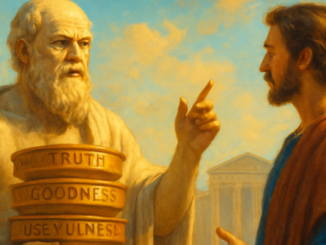
The Three Sieves of Socrates illustrated as a Masonic moral lesson
Philosophy & Ethics

The Three Sieves of Socrates: A Masonic Lesson in Speech

In Freemasonry, our meetings are a blend of serious reflection and warm fellowship. Brothers chat over coffee before the lodge opens, share a drink during the interval, and linger after the closing to enjoy each other’s company. During the formal proceedings — the lodge work itself — the tone is generally more earnest, with lectures and presentations that challenge us to think deeply. Yet even then, there is always room for a well-timed anecdote. Recently, a brother shared the parable of the Three Sieves of Socrates, and it struck a chord with everyone present. It is a short story, but one well worth reflecting upon — because its lesson is as relevant today as it was in ancient Athens. The Story of the Three Sieves Socrates, the great Greek philosopher, was walking through the streets of Athens one day when a man rushed toward him in a state of excitement. “Socrates! I must tell you something about your friend who—” “Hold on a moment,” Socrates interrupted. “Before you go any further, have you passed the story you want to tell me through the Three Sieves?” “The Three Sieves? What three sieves?” the man asked, bewildered. “Let us try,” Socrates suggested […]

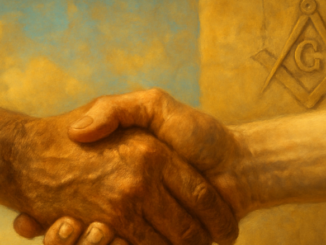
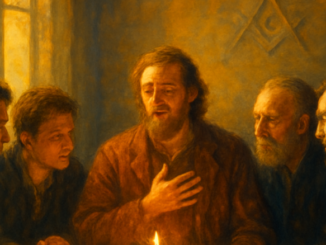
Freemasons sharing a heartfelt discussion about love during a Lodge comparition
Philosophy & Ethics

Love in Freemasonry: Selflessness and Brotherly Connection

This personal account of a Masonic comparition on the theme of love remains remarkably relevant, even more than two years after the event. The openness with which brothers spoke about what love means to them strikes a universal, timeless chord. What follows is an honest reflection on selflessness, vulnerability, and the extraordinary power of brotherly connection. What Is a Comparition? I was told afterward that I had just experienced a real comparition — a traditional Masonic discussion in which brothers openly share their thoughts following the presentation of a paper. That said, the remark was quickly qualified. The previous comparition had been about the concept of the Daimon and had taken the form of a guided group discussion after an introduction by two brothers. This evening was different because the originally planned event had been cancelled at the last moment. Fortunately, one of the brothers had a Tracing Board paper — what we call a “Bouwstuk” — far enough along that he could present it. The subject: love. Love Is Everywhere Love is everywhere, and without it, there is really no life. You see love in all its forms — between partners, in the devotion someone shows to a pet, […]