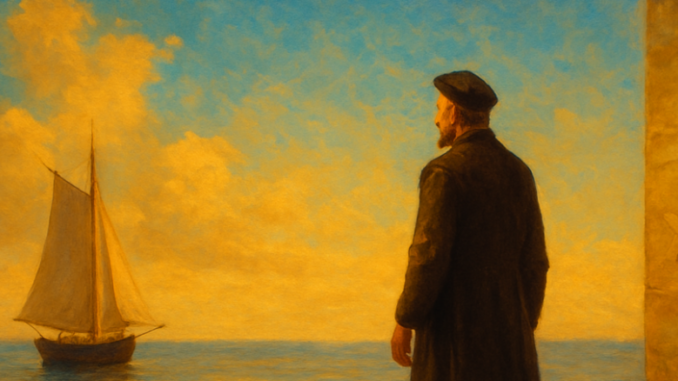
Picture a man sitting at his writing desk in a round tower room, high above the Dordogne valley. Evening is falling, but the work he had planned lies untouched. Michel de Montaigne twirls his quill between his fingers and smiles. Rather than finally beginning the postponed task, he starts writing about postponement itself. The result is one of his shortest yet sharpest essays: ‘Of Procrastination,’ the fourth essay in the second book of his famous collection — and a text with striking relevance to anyone who has ever delayed the work that matters most.
What Is This Essay About?
In ‘Of Procrastination,’ Montaigne examines a universal human tendency: the habit of deferring decisions and actions until tomorrow. The essay is brief compared to many of his other pieces, but its message is all the more powerful for its concision. Montaigne asks why we are so inclined to push forward what needs to be done, and what this habit reveals about our relationship with time, mortality, and our own capacity to act.
The title alludes to the Latin word cras — tomorrow — a word Montaigne associates with an attitude of perpetual deferral. He warns that those who always count on tomorrow forget that tomorrow is never guaranteed. In doing so, the essay touches on one of the great themes of classical philosophy: the finitude of human existence and the necessity of living consciously in the present.
Classical Sources and Historical Examples
As in nearly all his essays, Montaigne draws generously from classical antiquity. He references thinkers such as Cicero and Seneca, both of whom wrote about the dangers of procrastination. Seneca, the great Stoic philosopher, insisted that postponing the good life is the greatest waste a person can commit. Montaigne shares that conviction and makes it concrete through historical anecdotes about rulers and military commanders who lost crucial opportunities — or invited disaster upon themselves — through delay.
A recurring theme involves leaders who put off vital decisions until it was too late. Montaigne shows how procrastination is not merely a personal failing but can have far-reaching consequences when it touches public affairs. At the same time, he shows genuine understanding of the human tendency: he explicitly presents himself as someone who suffers from it too. That honesty, so characteristic of Montaigne, makes the essay relatable and approachable rather than preachy.
The Core Insight: Acting in the Present
The central message of the essay can be distilled into a simple but profound idea: the only moment in which a person can truly act is now. Montaigne argues that the postponement of deeds and decisions often stems from fear, laziness, or a misplaced confidence that the future will always be available to us. Those who continually lean on tomorrow surrender control over their own lives.
Montaigne teaches us that procrastination is no innocent habit — it is a silent denial of our own mortality and a flight from the responsibility to live fully in the present moment.
In this, Montaigne aligns with the Stoic tradition of Marcus Aurelius, who in his Meditations likewise hammered on the importance of the present moment. But where Marcus Aurelius spoke from the vantage point of imperial duty, Montaigne writes as a man among men — vulnerable, doubting, and filled with self-knowledge. It is precisely this combination of philosophical depth and personal honesty that makes this short essay so enduringly valuable.
Decisive Action and the Masonic Tradition
The themes of this essay resonate powerfully with the philosophy practiced within Freemasonry. In the ritual work of a Lodge, the Freemason is continually invited not merely to reflect on virtue and self-improvement, but to act on those reflections. The commitment to work on the ‘rough stone’ is not an abstract intention for some future date — it is a daily assignment, here and now.
The working tools that stand at the center of Masonic ritual all point to concrete action: the gavel strikes now, the chisel shapes now, the square measures now. There is no working tool called ‘tomorrow.’ This emphasis on the present moment connects the Lodge to the very insights Montaigne articulated so clearly. The Mason who postpones the work on himself is not building the temple — he is leaving his stone unworked.
Procrastination as a Moral Question
Montaigne elevates procrastination far beyond the everyday realm of productivity tips. For him, the postponement of what is good is a moral issue. The person who knows what is right but fails to act is not neutral — he is actively choosing stagnation. In the Masonic tradition, this is recognized in the concept of duty: not duty as a burden, but as a conscious choice to take responsibility for one’s own conduct and for the community.
Jacques Amyot, whose French translation of Plutarch so deeply influenced Montaigne, also wrote about the necessity of immediate action as a mark of character. Montaigne absorbed that idea and made it personal. He addressed himself not to kings or statesmen, but to every reader who recognizes in themselves the constant deferral of what ought to be done.
What This Essay Still Has to Tell Us
In an age when distraction lurks everywhere and procrastination has become almost a cultural phenomenon, Montaigne’s message is more relevant than ever. His essay reminds us that the quality of a human life is not determined by the plans we make, but by the deeds we perform. The tower room in which Montaigne wrote was not an ivory tower of detached contemplation — it was a workshop where thinking and doing converged.
For anyone drawn to Freemasonry, this essay offers a remarkably clear starting point. It invites self-examination without self-flagellation, honesty without cruelty, and above all the courage to begin today with what might otherwise never come tomorrow.
‘Of Procrastination’ is a small essay with a great lesson. Montaigne’s gentle but unflinching reminder that the only real moment is now echoes through centuries of Stoic wisdom and finds a living home in the Masonic commitment to daily labor on the self. The gavel does not wait for tomorrow. Neither should we. Whatever work lies before you — whether on the rough stone of your character or in the Lodge of your life — the time to begin is always, and only, now.
Copyright text & image: devrijmetselaar.nl
Texts are based on the ideas and content of the author of devrijmetselaar.nl, reviewed, corrected, and supplemented with the assistance of OpenAI. Images are created based on the ideas of the author of devrijmetselaar.nl using OpenAI/DALL-E.
Frequently Asked Questions
What is Montaigne's main argument about procrastination in his essay?
Montaigne argues that procrastination, the habit of deferring decisions and actions until tomorrow, is a universal human tendency that reveals our problematic relationship with time and mortality. He warns that those who constantly postpone forget that tomorrow is never guaranteed, emphasizing the necessity of living consciously in the present and acting now rather than endlessly delaying what matters most.
What classical sources does Montaigne use to support his views on procrastination?
Montaigne draws extensively from classical antiquity, referencing thinkers such as Cicero and Seneca. Seneca, the Stoic philosopher, was particularly influential in Montaigne's thinking, insisting that postponing the good life is the greatest waste a person can commit. Montaigne also uses historical anecdotes about rulers and military commanders who lost crucial opportunities through delay.
Why is Montaigne's essay on procrastination considered relatable despite its serious subject matter?
Montaigne's essay is relatable because he explicitly presents himself as someone who suffers from procrastination too. Rather than taking a preachy or judgmental tone, he demonstrates genuine understanding of the human tendency to delay. This honesty and self-awareness, characteristic of Montaigne's writing style, makes the essay approachable and allows readers to see themselves reflected in his observations.

Be the first to comment