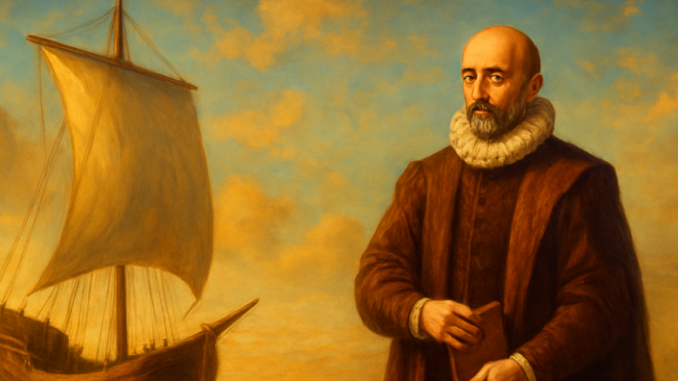
We have all experienced it: someone delivers a passionate speech about honesty or integrity, and yet something feels off. The words are right, but the speaker fails to convince. Michel de Montaigne wrote about this very phenomenon in the sixteenth century. In his brief but incisive essay on how the preaching of virtue can itself become a vice, he dissected the gap between words and deeds. But where did these insights come from? Which philosophers and intellectual traditions shaped his thinking? This article traces the sources behind this essay and shows how their wisdom remains strikingly practical today.
The Stoic Legacy: Seneca as Teacher
Montaigne read the Roman philosopher Seneca with extraordinary care. In Seneca’s letters to Lucilius, he found a recurring theme: the dangers of hollow rhetoric. Seneca warned that philosophers who speak beautiful words without living by them ultimately discredit philosophy itself. For Seneca, philosophy was never an academic exercise — it was a daily practice of self-improvement.
This Stoic emphasis on congruence — between inner conviction and outward action, between belief and behaviour — resonated deeply with Montaigne. In his own era, he observed how preachers and moralists lost themselves in theatrical performances about virtue while their own conduct was anything but virtuous. The Stoics taught him that genuine wisdom reveals itself through humility, not display.
Plutarch and the Art of Discernment
Alongside Seneca, Montaigne drew extensively from the work of Plutarch. This Greek writer of the first century AD wrote at length about how to distinguish genuine philosophers from mere talkers. In his Moralia, Plutarch describes how certain orators overwhelm their audiences with eloquent words while failing to practise a single grain of the wisdom they profess.
Plutarch offered concrete guidance: pay attention not only to what someone says, but to how they live. Watch the small things — daily choices, reactions under pressure, moments when no one is looking. Montaigne took this advice to heart and applied it throughout his essays. He wrote not to impress, but to investigate honestly, including his own shortcomings and contradictions.
Skepticism: Doubt as a Virtue
Another major influence on Montaigne was Pyrrhonian skepticism. This philosophical tradition, named after the Greek thinker Pyrrho, held that absolute certainty is unattainable. For the skeptics, humility about one’s own knowledge was not a weakness but a form of wisdom.
Anyone who claims to possess the whole truth betrays by that very claim that they have not yet found it.
Montaigne saw in skepticism an antidote to the self-assured preachers of his time. When we acknowledge that we do not know everything, we become more cautious about condemning others. The virtue preacher who proclaims with certainty how others should live lacks precisely this humility. Montaigne’s famous motto — Que sais-je? (What do I know?) — springs directly from this tradition, and it remains one of the most powerful philosophical questions ever posed.
Renaissance Humanism: The Individual as Measure
Montaigne wrote at the heart of the Renaissance, a period in which thinkers returned to classical sources to place the human being back at the centre of inquiry. Humanists such as Erasmus had paved the way with their sharp criticism of false piety in church and society. Erasmus’s In Praise of Folly remains a masterful satire on those who preach wisdom while practising foolishness.
Renaissance humanism gave Montaigne the intellectual freedom to question traditions critically. He was not obliged to follow the authorities of church or state without examination. Instead, he could investigate, compare, and judge for himself. This is precisely why his essays feel at once deeply personal and universally relevant: he wrote from lived experience, rooted in centuries of accumulated wisdom.
Practical Application: Recognising the Gap
What can you do with this philosophical background in practical terms? Start with yourself. Ask honestly: does what I say align with how I live? The goal is not perfection — perfection does not exist. The goal is honesty about the gap. Montaigne was never ashamed of his own contradictions. He described them openly, precisely because he understood that pretence is far worse than imperfection.
Then apply the same lens to others. When someone tells you how you ought to live, look at how they themselves live. Not to condemn, but to weigh and evaluate. The Stoics, Plutarch, and Montaigne all hand you the same practical instrument: words are cheap; actions are what count.
Historical Context: The French Wars of Religion
Montaigne wrote during the French Wars of Religion, a period of extreme religious polarisation. Catholics and Protestants fought each other with weapons and words. On both sides, preachers whipped up their followers with rhetoric about virtue and piety, even as the country was drowning in blood and chaos.
In this context, Montaigne’s essay acquires an extra edge. He witnessed how virtue preaching could degenerate into a justification for violence. Those who regard themselves as morally superior can easily dehumanise others. The philosophical traditions Montaigne consulted offered him a way out of this moral quagmire: humility, self-examination, and the recognition that no one holds a monopoly on truth.
Key Takeaways from Montaigne’s Philosophical Sources
Seneca: Genuine wisdom reveals itself through actions, not words.
Plutarch: Judge people by how they live, not by their speeches.
Pyrrhonian skepticism: Be humble about the limits of your own knowledge.
Renaissance humanism: Have the courage to question traditions critically and think for yourself.
Montaigne’s essay on virtue preaching is not an isolated observation — it is the product of deep engagement with Stoic, skeptical, and humanist thought. Seneca taught him the value of congruence between word and deed. Plutarch gave him tools for discernment. Skepticism granted him the gift of intellectual humility. And Renaissance humanism gave him the freedom to think independently. Together, these philosophical roots make the essay timelessly relevant. For as long as there are people who tell others how to live while failing to examine their own lives, Montaigne’s quiet challenge will continue to resonate — in Masonic lodges, in public discourse, and in the private chambers of self-reflection.
Copyright text & image: devrijmetselaar.nl
Texts are based on the ideas and content of the author of devrijmetselaar.nl, reviewed, corrected, and supplemented with the assistance of OpenAI. Images are created based on the ideas of the author of devrijmetselaar.nl using OpenAI/DALL-E.


Be the first to comment