Vrijmetselarij - Vrijmetselarij en Maatschappij – Persoonlijke Groei met Impact op de Wereld om je Heen
Freemasonry & Society

Freemasonry and Society – Personal Growth With Real-World Impact

Freemasonry is often described as an inner journey — a path toward self-knowledge, moral depth, and ethical living. But that journey doesn’t end at the lodge door. In fact, that’s where it truly begins. Freemasonry and society are inseparably linked, because what good is personal growth if it has no positive influence on the world around you? Society as the Real Proving Ground Freemasonry is not an escape from reality. It’s a training ground for reality. Inside the lodge, you work on yourself: you learn to think symbolically, examine your own behavior, and sharpen your moral compass. Then you take those insights with you — into your workplace, your family, your friendships, and your community. Precisely because Freemasons engage in regular, structured self-reflection rooted in ethics and ideals, they tend to be conscious and engaged citizens. They continually ask themselves: How can I contribute? What can I improve? From Self-Awareness to Social Impact Freemasonry and civic engagement go hand in hand. The underlying idea is simple: by improving yourself, you also improve the world. This philosophy plays out in tangible ways: Freemasons frequently dedicate their time to community organizations, from local neighborhood initiatives to international humanitarian projects. Many lodges support […]
Symbolic image of hands connecting across time representing Masonic brotherhood
Freemasonry & Connection

Montaigne on Connection: When Our Soul Reaches Beyond

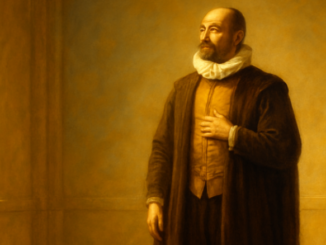
An old man sits in silence beside the bed of his dying friend. No words remain — only the warmth of a hand resting upon a hand. And yet he feels something within himself reaching beyond this moment, beyond this room, beyond his own boundaries. It is precisely this mystery that the sixteenth-century philosopher Michel de Montaigne sought to understand: how our emotions can transcend our bodies and our time, and what that reveals about the nature of human connection. The Question Montaigne Asked In his essay Whether Our Emotions Carry Themselves Beyond Us, Montaigne examines a riddle that every thoughtful person has encountered at some point. Why do we worry about what will happen after we die? Why do we feel sorrow now for future losses, or joy for events we will never live to witness? It seems irrational, yet it is profoundly human. Montaigne suggests that the soul is not imprisoned within the boundaries of the body or a single lifespan. It extends outward — toward others, toward the future, toward ideals larger than ourselves. This insight touches a fundamental truth about human existence: we are not isolated islands. Our emotions, our worries, and our dreams weave themselves […]

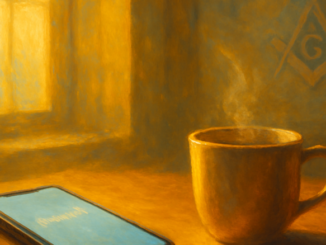
Freemason checking a thoughtful text message from a Brother at dawn
Personal Development & Leadership

Brotherhood Beyond the Screen: The Power of a Simple Message

It’s quarter to seven in the morning. A middle-aged man stands at the kitchen counter, coffee in one hand, phone in the other. The screen lights up. A short message from a Brother: “Thinking of you tonight. Good luck with that meeting.” Three sentences. No secret code, no hidden agenda. Just one person thinking of another. And yet, something deeper lives beneath this ordinary gesture. The Phone as an Extension of the Temple When we think of Freemasonry, we tend to picture grand lodge buildings, centuries-old rituals, and symbolic working tools. But what happens when the lodge doors close and Brothers return to their everyday lives? The connection doesn’t stop at the threshold. In our age, it also expresses itself through the most commonplace communication tool we know: the short text message on our phones. It’s tempting to dismiss such a message as trivial — a fleeting notification among dozens of others. But look a little deeper. When a Brother sends another Brother a word of encouragement before a difficult conversation, a congratulation on a personal milestone, or simply asks how he’s doing, that is not idle communication. It is an echo of what happens inside the lodge, translated into […]

Vrijmetselarij - What Happens at a Lodge Night? A Look Inside Freemasonry
Symbolism & Rituals

What Happens at a Lodge Night? A Look Inside Freemasonry

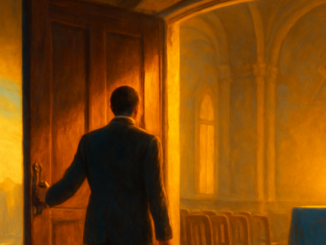
Freemasonry is not easily explained — it has to be experienced. And nowhere is that experience more vivid than during a lodge night. Many people outside the Craft wonder: “What actually happens behind those doors?” The reality is more surprising, more peaceful, and far more meaningful than most people imagine. A lodge night is not a meeting. It’s not a lecture. It’s not a networking event. It is a ritual moment — carefully structured, carried by symbolism, silence, and meaning. Let’s step across the threshold together and discover what a typical evening looks like. The Transition from the Outside World A lodge night begins before you even enter the temple. Freemasons consciously leave the outside world behind. No phones, no distractions, no news headlines or to-do lists. Just the here and now. The moment you step into the temple marks a transition from the mundane to the symbolic. This shift is essential. Only when you free yourself from the noise of daily life does space open up for deeper reflection. Ritual as a Meaningful Experience At the heart of the evening lies the ritual. It’s not a show and not some secret spectacle — it is a carefully crafted experience […]

Vrijmetselarij - Why Do People Become Freemasons?
Personal Development & Leadership

Why Do People Become Freemasons?

Why do people become Freemasons? There is no single answer to this question, and it is certainly not a decision anyone takes lightly. Freemasonry is not a hobby or a networking club. It is a deliberate choice — a path that often emerges from an inner longing for something more. More depth, more authenticity, more meaning. Personal Growth Begins With a Turning Point For many people, Freemasonry enters their lives during a period of deep reflection. On the outside, everything may look just fine — a busy life, a successful career, a full calendar. But inside, something gnaws at them. Questions arise that refuse to go away: Is this really it? What am I truly contributing? Freemasonry is not an answer to a problem. It is an invitation to inner growth. It is not about status or achievement, but about awareness, self-knowledge, and moral development. Freemasons choose to keep learning — not by consuming, but by reflecting. Brotherhood Without Masks In a world full of superficial connections, people crave genuine human encounter. Within the walls of a lodge, it does not matter who you are on the outside. Your profession, your status, your background — none of it matters. What […]

Golden oliebollen on a plate symbolizing Masonic tradition and brotherhood
Symbolism & Rituals

The Oliebol: Tradition, Symbolism and Masonic Brotherhood

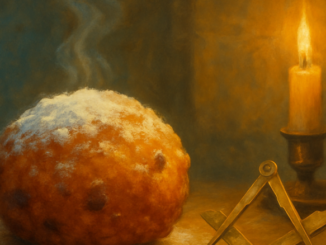
There is no Dutch New Year’s Eve without the irresistible aroma of freshly fried oliebollen — golden, round balls of dough that mark the turn of the year. This humble pastry is a symbol of tradition, abundance, and togetherness. For Freemasons, however, the oliebol can carry an even deeper meaning: a celebration of brotherhood and the cyclical nature of life itself. A Rich History The oliebol — literally “oil ball” — traces its roots back to at least the 17th century in the Netherlands. During the cold, dark winter months, this nourishing fried dough provided warmth and energy in harsh times. In Freemasonry, where symbolism plays a central role, the round shape of the oliebol can remind us of the circle of life and the eternal quest for perfection. Just as Freemasons work on the rough ashlar to shape it into a perfect cube, the oliebol invites us to transform the ordinary — a simple batter of flour, yeast, and milk — into something extraordinary. It is a small but powerful metaphor for the transformative work at the heart of the Craft. The Ritual of Baking Baking oliebollen is remarkably similar to performing a ritual. The batter must be carefully […]

Historical Masonic refugee shelter symbolizing Freemason humanitarian aid
Freemasonry & Society

Refugee Relief – A Freemason Initiative Worth Remembering

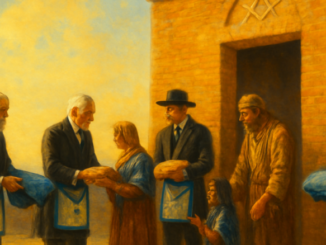
The 19th and 20th centuries saw wave after wave of political and economic refugees, driven from their homelands by war, revolution, and persecution. In these turbulent times, organized aid was scarce and often inadequate. Freemasons — bound by their commitment to brotherhood and humanity — felt a deep obligation to act. Drawing on their resources, networks, and philosophical principles, they established shelters that offered not just a roof over people’s heads, but genuine hope for a better future. Freemasonry and the Call to Help Refugees The core ideals of Freemasonry aligned naturally with the cause of refugee relief. Brotherhood, one of the Craft’s most fundamental principles, holds that all human beings are equal and interconnected. Helping those who had been displaced was a direct expression of this universal vision. Charity — not as an abstract concept, but as hands-on, practical assistance — gave Freemasons a way to translate their beliefs into tangible action. And by supporting refugees in rebuilding their lives, Masons also contributed to strengthening the communities that welcomed them, embodying the Masonic dedication to building a better society. The Practical Role Freemasons Played Freemasons were instrumental in establishing and sustaining refugee shelters across Europe and beyond. Their contributions […]

A warmly set dinner table symbolizing Masonic brotherhood and hospitality
Personal Development & Leadership

The Table as Sacred Space: Brotherhood Begins With Hospitality

The evening sun slants across the outdoor tables. Across the water, boats rock gently at their moorings. A waiter refills the glasses with quiet care, as though performing a small ceremony. As the voices of dinner companions blend with the rustle of the wind, something emerges that is difficult to name but instantly recognizable: connection. Why do some places feel like coming home, even when you’ve never been there before? And what does that tell us about how we bring people together? Returning to the Same Table, Year After Year There are places you return to — not out of obligation, but because something draws you back. Perhaps it’s a restaurant by the water where the warmth feels genuine, where the staff remembers your name, and where every dish is prepared with love. It’s no accident that such places are rare. Hospitality is an art that cannot be captured in a recipe. It demands sincere attention to the other person and a willingness to set aside your own needs in service of whoever sits at your table. When you return to the same place year after year, you build a tradition without realizing it. That repetition creates expectation, but also […]

Freemasons shaking hands symbolizing Masonic brotherhood and fraternal unity
Personal Development & Leadership

Brotherhood vs Friendship: What Makes Freemasonry Unique?

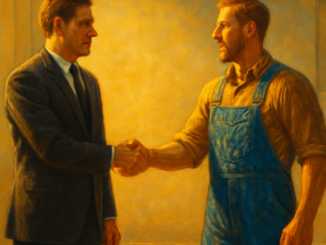
In conversations about Freemasonry, the word “brotherhood” comes up time and again. Some people equate it with close friendships or social networking, and while there is certainly overlap between the two concepts, brotherhood in the Masonic sense is something fundamentally different. Understanding this distinction sheds light on what makes Freemasonry such a unique and enduring institution. What Is Friendship? Friendship is a personal bond between people who appreciate and support one another. It grows from shared interests, mutual respect, and genuine affection. Friends choose each other, spend time together, and share personal experiences that deepen their connection over time. Friendship is intimate yet voluntary — and often shaped by circumstance. Friends may come and go as careers shift, families grow, or life takes unexpected turns. This doesn’t diminish the value of friendship, but it does reveal its nature: it is personal, selective, and sometimes transient. What Is Masonic Brotherhood? Brotherhood within Freemasonry runs deeper than friendship. It is not a relationship that forms through shared hobbies or chance encounters — it is forged through a shared dedication to a set of ideals. Freemasons are bound to one another as brothers regardless of differences in background, social status, or personal beliefs. […]

A rough ashlar stone and gavel symbolizing Masonic personal transformation
Symbolism & Rituals

The Sledgehammer Blow: A Masonic Moment of Revelation

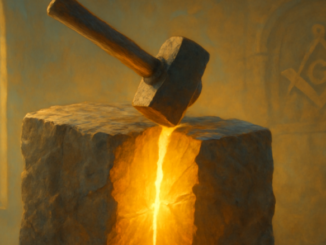
In Freemasonry, we work on ourselves. The idea is simple yet profound: by chipping away at our own rough stone, we strive to become better human beings. Every now and then, a presentation or discussion in Lodge strikes so deeply that it changes something inside you. I experienced such a moment — a sledgehammer blow of emotion that came from nowhere and left me transformed. Working on the Rough Stone Freemasonry is often described as a journey of self-improvement. We see ourselves as rough ashlar stones, and through reflection, ritual, and fellowship, we gradually shape ourselves into something more refined. Some Lodge meetings pass quietly, offering gentle lessons. Others hit you like a sledgehammer. The meeting I want to share with you was very much the latter. Some time earlier, I had attended a presentation about the concept of the Daimon — an idea I will write about separately another time. That earlier talk planted a seed in my mind, one I didn’t fully understand at the time. But seeds have a way of growing in the dark, and what happened next proved exactly that. The Blow That Came from Nowhere During a subsequent Lodge meeting, we had a round […]