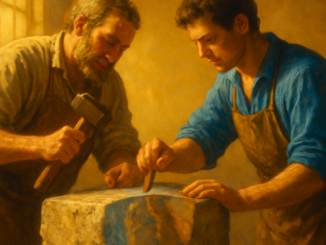
Rough ashlar stone symbolising human inconstancy and Masonic self-knowledge
Content & Summary

Montaigne on Inconstancy: Man as an Unfinished Symbol

There is an ancient symbol familiar to most Freemasons: the rough ashlar. It represents the human being in an unworked state — raw, unpolished, and full of contradictions. When we turn to the very first essay in Michel de Montaigne‘s celebrated Essais, that image becomes almost tangible. In his reflections on the inconstancy of our actions, the sixteenth-century philosopher holds up a mirror in which we recognise ourselves as beings who constantly shift, act in contradiction with themselves, and in doing so reveal something profoundly human. The Core Idea: Man as a Riddle to Himself Montaigne opens his essay with a sharp observation. Anyone who tries to judge another person by their actions runs into a fundamental problem: our deeds constantly contradict one another. The same individual who acts with courage today may prove a coward tomorrow. The person who gives generously now may cling to possessions later. For Montaigne, this is not a moral failing — it is simply the human condition laid bare. He resists the temptation to sort people into fixed categories. Labels like “brave” or “greedy” do not do justice to reality. We are not statues of virtue or vice, but living beings who move, stumble, […]

Rough ashlar stone being shaped symbolizing Masonic character building
Personal Development & Leadership

Personality and Choices: What a Verdict Teaches About Character

Sometimes you come across a news story that stays with you all day — not because of the shocking details, but because of the questions it raises. A court hands down a nine-year prison sentence, and you find yourself wondering: how does a person end up there? What happens within someone’s personality that leads them down a path ending in a courtroom? These questions go far beyond the legal realm. They touch on something fundamental about who we are and who we have the potential to become. The Rough Stone Within Each of Us In Freemasonry, we work with the symbol of the rough ashlar — the unfinished stone. This is no arbitrary metaphor. The rough stone represents the human being as they enter the world: full of potential, but also full of imperfections, sharp edges, and hidden cracks. The Freemason’s task is to work that stone — to chisel, smooth, and polish it. Not to achieve perfection, because that is an illusion, but to become more conscious of your own shape and the choices you make. When you read about a tragic event where lives have been permanently altered by violence, an uncomfortable question surfaces: what happened to the […]

Masonic level and plumb line symbolizing balance and self-reflection
Symbolism & Rituals

When Conviction Capsizes: The Hidden Risk of Certainty

Here is a paradox worth contemplating: the more firmly convinced you are of something, the greater the danger of capsizing. Not figuratively — literally. The word “convinced” traces back to nautical language, where it described a ship carrying so much weight on one side that it listed dangerously, no longer responded to the helm, and risked rolling over at the first strong gust of wind. Certainty as a risk factor. Firmness as a source of instability. Isn’t that one of the most uncomfortable truths language has been quietly trying to tell us all along? Certainty Makes You Lose the Helm Let’s take that paradox seriously. In everyday speech, we say “I’m convinced” as though it’s a virtue — a sign of resolve and strength. We admire people who stand firm, who don’t budge an inch. But an old-time sailor would have raised an eyebrow at such admiration for imbalance. To him, being “over-convinced” wasn’t a badge of honor — it was a diagnosis. A ship that had shifted all its weight to one side was a ship in distress. The rudder rendered useless, the crew at the mercy of forces they could no longer steer against. The shift in meaning […]

A single candle flame symbolizing brief life, loss, and Masonic light
History

Prenatal Loss: How Grief Has Taken Shape Through the Ages

There is a kind of loss that has no grave, no farewell ceremony, and yet leaves a lifelong scar. When a child dies before it is born, it touches the deepest layers of human existence. History teaches us that every culture and every era has grappled with this particular grief — often in silence, sometimes through rituals that seem foreign to us today. Freemasonry, with its long tradition of engaging symbolically with life, death, and rebirth, offers a surprisingly meaningful perspective on this unspoken sorrow. The Paradox of Grief Without Memory How do you mourn someone you never knew, yet loved completely? This is the paradox that parents face after prenatal loss. In our contemporary culture, we are gradually becoming more open about this subject — but that was not always the case. For centuries, this kind of loss was dismissed, denied, or simply not recognized as legitimate grief. Yet history shows that people have always sought ways to give shape to this sorrow. In medieval monastic archives, we find references to special prayers for unbaptized children. Midwives had their own rituals, handed down from generation to generation, to help mothers cope with their grief. The need to mark loss […]

A rough ashlar stone symbolizing personal growth through crisis in Freemasonry
Personal Development & Leadership

What Our Crises Reveal About Who We Truly Are

Sometimes a person disappears — not just physically, but inwardly. A young athlete withdraws from the world, overwhelmed by pressure and expectations. When he returns, he speaks openly about regret and self-awareness. This kind of story raises questions that reach far deeper than the headline itself. What does a moment of crisis actually reveal about who we truly are? And how does a Freemason view such turning points in a human life? Why Do People Sometimes Vanish From the Stage? The outside world tends to see a disappearance as either a mystery or a scandal. A news article presents the facts, quotes bystanders, and searches for explanations. But anyone who looks at the story from the inside recognizes something different: a human being who could no longer function under the weight of the expectations placed upon him. Pressure, perfectionism, fear of failure — these are universal themes that can touch any one of us. For the outsider, such a disappearance is a news item. For the Freemason, it is a mirror. In the lodge, we learn that a person is never a finished work, and that every crisis contains the possibility of growth. Disappearing is not an ending — sometimes […]

Pen and rough stone symbolizing essay writing as Masonic inner work
Culture & Media

Essay Writing: The Art of Personal Argument in Freemasonry

You probably know the feeling. Something stirs within you — a thought that won’t let go, a subject that captivates your mind. You want to write about it, but where do you begin? An essay offers precisely that space: a form where your personal voice is not only welcome but essential, where you’re allowed to explore and doubt, and where you ultimately reveal something of yourself. In Freemasonry, we call this kind of work “building” for good reason. Let’s explore together how to shape such a written piece of work. What Exactly Is an Essay? The word “essay” comes from the French essayer, meaning “to try” or “to attempt.” And that says everything about what an essay truly is. It’s not a scientific proof, not a journalistic report, and not fiction. It’s an attempt to explore a thought, to weigh it, to get to the heart of it. You try to understand something by writing about it — not by pinning it down definitively. In the sixteenth century, the French philosopher Michel de Montaigne began writing short pieces in which he reflected on everyday subjects: friendship, education, death, habits. He called them essais — attempts, trials. Since then, the essay […]

Masonic gavel resting on a rough ashlar stone symbolizing justice and growth
Philosophy & Ethics

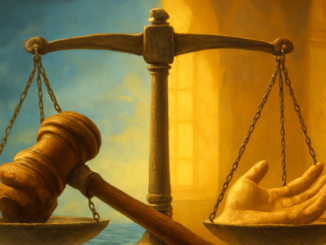
The Judge’s Gavel: Justice as an Inner Building Stone

A courtroom delivers its verdict. Twenty years in prison for an act of irreversible violence. The gavel strikes wood, and in that single blow, something resonates far beyond legal statutes and procedural formality. What does justice truly mean when we look beyond the courtroom walls? In Freemasonry, the gavel is one of the most powerful working tools — not wielded to condemn, but to shape. A recent high-profile sentencing invites us to reflect on the deeper layers of guilt, restoration, and the moral responsibility every human being carries within. The Gavel: An Instrument of Judgment and Formation In the courtroom, the judge wields a gavel to affirm a ruling. It marks a moment of finality — a decisive conclusion. But look a little longer at this gesture, and you’ll discover that the same instrument carries an entirely different meaning in other contexts. The stonemason uses his mallet to work rough stone, slowly and deliberately shaping something that is not yet finished. In the Masonic tradition, this gavel symbolizes the willpower with which we shape ourselves, chipping away at the imperfections of our character — not through force, but through patience and self-awareness. A twenty-year prison sentence for a violent crime […]

Rough ashlar being shaped into a perfect cube symbolising steadfastness
History

Twenty-Three Years of Criticism: Steadfastness as the Art of Living

Twenty-three years. It is a number that carries tremendous weight when it refers to criticism — relentless judgment from millions. A veteran of the football pitch spoke these words after a historic match, not as a complaint, but as a simple statement of fact. Within that plain observation lies a profound truth that reaches far beyond the sporting arena and touches one of humanity’s oldest questions: how do we build our character when the world never stops measuring us? The Number as a Mirror of Time Twenty-three years span nearly a quarter of a century. In that time, children become adults, kingdoms rise and fall, and the tectonic plates of collective consciousness shift beneath our feet. When someone says that criticism has been his constant companion for twenty-three years, he is not merely describing opposition. He is describing a shadow as faithful as the light that drives him forward. In the building art of the inner life, we know the principle of the rough ashlar that must be hewn into a perfect cube. Every blow of the hammer, every critical touch, contributes to the refinement of the material. But what happens when those blows never cease? When the chisel keeps […]

Cracked mirror reflecting a rough ashlar stone symbolizing Masonic character work
Personal Development & Leadership

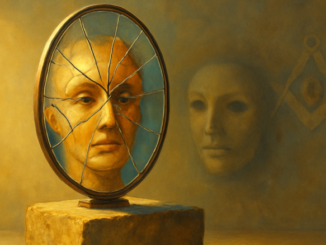
The Cracked Mirror: Character as Unfinished Architecture

A mirror that cracks no longer shows a true reflection. The glass is still there, the frame intact, but the image looking back at you is splintered, distorted, unreliable. This is how we might view those moments when someone’s actions stand in stark contradiction to the role they occupy. When the news confronts us with people who were given trust and then betrayed it, we are forced to sit with an uncomfortable question: what is personality, really? And can we ever fully know it — in others or in ourselves? The Mask and What Lies Behind It The word “personality” derives from the Latin persona, which originally referred to a theatrical mask. Actors in classical theater wore masks to define their roles. The mask was not meant to deceive — it was meant to clarify. It told the audience who this figure was and what to expect from him. And yet, buried in this etymology lies an unsettling truth: if personality is a mask, what lies behind it? In Freemasonry, this question occupies a central place, even if it is rarely stated so directly. The rough ashlar — the symbol of man at the beginning of his inner journey — […]

Cup of coffee on a quiet harbor dock at sunrise with sailboats in the background
Personal Development & Leadership

Morning Coffee in the Harbor: Stillness as a Mirror for the Soul

Steam curls upward from the cup cradled between my hands. In the harbor, the boats lie still — finally still. After days of relentless wind, the morning has turned so soft that you can hear the water lapping gently against the hulls. As I take my first sip, engines begin to rumble all around me. One by one, sailboats leave the shelter of the harbor, heading home. And I remain seated, watching the departure of others, wondering: what does this moment actually reveal about who I am? The Boat or the Man It is a question seafarers often ask when the weather turns: can the boat handle this? But anyone who is honest knows that the real question is a different one entirely. It is rarely about the strength of the vessel. It is about the person at the helm. Can you withstand the wind, the uncertainty, the unknown waiting beyond the horizon? For the past few days, everyone stayed in port because conditions were too fierce. Not for the boats — for the souls steering them. This distinction touches something essential. In Freemasonry, we speak of working the rough ashlar, of shaping character and personality through labor upon oneself. […]

Block of green soap symbolizing purification and inner work in Freemasonry
Symbolism & Rituals

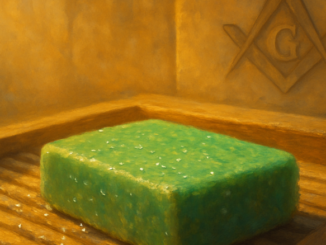
Green Soap: Purification as a Symbol for Inner Work

Tucked away in the cupboard beneath the kitchen sink sits an unassuming block. Yellowish-green, greasy to the touch, carrying a scent that calls to mind washdays at your grandmother’s house. Green soap. A product so ordinary that we scarcely give it a second thought. And yet, hidden within this simple cleansing agent lies a wealth of symbolism that teaches us about purification, transformation, and the daily labor we must perform upon ourselves. An Ancient Craft Green soap has a history stretching back well before the Industrial Revolution. In the Low Countries, it was made from vegetable oils and ash — a process that demanded patience and craftsmanship. Soap makers formed their own guilds, with their own rules, their own trade secrets, and their own hierarchy from apprentice to master. They understood that purification is never accidental; it is the result of careful labor and deep knowledge of one’s materials. In this respect, the soap maker’s craft bears striking parallels with other building traditions. Just as the stonemason works the rough ashlar, the soap maker transformed raw ingredients into something that cleanses and restores. The process itself — the slow saponification in which oil and lye become something entirely new — […]

An open empty wallet reflecting light as a symbol of Masonic self-reflection
Personal Development & Leadership

The Empty Wallet as Mirror: Wealth Beyond Numbers

A wallet. Leather, stitching, a slot for coins. We open it dozens of times a week, check its contents, calculate what’s possible. Reports keep telling us that a growing number of people struggle to make ends meet — even as wages rise. The numbers don’t match the feeling. And perhaps that disconnect is precisely the invitation to look deeper, beyond the figures, toward what wealth truly means for who we are. The Mystery of the Growing Gap Imagine a bucket. You fill it with more water than last year. Yet the bottom stays dry. Somewhere there’s a hole that grows along with the filling. This is the paradox many households experience: wages go up, but the sense of abundance never arrives. Economists point to inflation, rising fixed costs, and shifting consumption patterns. These explanations make perfect sense on paper. But there’s something no spreadsheet can capture. The wallet is more than an object. It’s a mirror. What we put into it — and how quickly it disappears — reveals something about our relationship with needs, desires, and the question of who we want to be. Financial pressure doesn’t just affect the bank account. It touches our personality, the way we […]

Open Bible showing the Book of Obadiah with Masonic square and compasses
Christianity

Obadiah: The Shortest Book With the Greatest Lessons on Pride

At just twenty-one verses, Obadiah is the shortest book in the Old Testament. Yet within that brevity lies a powerful message that has resonated across centuries. Where the casual reader might see an ancient text about a forgotten conflict, the searching mind discovers timeless wisdom about pride, downfall, and the path toward inner improvement. In this article, we place two perspectives side by side: the historical context of Obadiah and the symbolic meaning that Freemasons can recognize within it. The Historical World of Obadiah Obadiah directed his prophecy against Edom, a brother nation of Israel descended from Esau, the twin brother of Jacob. The text condemns Edom for its arrogance and for standing idly by while Jerusalem was plundered. The Edomites dwelled in rocky heights and believed themselves untouchable because of their geographic position. Their arrogance sprang from a false sense of security. For its original audience, this was a text of comfort and justice. They saw a brother nation that had abandoned them when it mattered most. The prophecy promised that pride would ultimately lead to a fall — a theme that runs throughout all of biblical literature. The message was clear: whoever exalts himself above others will eventually […]

Rough ashlar stone symbolizing personal growth and resilience in Freemasonry
Personal Development & Leadership

Chance and Vulnerability: Two Perspectives on Fate

A man falls asleep in his tent on a beach in the Netherlands. Morning approaches, the sea murmurs, and life seems peaceful. Then the unthinkable happens: a maintenance tractor drives over his tent. The news is shocking — not just for its tragedy, but for what it reveals about the fragility of human existence. How do we process such random events? And does it matter whether we have spent time consciously examining our own character? Two worldviews, two perspectives on the same brutal reality. The Outsider: Chance as Chaos For many people, an accident like this simply confirms the randomness of life. The world is unpredictable, even dangerous, and we are at the mercy of forces beyond our control. This response is deeply human and entirely understandable. We look for someone to blame, for explanations, for ways to reassure ourselves that something like this could never happen to us. The outsider — here meaning someone unaccustomed to systematic self-reflection — tends to experience fate as something purely external. It is something that happens to you, something you react to, but over which you have little influence. Personality is seen as more or less fixed: you are who you are, and […]

Football captain wearing armband leading team symbolizing Masonic leadership
History

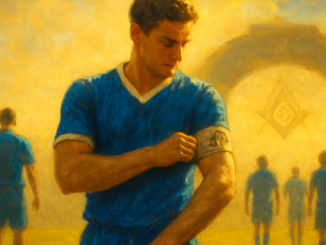
The Captain as Master Builder: Leadership on the Field

A green pitch, twenty-two players, and somewhere among them a figure who sets the direction. When a nation achieves a historic victory, all eyes turn to the captain — the armband, the gesture toward teammates, the calm gaze amid the chaos. In those moments, an ancient pattern unfolds, one that Freemasons recognize instinctively: the captain as Master Builder, someone who does not merely play but builds something far greater than any individual could alone. The Armband: A Symbol of Responsibility Anyone who has watched a football match knows the image of the captain’s armband. A simple strip of fabric, usually in the colors of the nation or the club, worn around the upper arm. At first glance, it seems unremarkable. But look deeper. That band distinguishes one player from the other ten. It is not a decoration — it is a commission. The one who wears it takes responsibility for the whole. In Freemasonry, we have comparable symbols of responsibility. The apron, worn by every Brother, serves as a reminder of labor and dedication. But the officers of a Lodge wear additional insignia: jewels, collars, specific regalia. These are not status symbols in the worldly sense. They are reminders of […]

Masonic mosaic pavement symbolizing unity of opposites and friendship
Symbolism & Rituals

Without Judgment: The Symbolism of the Extraordinary Friend

Imagine that the most valuable friendship in your life is one you never sought out — one that fits no category, defies every label, and forces you to reconsider all your definitions of human connection. Wouldn’t that be precisely the kind of bond that reveals the most about who you truly are? The Paradox of the Unnameable Some relationships resist classification. Not because they lack significance, but because they are so essential that every label falls short. Acquaintance? Too shallow. Friend? Too loaded with the expectations and conditions we unconsciously attach to the word. And yet, there is that person — someone with whom every conversation immediately plunges into depth, someone in whose presence the mask slips away and the real face emerges. Someone you met through chance, through loss, through a chain of circumstances no one could have planned. It is precisely this unplanned quality that makes the connection so pure. In Freemasonry, this experience finds expression in an ancient and powerful symbol: the rough ashlar that must be shaped. Not in isolation, but through interaction. The other person acts as chisel and mallet at once — not to wound, but to help us give form to who we […]

Ancient horn of anointing oil symbolizing inner calling and Masonic transformation
Christianity

First Samuel: Anointing Oil as a Symbol of Inner Calling

A small flask of oil. Ordinary, unremarkable. And yet, when the prophet Samuel pours that oil over the head of a simple shepherd, everything changes. The First Book of Samuel is far more than a chronicle of kings and battles. It reveals a deeper truth about calling, transformation, and the invisible forces that can reshape a person from within. For those who read with symbolic eyes, this ancient text opens a world that resonates profoundly within Freemasonry: the journey from darkness to light, from ignorance to insight. The Horn of Oil: More Than a Ritual Object Picture the horn — a tangible, physical vessel filled with oil pressed from olives. In the daily life of ancient Israel, oil was indispensable: fuel for lamps, nourishment for the body, a balm for healing. But when that same oil is poured over the head of a chosen one, it takes on an entirely different character. The anointing oil becomes a carrier of something that transcends the senses. It marks a transition, a transformation that cannot be seen but is deeply felt. In Freemasonry, we recognize similar moments. When a candidate is initiated, certain actions and objects may appear deceptively simple at first glance […]

Masonic gavel on a workbench symbolizing the cycle of growth and renewal
Christianity

Judges and the Cycle of Falling and Rising: Symbols of Growth

A hammer rests on the workbench. It is motionless, yet it carries within it the potential for both creation and destruction. In much the same way, the Book of Judges lies before us — a collection of stories about leaders who rise and vanish, about a people who fail and recover, fail and recover again. What does this ancient text tell us about the human soul? And how does the symbolism of this seventh book of the Old Testament mirror the path that every Freemason walks? The Cycle as an Archetypal Pattern The Book of Judges does not describe a linear history — it traces a spiral. The people turn away from their path, fall into oppression, cry out for help, and a leader emerges to deliver them. After a period of peace, the cycle begins anew. This pattern repeats itself twelve times, like a mantra carved into the very fabric of the text. For the Freemason, this cycle is deeply familiar. The rough ashlar is not shaped into a perfect cube in a single stroke. It is a process of failure and correction, of straying and returning to center. The cycle in Judges is not a sign of weakness […]

Masonic square and compasses symbolizing the balance of justice and wisdom
Freemasonry & Society

Justice and Retribution: Two Perspectives on Fairness

When news reaches us of a violent crime committed far from home, something ancient stirs within us. A life is taken, a suspect is arrested, and emotions ignite almost instantly. Calls for harsh punishment, outrage over injustice, a deep yearning for retribution. Yet alongside this visceral response, there exist traditions and communities that have looked at such moments differently for centuries — traditions that ask questions before passing judgment. This article explores two perspectives on justice: that of the outraged citizen and that of the searching Freemason. The Perspective of Outrage For most people, the first reaction to a violent crime is entirely understandable and deeply human: horror, anger, and an overwhelming desire for justice. When we hear that a fellow citizen has been killed in a distant land, we feel the pain as if the victim were someone we knew personally. The community closes ranks, the victim is given a face and a story, and the perpetrator becomes a symbol of the evil that must be fought. This perspective is rooted in a fundamental human need for order and safety. Society functions on the basis of shared agreements, and those who violate those agreements in the most horrific manner […]

Open Bible showing the Book of Hosea beside Masonic square and compasses
Christianity

Hosea and the Freemason: Two Perspectives on Faithfulness

The Book of Hosea occupies a remarkable place in the Hebrew Bible. Written by an eighth-century BCE prophet, it speaks of broken promises, unfaithfulness, and the possibility of restoration. But what happens when a biblical scholar and a Freemason each pick up the same text? Both approaches open windows onto deep symbolism — though from very different rooms. The Biblical Scholar Reads: A Covenant History For the biblical scholar, Hosea is first and foremost a historical document. The book emerged during a time of political instability, when the Northern Kingdom of Israel was caught between rival empires. The prophet received an extraordinary commission: he was to marry a woman who would be unfaithful to him. This marriage became a living metaphor for the relationship between the Divine and His people. The scholar analyzes linguistic structures, compares manuscripts, and situates the text within its original context. Unfaithfulness is understood here as idolatry — the straying toward foreign gods and political alliances. The academic approach seeks to uncover what the text meant for its original audience. Which cults were being criticized? Which historical events are reflected in the prophecy? The book closes with a promise of renewal, and the scholar examines how […]