
What does a toddler eating less sugar have to do with Freemasonry? At first glance, not much. But dig a little deeper and you touch one of the oldest ethical principles that philosophers and Freemasons alike have cherished for centuries: temperance. Recent research shows that children who consume less sugar in their early years reap the benefits well into old age — raising profound questions about how the choices we make today plant seeds for the future.
Why Would a Choice Made in Childhood Still Matter Decades Later?
This is exactly the question scientists set out to answer when they studied the long-term effects of sugar consumption in young children. The findings are striking: toddlers who ate little sugar had a significantly lower risk of chronic disease decades later. The body remembers, it turns out, the habits we learn early. But is this merely a biological fact, or does a deeper truth lie beneath?
Freemasonry would say yes — there is indeed a deeper truth here. The idea that small, seemingly insignificant actions can have far-reaching consequences sits at the very heart of Masonic thinking. The rough ashlar is not polished in a single blow but through continuous, patient labor. In the same way, temperance practiced in childhood lays the foundation upon which a healthy and balanced life can be built.
What Did the Ancient Philosophers Mean by Temperance?
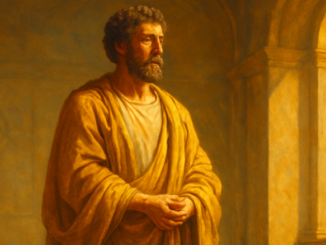
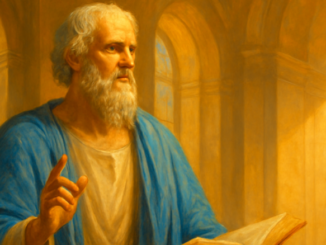
Aristotle, writing in the fourth century BCE, described temperance as one of the cardinal virtues. For him, it was the golden mean between excess and abstinence — not the complete renunciation of pleasure, but the art of finding the right measure. Plato went further still, arguing that temperance brings the soul into harmony, a prerequisite for both wisdom and justice. In The Republic, he describes how a well-ordered society depends on individuals who are able to govern their own desires.
The Stoics, among them Seneca and Marcus Aurelius, embraced and refined this line of thought. Seneca wrote that whoever fails to master his desires becomes a slave to his own impulses. Marcus Aurelius noted in his Meditations that the true strength of a person lies in the ability to say no to what harms him, even when short-term pleasure beckons.
How Does This Relate to Masonic Ethics?
Freemasonry has never let go of this classical wisdom. In the lodge, Brethren often speak of tempering the lower inclinations in favor of higher values. This is not a moralizing finger-wag but an invitation to honest self-examination. The Freemason asks himself: which habits serve my growth, and which ones hold me captive?
Temperance is not deprivation — it is the art of choosing today for the person you wish to become tomorrow.
This idea captures the essence of what the research on childhood sugar consumption invites us to consider. The parents who gave their children less sugar made a choice whose full effects only became visible decades later. They planted a seed of moderation without knowing what tree would grow from it. This is precisely what Freemasonry means by building the temple of humanity: every stone counts, even the invisible ones.
Is Temperance Outdated in an Age of Abundance?
A fair question. We live in a society where everything is available, where pleasure is one click away, and where restraint is sometimes seen as weakness. Yet it is precisely this abundance that makes temperance more important than ever. The philosopher Epicurus — often wrongly painted as a pure hedonist — understood this well. He argued that the highest pleasure lies not in the pursuit of ever more, but in the appreciation of the simple.
Freemasonry aligns closely with this view. In a world saturated with stimuli, the lodge offers a space for reflection. There, one learns that true wealth is found not in what you possess, but in what you can do without. The child who learns not to give in to every impulse develops an inner strength that will serve them for the rest of their life.
What Can We Learn from This — Even as Adults?
The beauty of this research is that it teaches us something not only about children but also about ourselves. Temperance is not a trait you either have or lack. It is a skill you can practice at any age. Freemasonry offers a practical framework for doing so: regular meetings where members reflect on their own conduct, rituals that invite contemplation, and a brotherhood that supports without judging.
Consider these principles that emerge from both the research and the Masonic tradition:
Temperance begins with awareness of your own patterns. Small adjustments produce large long-term effects. Self-discipline is not a limitation — it is a form of liberation. The choices you make today shape the person you become tomorrow.
Johann Wolfgang von Goethe, himself a Freemason, wrote that a person only becomes truly free when he knows himself and masters his inclinations. This is not a call for asceticism but for conscious living. The toddler who ate less sugar was not robbed of pleasure. That child learned that there is more to life than immediate gratification — and that is a lesson that endures for a lifetime.
The research on sugar consumption in young children reaches far beyond nutritional science. It touches the very core of ethics: how do we live well, and how do we pass that knowledge on to future generations? Freemasonry offers no ready-made answers, but it does offer a method. By practicing temperance, by making conscious choices, and by recognizing that every action leaves a trace, we build a temple of value not only for ourselves but for those who come after us. The question is not whether we are perfect, but whether we are willing to work on ourselves anew each day.
Copyright text & image: devrijmetselaar.nl
Texts are based on the ideas and content of the author of devrijmetselaar.nl, reviewed, corrected, and supplemented with the assistance of OpenAI. Images are created based on the ideas of the author of devrijmetselaar.nl using OpenAI/DALL-E.
Frequently Asked Questions
What is the connection between childhood sugar consumption and Freemasonry?
While they may seem unrelated, both relate to the principle of temperance. Masonic teachings emphasize that small, continuous actions practiced early in life have far-reaching consequences, just as research shows children who consume less sugar experience health benefits decades later. The Masonic concept of the rough ashlar being polished through patient, continuous labor mirrors how temperance practiced in childhood builds the foundation for a healthy, balanced life.
What did ancient philosophers like Aristotle and Plato say about temperance?
Aristotle described temperance as a cardinal virtue—the golden mean between excess and abstinence, allowing for pleasure in the right measure. Plato argued that temperance brings harmony to the soul and is essential for wisdom and justice. The Stoics, including Seneca and Marcus Aurelius, further refined this idea, emphasizing that mastering one's desires prevents enslavement to impulses and represents true personal strength.
How does Freemasonry incorporate the virtue of temperance?
Freemasonry preserves classical wisdom about temperance by encouraging Brethren to examine themselves honestly and temper their lower inclinations in favor of higher values. Rather than moral judgment, it is presented as an invitation to self-examination and personal governance, helping individuals master their desires in pursuit of greater ethical principles.

Be the first to comment