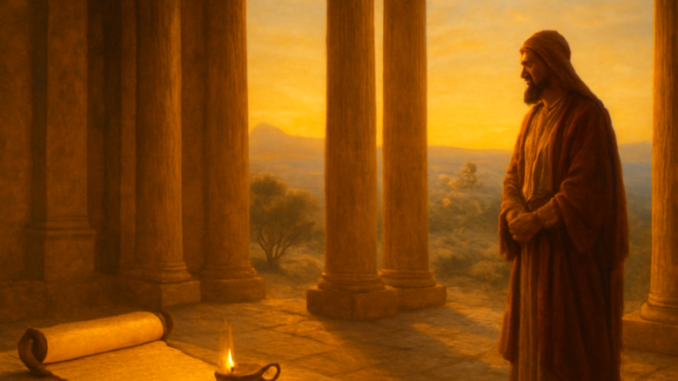
A small flask of oil. Ordinary, unremarkable. And yet, when the prophet Samuel pours that oil over the head of a simple shepherd, everything changes. The First Book of Samuel is far more than a chronicle of kings and battles. It reveals a deeper truth about calling, transformation, and the invisible forces that can reshape a person from within. For those who read with symbolic eyes, this ancient text opens a world that resonates profoundly within Freemasonry: the journey from darkness to light, from ignorance to insight.
The Horn of Oil: More Than a Ritual Object
Picture the horn — a tangible, physical vessel filled with oil pressed from olives. In the daily life of ancient Israel, oil was indispensable: fuel for lamps, nourishment for the body, a balm for healing. But when that same oil is poured over the head of a chosen one, it takes on an entirely different character. The anointing oil becomes a carrier of something that transcends the senses. It marks a transition, a transformation that cannot be seen but is deeply felt.
In Freemasonry, we recognize similar moments. When a candidate is initiated, certain actions and objects may appear deceptively simple at first glance — a blindfold, a cable-tow, a step across a threshold. Yet these seemingly modest elements carry a symbolic power that stays with the initiate forever. Just as the anointing oil did not physically change David but awakened him inwardly to his calling, so too do the ritual elements in the lodge work upon the consciousness of those who open themselves to their influence.
Samuel as Guide: The Voice That Calls in the Night
The book begins with a calling that fires the imagination. The young Samuel, serving in the temple, is awakened in the night by a voice calling his name. Three times he hears the call, and three times he mistakes it for the elderly priest Eli summoning him. Only on the fourth occasion does he recognize the true source: a voice from within, an urging that comes not from any human being.
Speak, for your servant is listening.
Here we touch on a theme that any Freemason will immediately recognize. The initiatory journey often begins with confusion — with not quite understanding what is happening. The candidate is confronted with questions that have no straightforward answers. Only gradually, through repetition and reflection, does the deeper meaning begin to dawn. Samuel’s hearing the call three times and failing to understand three times mirrors this process of gradual awakening. The number three, so central to the symbolic language of the lodge, returns here as a marker of a process moving toward completion.
From Shepherd to King: The Rough Ashlar Taking Shape
David is no born prince. He tends sheep, plays the harp, and lives in the shadow of older brothers who seem far more obvious candidates for greatness. And yet Samuel chooses him — not for what he already is, but for what he may become. The prophet sees past outward appearance, past social standing, straight to the heart of the young man.
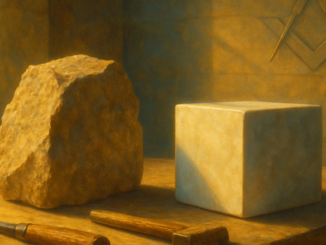
This principle resonates powerfully with the Masonic concept of the rough ashlar. Every brother or sister begins as unworked material, full of potential yet still unformed. The work upon the stone is the work upon oneself: chiseling away what is unnecessary, uncovering the pure form that was always hidden within. David begins as a rough ashlar and grows — through trial and refinement — into a perfect ashlar that fits within a greater edifice.
Light and Darkness: Saul and the Shadow of the Ego
The First Book of Samuel also presents a tragic figure: King Saul. Initially anointed and full of promise, he gradually becomes entangled in jealousy, fear, and suspicion. His inner light fades — not because of external enemies, but because of the demons of his own mind. Saul becomes a mirror of what can happen when a person closes himself off from self-reflection and growth.
In the symbolic language of Freemasonry, this contrast between light and darkness stands at the very center. The search for light is not a single victory but an ongoing obligation. Anyone who ceases to work on themselves, who avoids the mirror, risks falling back into shadow. Saul’s story is a warning: the anointing alone is not enough. It is the continuous effort, the daily choice to seek the light, that determines whether the promise of initiation is fulfilled.
The Temple on the Horizon: Building What Endures
Although the construction of the Temple is not described until later books, the First Book of Samuel already casts its shadow forward. David dreams of a house for the sacred — a place where the divine can dwell among people. This dream of building, of creating something lasting that transcends generations, is a motif that every Freemason recognizes at once.
In the lodge, the building of the Temple is never merely physical. It refers to the inner temple — the soul as an edifice that must be raised with care and attention. Every thought, every action, every relationship forms a stone in this structure. David is not permitted to complete the Temple himself, but his longing and preparation make the building possible. In this way, Freemasonry teaches that it is not only the completion that matters, but also the intention and the preparatory work.
The Stone and the Sling: Strength in the Unexpected
The image of David with his sling facing the giant Goliath is perhaps the most iconic moment in this book of the Bible. A smooth stone, a simple weapon, succeeds where armor fails. It is a story about courage, certainly, but also about trusting one’s own inner strength when outward means fall short.
For the Freemason, there is a lesson here about authenticity. The power to overcome obstacles does not lie in armored façades or borrowed authority, but in purity of intention and the willingness to be vulnerable. The stone David chooses is not a weapon of brute force — it is a symbol of focused purpose and inner resolve.
The First Book of Samuel speaks across the centuries to anyone engaged in the work of self-transformation. Its anointing oil, its calling in the night, its rough shepherd becoming king — these are not just ancient stories. They are living symbols that illuminate the Masonic path. The oil reminds us that true consecration is internal. The voice in the darkness reminds us to listen. And the stone in David’s hand reminds us that our greatest strength is not found in outward display, but in the quiet certainty of a life aligned with purpose.
Copyright text & image: devrijmetselaar.nl
Texts are based on the ideas and content of the author of devrijmetselaar.nl, reviewed, corrected, and supplemented with the assistance of OpenAI. Images are created based on the ideas of the author of devrijmetselaar.nl using OpenAI/DALL-E.
Frequently Asked Questions
What is the connection between the anointing oil in First Samuel and Freemasonry?
Just as the anointing oil in First Samuel marks an inner transformation and awakening to one's calling, Freemasonry uses symbolic ritual objects and actions to work upon the consciousness of initiates. Both the biblical anointing and Masonic initiation point to a deeper process of inner development that transcends the merely physical, helping individuals recognize and embrace their true potential.
Why is the number three important in this article and in Freemasonry?
In First Samuel, young Samuel hears his calling three times before understanding its true source, mirroring the gradual process of awakening through repetition and reflection. The number three is similarly central to Masonic symbolic language and the initiatory journey, marking progress toward deeper understanding and spiritual completion.
How does Samuel's story relate to a Freemason's journey of self-discovery?
Samuel's journey from confusion to clarity—learning to recognize an inner calling he initially misunderstood—parallels the Masonic initiate's progression from darkness to light and ignorance to insight. Like David being chosen not for what he appears to be but for what he may become, Freemasonry recognizes the hidden potential within each person and provides a framework for that transformation to unfold.
What does Freemasonry teach about inner calling and personal transformation?
Freemasonry recognizes that genuine transformation comes from within through meaningful ritual and reflection, much like the anointing oil in First Samuel awakened David inwardly rather than changing him outwardly. The fraternity provides initiates with symbolic tools and experiences designed to help them discover their true calling and potential, leading them from ignorance toward enlightenment and self-awareness.


Be the first to comment