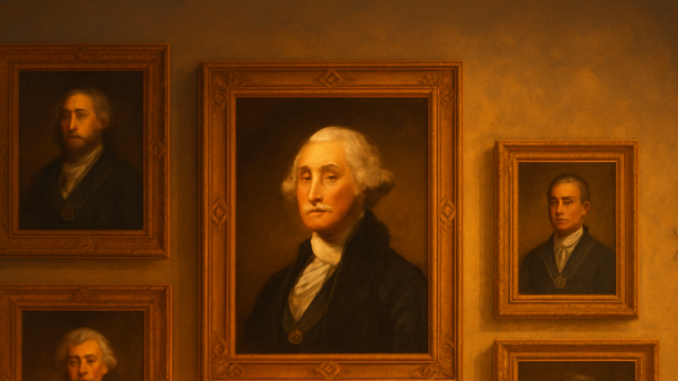
Throughout the centuries, Freemasonry has counted among its members some of the most influential, creative, and visionary individuals the world has ever known. From statesmen and scientists to composers and explorers, the brotherhood has served as a meeting ground for exceptional minds united by shared values of liberty, fraternity, and the pursuit of knowledge. Understanding famous Freemasons history means exploring not just the lives of remarkable individuals, but also the ideals and networks that helped shape modern civilization. This pillar page offers a comprehensive journey through the most notable members of the Craft and the extraordinary contributions they made to history.
The Historical Background of Freemasonry
Freemasonry as an organized institution traces its origins to the founding of the Grand Lodge of England in London in 1717. However, the philosophical and symbolic roots of the fraternity reach much further back — to the operative stonemasons’ guilds of medieval Europe, whose members built the great cathedrals and castles of the age. Over time, these practical associations evolved into “speculative” Freemasonry, a philosophical and moral system that used the tools and terminology of stonemasonry as metaphors for self-improvement and ethical living.
By the 18th century, Freemasonry had spread rapidly across Europe and the Americas, attracting members from the emerging middle classes as well as the nobility. The lodges became spaces where men of different social backgrounds could meet on equal footing — an extraordinary concept for the era. It was during this period of Enlightenment that some of the most famous Freemasons in history became active members of the fraternity, using the values they cultivated in the lodge to influence politics, science, art, and philosophy on a global scale.
The appeal of Freemasonry lay in its unique combination of ritual, moral teaching, philosophical inquiry, and brotherhood. Members were encouraged to improve themselves, serve their communities, and seek truth — values that resonated deeply with the intellectual currents of the 18th and 19th centuries. It is no surprise, therefore, that so many great figures of history found in Freemasonry a spiritual and intellectual home.
Founding Fathers and Political Leaders
Perhaps no area of famous Freemasons history is more celebrated than the role of the fraternity in the founding of the United States of America. A significant number of the men who signed the Declaration of Independence and the Constitution were Freemasons, and Masonic principles of liberty, equality, and human dignity are widely regarded as having influenced the ideals upon which the nation was built.
George Washington
George Washington (1732–1799), the first President of the United States and commander of the Continental Army during the American Revolution, is perhaps the most famous Freemason in history. Washington was initiated into the fraternity at Fredericksburg Lodge No. 4 in Virginia in 1752, at the age of twenty. He remained a committed Mason throughout his life, presiding over lodge meetings when his duties permitted and famously laying the cornerstone of the United States Capitol building in 1793 wearing his Masonic apron. Washington viewed Masonry as a moral institution that promoted virtue and brotherly love, values he embodied throughout his remarkable career. The Washington National Masonic Memorial in Alexandria, Virginia, stands as a testament to his enduring connection with the Craft.
Benjamin Franklin
Benjamin Franklin (1706–1790) — statesman, inventor, writer, and diplomat — was one of the most intellectually active Freemasons of his era. Franklin joined St. John’s Lodge in Philadelphia in 1731 and quickly rose to become Grand Master of Pennsylvania in 1734. He went on to print the first Masonic book published in America: an edition of James Anderson’s Constitutions of the Freemasons. During his time as American Ambassador to France, Franklin played a central role in Parisian Masonic circles, helping to bridge the fraternal networks of the Old and New Worlds. His belief in reason, tolerance, and civic virtue aligned perfectly with Masonic philosophy.
Other Notable Political Figures
Beyond the American context, Freemasonry counted many influential political leaders among its ranks. Simon Bolívar (1783–1830), the liberator of much of South America, was an active Freemason who saw the fraternity’s ideals as deeply compatible with his vision of republican governance and independence from colonial rule. The Marquis de Lafayette (1757–1834), the French general who fought alongside Washington in the American Revolution, was also a Mason, illustrating the transatlantic nature of Masonic brotherhood during the revolutionary era. In Europe, Frederick the Great of Prussia (1712–1786) was initiated into Freemasonry in 1738 and became a devoted patron of the Craft, believing it to be an institution that fostered reason and civilization.
Composers, Artists, and Cultural Icons
The world of arts and culture has also been richly represented in famous Freemasons history. The fraternity’s emphasis on beauty, harmony, and the elevation of the human spirit made it a natural home for creative individuals who sought to express deeper truths through their work.
Wolfgang Amadeus Mozart
Wolfgang Amadeus Mozart (1756–1791) is perhaps the most celebrated artistic figure in Masonic history. Mozart joined the Viennese lodge “Zur Wohltätigkeit” (Beneficence) in 1784 and became deeply immersed in Masonic philosophy and ritual. His final opera, Die Zauberflöte (The Magic Flute, 1791), is widely regarded as a Masonic allegory, filled with symbolism drawn from the degrees and teachings of the Craft. The opera’s themes of initiation, enlightenment, and the triumph of wisdom over ignorance reflect the core values of Freemasonry with remarkable depth and artistry. Mozart also composed several works specifically for Masonic ceremonies, including the beautiful Maurerische Trauermusik (Masonic Funeral Music). His deep engagement with Masonry enriched both his personal philosophy and his creative output.
Franz Joseph Haydn
Franz Joseph Haydn (1732–1809), one of the greatest composers of the Classical era and a close friend of Mozart, was initiated into Freemasonry in Vienna in 1785. Though less prolific in Masonic-themed compositions than his younger friend, Haydn shared the fraternity’s values of harmony, craft, and moral excellence — qualities that shine through in his extraordinary body of work, from his symphonies to his sacred oratorios.
Johann Wolfgang von Goethe
Johann Wolfgang von Goethe (1749–1832), one of the towering figures of world literature and author of Faust, was a Freemason for most of his adult life. Initiated in 1780 at the lodge “Amalia” in Weimar, Goethe served as Master of the lodge for a time and remained affiliated with the fraternity for over fifty years. His philosophical writings and literary works reflect many Masonic themes, including the search for wisdom, the reconciliation of opposites, and the moral development of the individual.
Rudyard Kipling
Rudyard Kipling (1865–1936), the Nobel Prize-winning author of The Jungle Book and Kim, was initiated into Hope and Perseverance Lodge No. 782 in Lahore, India, in 1886. The experience of brotherhood across cultural and religious lines — the lodge included Hindu, Muslim, and Christian members — profoundly influenced his world view and his writing. Kipling later wrote warmly about Freemasonry in both poetry and prose, viewing the lodge as a space of genuine human connection that transcended the boundaries of race and religion.
Scientists, Inventors, and Explorers
The world of science and exploration has also contributed greatly to the roster of famous Freemasons throughout history. The fraternity’s commitment to rational inquiry, careful observation, and the advancement of knowledge made it an attractive institution for men of science during the Enlightenment and beyond.
Erasmus Darwin
Erasmus Darwin (1731–1802), physician, naturalist, and grandfather of Charles Darwin, was a prominent Freemason and a member of the intellectually brilliant Lunar Society of Birmingham. Darwin’s speculative writings on evolution and natural philosophy anticipated many ideas that would later be developed by his famous grandson. His membership in Masonic circles connected him with other great thinkers of his era, facilitating the cross-pollination of ideas that characterizes the best of Enlightenment thought.
Edward Jenner
Edward Jenner (1749–1823), the English physician who pioneered the concept of vaccination and developed the first vaccine against smallpox, was a Freemason. His groundbreaking work saved countless lives and laid the foundation for modern immunology. Jenner exemplified the Masonic ideal of using one’s talents and knowledge for the benefit of humanity.
John Glenn
Moving into more recent history, John Glenn (1921–2016), the first American astronaut to orbit the Earth and later a distinguished United States Senator, was a proud Freemason. Glenn was a member of Concord Lodge No. 688 in New Concord, Ohio. His courage, integrity, and spirit of exploration embodied Masonic virtues in the modern age, demonstrating that the brotherhood continued to attract individuals of exceptional character and achievement well into the 20th century.
Military Heroes and Explorers
The spirit of adventure and service that characterizes Freemasonry has drawn many distinguished military figures and explorers to its ranks throughout history. These men combined personal courage with the Masonic values of duty, honor, and brotherly care.
Arthur Wellesley, Duke of Wellington
Arthur Wellesley, the first Duke of Wellington (1769–1852), the British general who defeated Napoleon Bonaparte at the Battle of Waterloo and later served as Prime Minister of the United Kingdom, was a Freemason. Wellington was initiated in 1790 and remained connected to the fraternity throughout his long and distinguished career. His victories on the battlefield and his leadership in government reflected the qualities of discipline, moral courage, and care for those under his command that Masonry sought to cultivate.
Ernest Shackleton
Ernest Shackleton (1874–1922), the legendary Antarctic explorer known for his extraordinary leadership during the ill-fated Imperial Trans-Antarctic Expedition of 1914–1917, was a Freemason. When his ship Endurance became trapped in ice and was eventually crushed, Shackleton’s remarkable ability to keep his crew alive and united through extraordinary hardship has become one of history’s greatest stories of leadership. His qualities of resilience, fraternal care, and determination to bring every man home safely resonate deeply with Masonic principles.
Heads of State and Royalty
Freemasonry has long had connections with royal families and heads of state across the world. In Great Britain, the fraternity has enjoyed a particularly close relationship with the monarchy, with many members of the royal family serving as senior Masons over the centuries.
King Edward VII (1841–1910), son of Queen Victoria, was an active Freemason who served as Grand Master of the United Grand Lodge of England from 1874 to 1901, before ascending to the throne. His enthusiasm for the Craft helped to reinforce its social respectability in Victorian and Edwardian England. His son, King George VI (1895–1952), father of Queen Elizabeth II, was also a Freemason, initiated in 1919. The Duke of Edinburgh, Prince Philip (1921–2021), was similarly a Mason, as was the current Duke of Kent, who has served as Grand Master of the United Grand Lodge of England since 1967.
In the United States, fourteen presidents are known or believed to have been Freemasons, including James Monroe, Andrew Jackson, James Polk, James Buchanan, Andrew Johnson, James Garfield, William McKinley, Theodore Roosevelt, William Howard Taft, Warren G. Harding, Franklin D. Roosevelt, Harry S. Truman, Lyndon B. Johnson, and Gerald Ford. This remarkable list speaks to the fraternity’s enduring appeal among men of public service and leadership.
Philosophers, Writers, and Thinkers
The intellectual and philosophical dimensions of Freemasonry have made it a natural home for writers and thinkers who sought to explore the deeper questions of human existence. The lodge’s atmosphere of open but respectful inquiry, combined with its rich symbolic tradition, provided fertile ground for creative and philosophical minds.
Voltaire (1694–1778), the great French Enlightenment philosopher and critic of religious intolerance, was initiated into the Lodge of the Nine Sisters in Paris just weeks before his death in 1778. The ceremony was presided over in part by Benjamin Franklin, making it one of the most symbolically resonant moments in the history of the Craft. Alexander Pope (1688–1744), one of the greatest English poets of the 18th century, is also associated with Freemasonry, as is Sir Walter Scott (1771–1832), the celebrated Scottish novelist and poet who was a member of St. David’s Lodge No. 36 in Edinburgh.
Mark Twain (1835–1910), the American author of Adventures of Huckleberry Finn and one of the most beloved writers in the English language, was raised as a Master Mason in Polar Star Lodge No. 79 in St. Louis, Missouri, in 1861. Twain’s sharp wit and his deep belief in human dignity and equality echo many of the values at the heart of Masonic philosophy.
The Legacy of Famous Freemasons in History
Looking across the full sweep of famous Freemasons history, what emerges is a remarkable portrait of men who, despite coming from vastly different backgrounds, nations, and professions, shared a commitment to self-improvement, brotherly love, and the betterment of humanity. The fraternity provided a unique space in which ideas could be exchanged, friendships forged, and values cultivated that then went out into the world through the actions of its members.
It would be an oversimplification to attribute the achievements of these great figures solely to their Masonic membership. Rather, Freemasonry attracted individuals who already possessed exceptional qualities — curiosity, integrity, creativity, and a desire to serve — and provided a community in which those qualities were nurtured and expressed. The lodge was not the source of greatness, but it was often a companion to it.
The legacy of famous Freemasons throughout history continues to inspire members of the fraternity today. Their example demonstrates that the Masonic ideals of moral development, rational inquiry, and service to others are not abstract principles but living values that can and do produce extraordinary results when taken seriously and lived faithfully.
Frequently Asked Questions About Famous Freemasons
How many U.S. presidents were Freemasons?
Fourteen U.S. presidents are confirmed or strongly believed to have been Freemasons. The list includes George Washington, Andrew Jackson, James Polk, James Buchanan, Andrew Johnson, James Garfield, William McKinley, Theodore Roosevelt, William Howard Taft, Warren G. Harding, Franklin D. Roosevelt, Harry S. Truman, Lyndon B. Johnson, and Gerald Ford. Their membership reflects the fraternity’s broad appeal among men dedicated to public service and moral leadership.
Was Mozart really a Freemason, and how did it influence his music?
Yes, Wolfgang Amadeus Mozart was indeed a Freemason, initiated in Vienna in 1784. His connection to the Craft was deep and sincere. His final opera, Die Zauberflöte (The Magic Flute), is widely regarded as a Masonic allegory, rich in symbolic references to Masonic ritual and philosophy. Mozart also composed specific works for Masonic ceremonies. Many musicologists believe that his experience of Masonic brotherhood and its philosophical teachings deepened the spiritual and humanistic qualities of his music.
What qualities did Freemasonry offer that attracted so many great historical figures?
Freemasonry offered a unique combination of features that made it attractive to exceptional individuals throughout history. Its lodges provided a space for open intellectual exchange at a time when such freedom was rare, bringing together men of different social classes and backgrounds on equal terms. The fraternity’s emphasis on moral improvement, rational inquiry, and brotherly love resonated with the values of the Enlightenment and beyond. For many famous members, the lodge was a place of genuine friendship, philosophical stimulation, and moral accountability — a brotherhood of like-minded individuals committed to making themselves and their world better.
Are there famous Freemasons in the world of science and medicine?
Absolutely. The world of science and medicine has contributed significantly to the ranks of famous Freemasons throughout history. Edward Jenner, the pioneer of vaccination, was a Mason. Erasmus Darwin, the influential naturalist and physician, was a Freemason active in Enlightenment scientific circles. John Glenn, the first American to orbit the Earth, was a proud member of the fraternity. These men exemplified the Masonic ideal of using knowledge and skill in service of the common good.
How can I learn more about Freemasonry and its history?
The best way to learn more about Freemasonry and its rich history is to explore reputable resources — books, museums, and the websites of established Masonic organizations. Visiting the websites of organizations like the United Grand Lodge of England or national Grand Lodges can provide authoritative and welcoming introductions to the fraternity. Many lodges also host open events and are happy to answer questions from curious members of the public. For Dutch speakers and those in the Netherlands, devrijmetselaar.nl offers a wealth of information about Freemasonry, its history, and how to connect with the brotherhood today.
Read more about this topic
- All articles in this category: History
- The Lost Island as Mirror: Freemasonry and the Atlantis Myth
- The Danube Runs Dry: What Rivers Teach Us About Impermanence
- Paw Prints in Manuscripts: What Cats Teach Freemasons
- Famous Freemasons Throughout History: A Remarkable Legacy
- History of Freemasonry in the Netherlands: Three Centuries
Frequently Asked Questions
What is the historical origin of Freemasonry?
Freemasonry traces its origins to the operative stonemasons' guilds of medieval Europe, whose members built cathedrals and castles. The modern organized institution began with the founding of the Grand Lodge of England in London in 1717. Over time, these practical associations evolved into 'speculative' Freemasonry, a philosophical and moral system that uses the tools and terminology of stonemasonry as metaphors for self-improvement and ethical living.
Why did Freemasonry appeal to notable historical figures?
Freemasonry appealed to influential individuals because it offered a unique combination of ritual, moral teaching, philosophical inquiry, and brotherhood. The lodges provided spaces where men of different social backgrounds could meet on equal footing — an extraordinary concept for the era. Members were encouraged to improve themselves, serve their communities, and seek truth, values that resonated deeply with Enlightenment intellectual currents of the 18th and 19th centuries.
What role did Freemasonry play in the founding of the United States?
Freemasonry played a significant role in the founding of the United States of America, with a substantial number of the men who signed the founding documents being members of the fraternity. These Freemasons used the values they cultivated in the lodge — liberty, fraternity, and the pursuit of knowledge — to influence American politics, philosophy, and the development of the new nation.

Be the first to comment