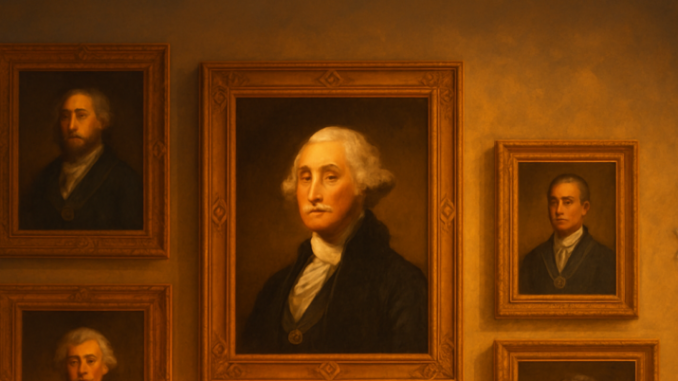
For centuries, Freemasonry has attracted men who not only excelled in their fields but also felt a deep yearning for brotherhood, philosophical inquiry, and personal growth. Famous Freemasons can be found across virtually every domain of human endeavor — from politics and the arts to science, the military, and business. Their membership in a lodge speaks to a shared pursuit of wisdom, ethics, and community — values that Freemasonry has championed for more than three hundred years. This overview brings together a broad and diverse collection of historical and more recent brethren, placing their Masonic membership in the context of their lives and times.
The Early Centuries: Freemasons in the 18th and 19th Century
Organized Freemasonry as we know it today began in 1717 with the founding of the first Grand Lodge in London. From that moment, the movement spread rapidly across Europe and North America. It comes as no surprise, then, that many of the most influential thinkers, statesmen, and artists of the eighteenth and nineteenth centuries were drawn to the principles of the lodge.
George Washington — Founding Father and Brother
Perhaps the most iconic name among famous Freemasons is George Washington (1732–1799), the first President of the United States. Washington was initiated into Fredericksburg Lodge No. 4 in Virginia in 1752. Throughout his life, he remained actively involved in the fraternity, forging a powerful connection between Masonic Enlightenment ideals and the founding of American democracy. When the cornerstone of the U.S. Capitol was laid in 1793, Washington wore his Masonic apron — a moment that has remained symbolically charged in American history. Washington embodied the Masonic virtues of honesty, duty, and service to the community in a way that continues to shape his political legacy to this day.
Wolfgang Amadeus Mozart — Composer and Brother
Wolfgang Amadeus Mozart (1756–1791) was initiated in December 1784 into the Viennese lodge “Zur Wohltätigkeit” (Beneficence). He was deeply moved by Masonic philosophy and openly incorporated Masonic symbolism and ideals into his music. His opera Die Zauberflöte (The Magic Flute, 1791) is widely regarded as one of the most explicitly Masonic works of art ever created: the hero Tamino’s journey through trials of water, fire, and darkness mirrors the initiation rites of the lodge. Mozart also composed specific musical pieces for lodge meetings, including the cantata Die Maurerfreude. His brotherhood within the lodge provided him not only with social connections but also a spiritual home that aligned with his humanistic worldview.
Benjamin Franklin — Scientist, Diplomat, and Freemason
Benjamin Franklin (1706–1790) stands as one of the most versatile famous Freemasons in history. As a scientist, writer, diplomat, and Founding Father of the United States, Franklin became a member of St. John’s Lodge in Philadelphia in 1731. Later, during his time in France as the American ambassador, he became Grand Master of the Loge des Neuf Sœurs in Paris — a lodge celebrated for its enlightened members, including Voltaire. Franklin embodied the Masonic connection between reason, science, and fraternal idealism. His friendship with Voltaire, who was initiated into that same lodge in 1778 at an advanced age, stands as a powerful symbol of the intellectual energy that Freemasonry radiated during that era.
Frederick the Great — King of Prussia
Frederick II of Prussia (1712–1786), better known as Frederick the Great, was initiated in Brunswick in 1738. As an enlightened monarch, he was a strong advocate for religious tolerance, freedom of the press, and philosophical debate — values that aligned perfectly with Masonic principles. Frederick established several lodges in Berlin and remained involved with the fraternity throughout his life. His combination of military greatness and intellectual leadership made him one of the most admired brethren of his time.
Famous Freemasons in Art and Culture
Freemasonry has always held a particular appeal for artists, writers, and musicians. The symbolic richness of the order, the pursuit of beauty and harmony, and the fraternal environment where ideas could be freely exchanged made the lodge fertile ground for creative minds.
Johann Wolfgang von Goethe — Poet and Philosopher
Johann Wolfgang von Goethe (1749–1832), one of the greatest writers in German literature, was initiated into the lodge “Amalia” in Weimar in 1780. Goethe remained active in the fraternity for decades and even served as the master of his lodge. Masonic themes are clearly present in his work, particularly in Faust and Wilhelm Meister. He regarded the lodge as a community of like-minded souls striving toward self-improvement and an understanding of the higher truths of existence.
Rudyard Kipling — Author of The Jungle Book
Rudyard Kipling (1865–1936), Nobel Prize laureate in literature and author of The Jungle Book and Kim, was initiated at a remarkably young age — barely eighteen — into Lodge Hope and Perseverance No. 782 in Lahore (in present-day Pakistan). The diverse composition of his lodge, with members from different religions and backgrounds, made a profound impression on him. This experience reinforced his conviction that human connection is stronger than cultural and religious differences. His poem The Mother Lodge is a moving tribute to this fraternal community, celebrating the bond between men of vastly different walks of life united by shared Masonic values.
Franz Liszt and Other Composers in the Craft
Beyond Mozart, numerous other composers were members of the fraternity. Franz Liszt (1811–1886), the Hungarian virtuoso pianist and composer, was initiated into Freemasonry and maintained a lifelong appreciation for its ideals. Jean Sibelius, the great Finnish composer, was also a Freemason. These musicians, like so many creative brethren before and after them, found in the lodge a space where artistic ambition and moral philosophy could coexist and inspire one another. The Masonic emphasis on harmony — both literal and metaphorical — resonated deeply with those whose lives were dedicated to the art of music.
The list of famous Freemasons stretches across centuries and continents, encompassing presidents and kings, poets and composers, scientists and diplomats. What unites them all is not fame or fortune, but a shared commitment to the timeless Masonic ideals of brotherly love, relief, and truth. Their legacies remind us that Freemasonry has never been merely a social club — it has been a transformative force in the lives of remarkable individuals and, through them, in the shaping of the modern world. Whether through Washington’s leadership, Mozart’s music, or Kipling’s poetry, the influence of the Craft endures as a testament to the power of fellowship, moral reflection, and the unending quest for light.
Copyright text & image: devrijmetselaar.nl
Texts are based on the ideas and content of the author of devrijmetselaar.nl, reviewed, corrected, and supplemented with the assistance of OpenAI. Images are created based on the ideas of the author of devrijmetselaar.nl using OpenAI/DALL-E.
Frequently Asked Questions
What is Freemasonry and why have so many famous people joined?
Freemasonry is a fraternal organization founded in 1717 that emphasizes brotherhood, philosophical inquiry, personal growth, and ethical values. Famous Freemasons throughout history—including George Washington, Benjamin Franklin, and Wolfgang Amadeus Mozart—have been drawn to the movement because it provides a community of like-minded individuals who share a deep commitment to wisdom, ethics, and self-improvement across all fields of human endeavor.
Was George Washington really a Freemason?
Yes, George Washington was initiated into Fredericksburg Lodge No. 4 in Virginia in 1752 and remained actively involved in the fraternity throughout his life. He famously wore his Masonic apron when laying the cornerstone of the U.S. Capitol in 1793, symbolically connecting Masonic Enlightenment ideals with the founding of American democracy.
How did Mozart incorporate Freemasonry into his work?
Wolfgang Amadeus Mozart, initiated into the Viennese lodge "Zur Wohltätigkeit" in 1784, was deeply inspired by Masonic philosophy and openly integrated Masonic symbolism into his compositions. His most famous work, the opera Die Zauberflöte (The Magic Flute), is considered one of the most explicitly Masonic artworks ever created, with the hero's journey mirroring the initiation rites of the lodge.
When did modern organized Freemasonry begin?
Modern organized Freemasonry began in 1717 with the founding of the first Grand Lodge in London. From that moment, the movement spread rapidly across Europe and North America, attracting influential thinkers, statesmen, and artists who were drawn to its principles of wisdom, brotherhood, and ethical community.
What values does Freemasonry emphasize?
Freemasonry emphasizes brotherhood, philosophical inquiry, personal growth, wisdom, ethics, and community service. These values have remained central to the organization for over three hundred years and have attracted members from virtually every domain of human endeavor, including politics, the arts, science, the military, and business.

Be the first to comment